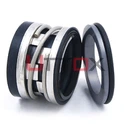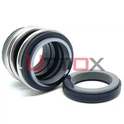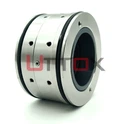


When selecting cartridge mechanical seals for your pumping system, the choice between single and double configurations can mean the difference between operational success and costly downtime. Many plant engineers face recurring seal failures, product contamination, and safety concerns simply because they selected the wrong seal type for their application. Understanding whether cartridge mechanical seals should be single or double depends on your process fluid characteristics, operating conditions, and safety requirements. This comprehensive guide will help you make an informed decision that protects your equipment, personnel, and bottom line.

Understanding Cartridge Mechanical Seals Configuration
Cartridge mechanical seals represent a significant advancement in sealing technology, offering pre-assembled units that simplify installation and reduce human error. The fundamental difference between single and double cartridge mechanical seals lies in their sealing arrangement and how they manage the process fluid. Single cartridge mechanical seals utilize the pumped fluid as a lubricant for the seal faces, creating a direct interface between the process and the sealing elements. This straightforward design makes single seals cost-effective and suitable for many general industrial applications where the process fluid is clean, compatible with seal materials, and operates within moderate temperature and pressure ranges. Double cartridge mechanical seals, conversely, incorporate two sets of sealing faces with a barrier or buffer fluid circulating between them. This configuration creates an additional layer of protection, isolating the process fluid from the atmosphere and providing enhanced safety for hazardous or toxic applications. The CARTEX SN Cartridge Seals from Uttox exemplify modern cartridge seal design, offering both single and double configurations with materials including resin carbon, antimony carbon, silicon carbide, and tungsten carbide seal rings. These cartex seal options accommodate diverse operating conditions across petroleum refining, water treatment, pharmaceutical, and chemical processing industries where mechanical seals must perform reliably under demanding circumstances.
Single Cartridge Mechanical Seals: Design and Applications
Single cartridge mechanical seals feature one set of primary sealing faces, typically consisting of a rotating ring attached to the shaft and a stationary ring mounted in the seal gland. The seal relies on the pumped fluid for lubrication and cooling of the sealing interface, making proper flush arrangements critical for optimal performance. Materials selection for single mechanical seals depends on chemical compatibility, with elastomers like FKM, EPDM, AFLAS, and NBR providing excellent sealing for various process fluids. Metal parts constructed from SS304, SS316, duplex stainless steel, Hastelloy C, or 904L ensure corrosion resistance and structural integrity under operational stresses. The primary advantages of single cartridge mechanical seals include lower initial investment costs, simpler maintenance procedures, and reduced space requirements. These seals excel in applications involving non-hazardous fluids such as water, light hydrocarbons, and many general industrial chemicals operating below 200°C. The cartex seal design philosophy emphasizes ease of installation, with pre-set components eliminating the need for precise measurement and adjustment during installation. Before installing any mechanical seals, operators must carefully inspect all components for cleanliness, verify that rotating parts move freely, check positioning screws, and confirm proper auxiliary seal thickness according to installation drawings to ensure correct positioning and spring load application.
Double Cartridge Mechanical Seals: Enhanced Protection
Double cartridge mechanical seals provide superior performance in critical applications where process containment, safety, and environmental protection are paramount. These seals incorporate two complete sealing arrangements within a single cartridge assembly, with barrier fluid circulating in the chamber between the inner and outer seal faces. The inner seal contains the process fluid while the outer seal prevents barrier fluid leakage to atmosphere, creating a redundant sealing system. This dual-barrier approach makes double mechanical seals essential for toxic, flammable, or environmentally sensitive fluids where even minimal process leakage is unacceptable. The barrier fluid system in double cartridge mechanical seals serves multiple functions beyond secondary containment. It provides superior lubrication and cooling compared to process fluid lubrication, extending seal face life and enabling operation at higher temperatures and pressures. Barrier fluids can be selected for optimal lubricity regardless of process fluid properties, addressing applications where the pumped medium has poor lubricating characteristics, contains abrasives, polymerizes, or crystallizes at seal faces. The CARTEX SN Cartridge Seals manufactured by Uttox offer double configurations with material combinations optimized for severe service conditions, including silicon carbide and tungsten carbide face materials paired with FFKM elastomers for extreme chemical resistance. Industries such as petroleum refining, chemical processing, pharmaceutical manufacturing, and power generation increasingly specify double cartridge mechanical seals for critical services. These sectors demand absolute reliability and zero emissions, making the additional investment in double seals economically justified through reduced maintenance costs, extended mean time between failures, and compliance with stringent environmental regulations. The reasonable design and reliable quality of modern cartex seal products ensure that double configurations provide long-term value despite higher initial capital expenditure.
Key Factors in Selecting Between Single and Double Cartridge Seals
Process Fluid Properties and Hazard Classification
The nature of your process fluid fundamentally determines whether single or double cartridge mechanical seals are appropriate for your application. Process fluids classified as hazardous, toxic, carcinogenic, or flammable typically require double mechanical seals to meet safety regulations and environmental standards. Fluids with poor lubricity, high vapor pressure, or tendency to crystallize or polymerize also benefit from double seal arrangements where barrier fluid provides consistent lubrication independent of process conditions. Chemical compatibility must be evaluated carefully, ensuring that seal ring materials like resin carbon, antimony carbon, SIC, SSIC, or tungsten carbide resist corrosion from the process fluid while maintaining dimensional stability and mechanical properties. For non-hazardous applications involving clean water, light hydrocarbons, or mild chemicals, single cartridge mechanical seals often provide adequate performance at lower cost. The selection must consider not only the primary fluid composition but also potential contaminants, temperature variations, and the consequences of seal failure. A process handling non-toxic materials but operating in a sensitive environment might still justify double seals to prevent any environmental impact. The cartex seal portfolio from manufacturers like Uttox offers material flexibility with elastomers including FKM for general chemical service, EPDM for water and steam, AFLAS for aggressive chemicals, and NBR for petroleum products, enabling optimal material matching for both single and double configurations.
Operating Conditions: Temperature, Pressure, and Speed
Operating parameters significantly influence cartridge mechanical seals selection and performance. Temperature affects seal material properties, fluid viscosity, vapor pressure, and thermal expansion, all impacting seal face lubrication and leakage rates. Single mechanical seals typically operate satisfactorily up to 200°C with proper flush arrangements, while double seals with engineered barrier fluids can handle temperatures exceeding 300°C in specialized applications. Pressure considerations include not only suction and discharge pressures but also pressure fluctuations, hydraulic testing pressures, and potential upset conditions that could compromise seal integrity. Shaft speed influences heat generation at seal faces, with higher speeds requiring enhanced cooling and lubrication. Double cartridge mechanical seals with pressurized barrier fluid systems provide superior cooling capacity compared to single seals dependent on process fluid circulation. The pressure differential across seal faces affects face loading, wear rates, and leakage potential, making proper hydraulic balance critical for both single and double configurations. Metal parts manufactured from SS304, SS316, duplex stainless steel, Hastelloy C, or 904L provide the structural strength necessary for high-pressure applications while resisting stress corrosion cracking and material fatigue that could lead to premature failure. The CARTEX SN Cartridge Seals design incorporates hydraulic balancing features that optimize face loading across varying operating conditions, extending seal life while maintaining effective sealing. Complete replacement compatibility with Burgmann's Cartex series ensures that users can upgrade from single to double configurations without equipment modifications when operating requirements change. This flexibility proves valuable when process modifications increase pressures, temperatures, or fluid hazards beyond single seal capabilities.
Installation and Maintenance Considerations
Pre-Installation Inspection Procedures
Proper installation begins with thorough inspection of all cartridge mechanical seals components, whether newly installed or returned from refurbishment. This critical step prevents many common seal failures attributed to contamination, damage, or improper assembly. All parts must be meticulously cleaned and free from dirt, grease, or manufacturing residues, with particular attention to sealing surfaces of static and dynamic rings where even microscopic imperfections can cause leakage. The rotating components of mechanical seals including transmission pins and spring pins must move freely without binding or resistance, indicating proper clearances and absence of corrosion or debris. Positioning screws securing rotating parts require careful evaluation, ensuring they are appropriately tightened to prevent movement during operation while not being overtightened which could induce stress concentrations. Worn or damaged positioning screws must be replaced rather than reused, as their integrity directly affects seal stability and concentricity. The thickness of all auxiliary seals including O-rings, gaskets, and back-up rings must be verified against seal installation drawings, as incorrect dimensions affect seal positioning, spring compression, and face loading. Improper auxiliary seal thickness represents a common installation error that compromises seal performance despite correct selection and handling of primary components. All rotating parts must be checked for proper fit with shafts or sleeves, confirming that specified clearances and tolerances are maintained. Excessive clearance permits vibration and eccentricity while insufficient clearance causes binding and heat generation, both detrimental to cartex seal performance. The sealing surfaces of dynamic and static rings demand microscopic inspection for nicks, scratches, or other damage, as even slight imperfections create leakage paths and accelerate wear. This comprehensive pre-installation inspection protocol applies equally to single and double cartridge mechanical seals, though double configurations involve additional components requiring verification including barrier fluid connections, instrumentation ports, and seal chamber pressurization systems.
Installation Best Practices
Easy installation represents a key advantage of cartridge mechanical seals over component seals, though proper procedures remain essential for achieving design performance. The pre-assembled nature of cartex seal products minimizes measurement and adjustment requirements, reducing installation time and eliminating many opportunities for human error. The complete unit slides onto the shaft or sleeve as a single assembly, with gland bolts providing compression to activate sealing elements. Proper alignment between seal cartridge and equipment housing proves critical, as misalignment induces vibration, face wear, and premature failure regardless of seal quality or design sophistication. Installation torque specifications for gland bolts must be followed precisely, applying even tightening in a star pattern to prevent cocking or distortion of sealing elements. Under-torquing allows leakage paths and movement during operation while over-torquing deforms elastomers and induces excessive face loading. For mechanical seals with flush connections, proper piping installation ensures adequate flow to seal faces for cooling and lubrication. Double cartridge mechanical seals require additional attention to barrier fluid system installation including reservoir capacity, pressurization system, and monitoring instrumentation that provides early warning of seal condition degradation. The reasonable design philosophy incorporated into CARTEX SN Cartridge Seals from Uttox emphasizes installation simplicity without compromising performance capabilities. Manufacturers provide detailed installation drawings specifying dimensions, tolerances, and procedures specific to each seal model and application. Following these instructions carefully, combined with proper inspection and preparation, ensures that both single and double configurations achieve their design service life. The affordable price and fast delivery offered by China cartridge mechanical seals manufacturers like Uttox makes quality sealing accessible while professional technical support assists with installation challenges specific to customer applications.
Material Selection for Optimal Performance
Seal Face Materials and Their Applications
Seal face materials represent the most critical selection in cartridge mechanical seals specification, directly determining chemical compatibility, wear resistance, and thermal stability. Resin carbon seal rings offer excellent performance in water and many chemical services, providing low friction coefficients and self-lubricating properties that minimize heat generation. Antimony carbon enhances hardness and dimensional stability compared to resin carbon while maintaining good chemical resistance and thermal conductivity. These carbon-based materials excel in applications where the mating ring is harder than the carbon face, creating a sacrificial wear pattern that protects more expensive components. Silicon carbide (SIC) has become the industry standard for demanding mechanical seals applications, offering exceptional hardness, chemical inertness, and thermal conductivity. Reaction-bonded silicon carbide provides excellent performance at moderate cost, while sintered silicon carbide (SSIC) delivers superior properties for severe services involving high temperatures, aggressive chemicals, or abrasive fluids. Tungsten carbide seal rings represent the ultimate in wear resistance and hardness, ideal for abrasive slurries, high-pressure differentials, and applications where extended service life justifies premium material costs. The CARTEX SN Cartridge Seals portfolio includes all these seal ring options, enabling optimal material matching for diverse process conditions. Face material combinations must be selected carefully to avoid excessive wear rates or thermal damage. Hard-soft pairings with carbon against silicon carbide or tungsten carbide generally perform well, while hard-hard combinations like SIC against SSIC require excellent lubrication to prevent friction-induced heat cracking. The cartex seal design accommodates various material combinations while maintaining hydraulic balance and mechanical stability essential for reliable sealing. Material selection for both single and double cartridge mechanical seals follows similar principles, though double configurations often specify more aggressive materials to handle barrier fluid compatibility requirements in addition to process fluid considerations.
Elastomer and Metal Component Selection
Elastomer selection for cartridge mechanical seals significantly impacts chemical compatibility, temperature capability, and service life. Fluorocarbon rubber (FKM) provides excellent general-purpose service for temperatures up to 200°C and broad chemical resistance excluding strong bases and amines. Perfluoroelastomer (FFKM) extends temperature capability beyond 300°C while resisting virtually all industrial chemicals, though at substantially higher cost justified only for severe services. Ethylene propylene (EPDM) excels in water, steam, and polar solvent applications but swells in hydrocarbon exposure, making fluid compatibility verification essential. AFLAS fluoroelastomer offers superior performance with acids, bases, and steam compared to FKM while resisting explosive decompression, making it valuable for high-pressure applications. Nitrile rubber (NBR) remains economical for petroleum products and hydraulic fluids at moderate temperatures, though thermal aging limits service life above 120°C. The mechanical seals designs from Uttox incorporate these elastomer options as secondary seals, O-rings, and gaskets throughout cartridge assemblies, ensuring that every seal interface maintains integrity under specified operating conditions. Proper elastomer selection prevents swelling, hardening, or chemical degradation that compromises sealing effectiveness regardless of primary seal face performance. Metal component materials including gland plates, sleeves, springs, and hardware must resist process fluid corrosion while providing mechanical strength. Stainless steel SS304 offers economical corrosion resistance for mild services while SS316 provides enhanced chloride resistance for chemical and marine applications. Duplex stainless steels combine high strength with excellent stress corrosion cracking resistance, valuable for high-pressure or chloride-containing services. Hastelloy C delivers superior performance in severely corrosive environments including hot sulfuric acid and chlorine compounds, though premium cost limits application to critical services. The 904L super austenitic stainless steel provides excellent resistance to sulfuric acid and chloride stress corrosion cracking. Metal part selection for CARTEX SN Cartridge Seals considers both mechanical requirements and chemical compatibility, ensuring structural integrity throughout specified service life for both single and double configurations.
Cost Analysis and Return on Investment
Initial Investment Versus Lifecycle Costs
The decision between single and double cartridge mechanical seals often reduces to economic comparison, though this analysis must extend beyond initial purchase price to comprehensive lifecycle costs. Single mechanical seals typically cost 40-60% less than equivalent double seal configurations, creating immediate capital expenditure advantages attractive for budget-constrained projects. However, this simplistic comparison ignores maintenance frequency, failure consequences, energy consumption, and environmental compliance costs that significantly impact total ownership expenses over equipment service life. Double cartridge mechanical seals generally achieve 2-3 times longer service life compared to single seals in demanding applications due to superior lubrication, cooling, and protection from process fluid contamination. This extended reliability reduces maintenance labor, replacement parts inventory, and production interruptions associated with seal failures. For critical services, the cost of unplanned downtime often exceeds annual seal expenditure by orders of magnitude, making double seal reliability economically compelling despite higher initial investment. The affordable price offered by China cartridge mechanical seals manufacturers like Uttox narrows the cost differential between single and double configurations, improving the economic case for enhanced seal technology. Energy consumption differences between seal configurations can be substantial in large installations. Double mechanical seals with optimized barrier fluid systems may actually consume less power than poorly performing single seals experiencing excessive leakage and requiring frequent flush fluid circulation. Environmental compliance costs including leak detection, emissions monitoring, and potential penalties for releases increasingly favor double seals in regulated industries. High quality cartridge mechanical seals from experienced manufacturers provide reliable performance regardless of configuration choice, though proper application engineering ensures that selected seal type matches operational requirements and economic constraints.
Selecting the Right Configuration for Your Application
Determining whether your application requires single or double cartridge mechanical seals involves systematic evaluation of process requirements, operating conditions, and economic factors. Applications handling non-hazardous fluids at moderate temperatures and pressures often achieve satisfactory performance with single mechanical seals, particularly when the process fluid provides adequate lubrication and cooling. The CARTEX SN Cartridge Seals single configuration offers reliable sealing for water treatment plants, food and beverage processing, pulp and paper manufacturing, and general chemical services where process fluids are relatively benign. Double cartridge mechanical seals become mandatory or strongly recommended when handling toxic, flammable, or environmentally hazardous materials regardless of other operating conditions. Regulatory requirements often specify dual sealing for these services, eliminating configuration choice. Applications involving poor lubricating fluids, abrasive slurries, or fluids prone to crystallization benefit from double seals where barrier fluid provides consistent lubrication independent of process characteristics. High-temperature services above 200°C or high-pressure applications exceeding 20 bar typically require double seal enhanced cooling and pressure balancing capabilities. The China cartridge mechanical seals supplier Uttox provides technical guidance for seal selection based on three decades of industry experience and cooperation with many large enterprises across petroleum refining, chemical processing, pharmaceutical, and power generation sectors. Their experienced R&D team offers customization and solutions for different working conditions, ensuring that selected cartex seal configurations optimize performance, reliability, and cost-effectiveness. Whether single or double, mechanical seals must be specified with proper materials including appropriate seal rings, elastomers, and metal parts for chemical compatibility and mechanical requirements. Professional technical support and OEM capabilities enable tailored solutions when standard offerings don't precisely match application needs.
Conclusion
Choosing between single and double cartridge mechanical seals requires comprehensive evaluation of process fluids, operating conditions, safety requirements, and economic factors to identify the optimal configuration for each specific application.
Cooperate with Zhejiang Uttox Fluid Technology Co.,Ltd.
Partner with Zhejiang Uttox Fluid Technology Co.,Ltd., a trusted China cartridge mechanical seals manufacturer and China cartridge mechanical seals supplier with over 30 years of manufacturing excellence since 1990. Our experienced technical team provides free technical support, customization for diverse working conditions, and extensive industry expertise serving petroleum refining, water treatment, pharmaceutical, and power plant sectors across 50+ countries. As a leading China cartridge mechanical seals factory offering high quality cartridge mechanical seals at competitive cartridge mechanical seals prices with fast delivery and sufficient inventory, we provide reliable cartridge mechanical seals for sale that match Flygt quality standards. Our CARTEX SN products completely replace Burgmann's Cartex series with OEM support and China cartridge mechanical seals wholesale options. Contact us today at info@uttox.com to discuss your sealing challenges and discover how our solutions deliver superior performance and value for your critical applications.
References
1. Lebeck, A.O. (1991). "Principles and Design of Mechanical Face Seals". John Wiley & Sons, New York.
2. Mayer, E. (1977). "Mechanical Seals: Design, Application and Testing". Newnes-Butterworths, London.
3. Summers-Smith, D. (1992). "Mechanical Seal Practice for Improved Performance". Professional Engineering Publishing, London.
4. Flitney, R.K. (2007). "Seals and Sealing Handbook". Fifth Edition, Elsevier Advanced Technology, Oxford.