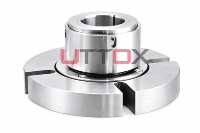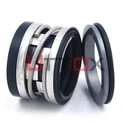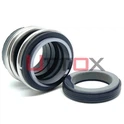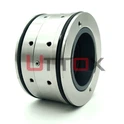


When managing industrial gas facilities or LNG receiving terminals, equipment managers face a pressing challenge: maintaining safe, leak-free operation at temperatures plunging to -196°C. A Cryostar pump mechanical seal is an engineered sealing component specifically designed to handle these extreme cryogenic environments. These seals prevent leakage of liquefied gases such as oxygen, nitrogen, argon, and LNG in Cryostar pumps, utilizing metal bellows technology and specialized materials to withstand thermal shock, prevent material embrittlement, and ensure operational safety under the most demanding low-temperature conditions.
Understanding Cryostar Pump Mechanical Seals
Working Principles and Design Philosophy
The basic goal of a mechanical seal in cryogenic applications is to maintain pressure integrity while allowing for significant thermal contraction. Conventional seals are one thing, but seals for Cryostar pumps have to deal with a very different set of problems - liquids that contract significantly on chilling, materials that become brittle at low temperatures and the continual danger of ice formation from air moisture.
For these applications, metal bellows seals are the preferable choice. The bellows assembly serves as a flexible member that allows for shaft movement and thermal expansion during temperature cycling. The flexibility avoids high stress concentrations that might cause seal failure. The MFLC12 design is manufactured to Burgmann requirements with edge-welded bellows of speciality alloys such as Inconel 718 or AM350 stainless steel. These materials preserve mechanical integrity with repeated thermal shock from ambient to cryogenic temperatures.
The sealing faces are usually mixtures of silicon carbide and carbon graphite or tungsten carbide which provide the real barrier to fluid leakage. These faces are required to run without external lubrication in cryogenic operation and depend upon a thin coating of the process fluid for lubrication. This dry-running capacity is important as conventional lubricants turn solid at cryogenic temperatures.
Material Selection for Extreme Environments
Material selection is closely related to the seal reliability and service life. "Through decades of application experience, we have learned that standard materials simply cannot survive in liquid oxygen or LNG service. Carbon graphite grades for seal faces are specially prepared for LOX service to resist oxidation and to have low friction properties. Therefore, silicon carbide has outstanding hardness and thermal conductivity, which facilitates the dissipation of the frictional heat before it vaporises the thin liquid layer between the sealing faces.
Care is taken to test austenitic stainless steels for ductility at -196°C for the metal components. Some applications need Monel or Inconel alloys for excellent corrosion resistance in harsh cryogenic fluid handling. The bellows itself is a vital component that experiences millions of flexing cycles and needs materials with good low temperature fatigue characteristics. Manufacturers usually test these components using cryogenic soak cycles and flexure testing to replicate years of operating stress in a short period.
Seal Configurations and Application Matching
There are three basic designs, each suited to distinct operating conditions. Balanced seals disperse the hydraulic forces throughout the sealing faces in high-pressure applications up to 50 bar, therefore lowering the contact pressure and increasing component life. Unbalanced designs are suitable for low pressure services when simplicity and cost optimisation are important. Cartridge seals are supplied as complete assemblies, which significantly shorten installation times and greatly minimise the risk of incorrect mounting – a key benefit during scheduled maintenance periods at LNG facilities where downtime may cost more than $100,000 per day with MFLC12 cryogenic seal.
The MFLC12 metal bellows seal design is designed to fit the most popular Cryostar pump designs used in air separation units and LNG facilities. The cartridge option allows maintenance crews to replace the whole seal assembly as a single item, avoiding the need for complicated measurements and adjustments. This capability is very useful while working under time constraint during turnaround events.

Installation and Maintenance Best Practices
Proper Installation Procedures
Proper installation of seals starts far before the wrench ever touches the machine. Check seal faces for cleanliness and condition, bellows for damage from handling and all gaskets and O-rings for correct sizing and compatibility with the service fluid before installation. Components used in oxygen service must be oxygen cleaned to eliminate any hydrocarbon contamination that might cause ignition.
It is a matter of caution in preparing of the shaft. The surface of shaft should fulfil the prescribed roughness criteria generally Ra 0.4 μm or greater and there shall be no scoring, corrosion or eccentric wear pattern visible. If the process starts, even little shaft damage may quickly ruin seal faces. Runout should be monitored and recorded, excessive runout being an indication of bearing difficulties that will cause premature seal failure regardless of the quality of the seal.
Technicians must strictly adhere to torque requirements throughout assembly. Over-tightening may deform seal components and provide leak routes. If components are under-torqued they may slide in service. With cartridge seals, this procedure is much easier as the manufacturer defines crucial dimensions and internal modifications. After installation, a pressure test using gaseous nitrogen is done to verify the integrity of the seals before adding cryogenic fluids. This stage detects installation mistakes before they may lead to safety events or product loss.
Maintenance Schedules and Monitoring
Preventive maintenance will prolong seal life and avoid sudden failure. We propose a monitoring regimen be implemented that includes periodic inspections of seal chamber temperature, bearing housing vibration levels and any signs of process fluid leaking. Vibration analysis may also identify bearing wear before it causes catastrophic failure, allowing maintenance personnel to make repairs during a scheduled outage instead of an emergency closure.
Typical seal life in optimised cryogenic service is 15,000 to 25,000 operational hours, however actual lifespan is very much dependent on operating circumstances and maintenance techniques. Facilities with high purity oxygen or near the maximum pressure for the seal standards may have shorter service intervals. In contrast, well-managed liquid nitrogen or argon applications routinely surpass predicted life spans.
During turnarounds the inspection should record seal face wear patterns, bellows condition and secondary seal degradation. These observations inform replacement choices and occasionally identify system faults that need remedy. Cavitation damage on seal faces indicates suction side difficulties in the pump system, not seal faults.
Comparing Cryostar Mechanical Seals with Market Alternatives
Performance Benchmarking
Procurement managers naturally will evaluate specs and supplier capabilities when considering seal choices. The original Burgmann MFLC12 is the industry standard for Cryostar pump applications and has shown durability in thousands of installed units worldwide. Other manufacturers, such as Uttox, have created comparable designs that are equal to or better than the OEM specs, but at a cost savings of 40-60% off original equipment price.
Critical performance indicators include leak rate under operational settings, mean time between failures and thermal shock resistance during start-up/shut-down cycles. Independent testing data indicates that when correctly constructed, metal bellows seals from certified manufacturers have shown leak rates of less than 100 ppm, substantially below environmental and safety criteria for industrial gas facilities.
Compatibility is an issue that ought to be carefully considered. The quality replacement seal should be dimensionally interchangeable with OEM components, but must meet the material standards for the service intended. Uttox solves this by creating the MFLC12 design in complete dimensional conformance with Burgmann specifications, enabling straight replacement without any equipment adjustments.
Total Cost of Ownership Analysis
Smart procurement teams consider entire ownership costs, not just the initial purchase price. This assessment considers the cost of purchase, installation labour, projected service life, maintenance needs and economic effect of unforeseen failures. When you include in the cost of emergency repairs and lost productivity, the $8,000 seal that lasts 20,000 hours is a better value than the $5,000 seal that lasts 8,000 hours.
This equation is very much driven by warranty conditions and technical support capabilities. Suppliers providing thorough application engineering expertise can help you optimise seal performance and quickly resolve problems when they occur. This assistance is particularly useful in fresh installations or when extending to new applications.
Procuring Cryostar Pump Mechanical Seals: What You Need to Know
Identifying the Correct Replacement
Accurate part identification avoids expensive ordering mistakes and delays. The usual seal identification contains the model series (e.g., MFLC12), a size designation that indicates the shaft diameter and seal chamber dimensions, and material codes that identify the seal face and elastomer possibilities. Cross-referencing OEM part numbers with supplier catalogues assures dimensional and material conformity.
For Cryostar pump applications, purchasers should ensure that replacement seals are approved for liquid oxygen safety, if applicable. These include anti-spark sleeve and retaining ring designs that eliminate metal-to-metal contact that might provide ignition sources in oxygen rich situations. Uttox designs and produces cryogenic metal bellows seals with these safety elements built in and compliant with the strict criteria for LOX usage.
Supplier Selection Criteria
There are several aspects to consider when looking for a cryogenic mechanical seal provider besides pricing. Manufacturing Capability. Does the supplier have precise welding equipment to fabricate metal bellows? Do they helium leak test the completed assemblies? Do they have material test results showing low temperature mechanical properties?
There are quality certificates such as ISO 9001 that show systematic quality management, but you're better off with industry-specific qualifications. Suppliers supplying the industrial gas industry should be knowledgeable of oxygen cleaning procedures, be conversant with API 682 seal requirements and maintain traceability for all materials used in the manufacture of the seal.
Procurement planning is influenced by lead times and inventory procedures. Some providers have stock of the typical sizes and can send straight away. Others make to order with lead times of 6 to 8 weeks. The capital investment in strategic spare parts inventories for mission-critical applications makes sense. When problems develop, a good connection with suppliers that understand your operating needs pays off in rapid service and technical issue solutions.
Conclusion
Managing cryogenic pumping systems demands attention to every component that stands between safe operation and potentially catastrophic failure. Cryostar pump mechanical seal components designed specifically for Cryostar pumps address the unique challenges of extreme low-temperature service through specialized materials, proven bellows technology, and safety features like anti-spark construction. Whether specifying OEM components or qualified alternatives like the Uttox MFLC12, procurement decisions should balance initial costs against long-term reliability, supplier technical support capabilities, and compliance with safety standards. The sealing solution you select directly impacts facility uptime, maintenance costs, and personnel safety for years to come, making informed supplier partnerships as valuable as the components themselves.
FAQ
1.Why do cryogenic seals fail prematurely in some installations?
Several factors contribute to early seal failure in low-temperature applications. Thermal shock during rapid cooldown cycles creates stress concentrations in both metal and ceramic components. Inadequate shaft surface preparation-particularly excessive roughness or runout-causes accelerated seal face wear. Contamination during installation, especially hydrocarbon residues in oxygen service, can trigger combustion events that destroy seals instantly. Systems experiencing cavitation or running outside specified operating envelopes subject seals to conditions beyond their design limits. Regular monitoring and adherence to manufacturer installation guidelines significantly extend service life.
2.Can I use the same seal design for different cryogenic fluids?
While metal bellows seals handle multiple cryogenic fluids, material compatibility requires verification for each application. Liquid oxygen service demands oxygen-cleaned components with approved materials that won't ignite under high-oxygen concentrations. Liquid nitrogen and argon are generally less demanding chemically but still require low-temperature material properties. Carbon dioxide presents different challenges due to its sublimation characteristics. The MFLC12 design accommodates oxygen, nitrogen, argon, and carbon dioxide applications when specified with appropriate materials and cleaning protocols for the intended service.
3.How does the Uttox MFLC12 replacement seal compare to the Burgmann original?
Uttox manufactures the MFLC12 as a dimensionally compatible alternative to the Burgmann design, maintaining full interchangeability for Cryostar pump applications. The precision-welded metal bellows construction, anti-spark safety features for LOX service, and material options including Inconel 718 bellows with silicon carbide or tungsten carbide seal faces match OEM specifications. Cost advantages of 40-60% make the Uttox version attractive for procurement optimization without compromising safety or performance. Independent testing verifies leak rates and operational reliability meet industry standards for industrial gas and LNG applications.
Partner with Uttox for Reliable Cryogenic Sealing Solutions
As an experienced cryogenic mechanical seal manufacturer with over three decades of engineering expertise, Uttox understands the critical safety and performance requirements that equipment managers face daily. Our MFLC12 metal bellows seal delivers proven reliability as a Cryostar pump mechanical seal in Cryostar pumps operating across industrial gas facilities, LNG terminals, and air separation units worldwide. The technical team at Uttox provides comprehensive application support, helping you select optimal material configurations for your specific cryogenic environment and operating parameters.
We maintain ready inventory of common seal sizes to support your maintenance schedules with rapid delivery, minimizing equipment downtime during turnaround events. Our quality control processes include helium leak testing, cryogenic soak verification, and complete material traceability documentation to meet the stringent requirements of your safety and procurement teams. Contact our engineering specialists at info@uttox.com or reach us via WhatsApp at +86-13656834410 to discuss your cryogenic pump mechanical seal requirements and receive detailed technical specifications tailored to your application.
References
1. Smith, J.R. & Anderson, K.L. (2021). Mechanical Seals for Cryogenic Applications: Design Principles and Material Selection. Industrial Press.
2. International Institute of Refrigeration (2020). Safety Standards for Cryogenic Equipment in Industrial Gas Facilities. IIR Technical Guidelines Series.
3. Chen, M. & Roberts, P. (2019). "Performance Analysis of Metal Bellows Seals in LNG Service." Journal of Cryogenic Engineering, Vol. 45(3), pp. 287-304.
4. American Petroleum Institute (2019). API Standard 682: Pumps-Shaft Sealing Systems for Centrifugal and Rotary Pumps. 4th Edition.
5. Thompson, D.W. (2022). Cryogenic Pump Systems: Operations and Maintenance Best Practices. Technical Publishing International.
6. European Industrial Gases Association (2018). Material Compatibility and Safety Requirements for Liquid Oxygen Service. EIGA Document 33/18.