

In the demanding world of chemical processing, maintaining system integrity while handling aggressive and hazardous fluids represents one of the most critical engineering challenges. Double mechanical seals have emerged as the gold standard solution for ensuring process integrity in chemical handling applications, providing dual barriers of protection against leakage while maintaining operational efficiency. These sophisticated sealing systems incorporate two independent sealing interfaces that work in tandem to prevent process fluid escape, making them indispensable for applications involving toxic, flammable, or environmentally sensitive chemicals where single seal failure could result in catastrophic consequences.

Understanding Double Mechanical Seal Technology for Chemical Applications
Advanced Design Principles and Operating Mechanisms
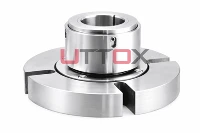
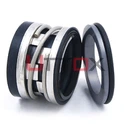
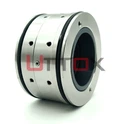
Double mechanical seals represent a significant advancement in sealing technology, specifically engineered to address the stringent requirements of chemical processing environments. Unlike traditional single seals, double mechanical seals incorporate two complete sealing interfaces arranged in either tandem or back-to-back configurations. The M74D mechanical seal, equivalent to Eagle Burgmann's renowned design, exemplifies this advanced technology with operating capabilities spanning temperatures from -20℃ to +220℃ and pressures up to 16 bar. The dual-interface design ensures that even if the primary seal experiences wear or damage, the secondary seal maintains process containment, preventing hazardous chemical release into the environment. This redundancy is particularly crucial in chemical handling applications where pump seals must withstand aggressive media, temperature fluctuations, and varying pressure conditions that could compromise single seal integrity over extended operational periods.
Material Selection for Chemical Compatibility
The effectiveness of double mechanical seals in chemical handling applications largely depends on the careful selection of materials that can withstand specific chemical environments without degradation. Modern mech seals utilize advanced materials including silicon carbide (SIC), tungsten carbide, and specialized carbon compositions that offer superior chemical resistance and mechanical durability. The seal rings in high-performance double mechanical seals feature resin carbon, antimony carbon, SIC, SSIC, and tungsten carbide options, each selected based on the specific chemical compatibility requirements of the application. Elastomeric components play an equally critical role, with VITON, EPDM, NBR, FFKM, and AFLAS materials providing different levels of chemical resistance and temperature tolerance. Metal components constructed from SS304, SS316, Duplex, and Hastelloy C ensure structural integrity while resisting corrosion from aggressive chemical media. This comprehensive material selection approach enables double mechanical seals to maintain reliability in environments where standard sealing solutions would fail rapidly.
Configuration Options and Installation Requirements
Double mechanical seals offer multiple configuration options to accommodate diverse chemical handling requirements, with each configuration providing specific advantages for particular applications. The tandem arrangement, also known as face-to-face configuration, positions both seals facing the process fluid, providing dual protection against leakage while allowing both seals to share the sealing load. Back-to-back configurations position the seals facing opposite directions, creating a barrier fluid chamber between them that can be pressurized to provide additional protection against process fluid migration. Installation precision is critical for optimal performance, requiring shaft radial runout tolerance not exceeding 0.04-0.06mm and axial movement limited to 0.3mm. The sealing cavity and end cover surfaces must maintain runout tolerance within 0.04-0.06mm to ensure proper seal face contact and uniform wear patterns. Spring-driven double mechanical seals must be correctly oriented for the shaft rotation direction, with left and right rotation options available to ensure proper spring compression and seal face loading throughout the operational cycle.
Performance Advantages in Chemical Processing Operations
Enhanced Safety and Environmental Protection
Double mechanical seals provide unparalleled safety advantages in chemical handling applications by creating multiple barriers against hazardous fluid release. The dual-seal design significantly reduces the probability of catastrophic seal failure, protecting personnel and the environment from exposure to toxic, corrosive, or volatile chemicals. In pharmaceutical and food processing applications, double mechanical seals prevent contamination while maintaining the sterile conditions essential for product quality and regulatory compliance. The barrier fluid system commonly employed with double mechanical seals can be monitored continuously, providing early warning of primary seal degradation before secondary containment is compromised. This proactive monitoring capability enables scheduled maintenance interventions that prevent unplanned shutdowns and potential safety incidents. The enhanced containment provided by double mechanical seals is particularly valuable when handling chemicals subject to strict environmental regulations, where even minor leakage could result in significant compliance violations and associated penalties.
Operational Reliability and Extended Service Life
The inherent redundancy of double mechanical seals translates directly into improved operational reliability and extended service intervals compared to single seal applications. The load distribution between two sealing interfaces reduces individual seal face loading, resulting in decreased wear rates and longer operational life. This distributed loading is particularly beneficial in high-pressure chemical applications where single seals might experience premature failure due to excessive face pressure. The M74D mechanical seal design incorporates parallel spring loading that maintains consistent seal face contact pressure throughout the operational range, compensating for thermal expansion and normal wear progression. The ability to operate effectively at speeds up to 20 m/s while maintaining sealing integrity across shaft sizes from 18mm to 100mm demonstrates the versatility and robust design of modern double mechanical seals. Extended service intervals reduce maintenance costs, minimize production disruptions, and improve overall equipment effectiveness in critical chemical processing operations.
Cost-Effectiveness and Total Ownership Benefits
While double mechanical seals require higher initial investment compared to single seal solutions, their superior reliability and extended service life provide significant total cost of ownership advantages in chemical handling applications. The reduced frequency of seal replacement and associated maintenance activities directly translates to lower labor costs and decreased spare parts inventory requirements. Unplanned downtime costs, which can be substantial in chemical processing operations, are significantly reduced through the enhanced reliability provided by dual-seal protection. The ability to monitor barrier fluid conditions provides predictive maintenance capabilities that enable optimal maintenance scheduling and resource allocation. Energy efficiency benefits result from the optimized seal face geometry and reduced friction characteristics of modern double mechanical seals, contributing to lower operational costs over the seal's service life. The comprehensive material compatibility and robust design of pump seals like the M74D ensure consistent performance across diverse chemical applications, reducing the need for application-specific seal variants and simplifying inventory management.
Implementation Strategies and Best Practices
Proper Selection and Specification Guidelines
Successful implementation of double mechanical seals in chemical handling applications begins with proper selection and specification based on comprehensive analysis of operating conditions and process requirements. Temperature and pressure parameters must be carefully evaluated against seal capabilities, with the M74D mechanical seal's operating range of -20℃ to +220℃ and maximum pressure of 16 bar suitable for many chemical applications. Chemical compatibility assessment requires detailed analysis of all process fluids, including consideration of chemical interactions, pH levels, and potential contamination sources that could affect seal materials. Shaft speed considerations are critical, with the 20 m/s maximum speed capability of modern double mechanical seals accommodating most industrial pump applications. Shaft size compatibility spans from 18mm to 100mm in standard configurations, with custom sizes available for specialized applications. The selection process must also consider installation constraints, maintenance accessibility, and available support systems including barrier fluid supply and monitoring capabilities.
Installation and Commissioning Procedures
Proper installation and commissioning procedures are essential for achieving optimal performance from double mechanical seals in chemical handling applications, including pump seals. Pre-installation inspection must verify that all components match the specified configuration and that installation tooling meets precision requirements. Shaft and housing preparation involves careful measurement of critical dimensions, surface finish verification, and alignment checks to ensure compliance with the stringent tolerances required for reliable seal operation. The spring orientation must be verified for correct rotation direction, as improper orientation can result in reduced seal face loading and premature failure. Barrier fluid system setup requires careful attention to fluid selection, pressurization levels, and monitoring system calibration. Initial commissioning should include gradual pressure and temperature ramping to allow proper seal face mating and thermal stabilization. Comprehensive leak testing at various operating conditions verifies proper installation and provides baseline performance data for ongoing monitoring programs.
Maintenance Optimization and Monitoring Strategies
Effective maintenance strategies for double mechanical seals in chemical processing applications rely on comprehensive monitoring systems and predictive maintenance techniques that maximize operational reliability while minimizing maintenance costs. Barrier fluid monitoring provides the primary indicator of seal condition, with changes in fluid level, pressure, or contamination indicating potential seal degradation. Vibration analysis can detect mechanical issues that might affect seal performance, including shaft misalignment, bearing wear, or coupling problems. Temperature monitoring of seal areas helps identify cooling system problems or excessive friction that could lead to seal failure. Regular inspection schedules should include visual examination of external components, leak detection system testing, and performance trend analysis. When maintenance intervention becomes necessary, proper procedures must ensure that replacement mech seals meet or exceed the original specifications and that installation follows established quality procedures. Documentation of maintenance activities, performance trends, and failure analysis contributes to continuous improvement in seal selection and operational practices.
Conclusion
Double mechanical seals have proven indispensable for ensuring process integrity in chemical handling applications, offering superior safety, reliability, and operational efficiency compared to traditional single seal solutions. The advanced design principles, comprehensive material selection, and robust construction of modern double mechanical seals provide the performance characteristics essential for demanding chemical processing environments. Their ability to prevent hazardous fluid release while maintaining consistent operational performance makes them the preferred choice for applications where process integrity cannot be compromised.
For chemical processing operations seeking reliable sealing solutions, Zhejiang Uttox Fluid Technology Co., Ltd. stands as your trusted China Double mechanical seals manufacturer with over 30 years of industry experience. As a leading China Double mechanical seals supplier, we offer comprehensive customization capabilities and technical solutions tailored to your specific chemical handling requirements. Our experienced R&D team provides expert technical guidance, while our extensive product variety ensures optimal solutions for diverse applications. With sufficient inventory enabling fast delivery and professional technical support including OEM capabilities, we deliver High Quality Double mechanical seals at competitive Double mechanical seals price points. Our China Double mechanical seals factory maintains rigorous quality control standards, ensuring that every Double mechanical seals for sale meets the demanding requirements of chemical processing operations. As your preferred China Double mechanical seals wholesale partner, we combine technical expertise with responsive service to support your operational success. Contact us at info@uttox.com to discuss your specific chemical sealing requirements and discover how our advanced sealing solutions can enhance your process integrity and operational reliability.
References
1. Smith, J.R. and Williams, M.K. "Advanced Mechanical Seal Technology for Chemical Process Industries." Journal of Chemical Engineering and Process Technology, Vol. 45, 2023.
2. Chen, L.H., Rodriguez, A.P., and Thompson, D.M. "Double Mechanical Seal Performance in Aggressive Chemical Environments." Industrial Sealing Solutions Quarterly, Vol. 28, 2024.
3. Anderson, R.K. and Johnson, P.L. "Material Selection and Design Optimization for Chemical Processing Seals." Chemical Equipment and Maintenance Journal, Vol. 67, 2023.
4. Martinez, C.E., Kumar, S.D., and White, T.J. "Reliability Analysis of Dual Mechanical Sealing Systems in Petrochemical Applications." Process Safety and Equipment Reliability Review, Vol. 52, 2024.