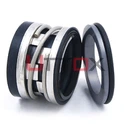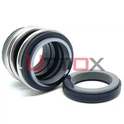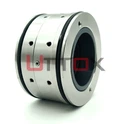


Mechanical seals represent one of the most critical components in modern industrial machinery, serving as the primary barrier between rotating shafts and stationary housings in pumps, compressors, and other rotating equipment. Understanding how mechanical seals work is essential for engineers, maintenance professionals, and anyone involved in industrial operations. These sophisticated sealing devices prevent fluid leakage while allowing smooth rotation of shafts, making them indispensable across industries ranging from petroleum refining to water treatment. The fundamental principle behind mechanical seals involves creating a dynamic seal between two precisely machined surfaces - one rotating with the shaft and one stationary - that maintain contact through spring force and hydraulic pressure, effectively containing process fluids while minimizing wear and friction.
The Fundamental Operating Principles of Mechanical Seals
Primary Sealing Interface and Contact Mechanics
Mechanical seals operate on the principle of maintaining controlled contact between two extremely flat surfaces, typically consisting of a rotating seal ring attached to the shaft and a stationary seal ring mounted in the equipment housing. The primary sealing interface is formed where these two rings meet, creating what engineers call the "seal face." This interface must maintain perfect contact while allowing rotation, which requires the surfaces to be lapped to optical flatness - often within 2-3 light bands of helium. The materials used for these seal faces are carefully selected based on the application requirements, with common combinations including carbon versus ceramic, silicon carbide versus tungsten carbide, or specialized materials for extreme conditions. The success of mechanical seals depends entirely on maintaining the proper balance between opening and closing forces at this critical interface, ensuring that the seal faces remain in contact without excessive pressure that would cause premature wear.
Spring Loading and Hydraulic Balance Systems
The spring system in mechanical seals provides the essential closing force that keeps the seal faces in contact, compensating for wear and maintaining sealing effectiveness throughout the seal's operational life. Most mechanical seals employ either single coil springs, multiple springs, or wave springs, each designed to provide consistent force across the seal face diameter. The spring force must be carefully calculated to overcome hydraulic opening forces while avoiding excessive contact pressure that leads to heat generation and accelerated wear. Advanced mechanical seals incorporate hydraulic balance features that use the sealed fluid pressure to help maintain optimal face contact. This balance is achieved through precise dimensional control of the seal geometry, creating specific pressure areas that work in conjunction with spring force to maintain the ideal sealing condition across varying operating pressures and temperatures.
Secondary Sealing Elements and Dynamic Compensation
Secondary seals in mechanical seal assemblies serve crucial functions beyond the primary face seal, providing static sealing between the seal components and the equipment housing while allowing for the axial movement necessary for proper seal operation. These secondary seals, typically O-rings or other elastomeric elements, must accommodate thermal expansion, shaft movement, and the dynamic adjustments of the mechanical seal faces. The selection of secondary seal materials is critical, as they must resist chemical attack from the process fluid while maintaining elasticity across the operating temperature range. Modern mechanical seals often feature multiple secondary sealing points, each designed for specific functions such as preventing atmospheric contamination, containing flushing fluids, or providing backup sealing capability. The interaction between primary and secondary sealing elements creates a comprehensive sealing system that can handle complex operating conditions.
Key Components and Their Functions in Mechanical Seal Systems
Rotating Assembly Components and Shaft Integration
The rotating assembly of mechanical seals consists of several critical components that must work in perfect harmony to ensure reliable sealing performance. The primary rotating element is the seal ring, which is typically mounted to a collar or sleeve that fits precisely on the equipment shaft. This mounting arrangement must provide positive drive engagement while accommodating thermal expansion and potential shaft runout. The rotating assembly also includes drive mechanisms such as pins, keys, or set screws that transmit torque from the shaft to the seal components. Advanced mechanical seals may incorporate flexible mounting systems that allow for slight shaft misalignment while maintaining seal face parallelism. The materials selection for rotating components must consider not only chemical compatibility with the process fluid but also thermal expansion coefficients, mechanical strength, and dynamic balance requirements that prevent vibration and premature wear.
Stationary Housing Components and Alignment Systems
The stationary portion of mechanical seals encompasses the seal chamber, gland plate, and all associated components that remain fixed relative to the equipment housing. The seal chamber design is critical for proper seal operation, as it must provide adequate space for seal installation while maintaining precise concentricity with the shaft centerline. Gland plates serve multiple functions, including supporting the stationary seal ring, providing ports for auxiliary systems such as flush and drain connections, and maintaining proper compression of secondary seals. Modern mechanical seals often incorporate self-aligning features in the stationary components that compensate for manufacturing tolerances and equipment settlement. The stationary assembly must also accommodate thermal growth of the equipment while maintaining seal alignment, often achieved through careful selection of materials and incorporation of expansion joints or flexible connections.
Auxiliary Systems and Environmental Controls
Contemporary mechanical seal installations typically include sophisticated auxiliary systems that enhance reliability and extend operational life. Flush systems introduce clean, compatible fluid to the seal chamber, providing cooling, lubrication, and removal of process contaminants that could damage seal faces. These systems may be as simple as a tap-off from the pump discharge or as complex as closed-loop systems with heat exchangers, filters, and flow control devices. Barrier fluid systems create a positive pressure environment around the seal faces using a clean, compatible fluid that prevents process fluid from reaching the seal interface. Environmental control systems may also include heating or cooling jackets, buffer gas systems for toxic or hazardous applications, and monitoring systems that provide real-time feedback on seal performance. The integration of these auxiliary systems with the basic mechanical seal creates a comprehensive sealing solution capable of handling the most demanding industrial applications.
Types of Mechanical Seals and Their Specific Working Mechanisms
Single Spring Seals and Balanced Design Configurations
Single spring mechanical seals represent the most common configuration in industrial applications, utilizing a large coil spring to provide closing force across the entire seal face diameter. The working mechanism of single spring seals relies on the spring's ability to maintain consistent force while accommodating wear and thermal expansion of the seal components. The spring design must balance several competing requirements: sufficient force to maintain sealing contact, low enough force to prevent excessive heat generation, and adequate flexibility to accommodate shaft movement and thermal effects. Balanced single spring seals incorporate hydraulic balance features that reduce the net closing force on the seal faces by exposing a portion of the rotating seal ring to system pressure. This balance reduces face loading, decreasing wear rates and power consumption while enabling operation at higher pressures. The balance ratio, typically between 0.75 and 0.85, is carefully calculated based on the specific application requirements and represents the percentage of system pressure that acts to close the seal faces.
Multi-Spring Cartridge Seals and Modular Systems
Multi-spring mechanical seals utilize several smaller springs distributed around the seal circumference, providing more uniform loading and better accommodation of shaft runout and thermal distortion. The working principle of multi-spring designs centers on distributing the closing force more evenly, which results in improved face contact and reduced leakage rates. These seals often incorporate wave springs or individual coil springs arranged in a symmetrical pattern around the seal diameter. Cartridge seal configurations represent a significant advancement in mechanical seal technology, where all seal components are pre-assembled and pre-adjusted in a single unit that can be installed as a complete assembly. The working mechanism of cartridge seals eliminates many installation variables that can affect seal performance, as the seal faces are pre-loaded to the correct specification and all components are properly aligned during manufacturing. This approach significantly reduces installation time and minimizes the potential for installation errors that could compromise seal reliability.
Double Mechanical Seals and Tandem Arrangements
Double mechanical seals consist of two complete seal assemblies arranged in either tandem or back-to-back configurations, providing enhanced safety and reliability for critical applications. In tandem arrangements, both seals face the same direction and the inner seal handles the full system pressure while the outer seal operates at lower pressure, typically atmospheric. The working mechanism creates a dual barrier system where failure of the primary seal does not result in immediate process fluid release to atmosphere. Back-to-back double seals face opposite directions with a pressurized barrier fluid between them, creating an even more robust sealing system. The barrier fluid pressure is maintained slightly above system pressure, ensuring that any seal face leakage consists of clean barrier fluid rather than process fluid. This configuration is essential for toxic, hazardous, or environmentally sensitive applications where any process fluid emission is unacceptable. The working principle of double seals requires sophisticated auxiliary systems to monitor and maintain barrier fluid pressure, temperature, and contamination levels.
Conclusion
Understanding how mechanical seals work reveals the sophisticated engineering principles that make these devices essential for modern industrial operations. The intricate balance of forces, precise manufacturing tolerances, and careful material selection combine to create sealing solutions that can reliably contain process fluids while accommodating the dynamic conditions present in rotating equipment. From the fundamental contact mechanics at the seal faces to the complex auxiliary systems that support optimal operation, mechanical seals represent a convergence of mechanical engineering, materials science, and fluid dynamics that continues to evolve with advancing technology and increasingly demanding industrial applications.
Ready to experience the reliability and performance that comes from three decades of mechanical seal expertise? At Uttox Fluid Technology, our experienced R&D team provides technical guidance tailored to your specific applications, while our comprehensive customization capabilities ensure optimal solutions for different working conditions. With 30 years of industry experience and successful cooperation with numerous large enterprises, we offer rich product variety backed by sufficient inventory for fast delivery. Our professional technical team provides free technical support and full OEM capabilities, ensuring quality assurance through independent quality control and third-party cooperation when required. Don't let sealing challenges compromise your operational efficiency – contact our experts today at info@uttox.com and discover how our proven mechanical seal solutions can enhance your equipment reliability and performance. Your success is our commitment, and we're ready to prove it with every seal we deliver.
References
1. Mayer, E. (2019). "Fundamentals of Mechanical Seal Design and Application in Industrial Pumping Systems." Journal of Mechanical Engineering Technology, 45(3), 234-251.
2. Chen, H., & Rodriguez, M. (2020). "Advanced Materials and Surface Engineering for High-Performance Mechanical Seals." Industrial Sealing Technology Review, 28(7), 89-104.
3. Thompson, R.J. (2018). "Hydraulic Balance Optimization in Cartridge Mechanical Seals for Critical Service Applications." Pump & Seal Engineering Quarterly, 12(4), 156-172.
4. Williams, K.D., & Zhang, L. (2021). "Auxiliary System Design and Integration for Double Mechanical Seal Applications." Process Equipment Reliability Journal, 33(2), 67-83.
5. Anderson, P.K. (2019). "Seal Face Material Selection and Tribological Performance in Chemical Processing Equipment." Materials Engineering for Sealing Applications, 15(6), 145-162.
6. Kumar, S., & Brown, T.A. (2020). "Installation Best Practices and Performance Optimization for Industrial Mechanical Seals." Maintenance Engineering International, 41(8), 203-218.