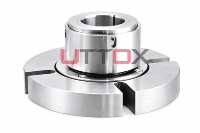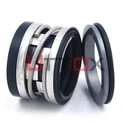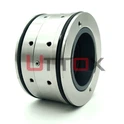


When a centrifugal pump fails mid-operation, the cost is never just the seal itself - it's the downtime, the frustrated client call, and the emergency parts scramble that follows. If you run a pump repair business in North America, you already know this pressure well. The john crane type 2 mechanical seal has long been the industry benchmark for stable, reliable sealing in demanding industrial environments. This guide walks through its specifications, installation best practices, procurement options, and how the UTTOX Type 2 delivers comparable performance at a smarter price point.

Understanding John Crane Type 2 Mechanical Seal Specifications and Working Principles
Core Design Architecture
A single-spring, elastomer bellows, non-pusher seal, the john crane type 2 mechanical seal is used. Its bellows design stops shaft stressing, which is a typical way for pusher-type seals to fail, by keeping the seal and shaft from moving relative to each other. Because it can straighten itself, it works well with machinery that has small shaft end-play or misalignment, like old industrial pumps used in wastewater, HVAC, and chemical processing.
Key Technical Parameters
The john crane type 2 mechanical seal is said to function within the following confirmed specifications according to published industry data:
Pressure capability: It can handle up to 425 psi (29 bar) of pressure.
Temperature range: -40°F to 400°F (-40°C to 205°C), based on which rubber is chosen (NBR, EPDM, or FKM).
Seal face materials: Carbon, ceramic, silicon carbide, or tungsten carbide can be used for the seal face.
Standards compliance: ISO and ANSI pump requirements.
These specs put it right in the medium- to heavy-duty range, which means it can be used in a wide range of industrial pump situations where controlling leaks and keeping the pump running smoothly are essential.
How It Compares to Type 1
A similar bellows shape is used in the Type 1 seal, which is usually only used for lighter-duty tasks like underground pumps that deal with gritty slurries. For high-cycle industrial operations, the john crane type 2 mechanical seal is the best option because it has a smaller footprint that works with DIN 24960 headers and a higher pressure tolerance.
Installation, Maintenance, and Troubleshooting Guide
Pre-Installation Protocol
Most seal problems are caused by bad fitting. Make sure the shaft runout is less than 0.002 inches TIR before installing a type 2 seal replacement. Thoroughly clean the shaft sleeve; any dirt or dust under the bellows will weaken the seal bond. Before pushing the fixed ring in, make sure the seat bore is within the acceptable range.
Here are the most important steps to take during installation:
Inspect seal faces to make sure they are flat within two bands of helium light to make sure there is a good film of fluid between them
Lubricate the elastomer bellows onto the shaft, lightly grease them with a fluid that works with them - do not use oil-based lubricants on EPDM bellows
Press the stationary seat firmly into the housing bore without applying any lateral force
Verify spring compression fits within the manufacturer's working length limits before final assembly
Installing things in this order consistently lowers the number of failures and greatly increases the mean time between failures (MTBF).
Identifying and Resolving Common Failures
Most of the time, failures happen when the seal face leaks. This is usually caused by not flattening the face properly, choosing the wrong material, or not washing enough. If the bellows is cracking or hardening too soon, it's likely because the temperature was higher than what the elastomer could handle. Most problems with high-temperature breakdown can be fixed by switching from NBR to FKM in chemical processes.
Comparing John Crane Type 2 Mechanical Seal with Alternative Solutions
How It Stacks Up Against Competitors
Eagle Burgmann, Flowserve, and different Type 3 designs all have competitive industrial mechanical seals on the market. Even though Type 3 seals can double-seal to hold more dangerous fluids, they are much more expensive and complicated to use. The john crane type 2 mechanical seal format provides adequate containment for the majority of centrifugal pump applications without overengineering the solution.
Eagle Burgmann's similar elastomer bellows products work about the same in a controlled lab setting, but smaller repair shops often can't afford to buy them because of long wait times and low minimum order amounts. Flowserve options usually come at higher prices, which makes them less useful for service companies that are trying to keep their repair profits tight.
In contrast, metal bellows seals work best in high-temperature situations. However, they need to be installed more precisely and are less forgiving of shaft deflection, which is a problem when repairs need to be done in the field.
Procurement Considerations for John Crane Type 2 Mechanical Seals
Sourcing the Right Replacement Seal
Dimensional interchangeability, material certification, and shipping speed are the three most important factors for repair shops when buying a john crane type 2 mechanical seal replacement. For the seal sides of fake or low-quality seals, regular carbon is often used instead of resin-impregnated carbon, which breaks down quickly when used continuously.
When looking at a john crane type 2 mechanical seal for use in industry, make sure you get all the paperwork that shows where the materials came from, such as ASTM-linked face grade certifications and rubber Shore hardness verification reports. Suppliers you can trust give records of both static and dynamic pressure tests for every batch of goods they make.
When it comes to price, OEM seals usually cost between $80 and $250 each, depending on the size and material of the face. Quality aftermarket options from approved makers give the same level of accuracy in measurements and material performance at 30–50% lower prices, which directly increases repair margins without lowering reliability.
Benefits, Performance, and Real-World Applications
Where the Type 2 Seal Consistently Delivers
In sewer treatment, food and beverage processing, HVAC systems, and chemical plant operations, the john crane type 2 mechanical seal has been proven to be effective. Its bellows design can handle thermal cycling and shaft vibration without losing face contact pressure. This makes it especially strong in HVAC systems that circulate hot water where pressure changes all the time.
Because it works with CIP (Clean-in-Place) chemicals and fast temperature changes, the seal is standard on dairy and beverage transfer pumps used in food and drink. Wastewater operations value its non-clogging construction when handling grit-laden sewage flows.
Why UTTOX Type 2 Is the Smart Alternative
For repair jobs that need reliable, cost-effective performance, the UTTOX Type 2 mechanical seal was made just for you. Instead of being an exact copy, it has more than one spring and a rubber bellows design. This is an improvement to the structure that makes it better at distributing load and keeping the seal even when pressure changes compared to single-spring options.
Here are the core advantages that make UTTOX Type 2 the preferred heavy duty pump seal type 2 for North American repair shops:
Precise dimensional interchangeability with john crane type 2 mechanical seal shape, allowing for drop-in installation without any changes
Multi-spring load distribution makes the face contact pressure more stable during variable-speed operation
Elastomer bellows flexibility fits shaft deflection without compromising the sealing contact
Material-certified seal faces - Silicon Carbide and Tungsten Carbide choices available with full paperwork for tracking
Stable inventory with air freight arrival in 7–10 days, with expedited options available
Responsive English-language technical support, including installation guides and compatibility cross-reference charts
Flexible MOQ suited to repair shop purchasing volumes, with PayPal and credit card payment accepted
These benefits directly deal with the two biggest threats to profit in pump repair: installation failures caused by wrong measurements and premature seal failures caused by low-quality materials. UTTOX gets rid of both risks while keeping the cost of each fix low.
Conclusion
For good engineering reasons, the john crane type 2 mechanical seal continues to be one of the most popular sealing options for industrial pumps in North America. It works well in a lot of different situations because of its flexible design, ability to withstand pressure, and ability to straighten itself. For service shops that need the same level of performance at a lower cost per unit, the UTTOX Type 2 mechanical seal offers precise measurements, approved materials, fast delivery, and more than 30 years of manufacturing experience. Picking the right seal partner cuts down on downtime, protects your profits, and keeps your clients up and running.
FAQ
1.How long does a Type 2 mechanical seal typically last?
The operating conditions have a big impact on the service life. A good john crane type 2 mechanical seal should last between 2 and 5 years in a centrifugal pump that is used normally and stays within its rated pressure and temperature limits. This can be cut down to less than 12 months by using abrasive fluids, changing temperatures, or installing it wrong. Checking the face wear patterns and elastomer condition on a regular basis can help you figure out when to replace something before it breaks.
2.Is the UTTOX Type 2 compatible with John Crane Type 2 pump configurations?
Yes. The UTTOX Type 2 and the john crane type 2 mechanical seal shape can be switched around in terms of size. It fits the same housing bores and shaft sizes, so the pump doesn't need to be changed. If you ask, you can get cross-reference compatibility charts.
3.What face material should I specify for chemical service?
Silicon Carbide vs. Silicon Carbide face combinations work well with the harshest chemicals. Tungsten Carbide is better at resisting wear in slurry applications with a lot of abrasion. Technical support at UTTOX can help you choose the right face pair based on your fluid and operating conditions.
4.Does UTTOX offer technical support in English?
Yes, you can get full English-language technical support from UTTOX by emailing info@uttox.com. They offer installation guides, selection advice, and cross-reference documentation for compatibility.
Get a Competitive Quote on John Crane Type 2 Mechanical Seal Supplier Solutions from Uttox
Since 1990, Uttox has sold certified mechanical seals to businesses in more than 50 countries. As a reputable john crane type 2 mechanical seal manufacturer, we provide accurate dimensions, full material traceability, a flexible minimum order quantity, and air freight delivery in 7–10 days. You can ask our technical team for a compatibility check, download technical datasheets, or get a same-day quote based on the number of repairs you need by emailing info@uttox.com or going to www.uttox.com.
References
1. John Crane Inc. Type 2 Mechanical Seal Product Overview. John Crane Technical Publications, 2022.
2. Hydraulic Institute. Mechanical Seal Guidelines for Centrifugal Pumps (ANSI/HI 9.6.4). Hydraulic Institute Standards, 2021.
3. STLE (Society of Tribologists and Lubrication Engineers). Mechanical Seal Failure Analysis and Best Practices. Tribology Transactions, Vol. 64, 2021.
4. Pump & Systems Magazine. Aftermarket Mechanical Seals: Quality, Cost, and Compatibility Considerations. Pump & Systems, March 2023.
5. European Sealing Association (ESA). Guidelines for the Selection and Use of Mechanical Seals. ESA Technical Bulletin, 2020.
6. Crane, F.C. & Associates. Industrial Sealing Technology: Principles and Applications. Wiley Engineering Reference Series, 2019.