

Have you ever experienced unexpected downtime in your pumping system due to seal failure? Imagine the costly consequences when leaking seals compromise production efficiency, waste valuable resources, and create safety hazards in your facility. The mg1 burgmann mechanical seal series offers a proven solution to these critical challenges. This comprehensive guide explores how MG1 Burgmann mechanical seals in various sizes can address your specific sealing requirements while ensuring reliable performance across diverse industrial applications. Whether you're dealing with corrosive chemicals in petrochemical plants or managing water treatment systems, understanding the right seal size and specifications is essential for operational success.
Understanding MG1 Burgmann Mechanical Seal Design and Applications
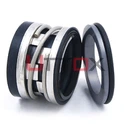
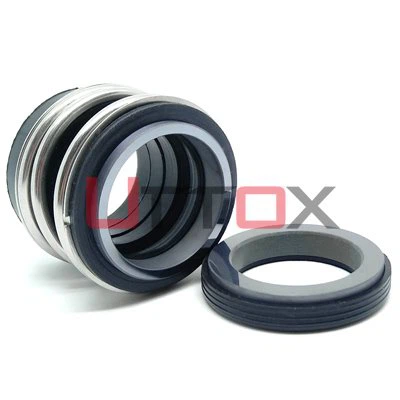
The mg1 burgmann mechanical seal represents a sophisticated engineering solution designed to prevent fluid leakage in rotating equipment. This single spring mechanical seal features a rubber bellows design that provides exceptional flexibility and reliability across numerous industrial sectors. The MG1 MG12 MG13 mechanical seal series incorporates advanced sealing technology that has been refined over decades of practical application and continuous improvement in the field. The fundamental design of the mg1 burgmann seal consists of several critical components working in harmony. The seal faces create a precision interface where one stationary component presses against a rotating element, forming a dynamic sealing barrier. The rubber bellows serves multiple functions, providing both the necessary closing force to maintain contact between seal faces and accommodating shaft movement and misalignment. This ingenious design allows the mechanical seal mg12 to maintain effective sealing even under challenging operational conditions where traditional packing materials would fail rapidly. Industries ranging from petroleum refining to food and beverage processing rely on these seals because they offer superior performance compared to conventional sealing methods. The ebara mechanical seal equivalent demonstrates how standardized designs have become essential across different pump manufacturers. When properly selected and installed, the mg1 burgmann seal can operate continuously for years, significantly reducing maintenance requirements and eliminating the frequent adjustments needed with traditional packing. The versatility of this seal design makes it suitable for handling everything from clean water to aggressive chemicals, provided the correct material combinations are specified.
Technical Specifications and Operating Parameters of MG1 Burgmann Seals
Understanding the technical capabilities of mg1 burgmann seals is crucial for proper application and long-term reliability. These seals are engineered to operate within specific parameters that define their safe and effective performance envelope. The temperature range spans from -20°C to +200°C, accommodating both cryogenic applications and elevated temperature processes common in industrial settings. This broad temperature capability makes the MG1 MG12 MG13 mechanical seal suitable for diverse process conditions without requiring specialized seal modifications. Pressure ratings are equally important when selecting appropriate sealing solutions. The mg1 burgmann seal handles pressures up to 16 bar, which covers the vast majority of centrifugal pump applications found in water treatment, chemical processing, and general industrial services. The maximum shaft speed of 10 meters per second ensures compatibility with standard pump operating speeds while maintaining seal face integrity and preventing excessive heat generation. Available shaft sizes ranging from 12mm to 120mm provide flexibility to match virtually any pump configuration, from small circulation pumps to large process pumps handling substantial flow rates. Material selection represents a critical decision point that directly impacts seal performance and longevity. The seal faces can be manufactured from resin carbon, antimony carbon, silicon carbide (SIC), silicon silicon carbide (SSIC), or tungsten carbide, each offering distinct advantages for specific applications. Silicon carbide provides excellent wear resistance and chemical compatibility, making it the preferred choice for the mechanical seal mg12 in corrosive environments. The elastomer components, available in VITON, EPDM, NBR, FFKM, or AFLAS, must be carefully matched to the process fluid chemistry and temperature conditions. Metal components fabricated from SS304 or SS316 stainless steel ensure corrosion resistance and structural integrity throughout the seal assembly. This combination of materials allows the ebara mechanical seal equivalent to function reliably in applications handling acids, caustics, hydrocarbons, and other challenging media.
Equivalent Cross-References and Industry Standards
The mg1 burgmann seal has become an industry-standard design, with numerous manufacturers producing compatible equivalents that maintain interchangeability and performance characteristics. Understanding these cross-references is essential for procurement flexibility, emergency replacements, and cost optimization. The original Eagle Burgmann produces the MG1, MG12, and MG13 variants, which differ primarily in their spring configurations and specific application optimizations. The MG1 features a single spring design, while the MG12 incorporates multiple springs for enhanced closing force distribution. AESSEAL manufactures the B02, B012, and B013 series as direct replacements for the MG1 MG12 MG13 mechanical seal family. These seals maintain dimensional compatibility and performance equivalence, allowing users to source from alternative suppliers without modifying pump installations or changing maintenance procedures. Similarly, Vulcan offers the 191, 192, and 193 seal series that correspond to the mg1 burgmann design philosophy and installation requirements. This standardization across manufacturers provides significant advantages for maintenance departments managing diverse pump populations. The widespread adoption of these standardized designs reflects the mechanical seal industry's evolution toward interchangeable components that reduce inventory requirements and simplify spare parts management. When sourcing the mechanical seal mg12 or related variants, engineers can confidently specify equivalent products knowing they will maintain the same sealing performance and reliability. This interchangeability also drives competitive pricing in the marketplace, as multiple qualified suppliers compete for business while maintaining stringent quality standards. The ebara mechanical seal applications benefit particularly from this standardization, as Ebara pumps are widely installed globally and require readily available replacement seals with proven performance characteristics.
Critical Importance of Fluid Mechanical Seal Technology in Industrial Safety
The role of mechanical seal technology extends far beyond simple leak prevention; it represents a fundamental safety and environmental protection system in modern industrial facilities. Fluid mechanical seals used in process industry applications face continuous risks associated with potentially hazardous materials. Leakage represents not merely an inconvenience but a serious threat that can result in energy waste, material loss, environmental contamination, fires, explosions, and direct endangerment of personnel safety. The mg1 burgmann seal, though physically small, determines the overall safety, reliability, and durability of critical machinery and equipment. Petrochemical industry applications present particularly demanding conditions where the mechanical seal mg12 must contain corrosive, toxic, flammable, or explosive media while operating under elevated pressures and temperatures. A seal failure in these environments can trigger catastrophic consequences, including facility-wide shutdowns, environmental remediation costs, regulatory penalties, and potential loss of life. The MG1 MG12 MG13 mechanical seal design addresses these challenges through robust construction, appropriate material selection, and proven operational reliability that has been validated across countless installations worldwide.
Beyond immediate safety concerns, mechanical seal technology serves as an essential tool for resource conservation and environmental stewardship. Even minor leakage from poorly performing seals accumulates over time, resulting in substantial material losses that impact both operational economics and environmental sustainability. Modern environmental regulations increasingly restrict fugitive emissions and require facilities to implement best available control technology for leak prevention. The mg1 burgmann seal meets these stringent requirements when properly applied and maintained, helping facilities achieve compliance while protecting their operational reputation. Industries globally recognize that investing in quality sealing technology like the ebara mechanical seal equivalents represents a cost-effective approach to risk management that delivers returns through reduced downtime, lower maintenance costs, and enhanced safety performance.
Size Selection Guidelines for Different Pump Applications
Selecting the appropriate mg1 burgmann seal size requires careful consideration of multiple factors that influence sealing performance and operational reliability. The shaft diameter represents the primary sizing parameter, with available options spanning from 12mm for small circulation pumps to 120mm for large industrial process pumps. Proper size selection ensures the seal fits correctly within the pump stuffing box, maintains appropriate compression on elastomer components, and provides adequate sealing force at the face interface without creating excessive friction or heat generation. Application-specific requirements significantly influence sizing decisions beyond simple shaft diameter matching. The mechanical seal mg12 selection must account for the pump's operating speed, as faster rotation generates more heat at the seal faces and requires enhanced cooling considerations. Process conditions including fluid properties, temperature extremes, and pressure fluctuations all impact which seal size and configuration will deliver optimal performance. For example, high-temperature applications may require larger seal faces to distribute heat more effectively, while high-pressure services might necessitate enhanced face loading through modified spring configurations.
Installation envelope constraints within existing pump designs often limit available options and require precise dimensional verification before procurement. The MG1 MG12 MG13 mechanical seal must fit within the stuffing box depth, align properly with the shaft, and provide adequate clearance for assembly and future maintenance activities. Many facilities maintain standardized seal sizes across their pump inventory to simplify spare parts management and reduce training requirements for maintenance personnel. When retrofitting existing equipment or upgrading from traditional packing to mechanical seals, careful attention to dimensional compatibility ensures successful implementation. The ebara mechanical seal dimensions typically follow industry-standard conventions, but verification against specific pump drawings remains essential to avoid costly procurement errors and installation delays.
Performance Advantages and Cost Benefits of MG1 Burgmann Seals
The mg1 burgmann mechanical seal delivers substantial performance advantages compared to traditional packing materials and less sophisticated sealing technologies. The single spring rubber bellows design provides consistent sealing force throughout the seal's service life, automatically compensating for wear and maintaining face contact without manual adjustment. This self-adjusting characteristic eliminates the frequent repacking and adjustment cycles required by compression packing, significantly reducing maintenance labor costs and minimizing unplanned downtime. The mechanical seal mg12 operates with minimal friction, resulting in lower power consumption and reduced shaft and bearing wear compared to traditional sealing methods. Fluid containment capabilities represent another critical advantage that directly impacts operational costs and environmental compliance. While compression packing inherently allows controlled leakage as part of its design, the MG1 MG12 MG13 mechanical seal provides virtually leak-free operation when properly applied and maintained. This zero-leakage performance prevents valuable process fluids from escaping to the atmosphere, conserving resources and eliminating waste disposal costs. In applications handling expensive chemicals, pharmaceuticals, or refined products, even small leakage rates can accumulate into substantial annual losses that far exceed the initial investment in quality mechanical seals.
The long service life achievable with mg1 burgmann seals translates directly into reduced total cost of ownership despite higher initial purchase prices compared to basic packing materials. Quality mechanical seals routinely operate for two to five years between replacements in typical industrial applications, while compression packing may require attention every few months or even weeks in demanding services. The ebara mechanical seal installations demonstrate this reliability advantage across diverse industries, with documented cases of seals operating continuously for extended periods without intervention. When evaluating sealing technology investments, facility managers must consider not only the component purchase price but also installation labor, downtime costs, spare parts inventory, and ongoing maintenance requirements. From this comprehensive perspective, the mg1 burgmann seal consistently delivers superior value through enhanced reliability, reduced maintenance burden, and improved operational efficiency.
Installation and Maintenance Best Practices for Extended Seal Life
Proper installation procedures are absolutely critical to achieving the full performance potential and service life from mg1 burgmann mechanical seals. Even the highest quality seal will fail prematurely if installation errors compromise the seal assembly or damage critical components. Before beginning installation, thoroughly clean the pump stuffing box and shaft to remove any debris, old gasket material, or corrosion products that could interfere with proper seal seating or damage the new seal faces. Inspect the shaft for wear grooves, corrosion, or damage that could prevent effective sealing or accelerate seal deterioration. The mechanical seal mg12 requires a smooth shaft finish in the seal contact area, typically specified as 32 micro-inches or better to ensure proper elastomer sealing without excessive wear. Dimensional verification represents an essential step that many technicians unfortunately skip, leading to installation problems and early seal failures. Measure the actual shaft diameter and stuffing box depth, comparing these values against the seal specifications to confirm compatibility before proceeding with installation. Check shaft runout and perpendicularity to ensure the rotating assembly meets the seal manufacturer's requirements for maximum allowable deviation. The MG1 MG12 MG13 mechanical seal can tolerate some shaft misalignment due to its flexible bellows design, but excessive runout will cause premature wear and potential leakage. During assembly, handle seal components carefully to avoid damaging the polished seal faces, which can be irreparably marred by a single drop or contact with abrasive materials.
Ongoing maintenance practices significantly influence mechanical seal longevity and reliability in service. Monitor seal performance through regular inspections for any signs of leakage, excessive heat generation, or unusual noise that could indicate developing problems. The mg1 burgmann seal operates most effectively when the pump maintains proper alignment and operates within its design envelope without excessive vibration or cavitation. Ensure adequate seal flush if specified for the application, as many seal failures result from inadequate lubrication and cooling at the seal faces. Maintain accurate records of seal installation dates, operating conditions, and any observed issues to identify patterns that might indicate systemic problems requiring corrective action. When seal replacement becomes necessary, thoroughly investigate the failure mode by examining the removed seal components. This failure analysis often reveals root causes related to process conditions, installation errors, or maintenance practices that must be addressed to prevent recurring failures. The ebara mechanical seal experience demonstrates that proactive maintenance and proper operating practices routinely extend seal life well beyond average expectations, delivering exceptional reliability and value over the equipment lifecycle.
Conclusion
The MG1 Burgmann mechanical seal for pump different sizes represents a proven, reliable sealing solution that addresses critical challenges across diverse industrial applications while ensuring operational safety, environmental compliance, and cost-effective performance throughout extended service life.
Cooperate with Zhejiang Uttox Fluid Technology Co.,Ltd.
As a leading China mg1 burgmann manufacturer and China mg1 burgmann supplier, Zhejiang Uttox Fluid Technology Co.,Ltd. offers High Quality mg1 burgmann seals at competitive mg1 burgmann prices. Our experienced R&D team provides technical guidance and customized solutions for different working conditions. With 30 years of industry experience and cooperation with many large enterprises across petroleum refining, water treatment, pulp and paper, shipbuilding, food and beverage, pharmacy, and power plant industries, we deliver excellent quality comparable to original equipment standards. As a trusted China mg1 burgmann factory and China mg1 burgmann wholesale provider, we maintain sufficient inventory for fast delivery and offer mg1 burgmann for sale with professional technical support and OEM capabilities. Contact us at info@uttox.com to receive expert consultation and competitive quotations for your mechanical sealing requirements. Save this article for quick reference whenever you need reliable sealing solutions.
References
1. "Mechanical Seals: Design and Application" by A.O. Lebeck, International Journal of Fluid Sealing Technology
2. "Handbook of Mechanical Seal Technology" by Ian K. Summers, Professional Engineering Publishing
3. "Industrial Sealing Technology: A Comprehensive Guide" by Heinz K. Muller, Society of Tribologists and Lubrication Engineers
4. "Process Plant Machinery: Equipment Selection and Reliability" by Heinz P. Bloch, Butterworth-Heinemann Technical Publications