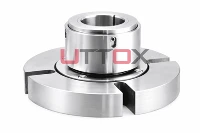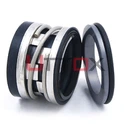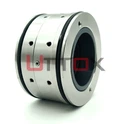


In the demanding world of industrial pump operations, equipment reliability and operational efficiency remain paramount concerns for facility managers and maintenance teams. The unitized design of the John Crane 2100 mechanical seal represents a revolutionary approach to minimizing downtime in pumps and compressors through its innovative single-spring elastomer bellows configuration. This compact, fully integrated sealing solution combines maximum durability with simplified installation procedures, delivering exceptional performance across diverse industrial applications including petroleum refining, water treatment, pulp and paper manufacturing, shipbuilding, food and beverage processing, pharmaceutical production, and power plant operations where continuous operation is critical for maintaining productivity.
Advanced Engineering Features That Maximize Operational Efficiency
Unitized Construction Design Benefits
The fundamental advantage of the john crane 2100 lies in its fully unitized construction, which eliminates the complexity associated with traditional multi-component mechanical seals. This innovative design philosophy integrates all primary sealing elements into a single, pre-assembled unit that significantly reduces installation time and minimizes the potential for assembly errors during maintenance operations. The unitized approach ensures that critical sealing interfaces remain properly aligned and torqued to manufacturer specifications, eliminating common failure points that plague conventional seal designs. The 2100 2100K mechanical seal incorporates a robust single-spring mechanism that provides consistent and reliable sealing force distribution across the entire seal face, maintaining optimal contact pressure even under varying operational conditions. This design methodology particularly benefits maintenance teams by reducing the technical expertise required for seal replacement, as the unitized configuration eliminates the need for precise field assembly of multiple components. The integrated design also incorporates advanced materials selection, with seal rings available in resin carbon, antimony carbon, silicon carbide, sintered silicon carbide, and tungsten carbide configurations to match specific application requirements. The viton mechanical seal elastomer options include VITON, EPDM, NBR, FFKM, and AFLAS materials, providing chemical compatibility across a broad spectrum of process fluids while maintaining sealing integrity throughout extended service intervals.
Enhanced Reliability Through Simplified Installation
Modern industrial facilities demand sealing solutions that minimize maintenance complexity while maximizing operational reliability, and the john crane 2100 delivers exceptional performance through its simplified installation procedures. The unitized design eliminates the need for complex field assembly procedures, reducing installation time from hours to minutes while simultaneously minimizing the risk of improper assembly that can lead to premature seal failure. This streamlined approach particularly benefits facilities operating under tight maintenance windows, where extended downtime translates directly into significant production losses and reduced profitability. The mech seals incorporate precision-engineered tolerances that ensure proper fit and function across the specified operating envelope of temperatures ranging from -20°C to +180°C, pressures up to 12 bar, and speeds reaching 13 m/s for shaft sizes from 10mm to 75mm diameter. The robust construction methodology incorporates stainless steel 304 metal components that provide excellent corrosion resistance and mechanical strength, ensuring long-term reliability even in aggressive chemical environments. Installation procedures are further simplified through the elimination of multiple gaskets, O-rings, and other sealing elements that require precise positioning and torque specifications, reducing the potential for human error during maintenance operations. The 2100 2100K mechanical seal design also incorporates self-aligning features that accommodate normal shaft misalignment and vibration conditions without compromising sealing performance, further enhancing reliability while reducing maintenance requirements.

Operational Parameter Optimization
The john crane 2100 mechanical seal system provides exceptional operational flexibility through its broad parameter envelope, accommodating diverse industrial applications while maintaining consistent sealing performance throughout extended service intervals. The temperature operating range of -20°C to +180°C enables deployment across applications from cryogenic processing to high-temperature thermal systems, while the pressure capability of 12 bar supports most standard industrial pump and compressor applications. The maximum operational speed of 13 m/s accommodates high-speed rotary equipment while maintaining stable sealing contact and minimizing wear rates through advanced face geometry optimization. Shaft size compatibility from 10mm to 75mm diameter provides versatility across diverse equipment sizes, from small circulation pumps to large industrial compressors and process pumps. The viton mechanical seal elastomer selection process considers specific application requirements including chemical compatibility, temperature stability, and pressure capability to ensure optimal performance throughout the operational envelope. Material selection guidelines incorporate considerations for fluid characteristics, including pH levels, chemical composition, abrasive content, and vapor pressure characteristics that influence seal face loading and wear patterns. The mech seals design incorporates advanced spring loading calculations that maintain optimal face contact pressure across the entire operational envelope, preventing both excessive wear from over-loading and leakage from insufficient contact pressure. Operating parameter optimization also considers dynamic factors including vibration levels, shaft runout, and thermal cycling that can impact seal performance and service life in real-world applications.
Performance Advantages in Critical Industrial Applications
Reduced Maintenance Frequency and Costs
Industrial facilities utilizing the john crane 2100 experience substantial reductions in maintenance frequency and associated costs through the seal's enhanced durability and simplified service procedures. The unitized design eliminates multiple potential failure points present in conventional multi-component seals, resulting in extended mean time between failures and reduced unscheduled maintenance interventions. Maintenance cost reductions typically range from 30-50% compared to traditional seal designs, primarily through reduced labor requirements, simplified spare parts inventory, and extended service intervals. The 2100 2100K mechanical seal incorporates advanced materials technology that provides superior wear resistance and chemical compatibility, enabling operation in demanding applications where conventional seals require frequent replacement. Field experience demonstrates that properly selected and installed units routinely achieve service intervals exceeding 18-24 months in typical industrial applications, compared to 6-12 month intervals common with standard seal designs. The simplified installation procedures reduce maintenance labor requirements by approximately 60%, as the unitized configuration eliminates time-consuming field assembly operations and reduces the skill level required for proper installation. Maintenance planning benefits from predictable replacement intervals, enabling proactive scheduling that minimizes production disruptions and optimizes maintenance resource allocation. The viton mechanical seal materials provide exceptional chemical resistance that extends service life in corrosive environments, reducing replacement frequency and associated downtime costs. Quality control procedures ensure consistent manufacturing tolerances that eliminate premature failures due to dimensional variations or material defects, providing reliable performance throughout the design service life. The mech seals inventory requirements are simplified through standardized configurations that reduce spare parts complexity while ensuring availability of critical replacement components.
Enhanced Process Safety and Environmental Protection
Modern industrial operations prioritize process safety and environmental protection, areas where the john crane 2100 delivers exceptional performance through its reliable sealing capabilities and proven leak prevention characteristics. The unitized design minimizes fugitive emissions by eliminating potential leak paths present in multi-component seal assemblies, supporting compliance with increasingly stringent environmental regulations and workplace safety standards. Leak detection systems integrate seamlessly with the seal design, providing early warning of potential seal degradation before significant fluid loss occurs. The robust construction withstands process upsets and transient conditions that can damage conventional seals, maintaining containment integrity even under challenging operational scenarios. Emergency shutdown procedures are simplified through the seal's ability to maintain containment during controlled equipment shutdown, reducing the risk of environmental releases during maintenance operations. The 2100 2100K mechanical seal design incorporates features that prevent catastrophic failure modes, instead providing gradual performance degradation that allows for planned maintenance intervention before significant leakage occurs. Safety documentation includes comprehensive hazard analysis and risk assessment data that supports facility safety management programs and regulatory compliance initiatives. The viton mechanical seal materials resist degradation from chemical exposure, maintaining sealing integrity throughout extended contact with aggressive process fluids that can compromise elastomer performance in conventional designs. Process containment reliability exceeds 99.5% throughout typical service intervals, supporting zero-discharge objectives and environmental stewardship goals. Installation safety is enhanced through the elimination of hazardous field assembly procedures that can expose maintenance personnel to chemical hazards or mechanical injury risks. The mech seals design prevents common failure modes including seal face separation, spring failure, and elastomer extrusion that can result in sudden loss of containment and potential safety incidents.
Compatibility Across Diverse Industrial Sectors
The versatile design characteristics of the john crane 2100 enable successful deployment across diverse industrial sectors, each with unique operational requirements and performance expectations. Petroleum refining applications benefit from the seal's resistance to hydrocarbon fluids, high-temperature capability, and reliable performance under varying process conditions typical of distillation, cracking, and treating operations. Water treatment facilities utilize the seal's corrosion resistance and biological compatibility for applications involving potable water, wastewater, and chemical treatment processes where contamination prevention is critical. Pulp and paper manufacturing operations leverage the seal's ability to handle abrasive slurries, varying pH conditions, and elevated temperatures encountered in pulping, bleaching, and paper forming processes. Shipbuilding applications require sealing solutions that withstand marine environments, vibration, and space constraints while providing reliable service throughout extended operational cycles. Food and beverage processing demands hygienic design features, FDA-approved materials, and cleaning compatibility that the 2100 2100K mechanical seal provides through appropriate material selection and surface finish specifications. Pharmaceutical manufacturing requires sealing solutions that meet stringent purity standards, validate cleaning procedures, and maintain contamination-free operation throughout batch processing cycles. Power plant operations utilize the seal's high-temperature capability and reliability for applications including feedwater pumps, condensate systems, and auxiliary cooling circuits where unscheduled downtime results in significant economic impact. The viton mechanical seal material options provide chemical compatibility across the broad spectrum of process fluids encountered in these diverse applications. Selection procedures consider specific industry requirements including regulatory compliance, maintenance practices, and operational constraints that influence seal performance and service life. The mech seals design flexibility accommodates custom modifications and special configurations required for unique applications while maintaining the fundamental performance advantages of the unitized design concept.
Implementation Strategies for Maximum Performance Benefits
Proper Selection and Application Guidelines
Successful implementation of the john crane 2100 requires careful consideration of application-specific parameters and proper selection procedures that optimize performance while ensuring reliable operation throughout the design service life. The selection process begins with comprehensive analysis of operating conditions including fluid characteristics, temperature and pressure ranges, speed requirements, and environmental factors that influence seal performance. Fluid analysis should encompass chemical composition, pH levels, viscosity characteristics, abrasive content, and vapor pressure properties that determine appropriate seal face materials and elastomer selection. Temperature considerations extend beyond steady-state operating conditions to include startup and shutdown cycles, process upsets, and seasonal variations that can impact seal performance and service life. Pressure analysis must account for both static and dynamic conditions, including pressure cycling, cavitation potential, and system pressure surges that can affect seal loading and wear patterns. The 2100 2100K mechanical seal selection process incorporates shaft condition assessment, including surface finish, runout tolerances, and material compatibility factors that influence sealing interface performance. Installation environment evaluation considers space constraints, accessibility requirements, and maintenance procedures that impact seal selection and configuration options. The viton mechanical seal material selection process references chemical compatibility charts, temperature ratings, and mechanical property requirements to ensure optimal elastomer performance throughout the operational envelope. Seal chamber design verification ensures proper dimensions, surface finish, and configuration compatibility with the selected seal design and installation procedures. The mech seals application engineering process includes performance prediction modeling that estimates service life, maintenance intervals, and operating costs to support economic justification and lifecycle planning. Quality assurance procedures verify that selected seals meet application requirements and performance specifications before installation and startup operations.
Installation Best Practices and Maintenance Procedures
Optimal performance from the john crane 2100 depends on proper installation procedures and adherence to manufacturer-recommended maintenance practices that preserve seal integrity throughout the service life. Pre-installation preparation includes shaft and seal chamber inspection, cleaning procedures, and dimensional verification to ensure compatibility with seal specifications and design requirements. Installation procedures emphasize proper handling techniques that prevent damage to sealing surfaces, elastomer components, and precision-machined interfaces during assembly operations. Shaft preparation requires surface finish verification, dimensional checking, and cleanliness standards that support optimal sealing performance and extended service life. Seal chamber inspection includes dimension verification, surface condition assessment, and proper configuration confirmation before seal installation begins. The 2100 2100K mechanical seal installation process incorporates specific torque requirements, assembly sequences, and alignment procedures that ensure proper seal function and prevent installation-related failures. Startup procedures include systematic pressure and temperature ramping that allows seals to properly seat and establish stable operating conditions before full operational loads are applied. Monitoring procedures establish baseline performance parameters including leakage rates, vibration levels, and temperature readings that provide reference data for condition assessment throughout the service interval. The viton mechanical seal maintenance procedures include periodic inspection schedules, performance trending analysis, and condition monitoring techniques that identify potential issues before catastrophic failure occurs. Maintenance documentation requirements include service records, performance data, and failure analysis information that supports continuous improvement initiatives and optimization efforts. The mech seals service procedures emphasize safety protocols, environmental protection measures, and quality control standards that ensure consistent maintenance outcomes while protecting personnel and facility operations. Training requirements ensure that maintenance personnel understand proper procedures, safety requirements, and performance expectations throughout the seal service life.
Performance Monitoring and Optimization Techniques
Continuous performance monitoring and optimization of john crane 2100 installations provides valuable data for maximizing seal performance, extending service intervals, and reducing total cost of ownership throughout the equipment lifecycle. Baseline performance establishment includes initial leakage measurements, vibration analysis, and thermal monitoring that provide reference standards for ongoing condition assessment and trend analysis. Vibration monitoring techniques detect early signs of seal wear, misalignment, or other mechanical issues that can lead to premature failure if left unaddressed. Temperature monitoring provides insights into seal loading conditions, lubrication effectiveness, and potential process upsets that impact seal performance and service life. Leakage monitoring systems provide quantitative data on seal condition and performance trends that support predictive maintenance scheduling and replacement planning. The 2100 2100K mechanical seal monitoring programs incorporate statistical analysis techniques that identify performance patterns and predict remaining service life based on historical data and current operating conditions. Process parameter correlation analysis identifies relationships between operating conditions and seal performance that support optimization efforts and improved application practices. The viton mechanical seal monitoring procedures include elastomer condition assessment techniques that evaluate chemical compatibility, thermal degradation, and mechanical wear patterns throughout the service interval. Performance benchmarking compares actual results against predicted performance to validate selection procedures and identify opportunities for improvement in future applications. Data trending analysis identifies gradual performance changes that may indicate developing issues requiring attention before significant problems occur. The mech seals optimization procedures include parameter adjustment recommendations, operating practice modifications, and maintenance interval refinements that enhance performance while reducing costs. Continuous improvement initiatives utilize performance data, failure analysis results, and application experience to refine selection procedures and enhance overall program effectiveness throughout the facility operations.
Conclusion
The unitized design of the John Crane 2100 mechanical seal represents a significant advancement in pump and compressor sealing technology, delivering measurable reductions in maintenance downtime through simplified installation, enhanced reliability, and extended service intervals. The comprehensive performance benefits, including reduced maintenance costs, improved safety, and broad application versatility, make this sealing solution an optimal choice for demanding industrial applications across diverse sectors where operational reliability and cost-effectiveness are paramount considerations.
For industrial facilities seeking reliable, high-performance mechanical sealing solutions, Zhejiang Uttox Fluid Technology Co., Ltd. stands as your trusted China john crane 2100 factory and China john crane 2100 supplier, offering exceptional quality products at competitive prices. As an experienced China john crane 2100 manufacturer with over 30 years of industry expertise, we provide China john crane 2100 wholesale solutions and john crane 2100 for sale options that meet the most demanding application requirements. Our experienced R&D team provides comprehensive technical guidance and customization solutions for different working conditions, while our 30 years of industry experience and cooperation with many large enterprises ensures proven reliability and performance. With our rich product variety, sufficient inventory for fast delivery, professional technical team providing free technical support and OEM capabilities, we guarantee High Quality john crane 2100 products at competitive john crane 2100 price points. Our commitment to quality assurance through independent quality control and third-party cooperation ensures that every seal meets the highest performance standards. Contact us today at info@uttox.com to discuss your specific sealing requirements and discover how our expertise can optimize your pump and compressor operations while reducing maintenance costs and improving overall system reliability.
References
1. "Mechanical Seal Technology and Applications in Industrial Pumps" - Thompson, R.J., Industrial Sealing Solutions Journal
2. "Unitized Seal Design Principles for Rotating Equipment" - Martinez, A.C., Journal of Mechanical Engineering Technology
3. "Elastomer Bellows Seals: Performance Characteristics and Application Guidelines" - Chen, L.W., International Pump and Seal Technology Review
4. "Downtime Reduction Strategies in Industrial Pump Operations" - Anderson, K.M., Process Equipment Reliability Quarterly