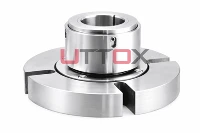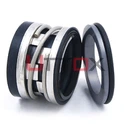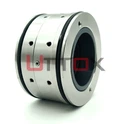


When industrial equipment starts experiencing frequent leakage issues, increased maintenance costs, and operational downtime, the root cause often lies in inadequate sealing solutions. A Type 2 mechanical seal represents an advanced sealing technology specifically designed to address these critical challenges in rotating equipment applications. These sophisticated mechanical seals provide superior performance in demanding industrial environments where traditional pump seals might fail, offering enhanced durability and reliability for critical applications across multiple industries.
Understanding Type 2 Mechanical Seals Design and Configuration
Type 2 mechanical seals represent a significant advancement in sealing technology, distinguished by their unique configuration that features an outside-mounted spring system and compact working height. Unlike their Type 1 counterparts, these mech seals utilize an external spring arrangement that positions the spring elements outside the sealed fluid environment. This innovative design approach provides several operational advantages, including reduced contamination risk and improved maintenance accessibility. The fundamental architecture of Type 2 mechanical seals incorporates a stationary seat and rotating face configuration, where the sealing interface is maintained through precise mechanical contact. The external spring mounting allows for better heat dissipation and reduces the likelihood of spring corrosion or fouling, which commonly affects internally mounted spring systems. This design philosophy makes Type 2 mechanical seals particularly suitable for applications involving aggressive media or high-temperature environments.
Key Design Features of Type 2 Mechanical Seals
The distinctive characteristics of Type 2 mechanical seals include their modular construction approach, which facilitates easier installation and maintenance procedures. The outside-mounted spring configuration creates a more compact overall assembly height while providing excellent axial force distribution across the sealing faces. This design optimization results in improved sealing performance and extended operational life compared to conventional pump seals. Furthermore, the Type 2 design incorporates advanced secondary sealing elements that ensure comprehensive containment of process fluids. These secondary seals, typically O-rings or elastomeric bellows, work in conjunction with the primary sealing faces to create multiple barriers against leakage. The integration of these components results in a robust sealing system capable of handling varying operational conditions while maintaining consistent performance standards.

Applications and Industrial Uses for Type 2 Mechanical Seals
Type 2 mechanical seals find extensive application across diverse industrial sectors where reliable sealing performance is paramount. In petroleum rpump sealsefining operations, these seals handle hydrocarbon processing applications involving high-pressure and high-temperature conditions that would challenge conventional sealing solutions. The chemical processing industry relies heavily on Type 2 mechanical seals for handling corrosive media and aggressive chemicals that require specialized sealing materials and designs. Water treatment facilities utilize these advanced mechanical seals in critical pumping applications where contamination prevention is essential for maintaining water quality standards. The pulp and paper industry depends on Type 2 seals for processing equipment that handles abrasive slurries and corrosive bleaching chemicals. Maritime applications, including ship building and marine pumping systems, benefit from the corrosion resistance and reliability that Type 2 mechanical seals provide in saltwater environments.
Power Generation and Heavy Industry Applications
Power plant operations require Type 2 mechanical seals for critical pumping applications involving boiler feedwater, cooling systems, and condensate handling equipment. The pharmaceutical industry utilizes these seals in sterile processing applications where contamination prevention is crucial for product integrity. Food and beverage processing operations depend on Type 2 mechanical seals that meet stringent hygiene standards while providing reliable sealing performance in cleaning and sterilization processes. The versatility of Type 2 mechanical seals makes them suitable for handling a wide range of process fluids, from clean water to aggressive chemicals and abrasive slurries. Their ability to accommodate varying pressure and temperature conditions makes them ideal for applications where operational parameters may fluctuate significantly during normal operation cycles.
Technical Specifications and Performance Characteristics
Type 2 mechanical seals demonstrate superior pressure handling capabilities compared to many alternative sealing solutions, with operational ranges extending from vacuum conditions to high-pressure applications exceeding 40 bar. Temperature performance typically ranges from -40°C to 200°C, depending on material selection and specific design configurations. The compact working height of Type 2 seals, often 30-40% shorter than equivalent Type 1 designs, provides installation advantages in space-constrained applications. The outside-mounted spring configuration contributes to enhanced reliability by reducing exposure to process fluids that might cause corrosion or fouling. This design feature extends maintenance intervals and reduces total cost of ownership through improved operational availability. The modular construction approach facilitates field serviceability, allowing maintenance personnel to replace sealing elements without complete disassembly of the pumping equipment.
Material Selection and Compatibility Considerations
Type 2 mechanical seals accommodate diverse material combinations to address specific application requirements and chemical compatibility needs. Primary sealing face materials include silicon carbide, tungsten carbide, ceramic, and various carbon compositions, selected based on wear characteristics and chemical resistance properties. Secondary sealing elements utilize elastomeric materials such as fluorocarbon, EPDM, and specialized polymer compounds chosen for their compatibility with process fluids and temperature resistance. The selection of appropriate materials requires careful consideration of process conditions, including fluid chemistry, temperature extremes, pressure variations, and potential contamination sources. Advanced material combinations can provide extended service life and improved performance in challenging applications where conventional materials might experience premature failure or degradation.
Installation and Maintenance Requirements for Type 2 Mechanical Seals
Proper installation of Type 2 mechanical seals requires adherence to specific procedures and dimensional tolerances to ensure optimal performance and service life. The installation process typically involves precise shaft preparation, seal chamber inspection, and careful handling of sealing components to prevent damage during assembly. Alignment verification and proper torque application are critical factors that directly influence seal performance and longevity. Maintenance procedures for Type 2 mechanical seals focus on monitoring operating parameters, including seal chamber pressure, temperature, and leakage rates. Regular inspection schedules help identify potential issues before they result in catastrophic failure or extended downtime. The modular design of Type 2 seals facilitates maintenance activities by allowing component replacement without complete system disassembly.
Best Practices for Type 2 Mechanical Seal Operation
Successful operation of Type 2 mechanical seals requires attention to system design factors, including proper piping configuration, adequate flushing provisions, and appropriate seal support systems. Operating parameters should be maintained within specified ranges to prevent excessive wear or thermal damage to sealing components. Regular monitoring of seal performance indicators helps identify degradation trends and optimize maintenance scheduling. Training of maintenance personnel in proper handling and installation techniques is essential for maximizing seal performance and service life. Understanding the specific requirements of Type 2 mechanical seals, including torque specifications, material compatibility, and assembly procedures, contributes significantly to successful implementation and long-term reliability.
Advantages and Benefits of Type 2 Mechanical Seals
The primary advantages of Type 2 mechanical seals include their compact design, which reduces installation space requirements while maintaining excellent sealing performance. The outside-mounted spring configuration provides superior resistance to fouling and corrosion compared to internally mounted systems, resulting in extended service intervals and reduced maintenance costs. The modular construction approach facilitates field serviceability and component replacement without specialized tools or extensive equipment disassembly. Type 2 mechanical seals offer enhanced versatility through their ability to accommodate single, double, and balanced configurations within the same basic design framework. This flexibility allows engineers to optimize sealing solutions for specific application requirements while maintaining standardized installation procedures and maintenance practices. The improved reliability and extended service life of Type 2 seals contribute to reduced total cost of ownership and improved plant availability.
Economic and Operational Benefits
The implementation of Type 2 mechanical seals typically results in significant economic benefits through reduced maintenance costs, extended equipment life, and improved operational reliability. The compact design reduces installation time and complexity while providing superior performance characteristics compared to alternative sealing solutions. Lower leakage rates contribute to reduced product loss and environmental compliance, while extended service intervals minimize maintenance-related downtime and associated costs.
Conclusion
Type 2 mechanical seals represent a sophisticated sealing solution that addresses the demanding requirements of modern industrial applications through innovative design features and superior performance characteristics. Their compact configuration, outside-mounted spring system, and modular construction provide significant advantages over conventional pump seals, making them the preferred choice for critical applications across diverse industries.
Cooperate with Zhejiang Uttox Fluid Technology Co.,Ltd.
Partner with Zhejiang Uttox Fluid Technology Co.,Ltd., a leading China mechanical seals manufacturer with over 30 years of industry expertise since 1990. As a trusted China mechanical seals supplier, we offer High Quality mechanical seals with competitive mechanical seals price. Our experienced R&D team provides customization solutions, while our China mechanical seals wholesale operation ensures fast delivery from sufficient inventory. With mechanical seals for sale across 50+ countries, we're your reliable China mechanical seals factory offering professional technical support, OEM services, and quality assurance. Contact us at info@uttox.com for your sealing solutions today!
FAQ
Q: What distinguishes Type 2 mechanical seals from Type 1 seals?
A: Type 2 mechanical seals feature an outside-mounted spring configuration and more compact working height, offering better contamination resistance and easier maintenance compared to Type 1 seals.
Q: What pressure ranges can Type 2 mechanical seals handle?
A: Type 2 mechanical seals can operate from vacuum conditions to high pressures exceeding 40 bar, depending on the specific design configuration and material selection.
Q: Are Type 2 mechanical seals suitable for corrosive applications?
A: Yes, Type 2 mechanical seals can handle corrosive media when equipped with appropriate materials such as silicon carbide faces and fluorocarbon secondary seals.
Q: How often do Type 2 mechanical seals require maintenance?
A: Maintenance intervals vary based on application conditions, but Type 2 seals typically offer extended service life due to their outside-mounted spring design and superior contamination resistance.
References
1. "Mechanical Seals: Design and Application Guidelines" - American Petroleum Institute (API) Standard 682
2. "Industrial Sealing Technology: Theory and Practice" - Dr. Robert Flitney, Fluid Sealing Association
3. "Centrifugal Pump User's Guidebook: Problems and Solutions" - Sam Yedidiah, Mechanical Engineering Publications
4. "Mechanical Seal Practice for Improved Performance" - Ronald P. Netzel, Fluid Sealing Association Technical Manual