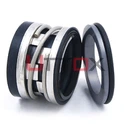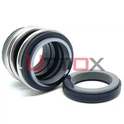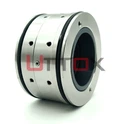


Leakage during static test of mechanical seal for pumps installation. After the mechanical seal is installed and debugged, it is generally necessary to conduct static test and observe the leakage. If the leakage is small, it is mostly moving ring or static ring, and the sealing ring has problems; When the leakage is large, it indicates that there is a problem between the dynamic and static ring friction pairs. On the basis of preliminary observation of the leakage amount and judgment of the leakage position, manually turn and observe. If there is no obvious change in the leakage amount, there is a problem with the static and dynamic ring seals; If there is an obvious change in the leakage during turning, it can be concluded that there is a problem with the friction pairs of moving and static rings; If the leakage medium is sprayed along the axial direction, the moving ring sealing ring has most problems. If the leakage medium is sprayed around or leaked from the water cooling hole, the static ring sealing ring is mostly invalid. In addition, leakage channels can also exist at the same time, but there are generally primary and secondary differences. As long as you observe carefully and are familiar with the structure, you can make a correct judgment.
Leakage during commissioning. After the static test of the mechanical seal for pumps, the centrifugal force generated by high-speed rotation during operation will inhibit the leakage of the medium. Therefore, the leakage of mechanical seal during test run is basically caused by the damage of dynamic and static ring friction pairs after excluding the failure of seal between shafts and end cover. The main factors causing the seal failure of friction pair are:
① during operation, due to abnormal phenomena such as evacuation, cavitation and pressure holding, large axial force is caused to separate the contact surfaces of dynamic and static rings;
② When installing the mechanical seal, the compression is too large, resulting in serious wear and scratch on the end face of the friction pair;
③ The sealing ring of the moving ring is too tight, and the spring cannot adjust the axial floating amount of the moving ring;
④ The sealing ring of the stationary ring is too loose. When the moving ring floats axially, the stationary ring will be separated from the stationary ring seat;
⑤ There are granular substances in the working medium. Friction pairs are introduced during operation, and the sealing faces of moving and stationary rings are subject to flaw detection;
⑥ Wrong design and selection, low specific pressure of sealing face or large cold shrinkage of sealing material, etc. The above phenomena often occur in the test run, and sometimes can be eliminated by properly adjusting the static ring seat, but most of them need to be disassembled and replaced.
Sudden leakage during normal operation. The sudden leakage of centrifugal pump in operation is caused by normal wear and tear or service life, while most are caused by large changes in working conditions or improper operation and maintenance.
① Evacuation, cavitation or pressure holding for a long time, resulting in seal damage;
② The actual output of the pump is too small, a large number of media circulate in the pump, and heat accumulates, causing medium gasification and seal failure;
③ The return flow is too large, resulting in the bottom sediment of the container (tower, kettle, tank and pool) on the suction pipe side, damaging the seal;
④ For long-term shutdown and restart, there is no manual turning, and the friction pair damages the sealing surface due to adhesion;
⑤ The corrosive, polymeric and gelling substances in the medium increase;
⑥ Rapid change of ambient temperature;
⑦ Frequent change or adjustment of working conditions;
⑧ Sudden power failure or fault shutdown, etc. Sudden leakage of centrifugal pump during normal operation, if not found in time, will often lead to major accidents or losses, which must be paid attention to and effective measures shall be taken.