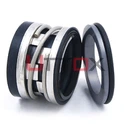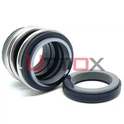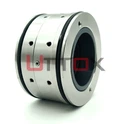


When your slurry pump operates in mining sites, wastewater facilities, or mineral processing plants, the sealing system faces relentless assault from abrasive particles. The 491 mechanical seal stands as a proven solution for these punishing environments, delivering reliable fluid containment where conventional seals fail prematurely. This rotary shaft seal combines balanced design with non-clogging architecture to address the specific challenges of solids-laden media. Its finger-spring mechanism and isolated spring design prevent the clogging and wear that plague standard multi-spring seals in abrasive applications.

Understanding the 491 Mechanical Seal: Design, Function, and Applications
Core Design Principles for Abrasive Service
This seal is designed to keep particles out of critical sections. In typical designs, springs immediately contact the process fluid. The fixed spring system protects these parts from the slurry material. This approach eliminates a typical failure point in harsh environments. Dynamic O-rings move on clean, disposable surfaces instead of shaft sleeves. Avoiding concern shortens the seal's life. Monolithic seal faces are thermally stable even when pressure varies; thus, they keep flat even when operating conditions change fast.
Material selection is crucial. Silicon carbide sides are durable and don't wear away readily, although tungsten carbide works better with coarser slurries. Choose fluorocarbon for chemical resistance or EPDM for water usage. A 491 mechanical seal can withstand slurries up to 5% solids without costly external cleaning devices because of its smart design and robust materials.
Industrial Applications Across Demanding Sectors
Mining operations need seals in tailings pumps and concentrate transfer systems. The seal can take grit and maintain facial contact while vibrating, making it suitable for these demanding settings. This seal is utilised in wastewater treatment plant sludge pumps that combine organic materials and abrasive grit. A non-jamming design prevents spring clogging, which causes these setups to fail early.
Chemical facilities benefit from crystallising solutions or catalyst slurries. The balanced design maintains face contact during air pressure variations, protecting the 491 mechanical seal when the process fails. Pulp and paper mill stock pumps handle medium-consistency fibre solutions using these seals. Working without external flush systems saves water and simplifies pipe installation. Mineral processing plants utilise them in flotation circuits and filter feed pumps, where tiny particles easily destroy seals.
Working Principle in Slurry Environments
Between the moving and fixed faces, the 491 mechanical seal makes a thin film of fluid that is usually only a few microns thick. Even though rough particles are trying to get through the closing gap, this film has to stay together. The balanced hydraulic design lowers the face loads, which lowers the amount of heat produced while keeping the contact pressure high enough to stop leaking. When particles do get into the seal faces, the harder material is better at keeping them from embedding and scoring than the softer ones.
The spring force stays the same because the springs stay clean and don't get any deposits on them. This makes sure that the face tracking works well even as it wears down over time. The seal can handle normal shaft runout and axial movement without losing its sealing power. This makes it easy to fix setups that aren't perfect, which happens a lot in the field.
UTTOX High-Performance Alternative: Engineering Excellence Without Premium Pricing
Technical Specifications and Standards Compliance
Our team at Uttox has designed a new seal that meets the dimensions required by EN 12756 (DIN 24960) L1K and improves performance by using what we've learned from making things for 30 years. The UTTOX 491-series can be used as a drop-in replacement, so retrofit projects don't have to change the equipment.
It can handle output levels of up to 31 bar (450 psi), which is what most industrial slurry pumps do. The temperature range goes up to 150°C based on the elastomer used, which is enough for most slurry uses. The speed rates can handle speeds of up to 20 m/s, and they work with both direct-coupled and belt-driven pump setups. These requirements make sure that the pump works with both ANSI and metric DIN standards, which are used in many industrial facilities around the world.
Key Performance Features for Slurry Applications
Several design features differentiate this Chesterton 491 Mechanical Seal under heavy use. Better particle resistance prolongs life. Because the improved face shape flushes particles away from critical contact zones, solids have less influence on sealing surfaces. Material hardness and toughness balance provides wear resistance and break toughness.
Stable closure needs a steady spring force and a level face. Thermal distortion and leakage in temperature-changing applications are prevented by the one-piece front. Non-fretting prevents shaft sleeve scoring, saving pump parts and maintenance. Unique alloy shafts that are difficult to fabricate in corrosive slurry settings benefit from this.
Distributors constructing multi-brand lines require batch uniformity. Our manufacturing rules ensure dimension correctness and material quality throughout production. This implies customers can anticipate consistent performance independent of order time.
Troubleshooting and Maintenance: Ensuring Optimal Performance
Common Failure Modes and Root Causes
When 491 mechanical seals fail too soon in slurry service, it's usually because of clear reasons. A lot of leaks usually means that the face is wearing down because particles are getting in or because of coking or crystallization; the face is losing touch. Abrasion damage shows up as fast face wear, clear score, or secondary seal breakdown. Thermal cracking happens when there isn't enough cooling or when there is a thermal shock during starting or stopping.
To find the root cause, you have to look at the broken parts. Deep radial lines on the faces show that big particles have gotten in, possibly because of poor filtering or cyclone escape. Circumferential scoring shows problems with shaft runout or misalignment. Patterns of heat checking show that the seal sides are not properly oiled. A chemical attack or the wrong choice of elastomer could cause secondary seal damage that doesn't show up on the face.
Installation Best Practices for Extended Life
The right way to install something starts before the 491 mechanical seal gets to the pump. Check the state of the shaft by looking for scoring, runout, and whether it is straight with the seal chamber. Get rid of all the dirt, scale, and old seal material on all the surfaces that fit together. Compare the measurements of the seal chamber to the equipment plans to make sure they fit right.
Handle seal faces carefully during assembly to avoid leaving chips or fingerprints that can lead to leaks. Never use petroleum jelly to lubricate elastomers because it can make them swell. To stop cocking, torque gland nuts equally in a crossing pattern. Check that the compression is right by comparing the position of the gland to the specifications. Turn the shaft by hand to make sure it can move freely and isn't stuck.
Preventive Maintenance Strategies
Regular inspections spot issues before they become major. Weekly visual inspections reveal tears, indicating failure. Monthly vibration monitoring identifies worn bearings that misalign. The 491 mechanical seal face is inspected every three months during scheduled outages to determine wear and when to replace it.
Monitoring operational parameters alerts you to seal issues. The seal chamber's increasing temperature indicates poor flushing or cooling. Increased power utilisation may indicate face loading or bearing difficulties causing friction. Pulsation dampeners may be required to relieve seal stress from process pressure changes.
The environment greatly impacts seals. Maintain flush fluid temperature within the range to prevent heat shock. Dilute or categorise the slurry to control its concentration. Monitor pH to ensure elastomers function with chemicals. These operating practices prolong 491 mechanical seals longer than equipment enhancements.
Comparing Mechanical Seal Options for Slurry Service
Alternative Seal Configurations
Each form of slurry seal has its own merits. Cartridge seals preassemble and position all parts, making installation simpler. This increases installation costs but reduces errors. Their enclosure protects the springs but makes it difficult to check and correct any issues. Bellows seals eliminate dynamic O-rings, reducing one leak channel while restricting shaft movement. Multi-spring pusher seals are cheaper initially, but they clog quickly in slurries, increasing their lifetime cost.
Price, performance, and maintenance are well balanced with the finger-spring internal Chesterton 491 seal equivalent system. It requires more attention to install than cartridge seals, although field repairs may be done using standard tools. The design keeps the spring away from the process fluid and allows the shaft to move more freely than bellows seals. Maintenance planners can count on a consistent supply of parts since they are standardised across manufacturers.
Performance Comparison in Abrasive Media
Wear resistance relies on face material hardness and load distribution. Tungsten carbide faces perform well with larger, harder particles, whereas silicon carbide faces function best with somewhat abrasive slurries. How particles interact with sealed surfaces depends on face shape. Textures and grooves assist in draining particles, although they may increase leakage. Smooth-lapped faces seal better but require cleaner flush fluid.
Installation difficulties impact maintenance. Precision measurement and shimming need expert professionals for component 491 mechanical seals. Cartridge designs allow novices to achieve decent results but make problem-solving difficult. Most businesses benefit from standard component seals and straightforward installation instructions.
Operating flexibility is crucial when pump service varies. Adaptability involves changing face materials or elastomers without replacing the 491 mechanical seal system. This helps when process changes affect slurry qualities or when attempting new material combinations to fix performance issues.
Procuring Solutions: Supplier Selection and Cost Considerations
Evaluating Supplier Capabilities
Good purchasing relationships go beyond price comparisons. Multi-brand distributors want sellers with several models to lower their vendor count. Having a single supplier for Chesterton, John Crane, and Burgmann options simplifies inventory management and reduces administrative expenditures. How soon your technical support staff fixes application issues affects client satisfaction.
Stable production capacity maintains supply during peak demand. Suppliers with particular manufacturing lines and parts can promptly satisfy urgent replacement requests, saving end users money on downtime. When offering important applications where a 491 mechanical seal installation failure would be disastrous, batch quality consistency preserves your reputation.
Distributors with stock and project buyers benefit from flexible minimum order amounts. Mixed model orders make it easier to stock up without investing in slow-selling items. Framework arrangements set pricing and wait times for more accurate budgeting but allow providers to be flexible.
Price Factors and Value Analysis
Material selection greatly impacts basic cost. Tho more costly than silicon carbide faces, tungsten carbide faces may wear out quicker in harsh situations. Carbon-graphite sides are cheaper and non-abrasive, but they break down fast in slurries. The initial cost and product lifespan depend on the elastomer. Perfluoroelastomers cost extra since they resist chemicals in 491 mechanical seals.
Volume discounts encourage larger commitments but need demand forecasts. When ordering in bulk, you weigh unit cost against inventory costs and stock outages. Non-standard sizes require additional tools, although they may be worth it for high-volume purposes or where there is no standard.
Installation labour, maintenance, and downtime make up the total cost of ownership. A 491 mechanical seal, which lasts twice as long but costs 40% more initially, is better value. Easy-to-install seals decrease labour costs and reduce errors. Lifecycle aspects typically trump initial pricing in economically efficient selections.
Identifying Genuine Quality Products
The aftermarket has several bogus and low-quality 491 mechanical seals, endangering distributors and users. Real products have material approvals and measurement records. Professional labelling and safe packaging suggest that the manufacturer takes things seriously.
Communicating with suppliers about product origins and procedures creates confidence. Offering facility tours or video documentation proves legitimate production. Long-term users in high-quality enterprises confirm the promised talent and quality.
ISO 9001 and other third-party quality standards provide fundamental assurance of process control. API 682 certifications demonstrate your ability to do vital duties, although they aren't necessarily required for basic industrial service. The 491 mechanical seal's face flatness, surface polish, and material hardness tests demonstrate stringent quality control.
Partnering with Uttox: Your Trusted Seal Solution Manufacturer
Uttox creates competitive ties beyond components. Technology and regular manufacturing help 50-country firms function. We've updated our procedures for 30 years to ensure customer reliability.
The technical team supports demanding applications with 491 mechanical seal concepts for slurry. Custom solutions for odd sizes or working situations are quick. Keeping popular models in stock lets you quickly meet customers' immediate replacement needs, keeping their businesses running.
Quality assurance programs assess products before and after manufacture to guarantee size and features. Our products have quick technical help to discover and address application difficulties. This collaborative method recognises that goods are key to success.
Email info@uttox.com to discuss your needs. Our professional service and manufacturing can help your firm flourish, whether you need 491 mechanical seals for regular supply or project quantities for a unique installation. Since we customise and offer many products, we may be your mechanical sealing partner.
Conclusion
Choosing the right covering technology for slurry pumps has a direct effect on how well they work and how much they cost to maintain. 491 mechanical seals are well-balanced and don't get clogged. They work well with rough materials because the springs are separate and the face materials are strong. Understanding how things break and following the right installation steps will extend their useful life in these tough situations. Total lifecycle costs, not just the initial price, are better for making purchasing choices than just the initial price. Things like supplier expert help and supply chain stability should be taken into account. Uttox has been making products for 30 years and brings to this market high-quality alternatives that work just like OEM parts but don't cost as much.
FAQ
1. Can this seal operate in slurry without external flushing?
The isolated spring design of the 491 mechanical seal lets it work in slurries with up to 5% solids without needing an external flush that is clean. Particles that would clog up normal multi-spring designs can't get into the fixed springs because they are safe. Some very rough jobs might still benefit from dilution washing to make the face last longer, but it's not necessary for the basic function.
2. What causes dynamic O-ring problems in slurry service?
Most of the time, sharp particles or chemical breakdown cause dynamic O-ring failure in a 491 mechanical seal. This problem isn't as bad with the non-fretting design because the O-ring moves on a clean surface instead of the shaft itself. If you choose the right rubber for the slurry chemistry, it won't grow or harden, which can cause the seal to fail.
3. How does face material selection affect performance?
Silicon carbide is good at transferring heat and resisting wear, so it works well with most industrial slurries. Tungsten carbide handles more aggressive abrasives in the 491 mechanical seal, but it costs more and can break when loaded suddenly. Carbon-graphite works in situations where it's not rough, but it wears out quickly when particles are present. Matching the hardness of the material to the properties of the slurry improves both life and cost.
Contact Uttox for Reliable Sealing Solutions
To make a full line of seal products, you need to work with manufacturers who know both how the products work technically and how they make money. Uttox offers precisely engineered alternatives that meet strict standards for dimensions and materials while giving your customers the cost savings they want. Our expert staff is quick to respond and help with difficult uses involving the 491 mechanical seal. We also keep a lot of stock on hand to ensure fast delivery when time is of the essence. The quality control methods have been improved over 30 years, so you can be sure that each batch will be the same and that they will work for a long time. Get in touch with us at info@uttox.com to talk about how our services as a reliable provider of mechanical seals can meet the needs of your business.
References
1. Mechanical Seals for Pumps: Application Guidelines (2019), Industrial Press Engineering Standards Committee
2. Slurry Pump Handbook: Design, Selection and Application (2021), Mining Equipment Technical Institute
3. Abrasive Wear Mechanisms in Mechanical Face Seals, Journal of Tribology Engineering, Vol. 45, Issue 3
4. Seal Failure Analysis in Mineral Processing Applications (2020), International Pumps & Seals Conference Proceedings
5. Cost-Effective Maintenance Strategies for Slurry Handling Equipment, Plant Maintenance Quarterly, Spring 2022 Edition
6. Material Selection Guide for Mechanical Seals in Erosive Service (2023), Fluid Sealing Association Technical Publication