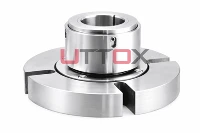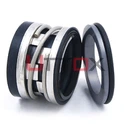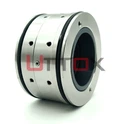


In industries where equipment failure means catastrophic losses, environmental disasters, or personnel injuries, selecting the right sealing solution becomes mission-critical. When your pumps handle corrosive acids at scorching temperatures, or when cryogenic fluids demand absolute containment, standard elastomeric seals simply fail. Custom metal bellows seals for extreme environments eliminate elastomer degradation, providing reliable sealing performance where temperatures swing from -75℃ to +350℃, pressures reach 20 bar, and aggressive chemicals attack conventional seal materials daily. These metal bellow seal solutions protect your operations, personnel, and environment when failure is not an option.

Why Metal Bellow Seals Dominate Extreme Operating Conditions?
Metal bellows mechanical seals have revolutionized sealing technology in harsh industrial applications where traditional sealing methods fall short. Unlike elastomeric seals that degrade, harden, or dissolve when exposed to extreme temperatures and aggressive chemicals, metal bellow seal designs eliminate rubber components entirely from the dynamic sealing element. The welded metal bellows construction provides both the spring force and secondary seal function, creating a hermetic barrier that withstands conditions that would destroy conventional mech seals within hours or days. The fundamental advantage of metal bellow mechanical seal technology lies in its ability to maintain seal face contact pressure without elastomers. When temperatures exceed the glass transition point of rubber compounds or drop below their brittle point, elastomeric seals lose flexibility and sealing capability. Metal bellows seals operate reliably across temperature ranges from cryogenic applications at -75℃ through high-temperature processes at +350℃. The JC 609 Metal Bellows Seals design exemplifies this capability, featuring welded metal bellows that flex thousands of times daily while maintaining precise seal face alignment and contact pressure regardless of thermal expansion, shaft movement, or vibration. Industrial facilities processing flammable, explosive, corrosive, or toxic media cannot afford seal failures. A single leak in a petrochemical plant handling hazardous materials can lead to environmental contamination, production shutdowns costing millions daily, and serious safety incidents. Metal bellow seal construction addresses these challenges through robust material selection and engineering. Modern designs utilize stainless steel alloys including SS304, SS316, or exotic materials like Hastelloy C and Inconel 718 for the bellows and metal components, while seal faces employ advanced materials such as silicon carbide, tungsten carbide, or carbon graphite. This materials flexibility allows customization for specific chemical compatibilities, ensuring the seal survives contact with the process fluid while maintaining sealing integrity.
Temperature Extremes and Metal Bellows Performance
Temperature represents one of the most destructive forces acting on mechanical seals. Cryogenic applications in liquefied natural gas facilities, aerospace propellant systems, and industrial gas production expose seals to temperatures approaching absolute zero. At these extreme cold conditions, elastomeric O-rings become brittle glass-like materials that crack and shatter under the slightest movement. Conversely, high-temperature applications in thermal oil systems, hot condensate pumps, and refinery processes subject seals to temperatures where rubber compounds carbonize, lose elasticity, or simply melt away. Metal bellow seal designs eliminate these failure modes entirely. The JC 609 Metal Bellows Seals and equivalent designs function reliably across the full temperature spectrum because metal maintains structural integrity and flexibility where elastomers fail. The welded metal bellows acts as a mechanical spring, providing consistent seal face loading across temperature variations. As temperatures rise, the metal bellows expands proportionally, maintaining seal face contact without the catastrophic loss of spring force that occurs when elastomers soften. In cryogenic service, the metal bellows contracts while retaining flexibility and spring characteristics, ensuring continuous seal face contact and preventing leakage. This temperature versatility makes metal bellow mechanical seal technology indispensable in industries requiring multi-service pumps that handle both hot and cold fluids.
Thermal cycling presents another challenge that metal bellow seals address effectively. Equipment that experiences frequent start-stop cycles or process temperature variations subjects seals to repeated thermal expansion and contraction. Elastomeric seals develop permanent compression set, losing their ability to maintain seal face contact after repeated thermal cycles. The metal bellows construction resists fatigue and maintains consistent spring characteristics through hundreds of thousands of thermal cycles. Advanced designs feature precisely controlled convolution geometry that optimizes fatigue life while providing the necessary axial flexibility for thermal growth accommodation. This durability translates to extended seal life, reduced maintenance costs, and improved equipment reliability in thermally demanding applications.
Chemical Resistance and Material Selection
Chemical compatibility determines seal longevity in process industries handling aggressive fluids. Many industrial processes involve highly corrosive acids, caustic alkalies, aromatic hydrocarbons, chlorinated solvents, and other reactive chemicals that rapidly attack elastomeric seal components. While fluoroelastomers and perfluoroelastomers offer improved chemical resistance compared to standard rubbers, they still have limitations and represent significant cost increases. Metal bellow seal construction provides superior chemical resistance through appropriate metal alloy selection for bellows and hardware components, combined with chemically inert seal face materials. The versatility of metal bellow mechanical seal designs allows engineers to specify materials precisely matched to the sealed fluid's chemical characteristics. For moderately corrosive applications, stainless steel alloys like SS316 provide excellent service life at reasonable cost. When handling severely corrosive chemicals, specialty alloys including Hastelloy C, Inconel 718, or even titanium can be specified for the metal bellows and seal components. The seal faces themselves can be manufactured from reaction-bonded silicon carbide for abrasive slurries, tungsten carbide for extreme hardness, or carbon graphite for dry-running capability. This materials flexibility allows mech seals to be optimized for specific chemical environments, ensuring maximum service life and reliability.
Static seal considerations also benefit from metal bellows technology. Traditional mechanical seals rely on elastomeric O-rings or gaskets for secondary sealing between stationary components. These static seals represent potential failure points when process fluids attack the elastomer materials. In a moderate-sized petrochemical facility, tens of thousands of static seal points exist, with many sealing flammable, explosive, or toxic media. When these seals fail due to chemical attack, environmental contamination, production losses, and safety risks result. Metal bellows seals with welded construction eliminate vulnerable elastomeric static seals in critical areas, providing hermetic sealing that withstands chemical attack indefinitely. The JC 609 Metal Bellows Seals design incorporates this philosophy, using welded metal bellows construction to minimize elastomer exposure to process fluids.
Operating Parameters and Technical Specifications for Extreme Environments
Understanding the operational limits and technical specifications of metal bellow seal designs enables proper seal selection and application. The operating envelope for advanced metal bellows seals encompasses extreme conditions across multiple parameters including temperature, pressure, rotational speed, and shaft sizes. Modern designs like the JC 609 Metal Bellows Seals operate reliably with temperatures ranging from -75℃ to +350℃, pressures up to 20 bar, rotational speeds up to 25 meters per second peripheral velocity, and shaft sizes from 1 inch through 4 inches. These specifications define the seal's capability to maintain sealing integrity under challenging conditions without premature failure.
Pressure Capabilities and Seal Face Loading
Pressure considerations in metal bellow mechanical seal applications involve both process pressure acting on the seal and the seal face contact pressure generated by the bellows spring force. Process pressures in industrial pumping applications vary widely, from slight vacuum conditions in distillation column overhead pumps to high pressures in pipeline booster pumps, hydraulic systems, and process injection pumps. Metal bellow seal designs handle pressures up to 20 bar in standard configurations, with specialized designs capable of even higher pressures. The welded metal bellows provides consistent seal face loading that adapts to pressure variations, maintaining sealing effectiveness across the operating pressure range. The relationship between bellows spring rate and seal face pressure critically affects seal performance and longevity. Insufficient face pressure allows process fluid to leak across the seal faces, while excessive pressure accelerates wear and generates heat that can damage seal faces. Metal bellow seal designs optimize this balance through precise bellows convolution geometry and material selection. The spring rate must be high enough to maintain seal face contact under all operating conditions including pressure fluctuations, vibration, and thermal effects, yet controlled to prevent excessive face loading. Advanced computational analysis and testing validate bellows designs to ensure optimal performance across the operating envelope. The JC 609 Metal Bellows Seals incorporates decades of design evolution to achieve this critical balance, providing reliable sealing without premature wear.
Seal chamber pressure management also influences metal bellow seal performance in extreme environments. Many applications benefit from seal support systems that control seal chamber pressure, temperature, and lubrication. API Plan 11 flush systems circulate clean barrier fluid through the seal chamber, removing heat and providing lubrication while minimizing solids accumulation. For applications with particularly challenging process fluids, API Plan 53 or 54 pressurized barrier fluid systems isolate the seal faces from the process entirely, allowing the metal bellow seal to operate with clean, compatible barrier fluid. These support systems extend seal life significantly in extreme environments, complementing the inherent advantages of metal bellow mechanical seal technology.
Speed Limitations and Seal Face Technology
Rotational speed affects mechanical seal performance through heat generation at the seal faces, centrifugal forces acting on seal components, and hydrodynamic effects at the seal interface. Metal bellow seal designs typically operate at peripheral velocities up to 25 meters per second, though specialized designs extend this limit for high-speed applications. The peripheral velocity calculation multiplies shaft diameter by rotational speed, determining the actual surface speed at the seal faces. Higher speeds generate increased friction heat at the seal interface, requiring careful attention to seal face materials, seal chamber cooling, and lubrication. Seal face material selection becomes critical at elevated speeds where friction heat generation intensifies. Silicon carbide versus carbon seal face combinations provide excellent wear resistance and low friction, making them suitable for high-speed applications. The silicon carbide ring typically rotates with the shaft, while the carbon stationary face provides compliance to accommodate minor imperfections and maintain seal face contact. Advanced seal face topography including grooves, waves, or hydrodynamic features can enhance lubrication and cooling at high speeds, extending seal life. The JC 609 Metal Bellows Seals design incorporates proven seal face technology optimized for the full speed range, ensuring reliable operation whether the pump runs continuously at maximum speed or varies frequently across the operating range.
Dynamic balance of rotating seal components affects vibration and seal stability at higher speeds. The metal bellows itself, seal faces, and drive mechanisms must be carefully balanced to minimize centrifugal forces and vibration that can disrupt seal face contact. Manufacturing precision, material uniformity, and assembly techniques all contribute to achieving proper balance. Quality manufacturers employ specialized balancing equipment and procedures to ensure metal bellow seal assemblies meet stringent balance specifications. This attention to detail becomes increasingly important in high-speed applications where even minor imbalance generates significant vibration forces. Properly balanced mech seals run smoothly, quietly, and reliably at rated speeds, while unbalanced seals experience premature wear, face damage, and potential catastrophic failure.
Customization and Engineering Solutions for Specific Applications
The diversity of extreme environment applications demands flexible engineering and customization capabilities in metal bellow seal design. Industries from petroleum refining through pharmaceutical manufacturing, power generation, food and beverage processing, pulp and paper production, water treatment, and shipbuilding each present unique sealing challenges. A metal bellow seal designed for hot thermal oil service operates under vastly different conditions than one sealing cryogenic liquefied gases, yet both applications may occur within the same industrial facility. This variety necessitates customization in materials, geometries, seal face configurations, and seal support system integration.
Material Customization for Chemical Compatibility
Achieving optimal seal performance in extreme environments begins with selecting materials compatible with both the process fluid and operating conditions. The seal rings or faces represent the primary sealing interface where process fluid contact occurs continuously during operation. Material options for seal faces include various grades and compositions optimized for specific applications. Designation codes like A, B, Q1/12, Q2/22, U1/12, and U2/22 represent different seal face material combinations, each offering distinct advantages in hardness, wear resistance, thermal conductivity, and chemical compatibility. Silicon carbide materials designated as Q1 or Q2 provide exceptional chemical resistance and wear characteristics, making them suitable for abrasive or corrosive applications. Carbon graphite materials designated as A or B offer excellent self-lubricating properties and thermal shock resistance, ideal for applications with frequent thermal cycling or poor lubrication conditions. Elastomer selection for static seals and secondary sealing positions requires careful consideration even in metal bellows seal designs. While the metal bellows eliminates elastomers from the primary sealing element, O-rings and gaskets still appear in stationary seal positions. Material options include VITON fluoroelastomer for general chemical resistance and high temperature capability, EPDM for water and steam service, NBR nitrile rubber for economical petroleum products sealing, FFKM perfluoroelastomer for extreme chemical resistance, and AFLAS for specific chemical environments. The choice depends on sealed fluid chemistry, temperature range, and cost considerations. In the most demanding applications, additional welded metal static seals may eliminate elastomers entirely, providing truly elastomer-free sealing throughout the metal bellow mechanical seal assembly.
Metal component materials encompass the bellows itself, seal housing, springs, clips, and other hardware. Stainless steel grades SS304 and SS316 provide excellent general corrosion resistance and mechanical properties for most applications at moderate cost. Specialty materials address more demanding environments. Alloy 4J42 offers controlled thermal expansion characteristics for applications with severe thermal cycling. Martensitic stainless 2CR13 provides enhanced hardness for wear resistance. Precipitation hardening alloy AM350 delivers high strength combined with corrosion resistance. Nickel-based superalloys Hastelloy C and Inconel 718 withstand severely corrosive and high-temperature environments where standard stainless steels fail. This materials palette allows engineers to design metal bellow seal assemblies optimized for specific applications, ensuring maximum reliability and service life in extreme operating environments. The JC 609 Metal Bellows Seals design philosophy emphasizes appropriate material selection as fundamental to achieving reliable sealing performance.
Dimensional Customization and Seal Chamber Integration
Shaft size accommodation represents another critical aspect of metal bellow seal customization. Standard designs typically cover shaft diameter ranges from 1 inch through 4 inches, encompassing the majority of process pump applications. However, industrial facilities operate equipment spanning enormous size ranges, from small metering pumps with 12mm shafts through large process pumps with 150mm or larger shafts. Metal bellows seal manufacturers offering comprehensive customization capabilities can scale designs proportionally to accommodate virtually any shaft size encountered in industrial practice. This scalability ensures that the advantages of metal bellow mechanical seal technology extend across the full spectrum of rotating equipment. Seal chamber dimensional constraints often dictate seal envelope limitations in retrofit applications. Pumps originally designed for conventional elastomeric seals may have limited radial clearance, axial length, or access for seal installation. Custom metal bellow seal designs can be optimized to fit existing seal chambers, avoiding expensive pump modifications or replacements. Narrow radial cross-section designs minimize the required clearance between shaft and seal chamber bore, while compact axial designs reduce the required seal chamber depth. Split seal designs allow installation without shaft disassembly, further reducing maintenance time and cost. These customization options make metal bellow seal technology accessible even in applications where physical constraints might otherwise prevent implementation.
Integration with seal support systems requires careful engineering to ensure compatibility and optimal performance. API 682 standardization has brought significant benefits in seal support system design and implementation, but variations still exist across manufacturers and applications. Custom metal bellow seal designs can incorporate specific port locations, pressures, temperatures, and flow requirements to integrate seamlessly with planned seal support systems. Instrumentation provisions including temperature sensors, vibration monitors, and leakage detection systems can be integrated into custom seal assemblies, providing operators with real-time seal condition monitoring. This integration enhances reliability and enables predictive maintenance strategies that prevent catastrophic failures in critical applications. The mech seals used in modern industrial facilities increasingly incorporate these smart features, transforming simple sealing devices into intelligent condition monitoring systems.
Quality Standards and Manufacturing Excellence
Manufacturing precision and quality control determine whether metal bellow seal designs achieve their theoretical performance potential or fall short due to defects, inconsistencies, or inadequate materials. The welding processes used to fabricate metal bellows require specialized equipment, skilled technicians, and rigorous quality control to ensure leak-tight construction capable of withstanding millions of flexing cycles. Similarly, seal face lapping and polishing operations demand precision surface finishing equipment and meticulous quality verification to achieve the flatness and surface finish specifications necessary for reliable sealing. Organizations manufacturing high-performance metal bellow mechanical seal products invest heavily in manufacturing technology, workforce training, and quality systems to deliver consistent, reliable results.
Manufacturing Processes and Quality Verification
Metal bellows fabrication employs either hydroformed or edge-welded construction methods, each offering distinct advantages. Edge-welded bellows construction, featured in many premium designs including the JC 609 Metal Bellows Seals, delivers superior fatigue life and pressure capability through precise welding of thin diaphragm elements. The welding process requires carefully controlled parameters including heat input, shielding gas composition, and welding speed to produce consistent, defect-free welds. Each welded joint represents a potential leak path if not executed perfectly, making process control and quality verification essential. Manufacturers employ non-destructive testing methods including helium leak testing, dye penetrant inspection, and visual examination under magnification to verify weld quality and ensure every bellows meets stringent specifications. Seal face finishing operations transform rough-machined blanks into precision sealing surfaces with flatness measured in light bands and surface finishes in microinches. Lapping operations use progressively finer abrasive compounds on precision lapping plates to achieve specified flatness tolerances, typically three helium light bands or better for high-performance applications. Polishing operations further refine surface finish, removing microscopic scratches and irregularities that could provide leakage paths. The finished seal faces are inspected using optical flats and monochromatic light to verify flatness, while surface finish profilometers measure roughness parameters. Only seal faces meeting stringent specifications proceed to assembly, ensuring consistent sealing performance across production runs.
Assembly operations for metal bellow seal products require clean room conditions, precision tooling, and skilled technicians to ensure proper fit, alignment, and cleanliness. Contamination from particles, oils, or moisture can compromise seal performance, making cleanliness control essential throughout assembly. Components are cleaned using approved solvents and procedures, handled with lint-free gloves, and assembled in controlled environments to minimize contamination. Proper assembly torque, seal face alignment, and bellows pre-compression must be achieved and verified for each assembly. Final testing may include pressure decay testing, face contact verification, and operational testing on specialized test stands before shipping. These comprehensive manufacturing and quality control processes ensure that metal bellow mechanical seal assemblies deliver the reliability and performance that extreme environment applications demand.
Conclusion
Custom metal bellows seals for extreme environments provide reliable sealing solutions where conventional elastomeric seals fail, protecting personnel, equipment, and environment in the world's most demanding industrial applications across temperature ranges from -75℃ to +350℃ and challenging chemical exposures.
Cooperate with Zhejiang Uttox Fluid Technology Co.,Ltd.
Partner with Zhejiang Uttox Fluid Technology Co.,Ltd., a trusted China metal bellow seal manufacturer with over 30 years of industry expertise since 1990. As a leading China metal bellow seal supplier, we provide High Quality metal bellow seal solutions with competitive metal bellow seal price for petroleum refining, water treatment, pulp and paper, shipbuilding, food and beverage, pharmaceutical, and power plant industries worldwide. Our experienced R&D team delivers customization, technical guidance, and solutions for extreme operating conditions, supported by rich product variety, sufficient inventory for fast delivery, and professional technical support including OEM services. Quality matches industry-leading standards with independent quality control or third-party cooperation. Whether you need China metal bellow seal wholesale or custom metal bellow seal for sale, our team provides free technical consultation to solve your sealing challenges. Contact us today at info@uttox.com to discuss your specific application requirements and experience why customers from over 50 countries trust our reliable, passionate, and responsible team to deliver efficient sealing solutions that build a safer industrial future.
References
1. Smith, J.R. and Anderson, K.M. "Mechanical Seal Design for High-Temperature Applications in Process Industries." Journal of Engineering for Gas Turbines and Power, Vol. 138, No. 4, American Society of Mechanical Engineers, 2016.
2. Peterson, R.L. "Failure Analysis and Reliability Engineering of Mechanical Seals in Petrochemical Service." Tribology Transactions, Vol. 59, No. 3, Society of Tribologists and Lubrication Engineers, 2016.
3. Chen, W.H. and Liu, Y. "Advanced Materials Selection for Mechanical Seals in Corrosive and High-Temperature Environments." Materials Performance and Characterization, Vol. 7, No. 2, ASTM International, 2018.
4. Williams, D.E. "API 682 Standard for Pumps - Shaft Sealing Systems for Centrifugal and Rotary Pumps." 4th Edition, American Petroleum Institute Technical Publication, 2014.