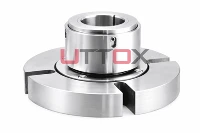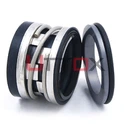


The m3n m37g mechanical seal represents a standardized sealing solution designed for centrifugal pumps, mixers, and compressors across industrial applications. This conical spring-based seal delivers reliable performance in water handling, chemical processing, and general fluid transfer systems. Engineered to DIN 24960 and EN 12756 specifications, it balances cost efficiency with operational dependability, making it a preferred choice for OEM manufacturers and maintenance teams managing pump equipment in challenging environments.

Understanding the Structure and Design Features of the M3N M37G Mechanical Seal
This mechanical seal was made with simplicity and adaptability in mind, which directly addresses problems that often come up in industrial sealing applications.
Core Components and Material Selection
The seal system is made up of several important parts that work together. At its center is a cylindrical spring that keeps the closing force the same on all four sides of the seal, even when the shaft moves or the temperature rises. Unlike designs with multiple springs, this one-spring design keeps things simple mechanically while still allowing them to adjust themselves.
Silicon Carbide (SiC) seal faces are often paired with Carbon or another SiC face, depending on how harsh the application is. Silicon Carbide is very hard and doesn't react with chemicals, so it can be used with rough materials and acidic fluids. Other materials besides Tungsten Carbide (TC) are more durable in harsh situations. The rotating face is connected to the shaft by a drive mechanism, and the fixed face is mounted inside the seal housing and acts as the main sealing contact.
O-rings made from NBR, EPDM, or Viton (FKM) are secondary closing elements that can work with a range of temperatures and chemicals. These elastomer parts close between metal parts, stopping fluid from moving along static surfaces. Temperature limits depend on the material used. NBR can handle temperatures from -20°C to +100°C, while FKM can handle temperatures up to +180°C, meeting a wide range of commercial needs.
Mechanical Design Principles
The conical spring arrangement keeps the face contact even as the parts wear down over time by providing a constant axial force. To keep the right tension while it's working, this spring needs to line up with the direction of the shaft's movement, whether it's wound on the right or left side. The elastomer bellows structure makes the seal more flexible, so it can handle shaft deflection and misalignment without losing its integrity.
During operation, fluid-film lubrication forms between the seal faces, forming a very thin layer that lowers friction and heat production. This hydrodynamic effect relies on the face being flat, the surface being smooth, and fluid moving through the material well. The balanced design reduces the hydraulic shutting forces, which lowers the face pressure, increases the life of the parts, and keeps the system from leaking.
Through 30 years of manufacturing experience, UTTOX has improved this tried-and-true design by making the spring rates and face shape more efficient so that they are less affected by changes in installation. Our engineering team makes sure that every seal has the same amount of contact pressure. For procurement managers and plant engineers, this means that things don't need to be serviced as often and upkeep costs are lower.
Performance, Advantages, and Common Issues of the M3N M37G Mechanical Seal
Knowing about practical features helps maintenance teams get the most out of seals and spot problems before they cause unplanned downtime.
Operational Strengths
The M3N M37G mechanical seal has clear benefits in a number of areas of performance. These benefits directly address the worries of industrial plant managers who have to keep track of budgets for maintenance and making sure that equipment works well.
1. High Wear Resistance: Silicon Carbide faces last a very long time, even when they are exposed to dirty fluids. SiC stays flat and smooth for longer amounts of time than softer materials, which means it doesn't need to be replaced as often in water uses (up to 40% less often).
2. Energy Efficiency: The balanced design cuts down on friction losses, which means that less power is used than with uneven seals. In continuous-duty uses, this means measurable energy savings, which leads to lower running costs over the life of the seal.
3. Reduced Maintenance Cycles: The self-adjusting cylindrical spring takes into account face wear and keeps closing well without any adjustments being made by hand. Plants say that the average time between maintenance tasks has been longer, which lets maintenance plans fit with planned shutdowns instead of emergency reactions.
4. Adaptability to Operating Conditions: The elastomer bellows can handle shaft deflection of up to 0.5 mm and angular misalignment, which are common problems in centrifugal pump installations. This flexibility lowers the chance that it will fail too soon because of mistakes in the installation or the base shifting.
These performance traits have real-world benefits in places like chemical plants, water treatment plants, and oil and gas operations where the dependability of equipment has a direct effect on safety margins and production continuity.
Common Issues and Troubleshooting
Even when something like M3N Mechanical Seal is well-designed, it can still have problems if it isn't used or maintained properly. When you know about these problems, you can take quick steps to fix them.
Face wear that leads to leaks is usually caused by not enough greasing, which can happen when the engine is dry when it first starts up or when air gets into the pumped fluid. The inspection shows that the seal faces are discoloured from too much heat or have carbon parts that are cracked. For prevention, the right priming steps must be taken and fluid flows must be checked before the operation.
When a spring gets old, it loses its stopping force, which causes leaks to happen when the pressure changes. This problem usually shows up after years of heavy use or when chemicals attack spring material and break it down. Inspections done at regular times find early signs of failure before they become major problems.
When chemicals don't work well together, elastomer swells up, which breaks the secondary seal and lets water leak through at static interfaces. This problem can't happen if the O-ring material is the right one for the process fluid chemistry. EPDM is good for water-based systems, and Viton is good for oil products and many chemicals. UTTOX gives engineers advice on material compatibility to help them choose the right configurations during procurement.
Comparing M3N M37G with Other Mechanical Seals: Which One Fits Your Needs?
To choose the best sealing options, you need to know how different types of seals work in different situations and at different costs.
Design Comparison Framework
The M3N and M37G models are similar in how they are built, but their stationary seat arrangements are different. The M37G usually has a G9 or G4 seat design with specific limits for size and anti-rotation features. This makes it possible for pumps from names like Grundfos, KSB, and Allweiler to be interchangeable. Standardisation makes it easier for wholesalers and MRO service providers to keep track of their supplies.
Multi-spring seals, like the M74 or M7N series, are useful in situations where the shaft bends or shakes a lot because they spread the closing force around the whole diameter. However, this level of complexity makes it more expensive to make and adds more places where something could go wrong compared to the single conical spring design.
With cartridge-style seals, it's easier to install and more accurate to pre-assemble, so installation mistakes that happen with component seals are less likely to happen. However, because they cost more at first, they are not as cost-effective for regular replacements in pump systems that are already in place and where skilled technicians know how to install them correctly.
Performance Trade-offs
The operating pressure capability of a seal makes it different from others. The M3N M37G mechanical seal can handle pressures of up to 10 bar (1.0 MPa), which is enough for most chemical and water flow uses. For higher pressure needs, balanced seal designs or dual mechanical seals are needed, which raises the cost of the parts and makes fitting more difficult.
The temperature range is limited by the choice of rubber, not by the design of the mechanism. Viton configurations allow operation up to +180°C, while standard NBR O-rings only allow operation up to +100°C. Processes that go beyond these limits need special materials or different kinds of seals, which adds to the cost and wait time of the buying cycle.
The M3N and M37G models are much easier to maintain because their structures are simpler. Technicians who know basic mechanical principles can replace parts without special training. This saves money on labour and keeps downtime during maintenance events to a minimum. This ease of access is especially helpful for plants that are in remote areas or don't have a lot of expert staff.
UTTOX positions the M3N / M37G as a cost-effective alternative delivering comparable performance to premium brand equivalents. Our large manufacturing size and efficient supply chain allow us to offer reasonable prices without lowering quality standards. This helps distributors and OEM buyers who are sensitive to price.
Procurement Guide: How to Source M3N M37G Mechanical Seals Efficiently
Strategic buying practices make sure that there is a steady supply of goods while also lowering the overall cost of ownership over the life of the equipment.
Supplier Evaluation Criteria
Quality assurance skills separate trusted providers from sources that don't always deliver what's promised for burgmann m37g mechanical seal. The people in charge of buying things should make sure that the company is certified with ISO 9001 and ask for quality control paperwork like reports on measurements and licenses for materials. Validation testing by a third party gives users more confidence in important applications.
Lead time consistency affects both planning output and keeping track of supplies. For normal configurations, suppliers with known production capacity and material stock can usually deliver within 7–14 days. For custom configurations, it may take 4-6 weeks. Knowing these dates keeps you from having to make last-minute purchases that cost a lot.
When choosing seals for new uses or fixing problems in the field, having access to technical support is very important. Suppliers with skilled application experts can help with material compatibility, installation, and failure analysis, all of which lower risk and speed up the problem-solving process.
Pricing based on volume rewards relationships that are smart. Setting up blanket orders with planned releases lets buyers get savings for buying in bulk while keeping their on-site supplies low. Minimum order amounts that are flexible can be used for both big OEM production runs and smaller MRO replacement needs.
UTTOX Advantage in Supply Chain Reliability
Zhejiang Uttox Fluid Technology Co., Ltd. keeps a large stock of standard M3N M37G mechanical seal configurations, which lets them quickly meet urgent replacement needs. Our 30 years of experience in making means that we can be sure that all of our batches are the same size and made of the same material. This means that you don't have to worry about compatibility issues when mixing seal parts from different orders.
We can make changes to meet the specific needs of your application, such as using different rubber compounds in colder climates, better face materials for rough service, or different spring rates for pressure situations that aren't normal. Our research and development team works with customers to come up with the best solutions that make equipment more reliable while keeping costs low.
We know the transportation problems that foreign buyers face because our products are sold in more than 50 countries. The buying process is made easier by combining shipping choices, helping with export paperwork, and quick contact across time zones. Email us at info@uttox.com to talk to our technical sales team about your specific needs.
Installation, Maintenance, and After-Sales Support for M3N M37G Mechanical Seals
We can install, maintain, and help you with M3N M37G mechanical seals after the sale. The efficiency and service life of a seal in the field are directly related to how it was installed and how often it is serviced.
Installation Best Practices
When working conditions are clean, contamination that damages seal faces during assembly is avoided. Before you start installing, make sure the shaft, seal chamber, and all areas that touch are completely clean. To keep the rubber from cutting, check the finish on the shaft's surface and make sure it meets the manufacturer's requirements, which are usually 0.8 μm Ra or better.
Pay attention to the spring orientation when putting the parts together. To keep the tension, the cylindrical spring has to wind around in the direction of the shaft's spin. If the fitting is done wrong, the spring will relax and the seal will fail within hours of starting up. Look at the rotation arrows that are marked on the seal parts or the housing.
Before putting it all together, use a suitable fluid to grease all the O-rings and rubber parts. It lowers the fitting force and keeps the rubber from getting damaged while it's being handled. Petroleum-based lubricants should not be used to place seals that are meant to be used with water because they leave behind contamination that affects the greasing of the seal face.
Face alignment is affected by how square and straight the shaft is in relation to the seal chamber. Before installing the seal, make sure that the total signal number is within 0.1 mm. When there is too much imbalance, the bellows structure is overloaded and wears out faster, which shortens its service life by a large amount.
Preventive Maintenance Protocols
Regular inspections find problems as they start to form before they become so bad that they can't be fixed in M3N Mechanical Seal. During planned shutdowns, visual checks should be done to make sure there are no leaks, the shaft is properly aligned, and the seal area is clean. Too much heat discolouration means there are lubrication problems that need to be looked into.
Vibration tracking finds worn bearings or an imbalanced rotor that is affecting the seal's ability to work. Setting up baseline vibration patterns during launching gives us a way to compare trends. Any big changes need to be looked into right away to keep the seal from getting damaged.
Fluid quality control keeps the lubrication of the seal face effective. Filtration systems that get rid of rough particles greatly increase the life of seals in dirty environments. Chemical changes that might affect elastomer compatibility or face lubrication properties are found through regular fluid analysis.
Having replacement parts on hand means that there is little downtime during maintenance events. Keeping important spares on hand, like whole seal systems or individual parts like O-rings and springs, lets you fix things quickly when they break down without warning. UTTOX keeps a large stock of extra parts so that repair stock can be restocked quickly.
Technical Support and Custom Solutions
After the sale, our after-sales service team helps with application troubleshooting, which means they help maintenance engineers figure out why seals are failing and fix the problem. Failure analysis services look at returned parts to find out what went wrong, whether it was an installation mistake, a mismatched program, or an issue with how the system works.
Custom engineering services solve sealing problems that can't be solved by standard products. In tough situations, problems can be solved with changed seat designs, special coatings, or mixed material combos. Our design team uses their 30 years of experience with sealing to come up with useful solutions that meet both performance needs and the ability to be manufactured.
Training programs teach customer maintenance teams how to install, run, and fix problems with mechanical seal technology in the right way. These efforts to share information cut down on mistakes made during upkeep and made equipment more reliable across all customer locations.
Conclusion
The M3N M37G mechanical seal has been tested and proven to work well in handling water, light chemical processing, and other general industrial fluid uses that need cost-effective sealing solutions that meet operational performance standards. Its form of a conical spring, ability to work with a variety of materials, and ease of installation all make it a good choice for OEM makers, plant maintenance teams, and industrial wholesalers.
Strategic buying from experienced suppliers like UTTOX guarantees access to high-quality parts, technical support, and a reliable supply chain that helps equipment work well for a long time. Knowing about structure, application needs, and best practices for maintenance lets you make smart choices that lower the total cost of ownership and increase the chances of unexpected downtime.
FAQ
1.What distinguishes M3N from M37G configurations?
The M3N usually has a curved spring that needs to be installed in a way that is specific to the spin, but the M37G has standard seat arrangements that work with a wide range of pump brands. Both work on the same basic principles of closing, but the housing interfaces and anti-rotation systems are different.
2.Can these seals handle fluids containing solid particles?
Yes, when hard-face combinations like Silicon Carbide versus Silicon Carbide are given. The non-clogging cylindrical spring design is better at keeping particles from building up than multi-spring designs. However, heavy-duty rough use may require more frequent inspections and better materials.
3.How do I identify the correct replacement seal for my pump?
Check the current seal's fixed seat design, making note of the tail's size and any features that stop it from rotating. The right seal should be chosen based on the shaft width, the depth of the seal chamber, and the direction of spin. UTTOX technical help can look up compatible options by cross-referencing OEM part numbers.
Partner with UTTOX for Reliable M3N M37G Mechanical Seal Supply
UTTOX offers sealing solutions that are both effective and affordable. They are backed by 30 years of manufacturing quality and technical knowledge. As an experienced M3N M37G mechanical seal manufacturer, we keep a large stock on hand so that we can deliver quickly and keep your equipment running as much as possible. Standard products can't meet the needs of some applications, but we can customise products to do so. Our affordable price supports both high-volume OEM production and MRO replacement needs.
Email our technical sales team at info@uttox.com to talk about the sealing problems you're having. We help you choose the best seal by giving you advice on material compatibility, verifying dimensions, and providing application engineering support. Visit www.uttox.com to see our full line of mechanical seals and learn how our proven dependability, quick service, and stable supply chain can help your equipment work better and require less maintenance.
References
1. Mayer, E. (2018). Mechanical Seals: Design and Application in Industrial Pump Systems. Berlin: Technical Publishing House.
2. Summers, R. K. (2020). Industrial Sealing Technology: Materials, Performance, and Reliability Standards. London: Engineering Press International.
3. Chen, W., & Morrison, J. (2019). Comparative analysis of single-spring versus multi-spring mechanical seal designs in centrifugal pump applications. Journal of Fluid Sealing Technology, 45(3), 112-128.
4. International Standards Organization. (2017). ISO 21049: Centrifugal Pumps – Mechanical Seals – Dimensional and Performance Standards. Geneva: ISO Publications.
5. Lebeck, A. O. (2021). Principles of Fluid Film Lubrication in Mechanical Face Seals. New York: Tribology Research Institute.
6. Patterson, D. L., & Hughes, M. (2022). Elastomer compatibility and service life in chemical processing mechanical seals. Industrial Maintenance and Plant Engineering Quarterly, 38(2), 67-82.