

If you manage or procure sealing components for submersible wastewater equipment, finding the right mechanical seal for Wilo EMU pump systems is one of the most operationally critical decisions you will make. A mismatched or substandard seal does not just cause leakage - it risks motor burnout, unplanned downtime, and costly emergency repairs. This guide walks through everything a B2B procurement professional needs to know: how these seals work, how to select and install them correctly, and where to source reliable replacements.

Understanding Mechanical Seals for Wilo EMU Pumps
What a Mechanical Seal Actually Does
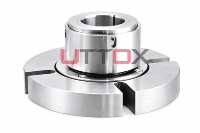
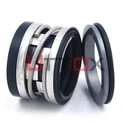
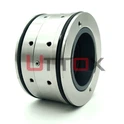
A mechanical seal for Wilo EMU pumps is the main moving part that keeps the wet hydraulic end of the pump away from the motor housing. This shield stops raw wastewater, sludge, or abrasive effluent from getting into the motor room of submersible sewage and drainage pumps. If these fluids get in, the motor usually stops working right away.
The core assembly has an elastomeric secondary seal, a stationary ring (fixed in the case), a spinning ring connected to the shaft, and a spring system that keeps the face-loading pressure constant. The choice of material is very important. Silicon Carbide (SiC) or Tungsten Carbide (TC) are popular face materials because they are very hard and don't react with chemicals. Tungsten Carbide (TC) is better at resisting impact when the pump hits big solid debris. Most elastomers are FKM (Viton), which is resistant to chemicals, EPDM, which is resistant to high temperatures, or NBR, which can be used for a wide range of tasks. Depending on how much rust they will be exposed to, metal parts are made from either SS304 or SS316 stainless steel.
When it comes to mechanical seals, Wilo EMU pumps are usually made to work with either two or four of them. In these situations, a single seal is not enough. If the main seal fails, there is no buffer zone between the two seal faces, so the motor is instantly exposed to flooding. According to DIN EN 12756, these seals have standard size differences that make sure they fit perfectly on all versions of the Wilo EMU series.
How to Select the Best Mechanical Seal for Your Wilo EMU Pump
Key Operational Parameters to Evaluate
To choose a new mechanical seal for Wilo EMU pump systems, you need to match more than just the shaft width. Before ensuring suitability, buyers need to compare a number of factors:
Shaft diameter: The size of the shaft in most Wilo EMU pump configurations is between 30 mm and 60 mm. Before you place your order, check the exact size on the pump's nameplate or model code (for example, FA 10.33).
Operating pressure: The technical specs for EMU pump seals usually list pressure ranges from 10 to 16 bar. This range must match the static head and submersion depth of your installation.
Fluid chemistry: The right face material and rubber grade are chosen based on the pH level and the amount of sand, grit, and fibrous solids in sewage or industrial waste systems.
Temperature range: Standard seals work in temperatures from -20°C to +140°C. Make sure that the conditions of your process are in this box.
In submersible uses, mechanical seals always work better than standard packing seals. Packing seals need to leak on purpose to keep the gland oiled, which can't happen in a sealed motor environment. A properly specified seal eliminates this problem completely.
OEM vs. Aftermarket: Making a Rational Decision
Original Wilo seals are more expensive than other seals, but they come with the guaranty of being tested by the maker. Certified replacement options close just as well at a much lower cost when they are made to the same precise measurements and high-quality materials for wilo emu pump seal. Critically, the word "certified" is needed: the supplier must show that the dimensions can be tracked, the materials can be checked, and there is a written warranty. A warranty time of at least 12 months is a fair minimum for any replacement seal that meets the requirements.
Installation and Maintenance Guide for Wilo EMU Pump Mechanical Seals
Step-by-Step Installation Essentials
The right fitting is just as important as the right standard. If it's not put on right, even a mechanical seal for Wilo EMU pumps that fits perfectly will fail early.
Before installing, make sure that all of the mating surfaces are clean and check the shaft for any scoring or runout that could make it hard to line up the faces. Before seating the elastomeric O-rings, put a thin layer of a compatible lubricant on them. In EMU pump buffer chambers, non-conductive white oil or specialized transformer oil is used. Never use petroleum-based grease on FKM seals. To make sure there is no axial play, press the fixed ring firmly into the housing bore without turning it. Then, make sure the rotating ring fits flush on the shaft.
Common installation errors include overtightening the gland bolts (which changes the shape of the seal face), getting fingerprints or other particles on the seal faces, and not matching the spring tension correctly. Each of these mistakes speeds up face wear and makes the operating life much shorter.
Routine Maintenance and Early Failure Detection
When pumps are used in rough sewage environments, they should be inspected every 2,000 to 4,000 hours of operation. Watch for these signs that the seal is about to fail:
The built-in leakage sensor found moisture in the motor's oil chamber.
Readings for winding insulation resistance drop all of a sudden
Grinding sounds or strange vibrations at startup
Seepage that can be seen around the wire opening or shaft housing
If you notice these signs early, you can schedule a planned maintenance window rather than having to shut down in an emergency shutdown, which is a huge difference when it comes to pump station operations during flood season.
Procurement Strategies: Where and How to Buy Mechanical Seals for Wilo EMU Pumps
Evaluating Suppliers Against Operational Risk
A mechanical seal for Wilo EMU pump replacement is more than just a matter of price. In high-uptime settings, lead time, expert help, and stock reliability are all given the same amount of weight for emu pump mechanical seal.
Certified aftermarket makers with their own quality control, the ability to track materials, and helpful expert teams can provide service levels that are as good as or better than OEMs while cutting costs by a large amount per unit. When reviewing suppliers, you should ask specifically for dimensional data sheets and records of material certification-not just product shots.
Here are the factors that experienced equipment managers use to decide which purchases to make:
Dimensional verification: Check the shaft diameter, housing bore, and seal face geometry against the specifications provided by Wilo EMU.
Material documentation: Ask for SiC or TC face hardness data and elastomer grade certification as part of the material documentation.
Stock availability: Suppliers with stable inventory cut lead times from weeks to days, which is very important for getting buffer stock before the flood season.
After-sales support: Having access to installation instructions and a written warranty claim process greatly lowers the risk of buying something.
When these criteria are regularly used, they help buying teams make a list of reliable, qualified suppliers that can be used for both regular and emergency restocking.
Benefits and Future Outlook for Mechanical Seals on Wilo EMU Pumps
Reliability Gains and Emerging Technologies
Unplanned downtime, which the Water Research Foundation says costs up to 30% of all wastewater plant repair costs, can be cut directly by using high-quality sealing parts in submersible pump systems. Buying a new mechanical seal for Wilo EMU pumps that is the right size and type saves money on operations over the course of 3 to 5 years.
In the future, the sealing industry will put condition-monitoring devices right into seal housings. This will allow for real-time wear tracking and planning of preventative maintenance. As environmental rules get stricter for city owners, eco-friendly elastomer products with lower volatile organic compound pollution are also becoming more popular. These changes are in line with the larger shift in Industry 4.0 toward managing infrastructure based on data.
Conclusion
Choosing and taking care of the right mechanical seal for Wilo EMU pump systems can affect both the budget for upkeep and the ability to keep the pumps running. Each part of this fitment guide, from choosing the right material and making sure the measurements are correct to the right way to put it and making sure the seller is qualified, deals with a real failure risk. Certified replacement parts from reputable companies can help you save money without losing quality, but only if you follow strict evaluation guidelines all the way through the buying process.
FAQ
1.How long does a mechanical seal for Wilo EMU pump systems typically last?
When used properly in city sewage systems, a mechanical seal for Wilo EMU pumps that was correctly chosen and placed will usually last between 8,000 and 12,000 hours of normal use. Large amounts of sand or grit can make this number drop by a large amount in rough conditions. Regular checks of the oil chamber help find wear before it leads to a fatal failure.
2.Can I replace the original double seal with a single seal to reduce costs?
No. In order to keep a safe distance between the sealing faces and the motor chamber, Wilo EMU pumps need a double or tandem seal arrangement. A single seal doesn't have a secondary containment layer, so if the face wears down or breaks, fluid can get into the motor windings right away.
3.What are the main signs of seal failure I should monitor?
The most reliable early warning signs are moisture found by the pump's internal leakage sensor, a drop in motor insulation resistance that can be measured, strange noises when the motor starts up, and fluid that can be seen around the shaft housing or cable entry point.
4.Are aftermarket replacement seals compatible with all Wilo EMU models?
Dimensional compatibility is different for each model. The FA, TR, and TRE models all have different shaft sizes and housing shapes. Before buying a new seal, you should always check the exact Wilo model number and shaft diameter.
Partner with Uttox for Reliable Wilo EMU Pump Seal Solutions
Since 1990, Uttox has provided industrial and municipal clients in over 50 countries with a precision-engineered mechanical seal for Wilo EMU pump applications. As a trusted manufacturer, Uttox combines 30 years of R&D expertise with stable inventory, fast delivery, and responsive technical support. Reach our team at info@uttox.com or explore our full product range at www.uttox.com to request dimensional verification and a customized procurement proposal.
References
1. Grundfos Engineering Manual - Submersible Pump Maintenance and Seal Integrity Guidelines (2022).
2. Hydraulic Institute - Pump System Assessment and Reliability Standards (2021).
3. Water Research Foundation - Reducing Unplanned Downtime in Municipal Wastewater Facilities (2020).
4. European Sealing Association - Seal Material and Design Innovations for Industrial Pump Applications (2023).
5. DIN EN 12756 - Mechanical Seals: Principal Dimensions, Designation and Material Codes (2019).
6. Wilo SE - EMU Submersible Pump Technical Documentation and Spare Parts Reference (2022).