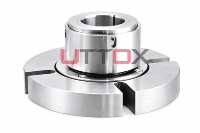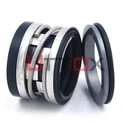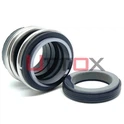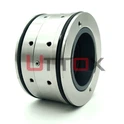


Finding a reliable John Crane 502 mechanical seal equivalent is one of the most practical decisions a maintenance procurement team can make. The John Crane 502 mechanical seal is a single-spring elastomer bellows seal built for versatility across demanding fluid-handling systems. Its non-pusher design eliminates shaft fretting - a recurring failure point in conventional pusher seals. When downtime carries a real financial cost, identifying a dimensionally identical, performance-matched aftermarket alternative allows procurement teams to protect equipment reliability while reducing part costs by 30–50%. This guide walks you through specifications, comparisons, and sourcing best practices.

Understanding the John Crane 502 Mechanical Seal Specifications and Features
Before you judge an alternative, it's helpful to know exactly what the original seal does properly. The John Crane 502 mechanical seal can work in temperatures from -40°C to +205°C, at pressures of up to 28 bar, and at speeds of up to 25 m/s on the surface. This makes it a good choice for a wide range of industrial pump setups. [1]
Core Technical Parameters
A lot of different shaft sizes can be used with this seal. It fits normal DIN 24960 and EN 12756 seal chambers and has a full-convolution elastomer bellows that fixes issues with shaft alignment and axial end play. This ability to self-align greatly lowers the face-contact irregularities brought on by vibration, which is a common reason why centrifugal pumps' seals fail too soon. [2]
Material Configuration and Design Logic
There are hard seal faces made of Silicon Carbide (SiC/SiC or SiC/Carbon) or Tungsten Carbide (TC/TC) in the John Crane 502 mechanical seal, and rubber lips made of NBR, EPDM, or Viton (FKM). All of the metal parts are made of stainless steel. This mix makes it resistant to chemicals in both water and mildly aggressive media. The bellows works as both a spring and a secondary seal, so there is no need for the dynamic O-ring that is usually found in pusher designs. This gets rid of one of the main reasons why abrasive slurry uses get stuck and leak. [3]
Comparing John Crane 502 with Other Mechanical Seal Options for Optimal Procurement
The John Crane 502 mechanical seal is often compared to the John Crane 501 and 503 types by procurement teams. Misspecification can be avoided by understanding the practical differences.
John Crane 501 vs. 502 vs. 503
The John Crane 501 is a pusher-style seal that works well with clean, low-viscosity fluids and doesn't require much shaft movement. The John Crane 502 mechanical seal, on the other hand, has elastomer bellows that can adjust to uneven surfaces and stop shaft wear. The John Crane 503 works the same way as the bellows, but it is designed for places with higher pressures. The John Crane 502 mechanical seal design is the best mix of effectiveness and ease of installation for most general-purpose industrial pump seal uses that involve solids in suspension, thermal cycling, or shaking.
Competitive Alternatives: Burgmann and EagleBurgmann
People often use Burgmann's MG1 and EagleBurgmann's MG12 models as practical cross-references for elastomer bellows seals in the same group. These brands make good products, but their prices and lead times from approved wholesalers are usually longer and more expensive than what aftermarket brands can offer. It makes business sense for maintenance-focused B2B buyers who manage multi-brand pump fleets to look at aftermarket options that match the John Crane 502 mechanical seal's dimensions and material requirements. This is especially true when lowering the cost of spare parts is a key buying KPI.
Procurement Considerations for John Crane 502 Mechanical Seals and Their Equivalents
Strategy for sourcing is just as important as product design. Here are the most important things that buying managers need to think about:
Dimensional verification: Ask the seller for a full cross-section model. If the face OD, bellows seat diameter, or drive collar specs aren't exactly the same, the fitting will fail. Suppliers you can trust give you certified measurement sheets before you confirm your large order.
Lead time and stock position: When a lot of pumps break down, it can cost thousands of dollars an hour. Suppliers who keep common shaft sizes (12mm–100mm) in stock can ship within 48–72 hours, which is a big advantage over OEM channels that may quote 2–4 weeks.
Minimum order flexibility: Service companies that keep up with multiple pump brands face inventory pressure when they have to meet high MOQ requirements. Buying from suppliers who offer single-piece samples followed by trial batches of 10–50 units greatly lowers the risk of the purchase.
Warranty and after-sales support: A reliable aftermarket provider should offer a written quality assurance process, such as in-house testing or review by a third party, along with clear warranty terms for each material grade.
These factors collectively determine whether or not a supplier relationship can grow from a trial order to a long-term preferred supplier status.
Why Consider John Crane 502 Mechanical Seal Equivalents?
Cost is the one that stands out the most, but it's not the only one. Aftermarket replacements that are made to fit the dimensions of the John Crane 502 mechanical seal are useful for buying teams in a number of ways.
The Uttox 502-Type Seal: A Direct Interchange Solution
Uttox is a company that has been making mechanical seals for more than 30 years. They have an aftermarket 502-type elastomer bellows mechanical seal that is a direct replacement for the original John Crane 502 mechanical seal. It has been proven that the Uttox version works within these limits:
Temperature: Cold (-40°C) to hot (180°C)
Pressure: ≤ 25 bar of pressure
Speed: ≤ 15 m/s speed
Shaft size: 12 mm to 100 mm
Seal face materials: SiC/Carbon, SiC/SiC, and TC/TC
Elastomer options: You can use Viton (FKM), EPDM, NBR, FFKM, or AFLAS as an elastomer.
Metal components: Parts made of metal: SS304
These rules cover most of the situations where the original John Crane 502 mechanical seal is needed, like treating water and garbage, processing chemicals, and using pumps in factories. The John Crane 502 mechanical seal model and the Uttox seal are the same size, use the same face material pairings, and fit the original seal chamber without any changes.
The seal works especially well on pumps that deal with solid-particle media. When abrasive particles get into the seal face in slurry or wastewater applications, the bellows design keeps the particles from building up around the spring mechanism, which is a common way for pusher seals to fail early. [4]
Uttox offers one-piece samples, small trial amounts, and ships from a well-kept inventory before placing a large order. The packaging has the Uttox brand on it, and the seal has the Uttox name and a 502-equivalent number on it. There are no OEM marks.
Ensuring Long-Term Performance and Value from Your Mechanical Seal Investment
Choosing the right seal is just the beginning; it's not the end. For service life to be maximized, both installation discipline and continued operating monitoring must be paid close attention to. [5]
Maintenance Practices That Extend Seal Life
One main variable is the choice of flush plan. A Plan 11 recirculation arrangement is usually enough for clean water service. When working with rough or hot materials, a Plan 32 external flush or Plan 23 cooler arrangement gets rid of heat and particles in the seal environment, which greatly increases the face's longevity. Using simple instruments to keep an eye on the temperature and difference pressure in the seal chamber lets repair teams spot early changes before they cause major leaks.
When it comes to rubber bellows covers, the material of the bellows needs to match the process fluid. Viton (FKM) is good for most chemical and hydrocarbon fluids, EPDM is good for steam and hot water, and NBR is good for oil-based fluids. If you choose the wrong elastomer grade, the bellows will break down faster, no matter how good the face material is.
Conclusion
The John Crane 502 mechanical seal is still the standard for how to make a rubber bellows seal for an industrial pump. When the OEM part is out of budget or takes too long to get from the supplier, an aftermarket part that is dimensionally confirmed and made with the same face material and elastomer specs can be used instead. It seals just as well but costs a lot less. Uttox's 502-type seal meets this exact need: it's a straight interchange part that comes with technical paperwork, a flexible minimum order quantity, quick shipping, and 30 years of manufacturing experience. This has been shown to work in the past to help buying teams find a reliable, low-cost way to seal things without sacrificing quality.
FAQ
1.What is the operating range of the Uttox 502-type mechanical seal?
From -40°C to +180°C, the Uttox 502-type seal works. It can handle pressures up to 25 bar, shaft speeds up to 15 m/s, and shaft lengths from 12mm to 100mm. Most normal industrial pump uses can be met by these specifications.
2.Will this seal fit my existing pump without modifications?
Yes, the Uttox seal chamber can be used in place of the John Crane 502 mechanical seal chamber if your pump originally had one. No changes need to be made to the housing. Before your first buy, you should ask for a dimensional drawing to make sure the fit is right.
3.Which elastomer grade should I select for my application?
Most chemical and hydrocarbon jobs can be done with Viton (FKM). EPDM is better for uses with hot water and steam. NBR works well in oil-based media and most other industrial media. For very harsh chemical conditions, you can get FFKM and AFLAS. Our professional team can help you choose the right materials.
4.Can I order a single sample before committing to a bulk purchase?
Yes, Uttox does take requests for samples of a single piece. This lets your maintenance team check that the sizes fit and that the installation works before putting in a test batch of 10–50 units.
5.How do I confirm dimensional compatibility with the original JC 502?
Ask your supplier for a certified cross-section drawing. The face outer diameter, the bellows seat hole, and the drive collar shape are some of the most important measurements to check. If you ask, Uttox can give you dimensional proof.
Partner with Uttox for Your Next John Crane 502 Mechanical Seal Equivalent Order
Uttox is a trusted John Crane 502 mechanical seal seller with more than 30 years of experience making products, a large collection of all standard shaft sizes, and free technical selection help. Whether you need a single sample to make sure the fit is right or a regular supply for your pump repair program, our team can help you with useful replies and quick shipping. Contact us right away, and we'll help you come up with a way to buy things that will keep your equipment running.
📧 Email: info@uttox.com | 🌐 Website: www.uttox.com
References
1. John Crane. (2022). Type 502 Mechanical Seal Product Datasheet. John Crane Inc.
2. European Committee for Standardization. (2014). EN 12756: Mechanical Seals - Principal Dimensions, Designation and Material Codes. CEN.
3. Neale, M. J. (Ed.). (1994). The Tribology Handbook (2nd ed.). Butterworth-Heinemann.
4. Hydraulic Institute. (2020). ANSI/HI 9.6.4: Rotodynamic Pumps for Vibration Measurement and Allowable Values. Hydraulic Institute.
5. Bloch, H. P., & Geitner, F. K. (2012). Machinery Failure Analysis and Troubleshooting (4th ed.). Elsevier.
6. Flowserve Corporation. (2021). Mechanical Seal Engineering Manual: Selection Guide for Pump Sealing Applications. Flowserve.