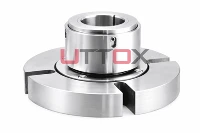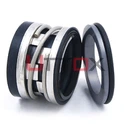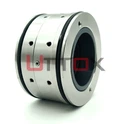


If you use underground pumps, picking the right sealing technology will determine whether your plant runs smoothly or has expensive unplanned shutdowns. In wastewater treatment plants, chemical plants, and industrial drainage systems, the argument over mechanical seals vs. standard packing is still going on. Picking the right mechanical seal for wilo emu pump application has a direct effect on how long the equipment lasts, how much it costs to maintain, and how safe it is to use. At Uttox, we've seen how reliable closing solutions can change things in some of the toughest industrial settings in 50 different countries. Knowing the main differences between these two closing methods helps purchasing managers, plant engineers, and maintenance supervisors make smart choices that protect important assets and keep costs low over their entire life.
Understanding Pump Sealing Systems: Mechanical Seals and Packing
To keep fluid from moving along spinning blades, industrial pumps need good sealing barriers. Mechanical seals and packing, the two most common methods, deal with this problem in very different ways.
How Mechanical Seals Function in Submersible Pumps?
Mechanical seals act as dynamic barriers with precision-machined flat surfaces rotating under controlled pressure. The mechanical seal for Wilo EMU pump typically features a double seal design with silicon carbide or tungsten carbide faces. These materials maintain an extremely thin fluid film between surfaces, reducing friction and stopping media leaks. The system includes flexible secondary seals, springs for face contact, and a buffer chamber with non-conductive lubricating fluid. This design handles high water pressure and keeps sewage from motor shafts.
Traditional Packing Seals and Their Operational Principles
Packing seals consist of braided or twisted fibers, often graphite-coated, compressed around the shaft by an adjustable gland follower. This older technology permits controlled leakage but requires periodic adjustment to maintain acceptable seepage rates. Friction between packing material and rotating shaft generates heat and wears both packing and shaft sleeve over time. While packing was once common in water treatment plants for its simplicity and low initial cost, zero-leakage alternatives are now preferred for critical applications.
Common Failure Modes and Root Causes
Most submersible pump seal problems trace to specific sources. Misalignment between pump and motor shafts causes uneven face pressure distribution, leading to premature wear and leakage. Poor installation, especially incorrect compression or contamination during assembly, immediately compromises seal integrity. Abrasive particles in sewage streams damage face flatness. Exceeding elastomer design parameters accelerates degradation. Cavitation and vibration add mechanical forces shortening seal life. Understanding these failures enables maintenance teams to select purpose-engineered solutions.
Mechanical Seals vs. Packing Seals: Key Differences and Reliability Comparison
The difference in performance between these two sealing technologies is clear when you look at business data that have a direct effect on how profitable the plant is and how well it follows the rules.
Performance and Longevity Analysis
Modern mechanical seals provide significantly longer service intervals than traditional packing. Packing requires adjustment every few weeks and complete replacement every three to six months. A properly specified mechanical seal for Wilo EMU pump typically operates successfully for two to five years under identical conditions. The non-contact operating principle reduces wear. Municipal wastewater data shows mechanical seals maintain integrity after millions of shaft revolutions while packing progressively wears, requiring increasing gland adjustment. Longer durability reduces maintenance labor, spare parts inventory, and production interruptions.

Maintenance Requirements and Complexity
Packing seals require regular adjustment for wear, leakage rate monitoring, and periodic replacement, consuming technician time and creating adjustment errors. Mechanical seals operate as self-contained cartridge assemblies requiring minimal attention. Routine monitoring involves only visual inspection and periodic buffer fluid checks. Reduced maintenance complexity requires less specialized training and fewer opportunities for installation errors. Mechanical seal repair schedules are more predictable than reactive packing maintenance, enabling better planning and resource allocation for maintenance managers.
Environmental Compliance and Leak Prevention
In the chemical manufacturing, petrochemical, and wastewater industries, regulators are paying more attention to industrial fluid pollution. Packing naturally allows controlled leakage-usually a few drops per minute even when everything is set up correctly-which leads to environmental reporting duties and worries about contamination. When designed and fitted correctly, mechanical seals really do stop all leakage, so there are no obvious emissions that get the attention of regulators. This trait is especially helpful when working with dangerous drugs, garbage that is polluted, or any other material that has to follow environmental protection rules. By stopping regular leaks, acidic or poisonous fluids can't damage nearby equipment, contaminate work areas, or make surfaces slippery.
High-Pressure and Temperature Capabilities
Packing struggles under sustained high pressure, requiring frequent adjustment as material compresses and relaxes under load. Extreme temperatures accelerate packing degradation through stiffening or charring, reducing sealing effectiveness. Submersible-rated mechanical seals typically handle pressures exceeding 10–16 bar and temperatures from -20°C to +140°C without performance loss. The robust construction of a mechanical seal for Wilo EMU pump, featuring reaction-bonded silicon carbide and fluoroelastomer secondary seals, maintains stable operation across demanding thermal and pressure cycles that would destroy packing within hours.
Real-World Reliability Improvements
A chemical processing business in the Midwest kept records of how they switched their underwater transfer pumps from packing to mechanical seals. Before the conversion, the plant had seal-related problems about once every 47 days. Each time, production had to be stopped for 4 to 6 hours for unplanned repair. After adding closing systems that were made just for the job, the average time between failures went over 800 days, and maintenance was limited to regular checks during planned shutdowns. The increase in dependability saved about $78,000 a year in labor costs, spare parts, and lost output. When operators switch from packing to current sealing technology made just for their purpose, the effects are always the same across all industries.
How to Choose the Best Mechanical Seal for Your Wilo EMU Pump?
To choose the right sealing technology, you have to match the seal's properties to its unique operational factors and performance standards.
Material Compatibility Considerations
Seal face materials for a Wilo EMU mechanical seal significantly affect performance and service life. Silicon carbide offers exceptional hardness and chemical resistance, ideal for aggressive wastewater applications with varying pH and chemical content. Tungsten carbide provides superior impact resistance when pumps handle large solid debris or sudden pressure surges. Secondary elastomer selection for a Wilo EMU mechanical seal proves equally critical. Fluoroelastomers (FKM/Viton) provide broad chemical compatibility while ethylene propylene (EPDM) excels in hot water and steam services. Stainless steel hardware resists corrosion in chlorides or acidic environments. Consider the complete chemical environment including cleaning agents and process upsets.
Cartridge vs. Component Seal Configurations
Cartridge seals arrive as fully assembled, self-contained units that slide onto the pump shaft and bolt into place, simplifying installation and reducing assembly errors. Component seals require field assembly with individual parts installed sequentially on the shaft, demanding higher technician skill levels and creating more error opportunities. The cartridge design of submersible pump seals for sewage systems typically enables maintenance personnel to complete unit replacement quickly during scheduled outages without specialized tools or extensive training, reducing downtime and improving reliability.
OEM vs. Aftermarket Seal Solutions
Original equipment manufacturer seals provide exact dimensional and material specification compliance with pump designer intent, offering certainty with full warranty protection. Quality aftermarket options like UTTOX deliver equivalent performance at lower cost while maintaining original equipment interchangeability. Facilities managing large pump fleets find that standardizing on trusted aftermarket providers simplifies procurement while maintaining quality standards. Procurement managers should evaluate material certifications, dimensional verification procedures, and field performance evidence rather than focusing solely on OEM names when selecting suppliers.
Installation Best Practices
Proper seal installation determines whether seals achieve design life or fail prematurely. Thoroughly clean seal chambers and shaft surfaces to remove any debris that could damage seal faces. Shaft runout and perpendicularity must remain within specified limits; excessive wobble creates uneven face loading accelerating wear. Lubricate O-rings and gaskets with compatible fluids before assembly to prevent rolling or cutting during installation. Follow torque specifications precisely using calibrated tools for even gland bolt compression. Verify buffer fluid quantities before pump startup. Following manufacturer instructions prevents most early-life seal failures caused by improper assembly.
Procurement Insights: Where and How to Source Mechanical Seals for Wilo EMU Pumps?
When buying important sealing parts, strategic sourcing choices have a big effect on both the short-term prices and the long-term operational value.
Selecting Certified Suppliers and Authorized Partners
Supply chain security starts with verifying supplier credentials. Reputable manufacturers maintain ISO 9001 certification documenting design control and material traceability. Suppliers should provide material certificates linking each batch to quality records. Evaluate mechanical seal for Wilo EMU pump suppliers on quality documentation, testing capabilities, and technical help rather than price alone, which may deliver substandard components.
Pricing Structures and Volume Purchasing
Mechanical seal cost reflects material quality, manufacturing precision, and technical support. Premium materials like reaction-bonded silicon carbide cost more but deliver superior performance. Volume purchasing agreements provide significant cost benefits. Facilities managing multiple pump installations secure price advantages and priority delivery through annual supply contracts. Bulk purchasing enables standardizing seal configurations across similar pumps, simplifying inventory and training. Evaluate total ownership cost including service life and downtime consequences.
OEM Specifications vs. Engineered Alternatives
Original equipment seals match exact measurements and materials specified during pump design, eliminating compatibility issues but costing more. Engineered interchangeable alternatives deliver equivalent performance at lower cost through efficient production methods. The mechanical seal for Wilo EMU pump exemplifies this approach as a useful alternative meeting operating needs while increasing value. OEM parts may be necessary for mission-critical hazardous service, but cost-effective engineered replacements meeting same standards suit general wastewater transfer applications.
Maintenance and Troubleshooting: Maximizing Mechanical Seal Performance
Systematic repair plans make seals last longer and stop them from breaking down when they're least expected, which can stop activities.
Routine Inspection and Monitoring Protocols
Regular visual checks for a Wilo EMU seal replacement should detect gland weeping indicating developing problems. Buffer fluid consumption reflects seal face wear; abnormal usage indicates face contact issues generating excessive heat. Temperature readings at seal housings reveal developing problems; high readings signal lubrication failure or misalignment. Vibration analysis identifies shaft or bearing problems before seal damage to a Wilo EMU seal replacement. Insulation resistance testing on submersible motors provides early indication of seal degradation. Document findings to enable Wilo EMU seal replacement scheduling during planned maintenance rather than emergency repairs.
Proper Cleaning and Lubrication Methods
Seal chambers accumulate pumped media deposits that can impede seal function. Regular flushing with appropriate cleaning solutions removes buildup. Buffer tank fluid requires periodic replacement as degraded lubricant loses protective properties. During seal replacement, thoroughly clean all mating surfaces. Inspect shaft sleeves for wear or grooving; replace or repair before new seal installation. Use specific lubricants for O-ring and seal face placement to prevent dry running damage during initial startup. Use manufacturer-recommended products for chemical compatibility.
Diagnostic Strategies for Leak Detection
Systematic analysis finds root causes rather than simply replacing parts when leakage occurs. Sudden catastrophic leakage indicates seal face fracture from impact or thermal shock, requiring investigation beyond seal replacement. Progressive worsening leakage signals normal wear approaching end of service life. Intermittent leakage results from process variations like temperature cycling. Contaminated buffer fluid indicates seal face wear. Examining failed components reveals failure mechanisms: face wear patterns indicate alignment issues; elastomer condition shows chemical or temperature exposure.
Operational Best Practices and Performance Optimization
Avoid dry running-submersible pumps should never operate without adequate liquid coverage. Minimize temperature cycling to reduce elastomer stress and prevent differential expansion problems. Control process upsets to limit exposure to conditions exceeding seal design boundaries. Use graduated pump starting to reduce impact loading on seal faces. Proper pump base and installation design maintains alignment and prevents shaft movement creating uneven seal loading. Operate pumps near best efficiency point to minimize vibration and cavitation. These practices maximize return on investment.
Conclusion
Selecting between a mechanical seal for Wilo EMU pump and traditional packing significantly impacts pump reliability, maintenance workload, and operating costs. Modern sealing technology delivers tangible advantages in durability, environmental compliance, and reduced maintenance compared to older packing methods. Proper mechanical seal for Wilo EMU pump selection requires understanding application-specific demands, material compatibility, and total ownership cost beyond initial price. Procurement strategies emphasizing supplier quality verification and engineering support protect equipment investments. Systematic maintenance plans including regular monitoring, proper lubrication, and root-cause diagnostic methods extend mechanical seal for Wilo EMU pump life and prevent unexpected failures.
FAQ
1. What are the typical warning signs indicating seal replacement is necessary?
In submersible uses, the obvious sign of a broken seal is visible moisture in the motor oil chamber picked up by leakage sensors. During regular tests, a sudden drop in the resistance of the motor insulation shows that moisture is getting in before leaks can be seen. When buffer fluid is used up too quickly, it means that the seal face is wearing out too quickly. Heat buildup in the bearing or seal housing during operation could mean that there are issues with greasing or that the seal assembly is being stressed out of line. Weeping at the seal glands or a buildup of moisture in the seal chambers are both signs of problems that need to be fixed.
2. Can facilities use single seals instead of double-seal configurations in submersible pumps?
When submersible pumps deal with dirty fluids, they need double or twin seals that create a clean space between the pumped fluid and the motor room. Single seals don't have this kind of protection-any damage to the seal face causes the motor to flood right away and fail catastrophically. The two-part design means that the secondary seal can keep things safe even if the primary seal starts to leak slightly. This gives time for planned maintenance instead of last-minute fixes. This extra safety feature explains the higher price in important underwater uses where the cost of replacing the motor is much higher than the cost of the seal.
3. Are replacement seals interchangeable between different pump models within the EMU series?
Even though a lot of EMU pumps have similar shaft lengths and seal chamber designs, it is still important to check the exact model number. The product line has different housing levels, shaft lengths, and seal chamber designs. To make sure that the sizes are compatible, the full pump model code should be included in the procurement specs. Reliable suppliers offer thorough interchange charts and expert help to make sure that the parts will fit before you order them. This keeps you from making mistakes that cost a lot of money.
Partner with Uttox for Reliable Mechanical Seal Solutions
With a reliable mechanical seal for wilo emu pump systems that performs as well as or better than the original equipment, Uttox brings 30 years of sealing technology knowledge to industrial pump uses. Our engineering team comes up with replacement options that are both high-quality and low-cost that are perfect for garbage, sewage, and industrial fluid handling settings that are tough. We keep a large inventory of all of our products, so we can send them quickly and keep your equipment running as much as possible during regular maintenance or emergency repairs. Certified quality control methods check that every part meets the required dimensions and material standards.
This gives buyers trust whether they are ordering a single seal or a lot of them. As a well-known mechanical seal for wilo emu pump maker with clients in 50 countries, we are aware of the difficulties maintenance managers and plant engineers face when trying to find the right parts. Our helpful technical support team gives you information on how to use the seal, which materials to choose, and how to fix problems so that it works best in your unique operating conditions. You can email our team at info@uttox.com to talk about your sealing needs and find out how our custom solutions can improve efficiency while keeping servicing costs low.
References
1. Mechanical Seals for Pumps and Machinery: Theory, Design and Practice. Published by Industrial Press, detailing fundamental principles of mechanical seal design and application across industrial equipment.
2. Pump User's Handbook: Life Extension, Fourth Edition. Comprehensive technical reference covering pump reliability, maintenance strategies, and sealing system optimization for process industries.
3. Seal Technology in Wastewater Treatment: Performance Standards and Selection Criteria. Industry white paper examining sealing requirements specific to municipal and industrial wastewater applications.
4. DIN EN 12756: Mechanical Seals for Pumps and Agitators - Principal Dimensions, Designation and Material Codes. European standard defining dimensional specifications and material classifications for industrial mechanical seals.
5. Reliability-Centered Maintenance for Rotating Equipment: Strategies for Cost-Effective Asset Management. Technical publication addressing maintenance optimization and component selection for industrial pump systems.
6. Corrosion and Materials Selection in Chemical Process Industries. Reference text covering material compatibility considerations for equipment operating in corrosive industrial environments.