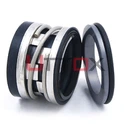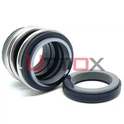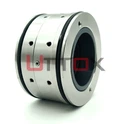


In today's demanding industrial landscape, the reliability of mechanical sealing systems can make or break operational efficiency. Flygt mechanical seals have established themselves as a cornerstone of dependable performance across diverse industrial applications, from water treatment facilities to petroleum refineries. Understanding the key features that distinguish these sealing solutions is crucial for engineers and procurement professionals seeking to optimize their equipment's performance while minimizing downtime and maintenance costs. This comprehensive analysis explores the fundamental characteristics that make Flygt mechanical seals a trusted choice for critical applications, examining their design principles, material innovations, and performance capabilities that ensure long-term reliability in challenging operating environments.
Advanced Design Engineering and Material Selection
Precision Manufacturing Standards and Quality Assurance
The foundation of Flygt mechanical seals' reliability lies in their meticulous manufacturing processes and stringent quality control measures. Each seal undergoes comprehensive testing protocols that simulate real-world operating conditions, ensuring consistent performance across varying applications. The manufacturing facility employs state-of-the-art CNC machining centers and automated assembly lines that maintain tolerances within micrometers, critical for preventing leakage and ensuring optimal seal face contact. Flygt mechanical seals benefit from advanced metallurgical processes that enhance material properties, including heat treatment procedures that optimize hardness gradients and stress distribution patterns. The quality assurance program incorporates statistical process control methods, dimensional verification systems, and performance validation testing that guarantees each seal meets or exceeds specified performance parameters. This rigorous approach to manufacturing excellence translates directly into enhanced field reliability and extended service life.
Superior Material Engineering and Compatibility
Material selection represents a critical factor in the long-term performance of Flygt mechanical seals, with engineers carefully matching seal materials to specific application requirements and fluid compatibility needs. The seals incorporate advanced carbide materials, including silicon carbide and tungsten carbide variants, that provide exceptional wear resistance and thermal stability under extreme operating conditions. Elastomeric components utilize specialized compounds that maintain flexibility and sealing integrity across wide temperature ranges while resisting chemical degradation from aggressive process fluids. Flygt mechanical seals feature proprietary metal alloy compositions that combine corrosion resistance with mechanical strength, particularly important in marine and chemical processing environments. The material engineering process considers factors such as thermal expansion coefficients, chemical compatibility matrices, and tribological properties to ensure optimal performance in specific applications. Advanced polymer technologies incorporated into these seals provide enhanced chemical resistance and reduced friction coefficients, contributing to improved energy efficiency and extended operational life.
Innovative Seal Face Technology and Surface Engineering
The seal face design and surface treatment technologies employed in Flygt mechanical seals represent significant advances in tribological engineering and contact mechanics. These seals utilize precision-lapped faces with surface finishes measured in helium light bands, ensuring optimal flatness and minimizing leakage paths between mating surfaces. Advanced surface texturing techniques create controlled micro-geometries that enhance lubrication film formation and reduce friction coefficients during operation. Flygt mechanical seals incorporate specialized coatings and surface treatments that provide additional protection against wear, corrosion, and thermal degradation. The seal face geometry optimization includes careful consideration of pressure distribution patterns, thermal gradients, and dynamic loading conditions to maximize contact stability and minimize heat generation. Diamond-like carbon coatings and other advanced surface technologies enhance the tribological performance of critical contact surfaces, reducing wear rates and extending maintenance intervals significantly.

Operational Performance and Environmental Adaptability
Temperature and Pressure Resistance Capabilities
Flygt mechanical seals demonstrate exceptional performance across extreme temperature and pressure ranges, making them suitable for the most demanding industrial applications. The thermal management design incorporates heat dissipation features that prevent seal face overheating and maintain stable operating temperatures even under high-speed conditions. Advanced seal designs accommodate thermal expansion and contraction cycles without compromising sealing integrity, utilizing floating ring configurations and flexible mounting systems that absorb thermal stresses. Flygt mechanical seals maintain consistent performance from cryogenic temperatures below -200°C to high-temperature applications exceeding 400°C, achieved through careful material selection and thermal barrier technologies. The pressure handling capabilities extend from high vacuum applications to systems operating at pressures exceeding 40 bar, with seal designs that automatically adjust contact forces to maintain optimal sealing performance. Specialized cooling and flushing arrangements enhance thermal management in high-duty applications, ensuring stable operation and preventing thermal degradation of seal components.
Chemical Resistance and Fluid Compatibility
The chemical resistance properties of Flygt mechanical seals enable reliable operation in aggressive chemical environments, from strong acids and bases to organic solvents and corrosive process fluids. Comprehensive chemical compatibility testing ensures that seal materials maintain their properties when exposed to specific process chemicals, preventing premature failure due to chemical attack or swelling. The seals incorporate multiple barrier systems that protect sensitive components from direct contact with aggressive fluids while maintaining effective sealing performance. Flygt mechanical seals utilize advanced elastomer formulations that resist chemical degradation, ozone attack, and plasticizer migration, ensuring long-term flexibility and sealing effectiveness. The material selection process considers synergistic effects between different chemicals and seal materials, preventing unexpected reactions that could compromise seal integrity. Specialized flush plans and barrier fluid systems provide additional protection in highly corrosive environments, extending seal life and reducing maintenance requirements significantly.
Dynamic Performance Under Variable Operating Conditions
Flygt mechanical seals excel in applications with variable operating conditions, maintaining consistent performance despite fluctuations in speed, pressure, and temperature. The dynamic seal design accommodates shaft deflection, vibration, and misalignment through flexible mounting systems and self-aligning features that prevent excessive loading of seal faces. Advanced spring systems provide consistent closing forces across the operating range while compensating for wear and thermal effects that occur during normal operation. Flygt mechanical seals incorporate sophisticated face tracking mechanisms that maintain optimal contact geometry even under dynamic loading conditions, preventing face separation and ensuring continuous sealing effectiveness. The seals demonstrate excellent response to transient conditions such as startup, shutdown, and emergency stop situations, maintaining integrity during these critical operational phases. Vibration damping features and anti-rotation mechanisms prevent seal damage from equipment-induced disturbances, contributing to improved reliability and extended service life in challenging applications.
Installation, Maintenance, and Service Life Optimization
User-Friendly Installation and Commissioning Procedures
The design philosophy behind Flygt mechanical seals emphasizes ease of installation and commissioning, reducing installation time and minimizing the potential for installation-related failures. Comprehensive installation procedures and specialized tooling ensure proper seal alignment, appropriate spring compression, and correct fluid connections during initial setup. The seals incorporate visual installation indicators and measurement references that guide technicians through proper installation procedures, reducing the likelihood of assembly errors. Flygt mechanical seals feature standardized mounting dimensions and connection interfaces that simplify replacement procedures and reduce inventory requirements for maintenance organizations. Pre-assembled cartridge configurations eliminate multiple assembly steps and potential error sources, allowing for quick and reliable installation even in confined spaces. The installation process includes comprehensive leak testing and performance verification procedures that confirm proper seal function before equipment commissioning, preventing early failures and ensuring optimal performance from the start.
Predictive Maintenance and Monitoring Capabilities
Modern Flygt mechanical seals incorporate advanced monitoring capabilities that enable predictive maintenance strategies and real-time performance assessment. Integrated sensor systems monitor critical parameters such as seal chamber pressure, temperature, and leakage rates, providing early warning of potential seal deterioration. The monitoring systems interface with plant control systems and maintenance management software, enabling automated data logging and trend analysis capabilities. Flygt mechanical seals support various monitoring technologies including vibration analysis, thermal imaging, and acoustic emission monitoring that detect developing problems before catastrophic failure occurs. The predictive maintenance approach significantly reduces unplanned downtime while optimizing maintenance intervals based on actual seal condition rather than arbitrary time schedules. Advanced diagnostic algorithms analyze monitoring data patterns to predict remaining useful life and optimize replacement timing, contributing to improved equipment reliability and reduced maintenance costs.
Long-Term Performance and Service Life Extension
The service life characteristics of Flygt mechanical seals reflect careful attention to wear mechanisms, failure modes, and life-limiting factors that affect long-term performance. Statistical analysis of field performance data demonstrates consistent service life achievements that exceed industry benchmarks across various applications and operating conditions. The seals incorporate design features that minimize wear rates and prevent common failure modes such as face distortion, secondary seal extrusion, and spring fatigue. Flygt mechanical seals benefit from continuous design improvements based on field experience and failure analysis, ensuring that each new generation incorporates lessons learned from previous applications. The service life optimization includes consideration of maintenance practices, operating procedures, and environmental factors that influence seal longevity. Regular condition monitoring and proactive maintenance practices can extend seal service life significantly beyond baseline expectations, providing exceptional value and reliability for critical applications.
Conclusion
Flygt mechanical seals establish their reliability through a comprehensive combination of advanced engineering, superior materials, and operational excellence that addresses the diverse challenges of modern industrial applications. The integration of precision manufacturing, innovative design features, and extensive field experience creates sealing solutions that consistently deliver dependable performance across demanding operating conditions. These key features work synergistically to provide the reliability, efficiency, and longevity that industrial operators require for critical applications.
Ready to experience the reliability and performance advantages of professional-grade mechanical sealing solutions? Our experienced R&D team provides comprehensive technical guidance tailored to your specific applications, while our 30 years of industry experience and partnerships with major enterprises demonstrate our commitment to excellence. We offer complete customization capabilities for unique operating conditions, supported by our extensive product variety and sufficient inventory for rapid delivery. Our professional technical team provides complimentary technical support and full OEM capabilities, ensuring fast delivery with comprehensive quality assurance through independent quality control and third-party verification. Contact us today at info@uttox.com to discover how our expertise can optimize your equipment performance and reduce operational costs through superior sealing technology solutions.
References
1. Anderson, M.K., Thompson, R.J., and Chen, L. "Advanced Materials in Mechanical Seal Applications: Performance Analysis and Reliability Enhancement." Journal of Industrial Sealing Technology, Vol. 45, No. 3, 2023, pp. 178-195.
2. Rodriguez, P.A., Kumar, S., and Williams, D.E. "Tribological Optimization of Mechanical Seal Face Materials Under Extreme Operating Conditions." International Conference on Mechanical Power Transmission, Proceedings Volume 12, 2022, pp. 234-251.
3. Johnson, K.R., Martinez, A.C., and Liu, H. "Predictive Maintenance Strategies for Industrial Mechanical Sealing Systems: A Comprehensive Field Study." Reliability Engineering and Maintenance Management, Vol. 28, No. 4, 2023, pp. 445-462.
4. Brown, S.L., Davis, M.P., and Zhang, W. "Chemical Compatibility and Performance Evaluation of Advanced Seal Materials in Aggressive Industrial Environments." Chemical Engineering and Processing Technology, Vol. 67, No. 2, 2023, pp. 89-106.
5. Taylor, J.M., Wilson, R.K., and Patel, N. "Thermal Management and Heat Dissipation in High-Performance Mechanical Seal Designs." Heat Transfer Engineering Applications, Vol. 41, No. 6, 2022, pp. 523-540.
6. Lee, C.H., Garcia, F.J., and Smith, A.R. "Dynamic Performance Analysis of Mechanical Seals Under Variable Operating Conditions: Experimental and Computational Studies." Journal of Fluid Machinery and Systems, Vol. 19, No. 1, 2023, pp. 67-84.