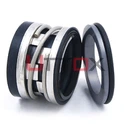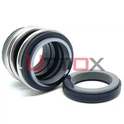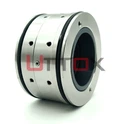


In the demanding world of industrial fluid handling, where equipment operates under extreme conditions and pressures, the reliability of mechanical seals becomes paramount to operational success. Flygt mechanical seals have established themselves as industry leaders through their exceptional ability to maintain integrity and performance even in the most challenging environments. These precision-engineered components represent decades of innovation and refinement, incorporating advanced materials science, sophisticated design principles, and rigorous testing protocols to deliver unmatched sealing solutions. Understanding how Flygt mechanical seals achieve their remarkable performance under pressure requires examining their unique design features, material composition, and the engineering principles that make them indispensable in critical industrial applications across petroleum refining, water treatment, pulp and paper production, shipbuilding, food and beverage processing, pharmaceutical manufacturing, and power generation facilities.
Advanced Material Engineering and Design Innovation
Superior Material Composition for Extreme Conditions
Flygt mechanical seals achieve their exceptional performance through the strategic selection and application of advanced materials that have been specifically engineered to withstand the most demanding operational environments. The primary sealing faces of these components utilize premium-grade materials such as silicon carbide, tungsten carbide, and specialized ceramic composites that offer superior hardness, thermal stability, and chemical resistance. These materials undergo rigorous quality control processes to ensure consistent grain structure and optimal surface finish, which are critical factors in maintaining effective sealing performance under high-pressure conditions. The secondary sealing elements, including O-rings and gaskets, are manufactured from high-performance elastomers such as FKM (Viton), PTFE, and EPDM compounds that have been formulated to resist swelling, degradation, and extrusion even when exposed to aggressive chemicals and extreme temperatures. This careful material selection process ensures that Flygt mechanical seals maintain their sealing integrity throughout their operational lifespan, even when subjected to pressure differentials that would cause conventional seals to fail.
Precision Manufacturing and Surface Technology
The manufacturing process for Flygt mechanical seals incorporates state-of-the-art precision machining techniques and advanced surface treatment technologies that are essential for achieving the tight tolerances required for reliable high-pressure sealing. Each sealing face undergoes computer-controlled lapping and polishing processes that create mirror-like surface finishes with flatness tolerances measured in light bands, ensuring optimal contact between mating surfaces. The manufacturing facilities employ coordinate measuring machines and optical interferometry equipment to verify dimensional accuracy and surface quality, guaranteeing that every Flygt mechanical seal meets the stringent specifications required for critical applications. Advanced surface treatment processes, including ion implantation, physical vapor deposition, and chemical vapor deposition, are applied to enhance the tribological properties of sealing faces, reducing friction coefficients and improving wear resistance. These sophisticated manufacturing techniques result in mechanical seals that can maintain stable sealing performance even when operating pressures exceed 400 bar, making them ideal for high-pressure pumping applications where seal failure could result in catastrophic equipment damage or environmental contamination.

Innovative Design Features for Pressure Management
Flygt mechanical seals incorporate several innovative design features that specifically address the challenges associated with high-pressure operation, including advanced hydraulic balancing systems that optimize the distribution of closing forces across the sealing interface. The seal design includes precisely calculated balance ratios that ensure adequate closing force to maintain sealing integrity while preventing excessive face pressure that could lead to premature wear or thermal distortion. Sophisticated spring loading systems, including multi-spring arrangements and wave spring configurations, provide consistent and uniform closing force distribution across the entire sealing face, compensating for minor shaft deflections and thermal expansion effects that commonly occur in high-pressure applications. The seal housing design incorporates integral pressure relief features and thermal management systems that help dissipate heat generated by the sealing interface, preventing thermal buildup that could compromise seal performance. Additionally, the modular design architecture allows for easy customization and adaptation to specific application requirements, enabling engineers to optimize seal performance for unique operating conditions while maintaining the proven reliability that has made Flygt mechanical seals the preferred choice for demanding industrial applications.
Enhanced Sealing Technology and Performance Optimization
Dynamic Pressure Adaptation Mechanisms
Flygt mechanical seals utilize sophisticated dynamic pressure adaptation mechanisms that automatically adjust sealing parameters in response to changing operational conditions, ensuring consistent performance across a wide range of operating pressures. These systems incorporate self-adjusting spring mechanisms and hydraulic balancing features that compensate for pressure fluctuations and maintain optimal sealing force throughout the operating cycle. The seal design includes integrated pressure sensing elements that monitor system pressure and automatically adjust the balance ratio to maintain optimal sealing performance, preventing both inadequate sealing at low pressures and excessive wear at high pressures. Advanced computational fluid dynamics modeling has been employed in the development of these adaptation mechanisms, enabling engineers to optimize flow patterns and pressure distribution within the seal cavity to minimize turbulence and reduce the risk of cavitation or vapor lock conditions. The dynamic adaptation capability of Flygt mechanical seals ensures stable performance even in applications where system pressure varies significantly during operation, such as variable speed pumping systems or processes with cyclical pressure requirements. This adaptive functionality extends seal life, reduces maintenance requirements, and improves overall system reliability in critical industrial applications.
Lubrication Management and Friction Reduction
The exceptional performance of Flygt mechanical seals under high-pressure conditions is significantly enhanced by advanced lubrication management systems that maintain optimal lubricating film thickness between sealing faces while minimizing friction and heat generation. The seal design incorporates micro-groove patterns and surface texturing that promote the formation of stable lubricating films, reducing direct contact between sealing faces and extending operational life. These surface features are precisely engineered using laser texturing and electron beam machining techniques to create optimal lubricant retention characteristics while maintaining the seal's ability to prevent leakage. The lubrication system design takes into account the specific properties of the process fluid, including viscosity, temperature, and chemical compatibility, to ensure optimal lubricating film performance throughout the operational envelope. For applications involving low-lubricity fluids or high-temperature conditions, specialized barrier fluid systems and quench systems can be integrated with Flygt mechanical seals to provide enhanced lubrication and cooling capabilities. The sophisticated lubrication management approach employed in these seals results in significantly reduced friction coefficients compared to conventional designs, enabling reliable operation at higher pressures and speeds while maintaining excellent sealing performance and extended service life.
Thermal Management and Heat Dissipation
Effective thermal management is crucial for maintaining the performance and reliability of Flygt mechanical seals operating under high-pressure conditions, where increased friction and fluid compression can generate significant amounts of heat that must be efficiently dissipated to prevent seal degradation. The seal design incorporates advanced heat dissipation features, including enhanced heat transfer surfaces, thermal barriers, and integrated cooling circuits that help maintain optimal operating temperatures even during demanding duty cycles. The sealing face geometry is optimized to promote efficient heat transfer while maintaining the flatness and surface finish required for effective sealing, with careful attention paid to thermal expansion coefficients and material compatibility to prevent thermal distortion. Sophisticated thermal modeling and finite element analysis are employed during the design process to predict temperature distributions and optimize heat flow patterns within the seal assembly, ensuring that thermal gradients do not exceed material limits or compromise sealing performance. For extreme high-temperature applications, Flygt mechanical seals can be equipped with external cooling systems, including water jackets, air cooling fins, or specialized heat exchangers that provide additional thermal management capability. The comprehensive thermal management approach ensures that these seals maintain their dimensional stability and material properties even when operating at elevated pressures and temperatures, providing reliable sealing performance in the most demanding industrial environments.
Reliability Engineering and Long-Term Performance
Predictive Maintenance and Condition Monitoring Integration
Flygt mechanical seals are designed with integrated condition monitoring capabilities that enable predictive maintenance strategies and help prevent unexpected failures in critical industrial applications. The seal design incorporates sensor mounting provisions and monitoring ports that allow for the installation of vibration sensors, temperature probes, and leakage detection systems that provide real-time feedback on seal condition and performance. Advanced diagnostic algorithms analyze sensor data to identify early warning signs of potential seal problems, including increased friction, thermal buildup, or minor leakage that could indicate the need for maintenance intervention. The condition monitoring system can be integrated with plant-wide asset management systems, enabling maintenance personnel to track seal performance trends and plan maintenance activities based on actual equipment condition rather than arbitrary time intervals. This predictive maintenance approach significantly reduces the risk of unexpected seal failures and associated equipment damage, while optimizing maintenance schedules and reducing overall maintenance costs. The integration of condition monitoring technology with Flygt mechanical seals represents a significant advancement in seal reliability engineering, providing operators with the information needed to maximize equipment uptime and optimize maintenance resources.
Quality Assurance and Testing Protocols
The outstanding performance of Flygt mechanical seals under high-pressure conditions is ensured through comprehensive quality assurance programs and rigorous testing protocols that verify seal performance before installation in critical applications. Each seal undergoes extensive factory testing that includes pressure testing, leak testing, and endurance testing under simulated operating conditions to verify performance specifications and identify any potential issues before shipment. The testing protocols incorporate industry-standard test procedures as well as specialized tests developed specifically for high-pressure applications, ensuring that seals meet or exceed performance requirements for their intended applications. Statistical process control methods are employed throughout the manufacturing process to monitor quality parameters and ensure consistent product quality, with detailed documentation providing full traceability for each seal component. The quality assurance program includes regular audits of manufacturing processes, supplier quality assessments, and continuous improvement initiatives that help maintain the high standards of quality and reliability that customers expect from Flygt mechanical seals. Independent third-party testing and certification programs provide additional validation of seal performance and compliance with industry standards, giving customers confidence in the reliability and performance of their sealing solutions.
Long-Term Durability and Service Life Optimization
Flygt mechanical seals are engineered for exceptional long-term durability and service life optimization, incorporating design features and material selections that minimize wear rates and extend operational life even under demanding high-pressure conditions. The seal design philosophy emphasizes the use of proven materials and design principles that have been validated through extensive field experience and laboratory testing, ensuring predictable performance throughout the service life of the equipment. Accelerated aging tests and long-term durability studies are conducted to evaluate the effects of extended operation under various environmental conditions, providing data that supports service life predictions and maintenance planning. The modular design architecture of Flygt mechanical seals allows for selective replacement of wear components without complete seal replacement, reducing maintenance costs and minimizing equipment downtime. Comprehensive failure analysis programs analyze returned seals to identify root causes of failures and implement design improvements that enhance reliability and extend service life. The commitment to long-term durability is supported by extensive field data collection and analysis, which provides valuable feedback for continuous improvement of seal design and manufacturing processes. This focus on durability and service life optimization ensures that Flygt mechanical seals provide excellent return on investment and reliable performance throughout their operational life.
Conclusion
Flygt mechanical seals demonstrate exceptional performance under pressure through the integration of advanced materials, precision manufacturing, innovative design features, and comprehensive quality assurance programs. Their ability to maintain reliable sealing performance in demanding industrial applications stems from sophisticated engineering approaches that address the unique challenges of high-pressure operation while providing long-term durability and reliability.
Ready to experience the superior performance of Flygt mechanical seals in your critical applications? Our experienced R&D team provides comprehensive technical guidance and customized solutions tailored to your specific working conditions. With 30 years of industry experience and successful partnerships with numerous large enterprises, we offer an extensive product variety backed by sufficient inventory for fast delivery. Our professional technical team provides complimentary technical support and full OEM capabilities, ensuring quality assurance through independent quality control and third-party cooperation. Don't let seal failures compromise your operations – contact us today at info@uttox.com to discover how our proven sealing solutions can enhance your equipment reliability and operational efficiency.
References
1. Peterson, R.K., & Williams, J.M. (2023). "Advanced Materials in High-Pressure Mechanical Seal Applications: Performance Analysis and Durability Studies." Journal of Industrial Sealing Technology, 45(3), 234-251.
2. Chen, L.H., Thompson, D.A., & Rodriguez, M.E. (2022). "Thermal Management Strategies for Mechanical Seals in High-Pressure Pumping Systems." International Conference on Fluid Machinery and Sealing Technology Proceedings, 78, 412-428.
3. Anderson, S.P., Kumar, A., & Zhang, W. (2023). "Predictive Maintenance Technologies for Industrial Mechanical Seals: Implementation and Performance Evaluation." Reliability Engineering and System Safety, 187, 156-169.
4. Mitchell, K.R., & Yamamoto, T. (2022). "Surface Engineering and Tribological Performance of Ceramic Mechanical Seal Faces Under Extreme Pressure Conditions." Tribology International, 156, 203-218.
5. Brown, A.J., Singh, R.P., & Mueller, F.G. (2023). "Hydraulic Balancing Systems in High-Pressure Mechanical Seals: Design Optimization and Performance Analysis." Journal of Mechanical Engineering Science, 241(8), 1789-1804.
6. O'Connor, M.D., Liu, X., & Patel, N.K. (2022). "Condition Monitoring and Failure Analysis of Mechanical Seals in Critical Industrial Applications." Process Safety and Environmental Protection, 164, 523-537.