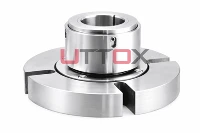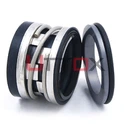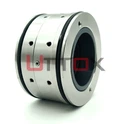


Selecting the wrong ebara mechanical seal can result in costly downtime, premature seal failure, and expensive pump repairs that disrupt your operations. Many facility managers and maintenance engineers struggle with identifying the correct seal specifications, material compatibility, and operating parameters for their specific Ebara pump models. This comprehensive guide walks you through the critical factors you must consider when choosing an ebara mechanical seal, from understanding temperature and pressure limits to matching seal materials with your process fluid, ensuring optimal pump performance and extended seal life for your industrial applications.
Understanding Ebara Pump Mechanical Seal Fundamentals
When working with Ebara pumps across various industrial sectors, understanding the fundamental principles of mechanical seal operation becomes paramount for achieving reliable pump performance. An ebara mechanical seal serves as the critical barrier between the pump's rotating shaft and the stationary housing, preventing process fluid leakage while maintaining system pressure integrity. The seal consists of two primary sealing faces-one rotating with the shaft and one stationary-that maintain contact through spring loading and hydraulic pressure, creating a thin fluid film that both seals and lubricates the interface. Modern mech seals like the M7N mechanical seal design incorporate advanced materials and precise engineering to handle demanding applications in petroleum refining, water treatment, and chemical processing. The effectiveness of your ebara mechanical seal depends on maintaining proper operating conditions within specified limits, including temperature ranges from negative twenty to positive two hundred twenty degrees Celsius, pressure ratings up to sixteen bar, and shaft speeds not exceeding twenty meters per second. Understanding these fundamental parameters helps you make informed decisions when selecting replacement seals or upgrading existing pump systems. The M7N M74 Mechanical Seal represents a proven design that balances performance with cost-effectiveness, offering compatibility with shaft sizes ranging from fourteen millimeters to two hundred millimeters, making it suitable for diverse pump models throughout the Ebara product line.
Key Components of Mechanical Seal Systems
The mechanical seal system for your Ebara pump encompasses multiple integrated components that work together to ensure reliable sealing performance across varying operating conditions. At the core, the seal rings form the primary sealing interface, available in various material combinations designated as A, B, Q1/12, Q2/22, U1/12, and U2/22 configurations to match specific fluid compatibility requirements. The elastomer components, including O-rings and secondary seals, provide static sealing between stationary components while accommodating thermal expansion and minor misalignments, with material options including VITON for chemical resistance, EPDM for steam and hot water applications, NBR for petroleum products, FFKM for extreme chemical environments, and AFLAS for specialized applications. Metal components such as seal housings, springs, and hardware are manufactured from SS304 stainless steel for standard applications, SS316 for enhanced corrosion resistance, duplex stainless steel for high-stress environments, or Hastelloy C for severe corrosive conditions. The sealed box or seal chamber provides the critical environment where the m7n mechanical seal operates, requiring proper dimensions and flushing arrangements to maintain adequate cooling and lubrication. Auxiliary devices including circulation systems, cooling-heating equipment, and piping plans support optimal seal operation by controlling seal face temperature and ensuring clean flush fluid delivery. The complete system also requires matching accessories such as shaft sleeves to protect the pump shaft from wear and corrosion, and glands to secure the seal assembly while maintaining proper compression on static sealing elements.
Critical Selection Criteria for Ebara Mechanical Seals
Selecting the appropriate ebara mechanical seal requires systematic evaluation of multiple critical parameters that directly impact seal performance, reliability, and service life in your specific application. The process begins with documenting your pump's exact model number and configuration, as Ebara produces numerous pump series including CD, CDH, 2CD, and others, each potentially requiring different seal designs and dimensions. Operating temperature represents one of the most influential factors, as seal face materials, elastomers, and lubricants must maintain their properties throughout the expected temperature range, with the M7N M74 Mechanical Seal rated for operation from negative twenty degrees Celsius up to two hundred twenty degrees Celsius, covering most industrial applications from cryogenic services to high-temperature processes. Pressure considerations include both the maximum operating pressure and pressure fluctuations, as mech seals must maintain face contact under varying pressure loads while preventing seal face separation that leads to leakage, with standard designs handling up to sixteen bar pressure. Shaft speed directly affects seal face wear rates and heat generation, with the seal design needing to accommodate speeds up to twenty meters per second through proper face material selection and cooling arrangements. Chemical compatibility between your process fluid and seal materials becomes absolutely critical, as even minor incompatibilities can cause rapid elastomer degradation, seal face corrosion, or deposit formation that destroys sealing surfaces. The physical properties of your pumped fluid, including viscosity, lubricity, abrasive content, and solid particle size, determine whether you need special face materials, flushing arrangements, or barrier fluid systems to achieve acceptable seal life.

Temperature and Pressure Operating Limits
The temperature and pressure operating envelope of your ebara mechanical seal fundamentally determines its applicability to your specific pumping application and must align with your process conditions to ensure reliable long-term performance. Temperature affects every aspect of seal operation, from the thermal expansion of metal components and dimensional stability of seal faces to the chemical resistance and elastic properties of rubber elements. The M7N mechanical seal design accommodates temperatures ranging from negative twenty degrees Celsius, suitable for refrigeration and cryogenic applications, up to two hundred twenty degrees Celsius, appropriate for hot water circulation, steam condensate, and many chemical processes. When operating near these temperature extremes, additional considerations include thermal cycling effects, which can cause seal face distortion and premature wear, and the need for external cooling systems to manage heat generation at the seal faces. Pressure limitations reflect both the mechanical strength of seal components and the seal face design's ability to maintain proper contact load across the sealing interface. Standard ebara mechanical seal configurations handle pressures up to sixteen bar, which satisfies requirements for most industrial pump applications including building services, irrigation systems, and light chemical processing. However, pressure spikes during pump startup, system water hammer events, or emergency shutdowns can exceed steady-state ratings, requiring pressure relief provisions or selection of higher-rated seal designs. The combination of temperature and pressure creates additional complexity, as materials that perform well at low pressure and high temperature may fail when both conditions occur simultaneously, necessitating careful material selection based on actual worst-case operating conditions rather than average parameters.
Shaft Size and Seal Configuration Compatibility
Proper matching of seal dimensions to your Ebara pump's shaft diameter and seal chamber configuration ensures correct installation, optimal performance, and prevents premature seal failure due to dimensional incompatibilities. The m7n mechanical seal accommodates shaft sizes from fourteen millimeters to two hundred millimeters, covering the complete range of Ebara pump models from small residential units to large industrial pumps. Accurate shaft measurement at the seal location proves essential, as even slight diameter variations affect seal compression, face loading, and potential leakage paths. The seal chamber dimensions, including depth, diameter, and the presence of internal steps or shoulders, determine which seal designs physically fit your pump and allow proper installation without interference or excessive clearances. Component arrangement within the seal chamber affects fluid circulation patterns, heat dissipation, and the seal's ability to handle solids or vapor formation, with some applications requiring special seal chamber modifications for optimal mech seals performance. The shaft sleeve selection, when required, provides a renewable wearing surface that protects the expensive pump shaft while offering a precision sealing surface for the rotary seal component. Gland plate design and bolt hole patterns must match your pump's stuffing box flange, with proper gasket selection ensuring leak-free connection between the gland and pump housing. Installation length, the distance from the gland face to the seal's sealing point on the shaft, requires precise control to achieve specified spring compression and seal face loading, with cartridge-style seals simplifying this critical dimension by incorporating factory-preset assembly lengths.
Material Selection for Optimal Performance
The materials used in your ebara mechanical seal construction directly determine its chemical compatibility, wear resistance, thermal stability, and ultimate service life in your specific pumping application. Seal face materials must provide the optimal balance of hardness for wear resistance, thermal conductivity for heat dissipation, and chemical inertness to resist corrosion and deposits from your process fluid. Common seal face combinations include carbon versus ceramic for clean water and mild chemical applications, silicon carbide versus silicon carbide for abrasive services and high-temperature applications, and tungsten carbide versus silicon carbide for extremely abrasive or corrosive fluids requiring maximum wear resistance. The M7N M74 Mechanical Seal offers multiple seal ring configurations designated as A, B, Q1/12, Q2/22, U1/12, and U2/22, each representing specific material combinations optimized for different application requirements, from standard water service to aggressive chemical environments. Elastomer selection for O-rings and secondary seals requires careful consideration of chemical exposure, temperature extremes, and mechanical properties needed to maintain sealing effectiveness throughout the expected service life. VITON fluoroelastomer provides excellent chemical resistance and high-temperature capability up to two hundred thirty degrees Celsius, making it the preferred choice for most chemical processing applications. EPDM elastomer offers outstanding resistance to steam, hot water, and polar solvents while maintaining flexibility at low temperatures, ideal for water treatment and steam applications. NBR nitrile rubber provides cost-effective sealing for petroleum products and mineral oils but has limited chemical and temperature resistance. FFKM perfluoroelastomer delivers universal chemical resistance and extreme temperature capability but commands premium pricing. AFLAS elastomer serves specialized applications involving acids, bases, and steam where other materials fail.
Metal Component Material Considerations
The metallic components in your m7n mechanical seal, including seal housings, springs, pins, clips, and hardware, require appropriate material selection to resist corrosion from your process fluid while maintaining mechanical integrity under operating stresses. SS304 stainless steel represents the standard material choice for general industrial applications, offering good corrosion resistance in fresh water, mild chemicals, and non-chloride environments at reasonable cost. This austenitic stainless steel provides adequate strength for most seal designs while facilitating machining and forming operations during manufacturing. SS316 stainless steel contains molybdenum additions that significantly improve corrosion resistance, particularly against chlorides, making it essential for seawater applications, chlorinated water treatment systems, and chemical processes involving halogens. The enhanced corrosion resistance justifies the moderate cost premium in applications where SS304 would suffer pitting or stress corrosion cracking. Duplex stainless steels combine ferritic and austenitic microstructures to achieve approximately double the yield strength of standard austenitic grades while maintaining excellent corrosion resistance, particularly to chloride stress corrosion cracking and pitting. These materials suit high-pressure ebara mechanical seal applications and pumps handling brackish water, seawater, or corrosive chemicals at elevated temperatures. Hastelloy C represents a nickel-based superalloy offering exceptional resistance to a wide range of aggressive chemicals including sulfuric acid, hydrochloric acid, and oxidizing chlorides, making it the material of choice for severely corrosive environments where stainless steels would quickly fail. While significantly more expensive than stainless steels, Hastelloy C proves cost-effective in applications where frequent seal failures would occur with lesser materials, as its extended service life and reduced downtime justify the initial investment.
Seal Type Selection Based on Application Requirements
Choosing between single seals, double seals, tandem seals, or other specialized configurations depends on your application's safety requirements, environmental regulations, and process fluid characteristics. Single ebara mechanical seals represent the most economical and simple configuration, with one set of seal faces providing the barrier between the pump interior and atmosphere, suitable for non-hazardous, non-volatile fluids where minor emissions meet regulatory requirements. These seals require adequate lubrication from the pumped fluid and operate most reliably when handling clean, lubricating liquids at moderate temperatures and pressures. Double mechanical seals incorporate two sets of seal faces in a back-to-back or face-to-face arrangement, creating a sealed chamber between them that contains a barrier or buffer fluid. This configuration prevents process fluid emissions even during seal face wear or minor failures, making it mandatory for toxic, flammable, or environmentally sensitive fluids. The barrier fluid lubricates and cools both sets of seal faces while providing early warning of seal degradation through monitoring systems. Tandem seals use two seals in series without pressurized barrier fluid, with the unpressurized cavity between seals vented to a collection system, offering containment benefits at lower cost than double seals for services where complete emission prevention is desired but barrier fluid complexity is unnecessary. The M7N M74 Mechanical Seal can be supplied in single or double configurations depending on application requirements, with proper auxiliary systems ensuring reliable operation in either arrangement. Multiple seal arrangements serve specialized applications such as those handling crystallizing fluids, polymers, or extremely abrasive slurries requiring isolation of the mech seals from direct process fluid contact. Combined seal systems integrate mechanical seals with other sealing technologies such as labyrinth seals, magnetic couplings, or packing to address unique application challenges where conventional seal designs alone prove inadequate.
Auxiliary Systems and Piping Plans
The auxiliary equipment and piping arrangements supporting your m7n mechanical seal significantly influence reliability, service life, and emission control effectiveness in demanding applications. API Plan 11 represents the simplest arrangement, recirculating cool process fluid from the pump discharge back to the seal chamber, providing adequate flushing for clean, non-polymerizing liquids at moderate temperatures. This system requires no external equipment but offers limited cooling capability and depends on process fluid cleanliness. API Plan 13 circulates fluid from the pump discharge through an external heat exchanger before returning to the seal chamber, managing seal face temperature in applications where process heat or friction heating would otherwise cause seal failure or fluid vaporization. The heat exchanger removes heat generated at the seal faces while maintaining proper fluid temperature for optimal seal performance. API Plan 23 injects cool, clean fluid from an external source into the seal chamber, providing superior cooling and flushing when the process fluid itself is too hot, dirty, or prone to vaporization at the seal faces. This arrangement requires a compatible flush fluid source and proper flow rate control to prevent seal damage from excessive or insufficient flow. API Plan 32 supplies clean barrier fluid to a pressurized reservoir connected to double seal arrangements, maintaining pressure above the seal chamber pressure to ensure inward flow through any leak path, preventing process fluid emissions while lubricating and cooling both seal faces. The barrier fluid system requires pressure control, level monitoring, and periodic fluid maintenance. API Plan 53A, B, and C provide pressurized barrier fluid circulation with temperature control for double ebara mechanical seal installations in critical services, incorporating pumps, heat exchangers, and instrumentation to maintain optimal seal operating conditions regardless of process variations.
Installation and Maintenance Best Practices
Proper installation procedures and preventive maintenance practices determine whether your ebara mechanical seal achieves its designed service life or fails prematurely, with many seal failures attributable to installation errors rather than design limitations. Pre-installation inspection verifies that the seal components match the specified configuration, with no shipping damage to sealing faces or elastomers, and that all required mounting hardware and accessories are available. The pump shaft and seal chamber require thorough cleaning to remove any dirt, scale, or old gasket material that could interfere with proper seal seating or cause misalignment. Shaft runout and end play measurements confirm that the pump meets seal manufacturer's tolerances, typically requiring less than fifty micrometers total indicated runout at the seal location and minimal axial shaft movement. Shaft sleeve installation, when required, demands proper sizing, alignment, and secure attachment to prevent sleeve rotation or axial movement during operation. The M7N mechanical seal installation follows standardized procedures including applying recommended lubricants to O-rings and shaft contact surfaces, carefully positioning the rotary assembly without damaging seal faces or elastomers, and securing the stationary seat housing with uniform bolt tightening patterns that prevent distortion. Cartridge seal designs simplify installation by incorporating factory-preset dimensions and assembly, requiring only mounting to the pump with correct axial positioning and torque specifications. Post-installation checks before pump startup include verification that the seal rotates freely without binding or excessive drag, proper auxiliary system connections and flow directions, and correct torque on all seal and gland fasteners. Proper pump startup procedures begin with venting air from the pump and seal chamber, confirming auxiliary system operation, and gradually bringing the pump to operating speed while monitoring for leakage or abnormal noise. Routine maintenance includes periodic inspection of seal leakage rates, barrier fluid level and condition in double seal applications, and auxiliary system pressures and temperatures, with documented results enabling trend analysis to predict seal degradation before catastrophic failure occurs.
Troubleshooting Common Seal Problems
Understanding common failure modes and their causes enables rapid diagnosis of m7n mechanical seal problems, minimizing unplanned downtime and preventing secondary damage to pump components. Excessive leakage from a recently installed seal typically indicates installation errors such as reversed seal components, damaged seal faces or O-rings during assembly, incorrect seal compression, or shaft misalignment exceeding the seal's capability. Gradual increase in leakage from a seal in service suggests seal face wear from abrasive particles in the fluid, chemical attack on face materials or elastomers, thermal cracking from temperature cycling, or loss of spring force from corrosion or deposits. Intermittent leakage often results from vaporization at the seal faces during low-flow or deadhead conditions, air entrainment in the pumped fluid creating unstable seal face conditions, or process pressure or temperature excursions exceeding the seal's rating. Rapid seal failure immediately after installation points to dry running during startup from inadequate priming, seal damage from solids or debris in the seal chamber, operating conditions far outside the seal's specifications, or auxiliary system malfunctions preventing proper cooling or lubrication. Excessive heat generation at the seal, evidenced by steam formation or hot surfaces, indicates insufficient cooling from blocked flush lines, inadequate flush flow rate, vaporization of seal fluid, or improper seal face materials for the application. Seal face damage including chipping, cracking, or severe wear patterns reveals hard particle ingestion, thermal shock from rapid temperature changes, cavitation erosion from vapor bubble collapse at seal faces, or incompatible seal face material combinations. Elastomer failures manifesting as hardening, softening, swelling, or cracking demonstrate chemical incompatibility with the process or barrier fluid, temperature excursions beyond elastomer capabilities, or seal aging from extended service. Drive mechanism problems such as broken springs, worn drive lugs, or corroded pins indicate corrosive environment exposure, fatigue from vibration or pressure cycling, or assembly errors creating excessive stress on components. Systematic troubleshooting examining operating conditions, maintenance history, and physical evidence guides corrective actions and prevents recurrence.
Equivalent Seal Cross-Reference and Sourcing
Understanding seal equivalency and interchangeability enables sourcing quality replacement seals while maintaining performance standards and potentially reducing costs. The M7N M74 Mechanical Seal offered by Zhejiang Uttox Fluid Technology Co., Ltd. completely replaces original Burgmann mechanical seals, specifically the Eagle Burgmann M7N/M74 design, providing dimensional and functional equivalency with original equipment while delivering excellent quality at competitive pricing. Seal equivalency requires matching multiple critical parameters including seal type and configuration, dimensional specifications such as shaft diameter and seal chamber size, operating limits for temperature, pressure, and speed, and material options for seal faces, elastomers, and metal components. Direct replacement seals eliminate the need for pump modifications or seal chamber machining, reducing installation time and costs while ensuring compatibility with existing auxiliary systems and piping plans. The mech seals from reputable aftermarket manufacturers like Uttox undergo rigorous quality control and testing to verify performance equivalent to original equipment, with manufacturing processes and material specifications meeting or exceeding OEM standards. Sourcing from established suppliers with extensive experience in mechanical seal design and manufacturing, such as Uttox with over thirty years in the industry, provides confidence in product quality, technical support, and consistent availability. Multiple sourcing options for critical seal components reduces dependence on single suppliers, improving supply chain resilience and potentially negotiating better pricing while maintaining quality standards. Documentation and certification of materials and dimensions enables quality verification and ensures regulatory compliance in industries with strict standards such as food processing, pharmaceuticals, and drinking water treatment where material traceability proves essential.
Quality Assurance and Testing Standards
Mechanical seal quality assurance encompasses materials verification, dimensional inspection, assembly procedures, and performance testing to ensure reliable operation throughout the expected service life. Material certifications document the actual composition and properties of seal face materials, elastomers, and metal components, confirming compliance with specified grades and providing traceability for quality investigations. Dimensional inspection using precision measuring equipment verifies that manufactured components meet drawing specifications and tolerances, preventing fit and function problems during installation or operation. Seal face flatness and surface finish measurements ensure proper mating and sealing, typically requiring flatness within three helium light bands and surface finish of eight to sixteen microinches Ra for reliable liquid sealing. Assembly quality control monitors proper component positioning, compression of spring elements, and correct orientation of directional components, with documented procedures and trained operators ensuring consistency. Hydrostatic testing applies specified pressure to assembled ebara mechanical seals while checking for leakage, verifying the seal's pressure-containing capability before shipment. Performance testing on seal test stands simulates actual operating conditions including rotational speed, process pressure, and operating temperature, measuring leakage rates, face temperature, and power consumption to validate design performance. Compliance with international standards such as ISO, DIN, or API specifications, where applicable, demonstrates engineering rigor and provides confidence in seal performance for critical applications. Third-party inspection and testing services offer independent verification of quality for applications where unbiased assessment adds value, such as large projects or critical services where seal failure consequences justify additional quality assurance costs.
Conclusion
Selecting the perfect ebara mechanical seal requires comprehensive evaluation of operating conditions, proper material selection, and understanding of seal configurations that match your specific pump model and application requirements. By considering temperature and pressure limits, shaft dimensions, chemical compatibility, and auxiliary system needs, while sourcing quality components from experienced manufacturers like Uttox, you ensure reliable pump operation and extended seal service life.
Cooperate with Zhejiang Uttox Fluid Technology Co.,Ltd.
Partner with Zhejiang Uttox Fluid Technology Co.,Ltd., your trusted China ebara mechanical seal manufacturer, China ebara mechanical seal supplier, and China ebara mechanical seal factory since 1990. As a leading China ebara mechanical seal wholesale provider, we offer High Quality ebara mechanical seal at competitive ebara mechanical seal price with ebara mechanical seal for sale worldwide. Our experienced R&D team provides technical guidance and customization for different working conditions, backed by thirty years of industry experience cooperating with many large enterprises across petroleum refining, water treatment, pulp and paper, shipbuilding, food and beverage, pharmacy, and power plant industries. With rich product variety, sufficient inventory for fast delivery, and professional technical support including OEM services, we deliver quality matching Flygt standards with comprehensive quality assurance through independent control or third-party cooperation. Contact us today at info@uttox.com to discuss your mechanical seal requirements and receive expert solutions for your pumping applications.
References
1. "Mechanical Seals for the Pump Industry: Selection, Installation, Maintenance, and Troubleshooting" - Hydraulic Institute Standards Committee
2. "Centrifugal Pump Mechanical Seal Selection and Application" - American Society of Mechanical Engineers (ASME)
3. "API Standard 682: Pumps - Shaft Sealing Systems for Centrifugal and Rotary Pumps" - American Petroleum Institute
4. "Industrial Pump Technology: Selection, Installation, and Maintenance" - Dr. Robert X. Perez, Maintenance Engineering Handbook