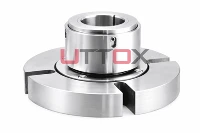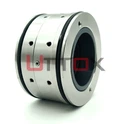


When operating pumps and equipment handling liquid nitrogen at minus 196 degrees Celsius or liquid oxygen at minus 183 degrees Celsius, standard elastomeric seals fail within minutes, leading to dangerous leaks, costly downtime, and potential safety hazards. The extreme thermal shock and embrittlement of conventional materials make cryogenic mechanical seals the only reliable solution for industries dealing with industrial gases, LNG transport, and cryogenic processing applications where equipment failure is simply not an option. Metal bellows mechanical seals, particularly those utilizing edge-welded construction with specialized stainless steel alloys, represent the optimal sealing solution for cryogenic temperatures. These advanced cryogenic mechanical seals combine flexible metal bellows elements with carefully selected face materials that maintain their integrity and sealing capabilities even when subjected to temperatures ranging from minus 270 degrees Celsius to ambient conditions, providing leak-free performance where traditional sealing methods cannot survive.
Understanding Cryogenic Mechanical Seals and Their Critical Role
Cryogenic mechanical seals are precision-engineered sealing devices specifically designed to prevent fluid leakage in rotating equipment operating at extremely low temperatures. Unlike conventional mechanical seals that rely on elastomeric components, cryogenic mechanical seals utilize metal construction that can withstand the unique challenges presented by cryogenic fluids without becoming brittle or losing their sealing capabilities. The fundamental challenge in cryogenic sealing stems from the extreme temperature differential between ambient conditions and the process fluid. When a pump handling liquid nitrogen or liquid oxygen starts up, the mechanical seals must endure thermal shock that would instantly destroy rubber or polymer-based sealing components. Metal bellows seal designs address this challenge through their inherent flexibility and material selection. The bellows element, typically manufactured from Alloy 347 stainless steel, maintains its mechanical properties and spring characteristics even at temperatures approaching absolute zero, ensuring consistent face loading and reliable sealing performance throughout the operational temperature range. The seal faces in cryogenic mechanical seals require equally careful consideration. Carbon graphite and silicon carbide face materials have emerged as the industry standard combination for cryogenic service due to their thermal conductivity, wear resistance, and ability to maintain a stable sealing interface despite extreme temperature fluctuations. The MFLC12 Mechanical Seal for Cryostar Pumps exemplifies this design philosophy, incorporating proven face material combinations with edge-welded metal bellows construction to deliver reliable sealing in the most demanding cryogenic applications.
Material Selection and Performance in Extreme Cold
The selection of appropriate materials for cryogenic mechanical seals represents one of the most critical factors determining seal performance and longevity. Alloy 347 stainless steel has established itself as the preferred bellows material for cryogenic applications due to its superior low-temperature toughness and resistance to brittle fracture. This austenitic stainless steel maintains its ductility and mechanical strength at cryogenic temperatures, unlike many other metals that become dangerously brittle when exposed to extreme cold. The edge-welded metal bellows construction method provides additional advantages in cryogenic service compared to formed bellows alternatives. Edge-welded bellows feature individual diaphragms laser-welded at their outer and inner diameters, creating a flexible yet robust structure that can accommodate thermal contraction and expansion without stress concentration. This construction method eliminates the work-hardening concerns associated with formed bellows while providing precise spring rates that ensure consistent seal face loading across the entire temperature operating range. Metal bellows seal technology has evolved significantly to meet the demanding requirements of cryogenic processing, with modern designs incorporating computational analysis to optimize bellows geometry for maximum flexibility and fatigue life. Secondary sealing components in cryogenic mechanical seals must also withstand extreme temperatures without leaking or deteriorating. Advanced PTFE compounds and filled PTFE materials provide the necessary low-temperature flexibility while maintaining chemical compatibility with cryogenic fluids. These materials must balance the competing requirements of maintaining a seal at cryogenic temperatures while accommodating the thermal expansion that occurs during warm-up cycles. The MFLC12 Mechanical Seal for Cryostar Pumps utilizes carefully selected secondary seal materials that have demonstrated reliability in thousands of installations handling liquid oxygen, nitrogen, argon, and carbon dioxide.
Metal Bellows Seal Technology for Cryogenic Applications
Metal bellows seal designs represent the pinnacle of mechanical seal engineering for cryogenic service, offering unmatched reliability and performance in applications where equipment failure poses safety risks and enormous economic consequences. The metal bellows element serves multiple critical functions simultaneously: providing the spring force necessary for seal face loading, accommodating shaft movement and thermal growth, and creating a hermetic barrier between the process fluid and atmosphere without relying on dynamic elastomeric components that would fail at cryogenic temperatures. The engineering sophistication embodied in modern metal bellows seal designs reflects decades of operational experience and continuous improvement. Edge-welded bellows construction utilizes precision-manufactured diaphragms, typically ranging from 0.004 to 0.010 inches in thickness, welded together to create a flexible yet durable assembly. This construction method produces bellows with highly predictable spring rates and exceptional fatigue resistance, critical factors when seals must endure millions of pressure and temperature cycles throughout their service life. The bellows geometry-including the number of convolutions, convolution height, and diaphragm thickness-is carefully optimized to provide adequate flexibility for accommodating shaft runout and misalignment while generating sufficient force to maintain proper seal face contact pressure. Cryogenic mechanical seals utilizing metal bellows technology typically incorporate unbalanced seal designs that leverage process pressure to assist in maintaining face contact. This design approach proves particularly effective in cryogenic service where the extremely low viscosity of the process fluid demands positive seal face loading to prevent leakage. The MFLC12 Mechanical Seal for Cryostar Pumps exemplifies this design philosophy, incorporating an unbalanced configuration that provides reliable sealing across a wide pressure range while minimizing heat generation at the seal faces. The seal's metal bellows construction eliminates concerns about elastomer degradation or hardening that would plague conventional seal designs in cryogenic service.

Design Features Ensuring Cryogenic Reliability
The reliability of cryogenic mechanical seals depends critically on several design features that distinguish them from standard industrial seals. Anti-spark sleeve construction represents one essential safety feature for seals handling liquid oxygen and other oxidizing cryogenic fluids. These non-sparking components, typically manufactured from aluminum bronze or similar alloys, prevent metal-to-metal contact that could generate sparks and ignite fires in oxygen-enriched environments. The MFLC12 Mechanical Seal for Cryostar Pumps incorporates anti-spark sleeves and retaining rings that meet stringent liquid oxygen (LOX) safety standards, ensuring safe operation in potentially hazardous service conditions. Thermal management constitutes another critical consideration in cryogenic mechanical seal design. The seal faces must maintain sufficient temperature to prevent ice formation and ensure proper lubrication while avoiding excessive heat generation that could vaporize the process fluid and disrupt sealing. Modern cryogenic mechanical seals achieve this balance through careful control of seal face loading and selection of face material combinations with favorable thermal conductivity and friction characteristics. Silicon carbide versus carbon graphite face combinations, for instance, provide excellent wear resistance and thermal conductivity while generating minimal frictional heat during operation. Metal bellows seal designs facilitate thermal management by eliminating the heat-trapping effects of elastomeric components and providing efficient heat transfer pathways between the seal faces and the cold process fluid. The cartridge seal configuration offers significant installation and maintenance advantages for cryogenic applications. Cartridge-style cryogenic mechanical seals arrive pre-assembled and preset from the factory, eliminating the measurement errors and assembly mistakes that can compromise seal performance. This design approach proves particularly valuable in cryogenic service where seal reliability directly impacts safety and operational efficiency. The MFLC12 Mechanical Seal for Cryostar Pumps is available as a cartridge seal, simplifying installation while ensuring proper seal face loading and alignment. Cartridge designs also facilitate rapid seal replacement during maintenance outages, minimizing downtime and associated costs in critical cryogenic processes.
Application-Specific Considerations for Industrial Cryogenic Systems
The selection and application of cryogenic mechanical seals must account for the specific characteristics of different industrial cryogenic systems and their operating requirements. Air separation plants producing liquid oxygen, nitrogen, and argon present unique challenges including high purity requirements, oxidizing service conditions, and continuous operation schedules that demand exceptional seal reliability. Mechanical seals for these applications must prevent not only product leakage but also atmospheric contamination that could compromise product purity or create safety hazards. Metal bellows seal designs excel in these demanding applications by providing hermetic sealing without the outgassing concerns associated with elastomeric components. Liquid natural gas (LNG) facilities and transportation systems represent another critical application area for cryogenic mechanical seals. LNG transfer pumps, loading arms, and regasification equipment all rely on mechanical seals to contain this valuable and potentially hazardous commodity. The MFLC12 Mechanical Seal for Cryostar Pumps and similar designs provide the reliability necessary for these high-stakes applications where seal failure could result in product loss, environmental damage, or catastrophic accidents. The seal's metal bellows construction ensures consistent performance despite the thermal cycling inherent in LNG operations, where equipment transitions between ambient temperature during idle periods and minus 162 degrees Celsius during LNG transfer. Industrial gas distribution systems, including trailer-mounted cryogenic pumps that deliver liquid nitrogen, oxygen, and argon to customer sites, demand mechanical seals that can withstand frequent thermal cycling and varying operating conditions. These mobile applications present additional challenges including vibration, shock loading, and potential misalignment that can compromise seal performance. Cryogenic mechanical seals for these applications must combine the thermal capabilities necessary for cryogenic service with the mechanical robustness required for mobile equipment. The proven track record of metal bellows seal designs in trailer pump applications demonstrates their ability to deliver reliable performance across diverse operating conditions.
Operational Advantages and Performance Benefits
The operational advantages provided by properly selected and installed cryogenic mechanical seals extend far beyond simply preventing leakage. Modern metal bellows seal designs deliver reduced power consumption compared to conventional sealing methods by minimizing seal face friction and eliminating the parasitic losses associated with external flush systems. The MFLC12 Mechanical Seal for Cryostar Pumps achieves power consumption levels significantly lower than packed gland alternatives, translating directly to reduced operating costs and improved process efficiency. This efficiency advantage proves particularly significant in large-scale cryogenic facilities where multiple pumps operate continuously. Minimal product loss represents another critical benefit of advanced cryogenic mechanical seals. The hermetic sealing provided by metal bellows seal construction virtually eliminates the product emissions associated with traditional sealing methods. This environmental benefit aligns with increasingly stringent emissions regulations while also improving process economics by conserving valuable cryogenic products. In applications handling liquid helium or other extremely expensive cryogenic fluids, the investment in high-quality cryogenic mechanical seals pays for itself rapidly through reduced product losses alone. Extended seal life and reduced maintenance requirements provide additional operational and economic advantages. Modern cryogenic mechanical seals routinely achieve service lives exceeding three years in continuous operation, dramatically reducing maintenance costs and improving equipment availability compared to alternative sealing technologies. The robust construction and proven material selection embodied in designs like the MFLC12 Mechanical Seal for Cryostar Pumps ensure reliable operation throughout the seal's design life, minimizing the risk of unplanned shutdowns and emergency repairs. Many facilities have achieved mean time between failures (MTBF) exceeding five years with properly selected and maintained cryogenic mechanical seals, demonstrating the maturity and reliability of modern metal bellows seal technology.
Manufacturing Excellence and Quality Assurance in Cryogenic Seal Production
The manufacturing of cryogenic mechanical seals demands exceptional precision and quality control to ensure reliable performance in demanding service conditions. Edge-welded metal bellows fabrication represents one of the most critical and challenging aspects of cryogenic seal manufacturing. The process requires precision laser welding equipment capable of creating consistent, leak-free welds between individual bellows diaphragms. Each weld must exhibit uniform penetration and strength to ensure the bellows can withstand millions of flexing cycles without fatigue failure. Leading manufacturers employ automated welding systems with real-time monitoring and quality control to achieve the consistency required for cryogenic service. Seal face manufacturing and preparation constitute another critical quality factor affecting cryogenic seal performance. The sealing surfaces must exhibit exceptional flatness, typically within two helium light bands, to ensure proper seal face mating and minimize leakage paths. Surface finish requirements are equally demanding, with typical specifications calling for finishes of 5 microinches or better. These stringent requirements necessitate specialized lapping and polishing equipment along with rigorous inspection protocols. Material consistency also plays a crucial role, particularly for carbon graphite seal faces where variations in density or porosity can significantly impact sealing performance and wear resistance. The MFLC12 Mechanical Seal for Cryostar Pumps exemplifies the manufacturing excellence required for reliable cryogenic sealing. This seal design, which can directly replace Bugmann MFLC12 seals, incorporates seal ring materials sourced from the same suppliers utilized by major seal manufacturers like EagleBurgmann, ensuring material quality and consistency. The manufacturing processes employed in producing these seals reflect decades of experience and continuous improvement, incorporating lessons learned from thousands of field installations. Quality assurance protocols include pressure testing, helium leak detection, and dimensional verification to ensure each seal meets stringent performance specifications before shipment.
Global Supply Chain and Technical Support Infrastructure
Access to reliable technical support and responsive supply chain capabilities represents a critical consideration when selecting cryogenic mechanical seals for mission-critical applications. The complexity of cryogenic sealing applications often requires engineering support to optimize seal selection, specify proper installation procedures, and troubleshoot any performance issues. Manufacturers with extensive cryogenic sealing experience can provide valuable guidance on seal selection, system design modifications, and operating procedures that maximize seal life and reliability. The availability of replacement seals and critical spare parts significantly impacts operational reliability and maintenance planning. Manufacturers maintaining adequate inventory of standard seal designs and critical components enable rapid response to seal failures and routine maintenance requirements. For facilities operating multiple cryogenic pumps, establishing relationships with manufacturers offering comprehensive product lines and reliable delivery becomes essential for minimizing spare parts inventory requirements while ensuring component availability when needed. Customization capabilities and engineering support for non-standard applications provide additional value for facilities with unique sealing challenges. Many cryogenic applications involve custom pump designs or unusual operating conditions that cannot be addressed with standard catalog seals. Manufacturers with experienced engineering teams and flexible manufacturing capabilities can develop custom seal solutions tailored to specific application requirements. This capability proves particularly valuable for facilities seeking to upgrade aging equipment or implement process improvements that require modified sealing arrangements.
Industry Applications and Service Conditions
Cryogenic mechanical seals find critical applications across numerous industries where extremely low temperatures present unique sealing challenges. The petroleum refining and petrochemical industries utilize cryogenic processing for gas separation, liquefaction, and product purification. Mechanical seals in these applications must handle hydrocarbon gases at cryogenic temperatures while maintaining zero-leakage performance to prevent product loss and ensure worker safety. The chemical industry employs cryogenic processing for specialty chemical production, requiring mechanical seals that can handle aggressive chemicals at extremely low temperatures. Water treatment facilities increasingly employ cryogenic technology for advanced treatment processes, including cryogenic grinding and freeze crystallization. While less common than other cryogenic applications, these water treatment processes require reliable mechanical seals capable of handling the demanding service conditions. The pulp and paper industry utilizes cryogenic gases in various processes, including oxygen delignification and bleaching, where cryogenic mechanical seals ensure reliable operation of oxygen supply systems. Shipbuilding applications for cryogenic mechanical seals primarily involve LNG-powered vessels and LNG carriers, where cargo handling systems and fuel supply systems rely on mechanical seals to contain the cryogenic fuel. The marine environment presents additional challenges including vibration, shock loads, and potential misalignment that demand robust seal designs. Food and beverage industries employ cryogenic freezing and cooling processes that require mechanical seals in refrigerant compressors and transfer pumps. Pharmaceutical manufacturing utilizes cryogenic processing for lyophilization, cold chain logistics, and active ingredient production, with mechanical seals ensuring contamination-free processing and regulatory compliance. Power generation facilities, particularly those utilizing combined cycle and cogeneration systems, employ cryogenic air separation plants to produce oxygen for combustion enhancement and nitrogen for emissions control. The mechanical seals in these facilities must deliver exceptional reliability since unplanned outages can result in significant revenue losses. The MFLC12 Mechanical Seal for Cryostar Pumps serves these diverse industries effectively, demonstrating the versatility and reliability of modern cryogenic mechanical seals across widely varying service conditions and operating requirements.
Emerging Applications and Future Developments
The expanding role of cryogenic technology in emerging industries continues to create new applications for advanced mechanical seals. Hydrogen liquefaction facilities for hydrogen fuel infrastructure require mechanical seals capable of handling hydrogen at minus 253 degrees Celsius, presenting even more demanding conditions than traditional cryogenic applications. Carbon capture and storage technologies employ cryogenic CO2 processing that relies on specialized mechanical seals for reliable operation. Aerospace applications, including rocket propulsion systems and space launch facilities, demand the ultimate in cryogenic seal reliability and performance. The semiconductor industry increasingly utilizes cryogenic cooling for advanced manufacturing processes and equipment, creating demand for compact, high-performance cryogenic mechanical seals. Medical applications including cryosurgery equipment and cryopreservation systems require miniature mechanical seals that maintain reliable sealing despite extreme temperature variations. Research facilities operating cryogenic experiments and superconducting systems rely on specialized mechanical seals that can accommodate unique installation constraints and operating conditions. Future developments in cryogenic mechanical seal technology will likely focus on extending operating ranges, improving efficiency, and incorporating condition monitoring capabilities. Advanced materials including ceramic matrix composites and functionally graded materials may enable seals with enhanced thermal shock resistance and extended service life. Integrated sensor technologies could provide real-time monitoring of seal condition and performance, enabling predictive maintenance strategies that further improve reliability and reduce operational costs. The continued expansion of cryogenic technology applications ensures ongoing demand for innovative sealing solutions and continued evolution of metal bellows seal designs.
Installation and Maintenance Best Practices
Proper installation of cryogenic mechanical seals represents a critical factor determining seal performance and service life. Unlike standard mechanical seals where installation errors might result in shortened seal life or minor leakage, improper installation of cryogenic mechanical seals can lead to catastrophic seal failure, equipment damage, and safety hazards. The installation process begins with thorough inspection of all seal components and mating equipment surfaces to identify any damage or contamination that could compromise seal performance. Shaft surface finish, runout, and perpendicularity must meet manufacturer specifications to ensure proper seal operation. Cartridge seal designs like the MFLC12 Mechanical Seal for Cryostar Pumps simplify installation and eliminate many potential installation errors. The pre-assembled and preset cartridge design ensures correct seal face loading and gap settings, eliminating the measurements and adjustments required with component seal installations. However, even cartridge seals require careful attention to cleanliness, proper support of seal components during installation, and verification of correct orientation and positioning. The installation instructions provided by seal manufacturers should be followed meticulously, paying particular attention to torque specifications, installation clearances, and any special procedures required for cryogenic service. The cooling and startup procedures for equipment fitted with cryogenic mechanical seals require special consideration to prevent thermal shock damage. Gradual cooling allows seal components to contract uniformly, avoiding the thermal stresses that could occur with rapid temperature changes. Many facilities employ written startup procedures that specify cooling rates and intermediate hold temperatures to ensure safe and reliable seal startup. The first introduction of cryogenic fluid to a newly installed seal represents a critical period where careful monitoring can identify potential issues before they develop into serious problems.
Maintenance Strategies for Maximum Seal Life
Preventive maintenance programs tailored to cryogenic mechanical seals can significantly extend seal life and improve overall system reliability. Regular visual inspections during operating periods can identify early signs of seal problems including frost formation, unusual vibration, or abnormal pump performance that might indicate developing seal issues. Many facilities implement vibration monitoring programs that track pump and seal vibration signatures, enabling early detection of bearing wear, misalignment, or other mechanical problems that could damage seals. Predictive maintenance techniques including thermography, ultrasonic leak detection, and vibration analysis enable proactive maintenance interventions before seal failures occur. These technologies allow maintenance teams to identify developing problems during normal operation, avoiding the unplanned shutdowns that result from unexpected seal failures. The implementation of condition-based maintenance strategies based on actual equipment condition rather than fixed time intervals has proven effective in optimizing maintenance resources while maximizing equipment availability. Documentation of seal performance including installation dates, operating conditions, and failure modes provides valuable data for optimizing seal selection and maintenance strategies. Facilities that maintain comprehensive seal history records can identify patterns in seal performance, enabling refinement of maintenance procedures and seal specifications. This continuous improvement approach, combined with strong relationships with seal manufacturers who can provide technical support and application expertise, represents the foundation of effective cryogenic seal management programs that maximize reliability while controlling costs.
Conclusion
Metal bellows mechanical seals engineered specifically for cryogenic service represent the only reliable sealing solution for pumps and equipment handling industrial gases at extremely low temperatures, delivering safety, environmental protection, and operational efficiency.
Cooperate with Zhejiang Uttox Fluid Technology Co.,Ltd.
Partner with a China cryogenic mechanical seals manufacturer recognized for excellence across petroleum refining, water treatment, shipbuilding, and pharmaceutical industries. As an experienced China cryogenic mechanical seals factory and reliable China cryogenic mechanical seals supplier, Uttox delivers High Quality cryogenic mechanical seals with competitive cryogenic mechanical seals price through three decades of expertise. Our technical team provides customized solutions, comprehensive support, and fast delivery of cryogenic mechanical seals for sale, backed by OEM capabilities and quality assurance. With sufficient inventory and proven success serving 50+ countries, including complete replacement capability for Cryostar applications matching EagleBurgmann material standards, we stand as your trusted China cryogenic mechanical seals wholesale partner. Contact us at info@uttox.com to discuss your sealing requirements and experience the quality that builds long-term partnerships.
References
1. Lebeck, A.O. (1991). Principles and Design of Mechanical Face Seals. John Wiley & Sons, Inc.
2. Summers-Smith, J.D. (1992). Mechanical Seal Practice for Improved Performance. Institution of Mechanical Engineers, London.
3. Flitney, R.K. (2007). Seals and Sealing Handbook (5th Edition). Elsevier Advanced Technology.
4. Nau, B.S. (1997). "Mechanical Seal Face Materials." Proceedings of the Institution of Mechanical Engineers, Part J: Journal of Engineering Tribology, Vol. 211, pp. 165-183.