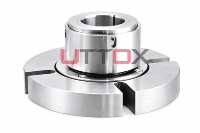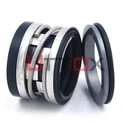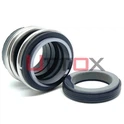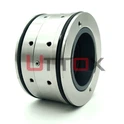


An agitator mechanical seal serves as a specialized dynamic sealing solution designed to prevent fluid leakage between the rotating shaft and stationary housing in mixing vessels, reactors, and blending equipment. Unlike standard pump seals, these seals accommodate significant shaft deflection, extended overhung shafts, and substantial radial movement characteristic of industrial mixing operations. They create a critical barrier that contains process media ranging from pharmaceutical formulations to corrosive chemical slurries, protecting both personnel safety and product integrity while preventing atmospheric contamination in sensitive processing environments.
Introduction
When mixing and processing things in factories, sealing solutions need to be able to handle conditions that are much tougher than normal pump uses. Agitator mechanical seals are very important because they keep fluids contained and can handle the different mechanical loads that come with mixing tanks, chemical reactors, and blending systems. It's always a problem for procurement managers, plant engineers, and maintenance workers when seals fail, causing production to stop, environmental damage, and expensive repairs.
Figuring out how these closing systems work and picking the right setup can have a huge effect on how well they run and how much money they make. This guide gives procurement and engineering workers useful information about seal technologies. It will help you make smart choices that balance the cost of the original investment with the reliability over time. This article talks about real-life issues that affect your work every day, like choosing seals for a new reactor or finding ways to make older equipment last longer before it breaks down.
Understanding Agitator Mechanical Seals: Definition and Function
What Makes Agitator Seals Different
Because they have to work in a different setting, agitator mechanical seals are very different from pump mechanical seals. Usually, mixing vessels have long, cantilevered shafts that bend a lot while they're working. This causes dynamic misalignment that would destroy a normal pump seal very quickly. The seal has to account for shaft runout, which can be more than a few millimetres, while keeping the sealing faces in touch to stop leaking.
The basic structure has two seal faces that move and one that stays still. They are pressed together by a spring force, with the moving face attached to the shaft and the stable face fixed to the equipment case. During operation, a thin film of fluid, often measured in microns, separates these faces. This film keeps the seal in place while providing lubrication. How well and how long a seal lasts depends on this fine balance between contact pressure and fluid film thickness.
Core Components and Their Roles
The seal system is made up of several parts that work together. The real sealing contact is made up of primary seal faces, which are usually made of silicon carbide, tungsten carbide, or carbon-graphite. Even when the shaft moves or the temperature rises, the face contact pressure stays the same thanks to springs or bellows. Secondary seals, which are usually flexible O-rings or PTFE wedges, stop leaks where the seal meets the shaft or frame.
Modern cartridge-style seals make installation easier by putting all the parts together ahead of time on a sleeve that slides over the shaft. This eliminates the need for measuring mistakes and speeds up the installation process. This design is especially helpful for maintenance teams that have to do emergency fixes and need to keep downtime to a minimum. Premium cartridge seals have built-in bearing support that keeps the shaft stable. This keeps the seal faces from deflecting, which increases the life of the component.
Why Standard Pump Seals Fail in Mixing Applications
When there isn't much shaft movement and the process conditions stay the same, pump seals work well. In mixing applications, shaft runout can be ten times greater than in pump applications. This is because the process conditions may include media with a high viscosity, particles that are rough, and changes in temperature. Standard pump seals don't have the face-tracking ability or strong spring systems that are needed to keep closing touch in these situations.
With a top-entry mixer, the seal is in the vapour space above the liquid level, which adds to the problems. For this setup to work, it needs special dry-running features or external barrier fluid systems, which pump seals can't handle. Cleaning-in-place (CIP) and sterilization-in-place (SIP) processes are common in pharmaceutical and food processing. Standard seal materials would break down in these situations because of the sudden changes in temperature and the harsh cleaning chemicals used.
Types and Design Principles of Agitator Mechanical Seals
Single Versus Double Seal Configurations
Choosing between single and double agitator mechanical seal designs is a big choice that affects both the cost of capital and the safety of operations. Single seals put up a straight wall between the process media and the air. They work with non-flammable, non-volatile fluids at normal temperatures and pressures. Because they are easy to use, don't cost much to buy, and are simple to keep up, they are good for general industry mixing tasks where environmental release doesn't pose much of a risk.
Double mechanical seals have two sets of seals that are divided by a barrier fluid chamber. This extra protection is needed for uses that need to handle dangerous, flammable, or highly pure materials. If the barrier fluid is kept at a higher pressure than the process pressure, the process will not leak even if the primary seal breaks. In chemical processing, this configuration meets strict environmental rules. In pharmaceutical manufacturing, it protects the purity of the product and gives volatile organic compounds the containment they need. Even though double seals make systems more complicated and cost more to build, they greatly reduce environmental damage and product loss in important situations.
Material Selection and Chemical Compatibility
In chemically active settings, the choice of material directly affects how well the seccomix sealing system works and how long it lasts. The materials on the seal face must be hard enough to resist wear while still being compatible with the process chemistry. Silicon carbide sides are good at resisting chemicals and transferring heat, so they can be used in many situations. Carbon-graphite is better at running in dry conditions, but it runs out faster in rough conditions.
Corrosion protection is important for both housing and tool materials. Hastelloy C-276 is used for highly corrosive acids and chloride-containing media, while stainless steel 316L is used for most chemical jobs. Titanium is less expensive than exotic nickel alloys and has better corrosion resistance in oxidising environments. For elastomeric secondary seals to work, they need to be able to survive chemical attack, keep their elasticity across the working temperature range, and be cleaned properly. In harsh environments, these needs are usually met by perfluoroelastomers (PTFE).

Balanced Design and Pressure Management
The seal balance ratio is an important design factor that affects how much heat is produced and how fast things wear out. When seals are balanced, the hydraulic closing force acting on the seal faces is lessened. This lowers friction and heat production. This is very important in high-pressure situations, where designs that aren't balanced would make too much heat, which would cause damage and fast wear. The balance ratio, which is usually between 0.65 and 0.85 for agitator applications, is a middle ground between how well the seal works and how well the heat is managed.
Limits on pressure depend on how the seal is configured and how it is being used. Most single seals can handle pressures up to 20 bar, while double seals can handle 60 bar or higher if they are properly stated. It can handle temperatures ranging from -40°C (cryogenic) to over 350°C (high), depending on the material used and the design of the seal. These requirements must match the needs of your process, including any upset conditions and safety gaps that take process unpredictability into account.
Common Problems and Troubleshooting of Agitator Mechanical Seals
Identifying Failure Modes and Root Causes
Leakage is the most clear sign of a broken agitator mechanical seal, but finding the root reasons takes a methodical approach. Too much movement of the shaft, which can be caused by worn bearings or bad shaft support, leads to dynamic misalignment that stops the seal faces from tracking correctly. Installation mistakes, like incorrectly compressing the springs or infection during assembly, weaken the seal from the moment it is turned on. Incompatibility between materials shows up slowly as a chemical attack breaks down elastomers or rusts metal parts.
The patterns of damage on the face show the working conditions that caused the failure. Heat checking, which looks like a pattern of radial cracks on the seal faces, is a sign of thermal stress caused by not enough cooling or too much friction. There may be rough bits in the process stream or barrier fluid if the score goes around the edges. Isolated scarring on faces means that they have been damaged by a chemical attack or cavitation. These forensic clues help people take corrective action that stops failures from happening again.
Maintenance Strategies That Extend Service Life
Regular maintenance makes seals last longer and stops major breakdowns that stop production. Vibration analysis should be used to find worn bearings before they cause the shaft to bend, temperature monitoring should be used to find problems with the cooling system, and leak checks should be done on a regular basis using the right detection methods. Barrier fluid systems need to be aware of pollution, circulation rates, and storage levels. Ignoring these support systems can cause seals to fail early, even if the seal itself is still good.
How often and how bad the service is affect the inspection times. Inspections with thorough records should be done every three months for critical uses, and once a year for less demanding services. During checks, look for wear patterns on the seal faces, measure the shaft's runout and deflection, compare the spring free length to the specs, and make sure the secondary seals keep their elasticity. By tracking these factors over time, you can see when they are getting worse before they break. This lets you do planned maintenance during planned shutdowns instead of emergency fixes.
Repair-or-Replace Decision Framework
Repair choices for eagle burgmann seccomix seal should be based on an economic study that takes into account both direct costs and operational effects. Simple fixes, like changing elastomeric secondary seals or restoring faces that aren't broken, are cost-effective as long as the parts still work as they should. On the other hand, lapping worn seal faces with precision tools and knowledge is often more cost-effective when done in the factory than in the field. When seal springs have loosened up too much, they can't be fixed reliably and need to be replaced.
Age and obsolescence of equipment play a role in these choices. Older seal designs might not have new parts, so you'll have to switch to a more modern cartridge design. This chance to convert can make things more reliable while also making upkeep easier in the future, which justifies a higher original investment. On the other hand, facilities that are close to their end-of-life may not need much investment and may be better off with a higher failure risk than with improving equipment that won't be used for much longer.
Choosing the Right Agitator Mechanical Seal for Your Application
Systematic Selection Methodology
A thorough description of the process is the first step in choosing the right agitator mechanical seal. Write down the viscosity, specific gravity, vapour pressure, and chemical make-up of the fluid. Find the working conditions, like pressure, temperature, speed of the shaft, and thickness of the shaft. Think about how the process can change, such as during startup, when something goes wrong, and when it needs to be cleaned. With this knowledge, seal makers can suggest the right shapes and materials.
Seal difficulty and cost are based on how severe the application is. For light-duty uses (low pressure, non-hazardous media, moderate temperatures), cheap materials and simple single seals can work. When you have harsh services like high pressure, corrosive or toxic media, or very high or low temperatures, you need double seals that are engineered with high-quality materials and advanced support systems. There are many situations in the middle where different types of seals might work, and engineers have to use their best judgement to find the best mix between cost and durability.
Evaluating Supplier Capabilities and Support
Supplier selection is essential for long-term seal performance of seccomix sealing system. Evaluate technical expertise, industry experience, quality control, traceability, and testing capabilities. Reliable suppliers should provide stable delivery and support for both standard and customised seals. The Uttox UT-Seccomix system offers dependable performance for agitator, mixer, and reactor applications, simplifying specifications across diverse equipment environments.
Key advantages of the UT-Seccomix include:
Cost optimization that reduces overall maintenance and procurement budgets without compromising reliability
System-level design that integrates seamlessly into existing equipment as a replacement option, maintaining operational continuity during upgrades
Stable inventory availability that ensures fast delivery and minimizes unplanned downtime when emergency replacements become necessary
Application versatility across chemical, pharmaceutical, and general process industries where demanding conditions challenge seal performance
Responsive technical support providing application-oriented solutions that address your specific operating conditions and requirements
These advantages translate directly into benefits that matter to procurement managers and plant engineers. Competitive pricing structures help optimize capital and maintenance budgets, while reliable supply chains prevent the inventory inflation required to buffer unreliable suppliers. Technical support responsiveness shortens troubleshooting cycles and accelerates resolution when application challenges arise, reducing the total cost of ownership beyond just component pricing.
Installation and Best Practices for Agitator Mechanical Seals
Step-by-Step Installation Protocol
Proper agitator mechanical seal installation begins with cleaning surfaces and checking shaft condition to prevent early failure. Cartridge seals simplify installation by reducing measurement requirements. Secure the assembly with correct torque, remove shipping restraints, and connect support systems such as barrier fluids, cooling lines, and instruments before operation to ensure reliable performance.
Operational Monitoring and Preventive Care
Effective monitoring detects early issues before failures occur. Tracking seal temperature, barrier fluid pressure, and cooling flow helps verify proper operation and identify leaks or overheating risks. Establishing baseline values during commissioning allows teams to monitor changes such as rising temperatures, vibration, or fluid usage, enabling preventive maintenance during planned shutdowns.
Emergency Response and Rapid Repair Techniques
Effective emergency plans reduce downtime and protect equipment during failures. Safe shutdown procedures should include isolation, depressurisation, drainage, and continued cooling to prevent damage. Maintaining critical spare seals, cartridge replacements, and repair kits enables faster recovery. Close supplier support provides technical assistance and rapid delivery for urgent or uncommon seal requirements.
Conclusion
Agitator mechanical seals are complex engineering solutions that deal with the unique problems that come up in mixing and reacting processes in industry. To be successful, you need to know the main differences between agitator and pump uses, choose the right seal configurations based on thorough process analysis, and use preventative maintenance strategies to keep your equipment running as long as possible. Long-term dependability depends on things like material compatibility, managing pressure, and controlling temperature. Correct installation and operating tracking stop problems before they happen.
Decisions about strategic sourcing have a direct effect on both operational reliability and the total cost of ownership. Evaluating providers on technical expertise, supply chain stability, and quick support offers value beyond component price. The UT-Seccomix closing system is a good example of how careful engineering and manufacturing can lead to reliable options that meet tough industry needs while lowering costs and keeping operations running smoothly.
FAQ
1.What distinguishes an agitator mechanical seal from a pump seal?
Agitator mechanical seals can handle ten times more radial movement than pump seals, which means they can handle much more shaft runout and deflection. They have stronger spring systems and bigger working gaps to keep the seal face in touch even when the shaft moves. Many types of agitators put the seal in vapour space instead of submerged in liquid. This means that they need to be able to run without liquid or have external barrier fluid systems that pump seals can't handle. Also, agitator seals often have to stand up to cleaning and sterilisation methods that are harsher than what is normally expected of pump seals.
2.How frequently should I inspect agitator seals?
How often to inspect relies on how bad the application is and how much business risk there is. Critical applications that work with dangerous or burning materials need thorough checks every three months, with full records. Standard industrial applications usually have inspection schedules that are every year and line up with planned maintenance breaks. Services with a lot of danger, like gritty slurries, high temperatures, or chemicals that eat away at metal, may need to be checked on more often. Continuous condition monitoring using temperature, vibration, and pressure sensors gives real-time information between physical inspections, which makes it possible to plan ahead for maintenance needs.
3.Can mechanical seals handle highly corrosive process fluids effectively?
When used correctly, modern mechanical seals work great in corrosive environments. The choice of material is very important. The faces can be made of silicon carbide or tungsten carbide, which are resistant to most acids and solvents. The case can be made of Hastelloy C-276 or titanium, which are also resistant to strong chemistry. In a lot of corrosive situations, elastomeric secondary seals need perfluoroelastomers (PTFE). In double seal setups with neutral barrier fluids, seal parts are completely cut off from corrosive process media. This greatly increases the life of the parts in the harshest chemical conditions.
Partner with Uttox for Reliable Agitator Mechanical Seal Solutions
For more than thirty years, Uttox has been making agitator mechanical seals for tough industrial uses. They are a trusted supplier of mechanical seals to customers in more than fifty countries. Our UT-Seccomix closing system has been used successfully in mixing tanks, chemical reactors, and other process equipment where dependability is essential. We know that procurement managers and repair teams need more than just parts. You need quick technical help, consistent product quality, and a supply chain that works well so that production doesn't stop.
Our skilled engineering team can help you choose the best sealing option for your process conditions through free application consulting. We have a lot of stock and can make things quickly if you need standard configurations. If you need custom-engineered solutions for tough uses, we can work around your plan. To talk about your sealing needs, email our team at info@uttox.com or go to www.uttox.com. We're dedicated to giving you useful, low-cost solutions that keep your business running smoothly and safely.
References
1. Lebeck, A. O. (1991). Principles and Design of Mechanical Face Seals. John Wiley & Sons, New York.
2. Mayer, E. (1977). Mechanical Seals, Third Edition. Newnes-Butterworths, London.
3. Summers-Smith, J. D. (1992). Mechanical Seal Practice for Improved Performance. IMechE, London.
4. Nau, B. S. (1997). "Mechanical Seal Technology for Pumps." Proceedings of the Institution of Mechanical Engineers, Part A: Journal of Power and Energy, 211(3), 169-183.
5. Flitney, R. K. (2007). Seals and Sealing Handbook, Fifth Edition. Elsevier Science, Oxford.
6. European Sealing Association (2010). Guidelines for Selection and Application of Mechanical Seals. ESA Technical Publication 02-2010.