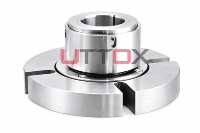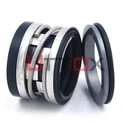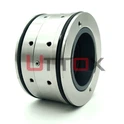


If you work in pump manufacturing or industrial equipment procurement, you have likely come across the term 2100 mechanical seal more than once. This compact, elastomer bellows-type seal has become a recognized standard in centrifugal pump applications worldwide. Rated for temperatures from -20°C to +180°C, pressures up to 12 bar, and shaft sizes from 10mm to 75mm, the 2100 mechanical seal delivers consistent sealing performance across a broad range of general industrial conditions. Whether you are evaluating a replacement option or sourcing for new pump builds, this guide breaks down everything you need to know.
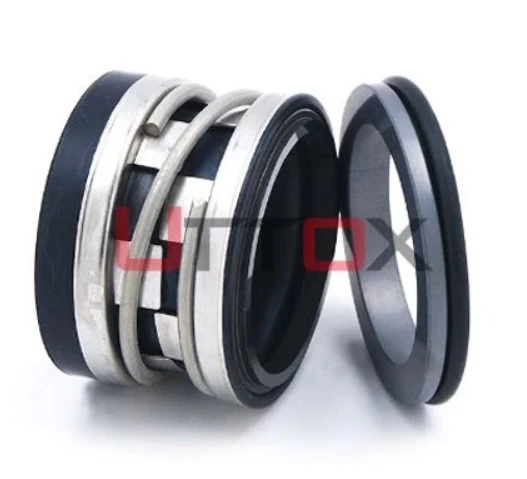
Understanding the 2100 Mechanical Seal
What Makes It a "Non-Pusher" Seal?
The 2100 mechanical seal is a rubber bellows, which is another name for a non-pusher seal. In contrast to pusher seals, which use moving O-rings that move along the shaft, the bellows itself acts as both the spring and the secondary seal. This gets rid of the "hang-up" and fretting of the shaft that happen a lot with O-ring pusher designs, which is a big technical plus in fluid settings that are dirty or prone to deposits.
According to Pumps & Systems (2021), elastomer bellows seals regularly work better than pusher-type seals in situations where shaft deposits cause the secondary seal to stick. This means that unexpected downtime is cut by a measured amount [1].
Core Design Specifications
The following conditions have been proven to work with the 2100 mechanical seal:
Temperature range: -20°C to +180°C
Pressure: ≤ 12 bar
Shaft surface speed: ≤ 13 m/s
Shaft size coverage: 10mm – 75mm
Because of these specs, it can be directly swapped out for the John Crane Type 2100 / 2100K, one of the most common seal models used in pump manufacturing around the world. The unitized design makes installation easier and lowers the chance of mistakes on the assembly line, which is useful if your facility puts together thousands of pump units every year.
Key Features and Benefits of the 2100 Mechanical Seal
The type 2100 mechanical seal was made with dependability, ease of upkeep, and material flexibility in mind. When looking at seal choices for high-volume OEM uses, procurement teams and production engineers always point to these traits.
Here are the main useful benefits that make this seal better than other seals that can be used for many things:
Elastomer bellows construction eliminates dynamic O-rings entirely, removing one of the most typical places where shafts wear out. The bellows directly transfers torque, keeping the sealing faces properly loaded even when the working conditions change.
Broad material selection allows engineers to make the seal work with any fluid because there are many materials to choose from. You can choose a seal face made of Resin Carbon, Antimony Carbon, SiC, SSiC, or Tungsten Carbide. For the elastomers, you can choose from VITON, EPDM, NBR, FFKM, and AFLAS, while SS304 is used to make the metal parts.
Unitized structure means that the whole seal assembly ships and installs as a single unit. This makes it less likely that parts will be out of place during assembly, which is very helpful when workers on an assembly line have to put together hundreds of seals every shift.
Wide operating envelope lets different types of pumps work, from moving clean water in HVAC systems to moving slightly aggressive fluids in chemical transfer uses, all without having to redesign the seals.
These benefits directly address one of the biggest problems in making OEM pumps: keeping leakage rates low for the whole guarantee time without raising the per-unit BOM cost.
The UTTOX 2100 / 2100K has been developed with these exact priorities in mind. It serves as a cost-effective alternative to the John Crane Type 2100, offering comparable performance in standard applications while helping manufacturers reduce procurement costs by 20% to 40% compared to original equipment seals.
Comparing the 2100 Mechanical Seal to Other Seal Types
Procurement engineers usually look at a number of design categories when choosing a seal for a centrifugal pump. It's clear where the 2100 mechanical seal fits in this picture.
Bellows Seal vs. Pusher Seal
A secondary seal that moves axially along the shaft is used in pusher seals. They are cheap when the environment is clean and safe, but they tend to get stuck when dirt and grime build up on the shaft. The bellows design of the 2100 series completely avoids this failure mode, making it better for water and wastewater uses where the cleanliness of the shaft isn't always guaranteed.
Bellows Seal vs. Cartridge Seal
It's easier to place cartridge covers because they don't need to be precisely measured. They cost more per unit, though, and take up more vertical room. The 2100 mechanical seal is better for pump housings with limited seal chamber depth because it has a small profile, which is common in standard centrifugal pump designs that follow DIN 24960 and ISO 3069 dimensions [2].
The 2100 series strikes a practical balance: it provides the installation reliability of a unitized design at a cost point that supports high-volume OEM production.
Procurement Guide for the 2100 Mechanical Seal
For OEM pump manufacturers sourcing at volume, procurement decisions involve more than unit price. The total cost of ownership is affected by batch consistency, lead time dependability, and the availability of expert assistance for john crane 2100 mechanical seal.
When evaluating a 2100 mechanical seal supplier, consider the following factors:
Dimensional interchangeability: Make sure that the new seal fits the John Crane 2100 / 2100K envelope measurements so that you don't have to change the tools or the assembly.
Material certification: Ask for proof of the grades of the rubber and face materials, especially if the fluids your pumps handle are controlled.
Batch-to-batch consistency: Ask for quality control records or inspection reports from a third party to see how stable the production is across multiple orders.
Stock availability: During busy production times, suppliers who keep an amount on hand lower the risk of wait times.
Technical responsiveness: If your supplier can look into a leakage failure and give you a root cause assessment, your downstream warranty will be safer.
Since 1990, Uttox has sold mechanical seals to people in more than 50 different countries. With over 30 years of manufacturing experience and an in-house technical team, Uttox offers stable stock availability, OEM support, and responsive after-sales service for 2100 mechanical seal orders at any volume. Visit www.uttox.com for technical datasheets and selection support.
Applications and Industry Use Cases
The 2100 mechanical seal works effectively in a number of tough application areas. Its versatility comes from the combination of broad material options and a proven structural design.
In municipal water and HVAC systems, the small bellows design fits normal pump housings without modification, handling treated water and glycol solutions up to the seal's rated limits. In the cleaning of industrial wastewater, SiC/SiC face configurations resist abrasive particle wear that would degrade softer face materials prematurely [3]. When moving chemicals or fluids, VITON or FFKM elastomers keep their seals intact even when they are exposed to strong acids and high temperatures of up to 180°C.
Across all these scenarios, the 2100 mechanical seal reduces unplanned maintenance intervals and supports compliance with operational standards that require demonstrable leak control.
Conclusion
As of now, the 2100 mechanical seal is still one of the most reliable ways to seal industrial pumps in general. Its elastomer bellows design fixes known problems with older pusher-type seals, its material choices meet a lot of different fluid compatibility needs, and its unitized construction supports efficient assembly at production scale. For OEM pump manufacturers balancing BOM cost reduction with performance reliability, the Uttox 2100 / 2100K offers a well-supported, interchangeable alternative to original equipment models. Understanding the seal's specifications and structural logic makes procurement decisions faster, more confident, and better aligned with long-term equipment performance goals.
FAQ
1.What shaft sizes does the 2100 mechanical seal cover?
The 2100 mechanical seal can fit shafts with sizes ranging from 10mm to 75mm, which covers most of the common setups for centrifugal pumps used in OEM production.
2.Is the Uttox 2100 directly interchangeable with John Crane Type 2100?
Yes. The Uttox 2100 / 2100K is dimensionally compatible with the John Crane Type 2100 / 2100K, making it suitable for direct replacement without modifying existing pump assemblies.
3.How do I select the right elastomer material?
NBR works with oil- and water-based fluids up to about 100°C. Up to 180°C, VITON can handle higher temperatures and chemical exposure. EPDM is preferred for systems that handle hot water and steam vapor. For very aggressive media, FFKM or AFLAS offer superior chemical resistance.
4.What causes bellows swelling on a 2100 mechanical seal?
Bellows swelling typically indicates chemical incompatibility between the fluid and the elastomer material. An immersion test against the process fluid confirms compatibility before installation.
5.What surface finish does the shaft require?
A shaft surface roughness of 0.4 to 0.8 μm Ra is recommended to ensure secure bellows grip without causing installation damage or slippage during operation.
Contact Uttox - Your Reliable 2100 Mechanical Seal Supplier
Precision mechanical seals have been made by Uttox for more than 30 years, serving customers across 50+ countries with stable inventory, OEM support, and responsive technical service. Whether you need a high-volume 2100 mechanical seal supply for your production line or engineering guidance on material selection, our team is ready to assist. Send your specifications or RFQ directly to info@uttox.com or explore our full product range at www.uttox.com.
References
1. Pumps & Systems (2021). "Elastomer Bellows vs. Pusher Seals: A Performance Comparison in Industrial Pump Applications."
2. ISO 3069:2000 - "End-suction centrifugal pumps - Dimensions of cavities for mechanical seals and for soft packing." International Organization for Standardization.
3. Hydraulic Institute (2020). "Mechanical Seal Selection and Application Guide for Centrifugal Pumps."
4. John Crane Technical Documentation (2022). "Type 2100 Elastomer Bellows Seal - Product Specifications and Application Guidelines."
5. Sealing Technology Journal (2019). "Material Selection for Mechanical Seals in Industrial Fluid Handling." Elsevier.
6. European Sealing Association (ESA) (2020). "Best Practices for Mechanical Seal Maintenance and Lifecycle Management."