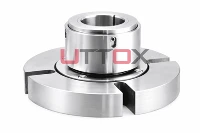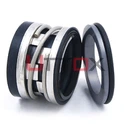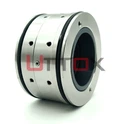


When critical industrial processes demand reliability, pump failures due to seal leakage can cost thousands in downtime and environmental hazards. A pump mechanical seal is a precision-engineered device that prevents fluid leakage where a rotating shaft passes through a stationary housing in pumps, mixers, and other rotating equipment. Unlike traditional packing materials, ITT Flygt mechanical seals create a dynamic barrier using two precisely machined faces - one rotating with the shaft and one stationary - that maintain contact under controlled pressure to eliminate leakage while allowing smooth shaft rotation.
Understanding ITT Flygt Mechanical Seal Fundamentals
Core Components and Working Principles
A pump mechanical seal operates on a deceptively simple yet highly sophisticated principle. The system consists of two primary sealing faces manufactured from advanced materials such as silicon carbide, tungsten carbide, or carbon graphite. The rotating face is attached to the pump shaft and spins with it, while the stationary face remains fixed within the pump housing. These faces are precision-ground to optical flatness, creating an interface that maintains contact under spring pressure and hydraulic force from the process fluid. The genius of ITT Flygt mechanical seals lies in their ability to maintain this critical seal interface under varying operating conditions. Springs provide the initial closing force when the pump starts, while system pressure enhances this force during operation. A thin film of fluid lubricates the sealing faces, preventing excessive wear while maintaining the seal integrity. This design allows Flygt mechanical seals to handle pressures and temperatures that would quickly destroy conventional packing materials, making them essential for demanding industrial applications.
Material Selection and Engineering Excellence
Modern pump mechanical seals utilize advanced material combinations specifically engineered for different operating environments. Primary sealing faces often feature silicon carbide against carbon graphite for standard applications, while harsh chemical environments may require tungsten carbide or ceramic combinations. The secondary sealing elements, including O-rings and gaskets, are manufactured from elastomers selected for chemical compatibility and temperature resistance. ITT Flygt mechanical seals incorporate decades of engineering experience in material selection and face geometry optimization. The surface finish of sealing faces is measured in microinches, with typical specifications requiring surfaces flatter than three helium light bands. This precision ensures optimal performance across the seal's operating life, minimizing leakage while maximizing durability in challenging industrial environments.

ITT Flygt Seal Applications Across Industries
Critical Process Applications
ITT Flygt pump mechanical seals excel in applications where reliability cannot be compromised. In petroleum refining operations, these seals handle hydrocarbon fluids at elevated temperatures and pressures, preventing environmental contamination while maintaining process integrity. The chemical processing industry relies on Flygt mechanical seals for handling corrosive media that would rapidly degrade conventional sealing methods. Water treatment facilities depend on pump mechanical seals for consistent operation in both clean water and aggressive wastewater applications. The ability of ITT Flygt seals to operate reliably in abrasive slurries makes them invaluable in mining, pulp and paper, and municipal wastewater treatment. Food and beverage processing requires seals that meet stringent hygiene standards while providing leak-free operation, making Flygt mechanical seals the preferred choice for sanitary applications.
Specialized Industrial Requirements
Power generation facilities utilize ITT Flygt mechanical seals in cooling water systems, condensate pumps, and boiler feed applications where reliability directly impacts plant availability. The maritime industry depends on these seals for ballast systems, cargo pumps, and marine propulsion applications where saltwater corrosion and space constraints demand compact, reliable sealing solutions. Pharmaceutical manufacturing requires pump mechanical seals that prevent cross-contamination while handling sterile process fluids. The precision engineering of Flygt mechanical seals ensures consistent performance in these critical applications, where product purity and process reliability are paramount concerns for manufacturers and regulatory compliance.
Advanced Flygt Mechanical Seal Technologies
Single vs. Dual Seal Configurations
Single mechanical seals represent the most common configuration for standard pumping applications. These seals utilize one sealing interface between rotating and stationary faces, with the process fluid providing lubrication and cooling. ITT Flygt single seals are engineered for maximum reliability in applications where the process fluid is compatible with the seal materials and operating environment allows atmospheric emissions. Dual mechanical seal systems provide enhanced safety and reliability for critical applications handling hazardous or valuable fluids. These configurations feature two sealing interfaces with a barrier fluid system that prevents process fluid from reaching the atmosphere. Flygt dual seals incorporate sophisticated barrier fluid circulation systems that monitor seal performance while providing enhanced protection against catastrophic seal failure.
Cartridge Seal Innovation
Cartridge mechanical seals revolutionized pump maintenance by pre-assembling all sealing components into a single, installation-ready unit. ITT Flygt cartridge seals eliminate the potential for installation errors while reducing maintenance time and improving seal reliability. These units include precision-machined components, optimal spring loading, and proper face alignment, ensuring consistent performance across multiple installations. The engineering advantage of Flygt cartridge seals extends beyond installation convenience. These units allow for precise control of seal chamber dimensions, optimal secondary seal placement, and integrated flush and barrier fluid connections. This design approach ensures optimal seal performance while minimizing the potential for premature failure due to installation variations or maintenance errors.
Maintenance and Performance Optimization
Operating Parameter Considerations
Successful pump mechanical seal operation depends on maintaining proper operating parameters within design specifications. Temperature management is critical, as excessive heat generation can damage seal faces and elastomeric components. ITT Flygt seals are engineered with thermal management features that optimize heat dissipation while maintaining proper lubrication at the sealing interface. Pressure variations can significantly impact mechanical seal performance, particularly during startup and shutdown cycles. Flygt mechanical seals incorporate design features that accommodate pressure fluctuations while maintaining seal integrity. Proper system design includes adequate suction conditions, appropriate shaft speeds, and compatible process fluids that support optimal seal operation throughout the pump's operating envelope.
Troubleshooting and Reliability Enhancement
Understanding common failure modes helps optimize ITT Flygt mechanical seal performance and extend operating life. Excessive leakage often indicates seal face wear, secondary seal degradation, or improper installation. Premature wear typically results from inadequate lubrication, contaminated process fluids, or operating outside design parameters. Systematic troubleshooting procedures help identify root causes and implement corrective measures. Proactive maintenance programs maximize Flygt mechanical seal reliability through regular inspection, proper installation procedures, and systematic replacement of wear components. Monitoring seal chamber pressure, temperature, and leakage rates provides early warning of developing problems, allowing planned maintenance rather than unexpected failures that can damage pump equipment and interrupt critical processes.
Conclusion
Pump mechanical seals represent critical components that ensure industrial process reliability, environmental protection, and operational efficiency across diverse applications requiring precise fluid containment and shaft sealing solutions.
Cooperate with Zhejiang Uttox Fluid Technology Co.,Ltd.
As a leading China ITT Flygt factory and China ITT Flygt supplier, Zhejiang Uttox Fluid Technology Co.,Ltd. has specialized in manufacturing high-quality mechanical seals since 1990. Our experienced R&D team provides technical guidance and customization solutions for different working conditions. With 30 years of industry experience and cooperation with many large enterprises, we offer rich product variety with sufficient inventory for fast delivery.
Our professional technical team provides free technical support and supports OEM manufacturing as a trusted China ITT Flygt manufacturer. We guarantee quality assurance through independent quality control and third-party cooperation. Whether you need China ITT Flygt wholesale solutions or specific ITT Flygt for sale, our competitive ITT Flygt price and High Quality ITT Flygt products serve customers across 50+ countries in petroleum refining, water treatment, pulp & paper, shipbuilding, food & beverage, pharmacy, and power plant industries.
Contact us at info@uttox.com for technical support and custom solutions. Bookmark this page for future reference when selecting optimal sealing solutions for your applications.
FAQ
Q: What is the main difference between mechanical seals and packing?
A: Mechanical seals use two precision-machined faces to create a dynamic seal, while packing uses braided materials that allow controlled leakage.
Q: How long do pump mechanical seals typically last?
A: With proper installation and maintenance, quality mechanical seals can operate for 2-5 years depending on application conditions and operating parameters.
Q: Can mechanical seals be repaired or must they be replaced?
A: Most mechanical seals are replaced as complete units, though some cartridge seals allow face replacement while maintaining precise alignment and spring loading.
Q: What causes premature mechanical seal failure?
A: Common causes include improper installation, inadequate lubrication, contaminated fluids, operating outside design parameters, and excessive vibration or misalignment.
References
1. "Mechanical Seals for Industrial Applications" by Heinz P. Bloch and Fred K. Geitner, Gulf Professional Publishing
2. "Pump Handbook" by Igor J. Karassik, William C. Krutzsch, Warren H. Fraser, and Joseph P. Messina, McGraw-Hill Professional
3. "Centrifugal Pumps: Design and Application" by Val S. Lobanoff and Robert R. Ross, Gulf Professional Publishing
4. "Mechanical Seal Practice for Improved Performance" by Heinz P. Bloch, Fairmont Press