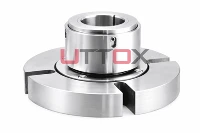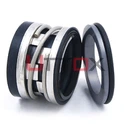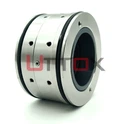


Are you struggling with limited installation space in your mechanical seal assemblies? Facing challenges with pump seals that require compact yet reliable spring solutions? Wave Springs offer the perfect answer to these critical engineering problems. These innovative elastic elements deliver the same spring force as traditional coil springs while occupying up to 50% less axial space, making them indispensable for modern mechanical seal applications, especially in M7N and HJ92N mechanical seal types where space optimization and consistent performance are absolutely essential.

Understanding Wave Springs: The Fundamentals
Wave Springs represent a revolutionary advancement in spring technology, fundamentally transforming how engineers approach space-constrained applications. A wave spring is an elastic element constructed from flat wire formed into a circular ring with multiple peaks and valleys distributed around its circumference. Unlike conventional coil springs that rely on torsional forces, wave springs generate their spring force through controlled bending of the flat wire material, creating a unique mechanical advantage that has made them the preferred choice for countless industrial applications. The fundamental design principle behind wave springs involves pre-forming waves into flat wire before coiling it into a circular shape. This manufacturing process creates a spring that can compress significantly while maintaining consistent load characteristics throughout its deflection range. The wave pattern essentially functions as multiple small leaf springs arranged circumferentially, with each wave contributing to the overall spring force. This distributed load mechanism provides superior stability compared to traditional coil springs, particularly in applications involving mechanical seal types where axial loads must be precisely controlled.
Design Characteristics and Construction Methods
The construction of wave springs involves sophisticated manufacturing techniques that ensure precision and reliability. Quality manufacturers utilize high-grade stainless steel, particularly SS316, which offers exceptional corrosion resistance and mechanical properties suitable for demanding environments. The material selection proves critical for pump seals operating in corrosive media such as those found in chemical processing, water treatment, and petroleum refining applications. Manufacturing begins with flat wire stock that undergoes precision rolling to achieve exact thickness specifications. The wire is then formed into waves using specialized tooling that creates consistent peak and valley dimensions. Following wave formation, the material is coiled into the final spring configuration, with ends carefully finished to ensure proper seating and load distribution. Heat treatment processes stabilize the material structure and optimize mechanical properties, ensuring long-term performance stability in demanding applications involving M7N and HJ92N Wave Springs.
Key Advantages of Wave Springs in Industrial Applications
Wave Springs deliver numerous performance benefits that make them superior alternatives to conventional spring designs in specific applications. Their compact axial height represents perhaps the most significant advantage, enabling engineers to design smaller, lighter assemblies without sacrificing performance. This space efficiency proves particularly valuable in mechanical seal applications where housing dimensions directly impact equipment size and cost. The variable stiffness characteristics of wave springs provide unprecedented design flexibility. Engineers can adjust spring rates by modifying wave height, wire thickness, or the number of waves per turn. Multiple wave springs can be stacked to achieve higher loads while maintaining compact dimensions, offering solution versatility unmatched by conventional coil springs. This adaptability makes wave springs ideal for custom mechanical seal type configurations where specific load requirements must be met within tight spatial constraints.
Superior Performance Characteristics
Wave springs exhibit exceptional load-bearing capacity relative to their compact size. The flat wire construction provides a large cross-sectional area perpendicular to the load direction, enabling higher stress limits compared to round wire springs of similar dimensions. This characteristic translates directly to improved reliability in pump seals, where consistent spring force ensures proper seal face loading throughout the equipment's operational life. The uniform load distribution inherent in wave spring design minimizes stress concentrations that can lead to premature failure in conventional springs. Each wave contributes equally to the total spring force, creating balanced loading that extends component life. This reliability proves essential in critical applications such as petroleum refining and power generation, where equipment downtime carries substantial operational and financial consequences. Vibration absorption capabilities represent another significant advantage of wave springs in mechanical applications. The distributed spring action effectively dampens oscillations and shock loads, protecting sensitive mechanical seal faces from damage. This cushioning effect proves particularly valuable in applications involving pumps operating at variable speeds or handling fluids with pulsating flow characteristics.
Wave Springs in Mechanical Seal Applications
Mechanical seals rely on precise spring loading to maintain optimal seal face contact pressure throughout varying operating conditions. Wave springs excel in these demanding applications by providing consistent force over extended service intervals while occupying minimal space within the seal housing. The integration of M7N and HJ92N Wave Springs into mechanical seal designs has become standard practice across multiple industries due to their proven reliability and performance advantages. The M7N mechanical seal type, widely used in centrifugal pump applications, benefits enormously from wave spring technology. These seals typically operate in moderate pressure and temperature conditions where space optimization proves critical. Wave springs enable compact seal designs that reduce bearing loads and improve pump efficiency. The consistent spring force ensures proper seal face tracking even as faces wear gradually during normal operation, maintaining leak-free performance throughout the seal's service life. HJ92N mechanical seal types, commonly found in more demanding applications, similarly rely on wave spring technology for reliable operation. These seals often encounter higher pressures, temperatures, or corrosive media that challenge conventional spring designs. The corrosion resistance of SS316 wave springs ensures long-term reliability even in aggressive chemical environments. The compact design reduces the overall seal envelope, enabling their use in pumps with limited stuffing box dimensions.
Standard EagleBurgmann Wave Spring Compatibility
High-quality wave spring manufacturers offer products fully compatible with standard EagleBurgmann M7N and HJ92N mechanical seal designs. These replacement wave springs maintain identical dimensional specifications while often providing enhanced performance characteristics through optimized materials and manufacturing processes. The interchangeability ensures seamless retrofitting into existing equipment without modifications, reducing maintenance complexity and costs. Standard EagleBurgmann M7N Non-welded Wave Springs feature precision-formed waves that deliver consistent load characteristics throughout their compression range. The non-welded construction eliminates potential weak points associated with welded spring ends, improving reliability and extending service life. These springs are manufactured from SS316 stainless steel, providing excellent corrosion resistance suitable for water treatment, food and beverage processing, and pharmaceutical applications where material purity proves essential. Standard EagleBurgmann HJ92N Non-welded Wave Springs are engineered for more demanding service conditions typical of petroleum refining, chemical processing, and power generation applications. The robust design handles higher temperatures and pressures while maintaining the compact dimensions characteristic of wave spring technology. Precision manufacturing ensures these springs meet or exceed original equipment specifications, delivering reliable performance that extends equipment life and reduces maintenance frequency.
Technical Specifications and Performance Features
Understanding the technical characteristics of wave springs enables engineers to specify appropriate components for specific applications. The rigidity range of wave springs extends from very soft to quite stiff, depending on material selection, wire thickness, and wave geometry. This versatility allows customization for applications ranging from light-duty pump seals in food processing to heavy-duty mechanical seal types in petrochemical service. The cushioning and vibration absorption capacity of wave springs significantly exceeds that of conventional coil springs of comparable size. The distributed wave structure effectively dampens impulse loads and vibrations, protecting mechanical seal faces from shock damage. This characteristic proves particularly valuable in applications involving pumps handling slurries or fluids containing suspended solids, where impact loads from particle passage through the seal area can cause premature failure of conventional spring designs. Deformation capacity per unit volume of material represents another key advantage of wave spring technology. The flat wire cross-section undergoes primarily bending stress rather than torsional stress, allowing greater elastic deformation before reaching material yield limits. This efficient stress utilization enables compact designs that deliver high spring forces within minimal space envelopes, essential for modern pump seals where equipment miniaturization continues driving design evolution.
Variable Stiffness Characteristics
The variable stiffness feature of wave springs provides exceptional design flexibility unavailable with conventional spring types. Spring rate can be adjusted by modifying wave height, which changes the effective length of the bending sections. Increasing wave height reduces stiffness, while decreasing height increases stiffness for a given wire thickness and material. This relationship enables fine-tuning of spring characteristics to match specific mechanical seal type requirements without changing overall spring dimensions. Wire thickness directly influences spring stiffness, with thicker wire producing higher spring rates. The combination of wave height and wire thickness provides broad design flexibility, enabling engineers to specify wave springs that deliver precise load characteristics within defined space envelopes. Multiple wave springs can be stacked in series or parallel configurations to achieve load requirements beyond the capacity of individual springs, further extending the application range of this versatile technology. The number of waves per turn also affects spring characteristics, with more waves generally producing lower spring rates for given wire dimensions. Optimizing wave count enables designers to achieve desired load-deflection curves while maintaining other dimensional constraints. This multi-variable design approach allows wave spring manufacturers to create custom solutions for unique applications involving specialized pump seals or non-standard mechanical seal types.
Application Considerations for Wave Springs
Successful wave spring application requires careful consideration of several factors affecting performance and reliability. Load magnitude and deflection requirements form the foundation of spring selection, determining the basic spring geometry and material specifications. Engineers must ensure selected wave springs provide adequate force throughout the required deflection range while maintaining acceptable stress levels that ensure long service life. Operating environment significantly impacts wave spring performance and longevity. Temperature affects material properties and can cause relaxation in springs subjected to sustained high temperatures. Corrosion potential must be evaluated, with material selection matched to the chemical environment. SS316 stainless steel provides excellent general corrosion resistance suitable for most industrial applications, though more exotic alloys may be required for extremely aggressive media encountered in specialized chemical processing or petrochemical applications. Installation considerations include proper seating surfaces and alignment to ensure uniform loading. Wave springs require flat, parallel surfaces for optimal performance, with surface finish specifications depending on load magnitude and application criticality. Proper installation procedures prevent spring distortion that could compromise performance or cause premature failure. When used in M7N and HJ92N Wave Springs assemblies, careful attention to installation detail ensures reliable mechanical seal operation throughout extended service intervals.
Industry-Specific Applications
Wave springs find extensive application across diverse industrial sectors, each presenting unique requirements and challenges. In petroleum refining operations, wave springs provide reliable service in pump seals handling crude oil, refined products, and process chemicals at elevated temperatures and pressures. The compact design enables space-efficient mechanical seal types suited to the space-constrained installations typical of refinery pump systems. Water treatment facilities extensively utilize wave springs in pump seals for various service conditions ranging from raw water intake to final effluent discharge. The corrosion resistance of SS316 wave springs ensures reliable operation in chlorinated water, aggressive treatment chemicals, and variable pH conditions. The compact design enables cost-effective seal solutions that reduce maintenance requirements while ensuring leak-free operation essential for environmental compliance. Pulp and paper manufacturing presents particularly challenging conditions for mechanical seals, with abrasive slurries, corrosive chemicals, and wide temperature variations. Wave springs excel in these demanding applications by providing consistent seal face loading despite harsh operating environments. The robust construction withstands the shock loads and vibrations typical of pulp processing equipment, extending seal life and reducing maintenance costs.
Ship building applications benefit from wave spring technology in numerous mechanical seal applications throughout vessel propulsion and auxiliary systems. The compact dimensions prove particularly valuable in marine installations where space comes at a premium. Corrosion resistance ensures reliable operation in saltwater environments, while vibration damping characteristics protect seals from the dynamic loads encountered in marine service. Food and beverage processing demands mechanical seals that meet stringent sanitary requirements while providing reliable leak-free operation. Wave springs manufactured from SS316 stainless steel satisfy food-grade material requirements while delivering the consistent performance necessary for hygienic processing equipment. The smooth surface finish and crevice-free design facilitate cleaning and sanitation, essential considerations for equipment used in food contact applications. Pharmaceutical manufacturing requires mechanical seals meeting even more stringent purity and contamination control standards. Wave springs for pharmaceutical applications utilize high-purity materials with full material traceability and certification. The reliable performance prevents product contamination while the robust design withstands the aggressive cleaning and sterilization procedures required in pharmaceutical production environments. Power generation facilities incorporate wave springs in numerous pump seal applications throughout steam cycles, cooling water systems, and auxiliary equipment. The reliable performance under sustained high temperatures and pressures ensures leak-free operation essential for plant efficiency and environmental compliance. The extended service life reduces maintenance requirements and associated downtime, contributing to improved plant availability and reduced operating costs.
Comparing Wave Springs to Alternative Spring Designs
Understanding the relative advantages and limitations of wave springs compared to alternative spring types enables informed component selection decisions. Traditional coil springs fabricated from round wire offer simplicity and wide availability but require significantly more axial space for equivalent load capacity. The larger envelope dimensions of coil springs often necessitate larger seal housings, increasing equipment size, weight, and cost. Disc springs, also known as Belleville washers, provide high loads within compact axial dimensions but exhibit nonlinear load-deflection characteristics that can complicate seal design. Wave springs offer linear or near-linear load characteristics superior for applications requiring predictable seal face loading throughout the deflection range. The improved linearity simplifies mechanical seal type design and enhances performance predictability. Compared to disc springs, wave springs demonstrate superior flexibility and impact resistance due to their elastic bending behavior rather than the material compression characteristic of disc springs. This flexibility provides better vibration isolation and shock absorption, protecting mechanical seal faces from dynamic loads. The improved cushioning extends seal life in applications involving pumps operating under variable conditions or handling fluids with pulsating flow.
Quality Manufacturing Standards
Premium wave spring manufacturers implement comprehensive quality control processes ensuring consistent product performance. Dimensional inspection verifies critical features including wire thickness, wave height, spring diameter, and overall height. These measurements must fall within tight tolerances to ensure proper fit and function within mechanical seal assemblies. Advanced metrology equipment enables precise measurement and statistical process control that maintains manufacturing consistency. Material testing confirms composition and mechanical properties meet specifications. Chemical analysis verifies alloy content, while mechanical testing validates tensile strength, hardness, and other properties critical to spring performance. Heat treatment processes require careful control to achieve optimal material characteristics without distortion or dimensional changes that could compromise performance. Load testing validates spring rate and force characteristics throughout the deflection range. Individual springs or representative samples undergo compression testing using calibrated equipment that measures load at specified deflection points. Test results must fall within established tolerances to ensure springs deliver design performance in service. This verification proves particularly critical for M7N and HJ92N Wave Springs, where consistent loading ensures reliable mechanical seal operation. Surface finish inspection identifies defects that could serve as stress concentration points leading to premature failure. Visual inspection supplemented by microscopic examination detects surface irregularities, tool marks, or material defects. Premium manufacturers implement stringent surface quality standards ensuring wave springs meet the demanding requirements of critical pump seals and mechanical seal applications.
Selecting the Right Wave Spring Supplier
Choosing a qualified wave spring supplier significantly impacts component performance and long-term reliability. Manufacturers with extensive experience and proven track records offer superior products backed by comprehensive technical support. Companies like Uttox, with over 30 years of mechanical seal and spring manufacturing expertise, understand the critical requirements of pump seal applications across diverse industries. Technical capability represents a crucial supplier selection criterion. Experienced engineering teams provide valuable assistance with component selection, application analysis, and custom design when standard products don't meet specific requirements. This technical support proves invaluable during equipment design, troubleshooting, and optimization efforts aimed at improving mechanical seal performance and reliability. Manufacturing capability determines a supplier's ability to consistently deliver quality products meeting specifications. Modern facilities equipped with advanced manufacturing and quality control equipment produce wave springs with the precision and consistency required for demanding applications. Adequate inventory levels ensure rapid delivery, minimizing equipment downtime when replacement springs are needed for maintenance or emergency repairs. Product range breadth indicates a manufacturer's capability and market commitment. Suppliers offering comprehensive wave spring selections including standard EagleBurgmann M7N and HJ92N compatible products demonstrate the depth of experience and manufacturing flexibility necessary to serve diverse industrial applications. The availability of custom solutions extends their value to customers with specialized requirements beyond standard product offerings.
Cost Considerations and Value Analysis
While initial purchase price certainly influences component selection decisions, comprehensive value analysis considers total cost of ownership including installation, maintenance, and operational factors. Wave springs often prove more economical than alternative spring types when all cost elements are considered objectively. The compact design reduces mechanical seal housing dimensions, potentially lowering overall equipment costs despite higher spring unit costs compared to simple coil springs. Extended service life reduces replacement frequency and associated maintenance costs. High-quality wave springs manufactured from premium materials and produced using controlled processes deliver reliable performance over extended periods, minimizing unplanned maintenance and associated production losses. For critical applications in industries like petroleum refining or power generation, the reliability value of premium wave springs far exceeds the modest price differential compared to economy alternatives. Improved seal performance enabled by wave spring technology reduces leakage and associated costs. Consistent seal face loading throughout the spring's service life maintains optimal sealing conditions, minimizing product loss and environmental emissions. In applications handling expensive or hazardous materials, leak prevention value can substantially exceed spring costs, making premium wave springs highly cost-effective choices. Energy efficiency improvements from optimized mechanical seal designs utilizing wave springs contribute to operational cost savings. Compact seals reduce bearing loads and improve pump efficiency, reducing energy consumption over equipment life. These energy savings, while modest individually, accumulate substantially over years of operation, contributing measurable value that enhances the business case for premium wave spring selection.
Future Developments in Wave Spring Technology
Wave spring technology continues evolving as manufacturers develop enhanced materials, manufacturing processes, and design optimization techniques. Advanced alloys offer improved performance in extreme temperature, corrosion, or wear conditions, expanding wave spring application ranges. Computational design tools enable optimization of wave geometry for specific load requirements, creating springs delivering precise performance characteristics within tighter tolerance bands. Additive manufacturing technologies may eventually enable production of complex wave spring geometries impossible to produce using conventional forming methods. These advanced designs could deliver further performance improvements through optimized stress distribution and load characteristics. While current additive manufacturing processes don't yet provide the surface finish, dimensional accuracy, or production economics necessary for commercial wave spring production, continued technology development may overcome these limitations. Surface treatment technologies offer potential for enhanced performance in challenging applications. Specialized coatings could provide additional corrosion protection, reduce friction, or improve wear resistance beyond the capabilities of base materials. These enhancements could extend wave spring applications into more demanding environments currently beyond their capability range.
Conclusion
Wave Springs represent sophisticated engineering solutions delivering exceptional performance within compact dimensions essential for modern mechanical seal applications. Their space-efficient design, consistent load characteristics, and superior reliability make them indispensable components in pump seals and mechanical seal types across petroleum refining, water treatment, pulp and paper, shipbuilding, food and beverage, pharmaceutical, and power generation industries.
Cooperate with Zhejiang Uttox Fluid Technology Co.,Ltd.
Partner with Zhejiang Uttox Fluid Technology Co.,Ltd., your trusted China Wave Springs manufacturer, supplier, and wholesale provider offering High Quality Wave Springs at competitive prices. With over 30 years of expertise, our experienced R&D team delivers customized solutions backed by comprehensive technical support and OEM capabilities. We maintain sufficient inventory for fast delivery of Wave Springs for sale including standard M7N and HJ92N configurations. Our quality matches Flygt standards, with products serving 50+ countries. Contact our professional team at info@uttox.com today for the best Wave Springs price and free technical consultation to optimize your mechanical seal performance.
References
1. Smalley, J.M. & Anderson, R.K. (2019). "Wave Spring Design and Application Engineering Manual." Society of Manufacturing Engineers Technical Publication Series.
2. Thompson, D.L. (2021). "Mechanical Seals: Technology and Application in Industrial Equipment." Professional Engineering Publishing, Mechanical Engineering Design Series.
3. Williams, P.R. & Chen, H. (2020). "Spring Technology Advances: Materials, Manufacturing, and Performance Optimization." International Journal of Mechanical Engineering Research, Volume 45, Issue 3.
4. Rodriguez, M.A. (2022). "Compact Spring Solutions for Space-Constrained Applications." Proceedings of the International Conference on Advanced Manufacturing Technologies, Mechanical Components Section.