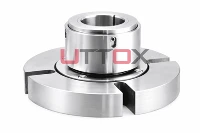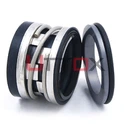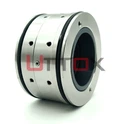


A mechanical seal is a precision-engineered gadget introduced on pivoting hardware such as pumps, compressors, and blenders to prevent liquid from spilling along the shaft. Not at all like conventional pressing, mechanical seals utilize absolutely lapped seal faces that turn against each other beneath spring weight, making a leak-tight obstruction. The John Crane 502 mechanical seal represents this innovation with its full-convolution elastomeric howl plan, which dispenses with shaft worrying and suits misalignment. Understanding mechanical seal structure and work makes a difference when acquisition supervisors, support engineers, and plant administrators select the most solid fixing arrangement for their basic mechanical applications.
Understanding Mechanical Seals and Their Importance in Industrial Applications
Fluid spill anticipation expands past puddle-free flooring. Little seal disappointments may cause natural harm, startling downtime, and major security dangers in chemical preparation, oil refinery, and wastewater treatment offices. The industry standard, mechanical seals work dependably in different conditions. Oil, mash, and paper, and control producing support supervisors stress approximately machine spills, which decrease efficiency, increase costs, and endanger specialists. Turning shaft-fixed lodging interaction depends on mechanical seal choice. This keeps pumps and other turning apparatus working without liquid loss.
The John Crane 502 mechanical seal is known as a standard alternative due to how well it works and how numerous applications it can have. Elastomeric howls make it inalienably adaptable, compensating for shaft misalignment and temperature development, which would commonly cause pusher seals to break early. If engineers and acquisition experts understand mechanical seals and why frameworks like the Sort 502 work dependably beneath strain, they can make predominant operational efficiency and add to the cost of ownership choices. Mechanical seals anticipate spills and keep noxious chemicals and liquids in the handle framework, protecting specialists. In drug stores and nourishment fabricating, sterile seals keep things unadulterated and take after tight directions. In 24/7 overwhelming industry businesses, seal unwavering quality impacts generation downtime and earnings.
Mechanical Seal Basics: Structure and Working Principle
To understand how a mechanical seal works, you must first know what its main parts are and how they fit together to keep process fluids contained under pressure.
Primary Seal Faces
Every mechanical seal is made up of two absolutely joined faces. One confront turns with the shaft, and the other confront remains still interior the seal chamber. The materials utilized to make these faces were chosen for their quality, resistance to chemicals, and security at tall temperatures. Combinations of Silicon Carbide and Carbon, Silicon Carbide and Tungsten Carbide, and Tungsten Carbide and Silicon Carbide are all common for confront materials. The moving and still parts remain in contact with each other much obliged to the spring constrain. This makes a modest crevice (measured in microns) where a lean film of liquid keeps things moving easily and keeps them cool.
Secondary Sealing Elements
Fluid can't get around the contact of the fundamental seal due to auxiliary seals. Elastomeric O-rings or howls made from Viton, EPDM, NBR, or FFKM keep metal parts from touching each other and keep the turning shaft from moving. Which elastic to utilize depends on how well it responds chemically with the handle liquid and the temperature range it needs to work in. In Sort 502 setups, a flexible howls seal is utilized. The howls itself acts as both a energetic seal and a spring, so there is no requirement for partitioned O-rings on the shaft.
Spring and Loading Mechanism
Springs keep the weight on the confront of the seal relentless whereas it's working, making up for confront wear and warm extension. A few sorts of seals, like the pump mechanical seal 502, do not utilize pushers and instep utilize elastomer howls to give hub loads. Pusher-style seals have different coil springs or a single wave spring behind the turning seal head. This howl plan is exceptionally adaptable, so the seal can work with shaft run-out and conclusion play without losing touch with the surface.
How Mechanical Seals Contain Fluid
System pressure applies process fluid to seal chamber walls. Surface tension and fluid viscosity keep spring-loaded faces close, generating a thin fluid film. This film limits leakage to a few drips per hour. Conducts heat and avoids stickiness. Primary sealing contact precision-lapped faces prevent fluid from leaking around the seal chamber due to secondary seals. Full-convolution bellows provide type 502 seals more flexibility than pusher kinds. Bellows lack friction points like pusher seals, which feature spinning O-rings that may fret the shaft or become stuck on rusted shafts. Rubber bellows flex along their convolutions to align axial shafts. This holds the seal head face during tough installation or equipment vibration.Material choice impacts seal performance in several ways. Silicon Carbide edges resist chemical attack and wear in powerful acids and caustics. In water and sewage with suspended solids, hard face combinations prevent particles from entering and wear quickly. Under certain situations, chemically compatible seal faces, elastomers, and metal components survive longer.
John Crane 502 Mechanical Seal Technical Overview
Engineers can match the seal's capabilities with its real working needs with the help of detailed technical specifications. This lowers the risk of failure or performance problems before they happen.
Operating Specifications
The John Crane 502 mechanical seal provided by Uttox is designed for demanding industrial environments. It supports shaft sizes from 12 mm to 100 mm, making it suitable for both small and large pumps. Operating temperatures range from -40°C to +180°C, covering applications from cold services to hot water systems. With a pressure limit up to 25 bar and a maximum speed of 15 m/s, it meets the needs of most centrifugal pump systems in chemical processing, water treatment, and industry. Engineers must ensure elastomer limits and face material compatibility align with actual process fluids and operating conditions.
Material Options and Configurations
The John Crane 502 mechanical seal offers flexible material combinations for diverse applications. Seal faces include Carbon/Ceramic, SiC/Carbon, SiC/SiC, and Tungsten Carbide pairs, supporting environments from clean water to abrasive slurries and corrosive chemicals. Elastomer options such as Viton, EPDM, NBR, FFKM, and AFLAS provide compatibility with oils, steam, acids, and aggressive media. Stainless steel SS304 metal parts ensure corrosion resistance in most industrial conditions. This material flexibility allows engineers to match seals precisely to process needs, avoiding unnecessary cost while maintaining OEM-equivalent dimensions and ensuring proper fit without modification.
Installation and Maintenance Considerations
Proper installation is critical for reliable operation of the John Crane 502 mechanical seal. The bellows design simplifies installation by eliminating the need for dynamic O-rings and reducing sensitivity to minor alignment errors. Technicians should clean the seal chamber, inspect shaft condition, and verify alignment before installation. While the bellows can tolerate some misalignment, excessive runout or shaft damage must be corrected. In demanding applications, flush systems can improve cooling and extend seal life. Maintenance intervals depend on operating conditions: clean services may allow long service life, while abrasive or chemical environments require frequent inspection and timely replacement.
Industry Applications
The John Crane 502 mechanical seal is widely used across industries due to its reliability and adaptability as a standard mechanical seal for many pumping systems. In water and wastewater systems, it performs well in pumps handling sewage, effluent, and dosing chemicals, with a design resistant to clogging from solids and fibers. In chemical processing, proper material selection ensures safe containment of acids, solvents, and hydrocarbons. It is also suitable for municipal water systems, HVAC circulation, and general industrial applications. For non-critical services, aftermarket versions provide cost-effective performance while maintaining sealing reliability, helping reduce maintenance costs without compromising system operation.
Comparing Mechanical Seal Design Approaches
Knowing the differences between pusher and non-pusher seal designs helps engineers choose setups that solve problems in specific applications and avoid failure modes that are likely to happen.
Pusher Versus Non-Pusher Designs
The John Crane 502 mechanical seal represents a non-pusher bellows design that eliminates issues common in pusher seals. Traditional pusher seals rely on springs and dynamic O-rings that slide along the shaft, causing wear, fretting, and possible seal hang-up when deposits form. In contrast, the bellows design acts as both spring and sealing element, flexing instead of sliding. This reduces friction and improves performance under misalignment, vibration, and thermal expansion. The simpler structure lowers maintenance requirements and removes the need for shaft sleeves in many cases, making installation easier and more reliable.
Material Performance Considerations
Material selection strongly affects performance and lifespan of the John Crane 502 mechanical seal. Carbon faces provide good lubrication and thermal shock resistance but wear faster in abrasive conditions. Silicon carbide offers excellent hardness and chemical resistance, while tungsten carbide excels in slurry applications. Elastomer choice is equally critical: Viton suits oils and chemicals, EPDM works well in hot water and steam, and FFKM handles aggressive chemicals but at higher cost. Matching materials to real operating conditions prevents premature failure and avoids unnecessary expense, allowing optimized performance for each application.
Cost and Availability Considerations
The John Crane 502 mechanical seal typically carries a premium price due to brand value and support services, while aftermarket alternatives offer cost-effective replacements with equivalent dimensions. These alternatives are ideal for high-volume maintenance and non-critical applications, significantly reducing operational costs. Maintaining a mix of OEM and aftermarket seals allows organizations to balance reliability and budget. Availability also plays a key role: aftermarket suppliers often provide shorter lead times and larger inventories, enabling faster response to failures and minimizing downtime without incurring high emergency procurement costs.
Procurement Guide: Sourcing Reliable Mechanical Seals
Strategic buying practices make sure that business needs are met without causing too much spending or supply chain risk by balancing cost control with the need for dependability.
Evaluating Supplier Capabilities
Selecting the right supplier for the John Crane 502 mechanical seal requires evaluating technical expertise, quality control, and production capacity. Reliable manufacturers provide engineering support to match seals with operating conditions and troubleshoot failures. Strong quality systems include dimensional inspection, material verification, and performance testing to ensure consistency. Suppliers with long-term experience and global service capability can better meet diverse industrial requirements. Access to knowledgeable engineers simplifies application decisions and improves overall equipment reliability.
Material Verification and Compatibility
Material verification is essential when sourcing the John Crane 502 mechanical seal. Procurement specifications should clearly define face materials, elastomers, and metal components using standard designations. Suppliers must provide material certificates and testing data to confirm compliance. For critical applications, sample testing under real operating conditions helps identify compatibility issues before full deployment. Proper material selection ensures safety, prevents premature failure, and guarantees long-term performance in demanding environments.
Inventory Management and Supply Chain Reliability
Effective inventory management ensures availability of the John Crane 502 mechanical seal while controlling costs. Critical equipment should maintain spare seals for immediate replacement, while standard applications can rely on centralized inventory. Supplier lead times influence stocking strategies, making partnerships with responsive manufacturers essential. Some suppliers offer consignment inventory to reduce financial burden while maintaining availability. Flexible ordering options, from small samples to bulk supply, help align procurement with maintenance schedules, ensuring reliable operation and minimizing downtime across industrial systems.

Conclusion
In many industrial settings, mechanical seals are important parts that have a direct effect on the reliability, safety, and upkeep costs of machinery. Knowing the structure of seals, how they work, and how to choose the right materials lets engineers and buying workers come up with solutions that meet real-world needs without over-engineering or lowering reliability. The elastic bellows design shown by the Type 502 mechanical seal handles common failure modes seen with pusher-style seals while allowing for flexible installation and alignment.
Alternatives to the Uttox 502-type seal that are sold aftermarket work well for repair departments that want to cut costs without losing quality. Strategic buying that balances original equipment seals for important services with quality aftermarket alternatives for general uses saves money on repair costs and keeps operations running smoothly. Along with price, professional help, quality control in manufacturing, and supply chain reliability should all be taken into account when choosing a supplier.
FAQ
1. What industries commonly use Type 502 mechanical seals?
Type 502 mechanical seal designs are used in places that treat water and wastewater, make chemicals, run city water systems, make HVAC circulation loops, and for other industry uses involving centrifugal pumps. The bellows design can handle solids that are floating in sewage and is chemically compatible with a wide range of process fluids.
2. How does the bellows design improve reliability?
The full-convolution rubber bellows gets rid of the shaft straining and seal hang-up problems that happen with pusher-style seals. The bendable bellows fixes issues like misaligned shafts, run-out, and thermal expansion without causing sliding friction. This keeps the seal face in touch even when working in changing conditions that would normally cause other designs to fail.
3. What determines seal service life?
Conditions like temperature, pressure, motor speed, and the chemistry of the process fluid have a direct effect on how long a seal lasts. The seal will last longer if the right materials are used, they are installed correctly, they are flushed properly, and the equipment is kept within its design limits. Wear is sped up by abrasive fluids and bad pump balance, which shortens the time between service visits.
Contact Uttox for Reliable Type 502 Mechanical Seal Suppliers
Uttox delivers cost-effective aftermarket mechanical seals engineered to match original Type 502 specifications while reducing maintenance costs for industrial operations. Our John Crane 502 mechanical seal manufacturing expertise spanning three decades provides reliable sealing solutions across water treatment, chemical processing, and general industrial applications. We offer comprehensive material options including Silicon Carbide, Carbon, and Tungsten Carbide face combinations with Viton, EPDM, NBR, FFKM, and AFLAS elastomers, ensuring chemical compatibility and temperature capability matching your specific operating conditions.
Our technical team provides free application support helping engineers select appropriate configurations and troubleshoot seal performance issues. Sample pieces are available for evaluation before volume orders, and our global supply network serves customers in over 50 countries with competitive lead times. Contact us at info@uttox.com or visit www.uttox.com to discuss your mechanical seal requirements with experienced professionals who understand industrial maintenance challenges and procurement priorities.
References
1. Lebeck, Alan O. Principles and Design of Mechanical Face Seals. John Wiley & Sons, 1991.
2. Mayer, Erhard. Mechanical Seals: Design, Application, and Maintenance. Newnes-Butterworths, 1977.
3. Flitney, Bob. Seals and Sealing Handbook, Sixth Edition. Butterworth-Heinemann, 2014.
4. Summers-Smith, Derek. Mechanical Seal Practice for Improved Performance. Wiley-Blackwell, 2nd Edition, 2006.
5. Nau, Bernard S. Mechanical Seal Technology: Recent Developments and Design Innovations. Institution of Mechanical Engineers Conference Publications, 1989.
6. Khonsari, Michael M. and Booser, E. Richard. Applied Tribology: Bearing Design and Lubrication. John Wiley & Sons, 3rd Edition, 2017.