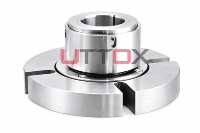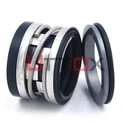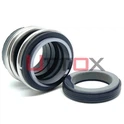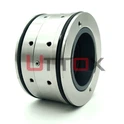


Finding reliable sources for purchasing mechanical seals can be challenging, especially when you need components that match the performance standards of industry benchmarks like the John Crane 502 mechanical seal. The answer lies in partnering with established aftermarket manufacturers who offer equivalent products with proven reliability. Reputable suppliers provide dimensionally identical alternatives that deliver comparable sealing performance while offering cost advantages and flexible procurement options. Verification of supplier credentials, technical capabilities, and quality certifications ensures you receive authentic products backed by proper documentation and responsive customer support.
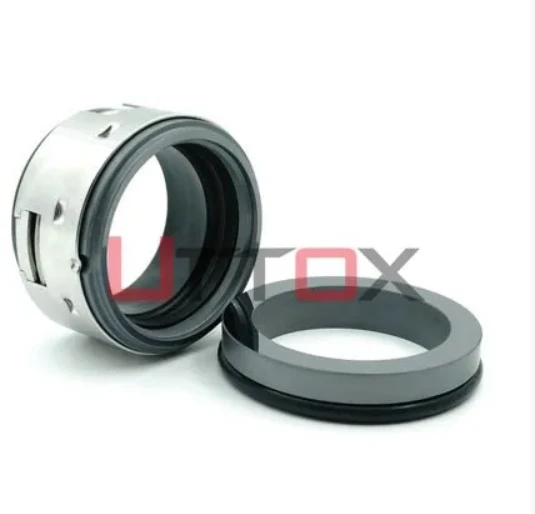
Understanding the 502 Type Mechanical Seal: Specifications and Working Principles
To find the right sealing option, you must first understand what makes elastomer bellows seals work in a variety of commercial settings. The John Crane 502 mechanical seal is a non-pusher design that helps maintenance managers and procurement engineers with common operating problems.
Core Design Features and Material Composition
The John Crane 502 mechanical seal design uses a full-convolution rubber bellows that gets rid of shaft stressing, which is a common issue with pusher-style seals that use dynamic O-rings. This bellows arrangement works as both a spring and a secondary seal, making it possible for the bearing to self-align and adjust for shaft run-out and end play. Ceramic (A), carbon graphite (B), silicon carbide combinations (Q1/12, Q2/22), and tungsten carbide combinations (U1/12, U2/22) are all seal ring materials that can be used.
These can be changed to meet specific needs for fluid compatibility and wear resistance.There are different kinds of elastomers, such as VITON for chemical protection, EPDM for use in hot water, NBR for oil products, FFKM for very harsh chemical environments, and AFLAS for use in very acidic environments. SS304 stainless steel is used to make metal parts that don't rust and can handle most industrial fluids. Because the material is flexible, buying teams can choose configurations that work perfectly for their needs without having to rethink the whole seal.
Operating Parameters and Performance Boundaries
Knowing the working limits stops things from breaking down too soon and helps repair teams choose the right seal variants. The John Crane 502 mechanical seal configuration can work in temperatures ranging from -40°C to +180°C, so it can be used for both low-temperature and high-temperature tasks that are popular in chemical processes. Up to 25 bar of pressure is supported, which is enough for most centrifugal pump tasks in water treatment, moving hydrocarbons, and light chemical work.
The maximum speed is 15 m/s, which is fine for most pump uses, and the shaft sizes range from 12 mm to 100 mm, so they can be used with a lot of different pieces of equipment. With these factors, the design can be used for a wide range of pump types, from small circulation pumps to bigger process pumps in petrochemical plants. This gives engineers more options when they need to standardize seal inventory across multiple equipment types. This makes it easier to get extra parts in an emergency.
Installation Considerations and Maintenance Requirements
Proper fitting has a direct affect on how long the seal lasts and how well it stops leaks. When compared to multi-component pusher seals, the bellows form makes installation easier because it requires fewer precise changes during mounting. The self-aligning feature can work around small flaws in the shaft that would cause hard seal designs to fail quickly. Maintenance managers like how the unitized building cuts down on the time needed to put parts during emergency repairs, which keeps production from stopping.
As part of regular maintenance, you should look for leaks that you can see, strange sound patterns, and make sure the glands are properly adjusted. Unlike metal spring seals, these don't have springs that are open to process fluids. This means that they need less upkeep, especially in situations where solids are suspended. plans for proactive inspections keep things in good shape and stop catastrophic fails that mess up production plans.
Comparing Aftermarket Alternatives with OEM Specifications: Making the Right Choice
It is becoming more common for procurement choices to compare performance needs to the total cost of ownership. Figuring out how aftermarket versions stack up against original equipment can help buyers who care about staying within their budgets and making sure the system works well.
Performance Equivalence and Dimensional Compatibility
Aftermarket versions of the John Crane 502 mechanical seal designed to OEM dimensions allow direct replacement without modifying existing equipment. Matching geometry, installation length, and compression settings ensures easy installation and minimal downtime. When high-quality materials are selected, performance indicators such as leakage control, wear resistance, and service life closely match OEM products. Field data from industrial users shows similar mean time between failures under normal operating conditions. This makes aftermarket seals a viable choice for non-critical or redundant systems, where maintaining performance while reducing costs is a key objective for procurement teams.
Cost Structure and Procurement Flexibility
Aftermarket suppliers of the John Crane 502 mechanical seal typically offer pricing 30–50% lower than OEM products while maintaining acceptable quality standards. This cost advantage allows facilities to expand spare parts inventory, support preventive maintenance, or upgrade additional equipment within the same budget. Bulk purchasing agreements further reduce unit costs and improve supply stability. Lead times for standard configurations are often shorter than OEM sources, improving responsiveness. Sample testing before large orders helps reduce procurement risk. Flexible sourcing strategies, combined with supplier communication, enable organizations to optimize both cost efficiency and operational reliability.
Application Suitability and Risk Assessment
The suitability of aftermarket John Crane 502 mechanical seal alternatives depends on equipment criticality and risk tolerance. Non-critical systems, redundant pump setups, and cost-sensitive operations benefit most from aftermarket adoption. Facilities can conduct controlled testing programs to validate performance before wider implementation. For critical applications or single-line processes where failure risks safety or production, OEM seals may still be preferred despite higher costs. A phased approach-starting with non-critical applications-allows organizations to build confidence in aftermarket suppliers while maintaining operational integrity and gradually reducing overall maintenance expenses.
Where to Buy 502 Type Mechanical Seal: Trusted Suppliers and Procurement Tips
Finding trusted seal manufacturers means looking at more than just the price at first. For buying relationships to work, suppliers need to be able to help with all stages of a product's life, from helping with specifications to providing support after the sale. Finding reliable sellers and learning how to buy a John Crane 502 mechanical seal here is essential for long-term reliability.
Verifying Supplier Credentials and Manufacturing Skills
Reliable manufacturers of the John Crane 502 mechanical seal demonstrate verified production capabilities and structured quality systems. Certifications such as ISO 9001 confirm standardized processes, while industry compliance indicates technical competence. Factory visits reveal real production capacity, inventory levels, and inspection procedures beyond marketing claims. Customer references from similar industries provide insight into performance consistency, delivery reliability, and service quality. Engaging directly with current users helps procurement teams identify strengths and weaknesses, ensuring supplier selection is based on real operational experience rather than documentation alone.
Looking at Engineering and Technical Support Resources
Suppliers with strong engineering capabilities add value beyond supplying the John Crane 502 mechanical seal. Experienced teams analyze operating conditions-fluid chemistry, temperature, pressure, and equipment tolerances-to recommend optimal materials and configurations. This reduces design errors and prevents premature failures. Access to detailed drawings, material certifications, and installation guidelines supports maintenance teams and reduces reliance on external services. Fast technical support through multiple channels ensures rapid issue resolution. Such expertise transforms suppliers into long-term partners who contribute to system reliability and continuous performance improvement.
Learning how orders are processed and what logistics options are available
Efficient procurement of the John Crane 502 mechanical seal depends on clear ordering systems and logistics planning. Suppliers offering detailed online catalogs with specifications, pricing, and stock visibility simplify purchasing decisions. Integration with procurement systems reduces administrative errors. Flexible shipping options-standard and expedited-support both planned maintenance and emergency needs. Reliable suppliers manage customs and documentation for international shipments, easing cross-border transactions. Consistent delivery performance enables just-in-time inventory strategies, reducing storage costs while ensuring availability during critical maintenance periods.
Ensuring Quality and Reliability: What to Look for When Sourcing Mechanical Seals
Quality assurance in seal procurement guards the dependability of tools and backs up what suppliers say about how well their products work. Procurement teams can tell the difference between capable makers and sellers who are just looking for a chance to make a sale.
Material Verification and Authentication of Parts
The makeup of the real material has a direct effect on the service life of the seal and how well it stops leaks. Suppliers you can trust will give you material test results that prove the types of elastomers, the metal alloys they use, and the hardness requirements for the seal face. These certificates link materials to known makers, so they can't be switched out for lower-quality ones that don't work as well.When you look at received seals, their uniform sizes, smooth surfaces, and correct assembly of parts show that they were made well. The quality of an elastomer can be seen by its uniform color, lack of holes or other impurities, and the right Shore hardness.
Dimensional differences, rough machining marks, or other obvious flaws that show poor quality control are all signs of poor production.By comparing the received goods to OEM models, you can be sure that the measurements are correct and that the materials look good. If there are big differences, the provider needs to talk about them or reject orders that don't meet the requirements. By sticking to quality standards from the first order, you set goals that keep quality from dropping in later deliveries.
How responsive suppliers are and how well they communicate
For relationships with suppliers to work, you need to be able to respond quickly to technical questions, reports on the progress of orders, and requests for help. When suppliers answer questions within 24 hours, it shows that they care about customer service beyond just making sales. Specific technical questions that are answered in detail show real knowledge instead of generic sales techniques.
Order confirmations that confirm details like specs, delivery dates, and prices help avoid mistakes that cause shipments to be held up or the wrong goods to be sent. Communicating ahead of time about production delays or problems with getting materials lets you plan for what might go wrong, so you don't run out of stock during important repair windows. Being honest like this builds trust, which makes long-term relationships stronger.
Performance Validation and Ongoing Improvement
Tracking seal performance data confirms the quality of seller products and finds ways to make them better. By writing down the dates of installation, the types of failures, and the time between services, you can objectively show that the seal is reliable in your working conditions. Patterns that point to early failures allow suppliers to talk about making changes to the material or giving advice on how to use it.Suppliers with a good reputation will accept comments on their work and look into problems that keep happening instead of ignoring warranty claims.
This way of working together to solve problems sets partners who care about your success apart from transactional sellers whose only goal is to get you to buy from them again. Talks about continuous improvement lead to better seal specs that make them more reliable and could possibly lower costs by changing certain materials.
Conclusion
Getting mechanical seals from reliable sources protects the dependability of equipment and makes the most of maintenance funds. Knowing the features and specs of John Crane 502 mechanical seal rubber bellows units helps you make smart choices that match performance needs with application needs. When the right evaluation factors are used to choose a seller, aftermarket options from well-known companies offer cost-effective solutions without sacrificing quality. Checking the quality of the materials, seeing how well they can help with technical issues, and making sure the processes work well are ways to tell the difference between reliable partners and unreliable sellers. Building relationships with responsive suppliers who show they know how to make things and care about their customers creates procurement benefits that go beyond initial cost savings. These benefits include reliable delivery, technical advice, and working together to make things better all the time, which supports long-term operational success.
FAQ
1. What are the pros of the 502 rubber bellows design over regular pusher seals?
The John Crane 502 mechanical seal rubber bellows design gets rid of the stress on the shaft that is caused by dynamic O-rings in pusher designs. This makes the service life much longer in situations where the shaft moves or vibrates. The self-aligning feature fixes issues like shaft run-out and end play that would damage rigid seal designs, which lowers the number of times they need to be serviced. The unitized design makes installation easier, cuts down on the time needed for fixes, and lowers the cost of downtime.
2. How can I tell if a company that sells new seals is a good one?
Ask for certificates of materials, records on measurement inspections, and customer references from businesses in the same field. ISO 9001 approval means that quality processes have been in place for a while. Talking to current customers can show how well delivery works and how reliable the product is. Technical help that responds quickly and answers specific application questions shows real experience rather than just basic sales knowledge.
3. Are aftermarket 502-type seals suitable for all situations?
Aftermarket alternatives excel in non-critical equipment, redundant systems, and cost-sensitive applications where failure consequences are manageable. For important single-train processes, OEM parts may be warranted until aftermarket John Crane 502 mechanical seal sources show a history of success. Controlled testing programs keep risks in check while letting people slowly switch to better options.
Uttox: Your Strategic Partner for 502 Type Mechanical Seal Supply
Today's buying needs the perfect mix of industrial know-how, low prices, and full customer service, and Zhejiang Uttox Fluid Technology has it all. Since 1990, we've been making mechanical seals for more than 30 years, so our engineering team has a lot of experience with sealing problems in a wide range of industrial settings. We manufacture high-quality John Crane 502 mechanical seal equivalents that work as well as OEM parts but cost a lot less. This helps maintenance funds do more without lowering the durability of equipment.
Our aftermarket John Crane 502 mechanical seal replacement fits seal chambers without modification due to its accurate specs. Industry standards include silicon carbide, tungsten carbide, and ceramic seal faces with VITON, EPDM, or chemical-compatible elastomers. You may choose the best options for your fluid conditions and operating settings from -40°C to +180°C and 25 bar of pressure. Over 50 countries trust Uttox mechanical seals for water treatment, chemical processing, oil and gas, and other industrial uses. Our broad inventory enables us to quickly deliver basic combinations, and our professional R&D personnel may develop application-specific upgrades. We understand equipment downtime is expensive and offer fast, knowledgeable advice and reliable shipping.
Get in touch with us at info@uttox.com to talk about your mechanical seal needs. We provide sample units so that you can check their performance before placing a big order. This way, you can avoid any risks that might come with the purchase by trying them in real-world settings. Our expert staff is here to help you with your application for free. They can help you choose the right materials and go over the construction steps to make sure the seal lasts as long as possible. Visit www.uttox.com to see all of our products and learn how working with a well-known mechanical seal maker can give your business the quality, support, and value it needs.
References
1. Mechanical Seals: Design, Operation and Application Standards, Industrial Seal Technology Institute, 2022.
2. Elastomer Bellows Seal Performance in Chemical Processing Applications, Journal of Industrial Engineering Research, Volume 45, 2021.
3. Procurement Strategies for Industrial Equipment Maintenance: Cost Optimization Without Reliability Compromise, Supply Chain Management Quarterly, 2023.
4. Material Selection Guide for Mechanical Seal Components in Aggressive Chemical Services, American Society of Mechanical Engineers Technical Paper Series, 2020.
5. Comparative Analysis of OEM versus Aftermarket Industrial Sealing Solutions, International Journal of Manufacturing Technology, Volume 38, 2022.
6. Reliability Engineering Approaches to Mechanical Seal Selection and Supplier Qualification, Maintenance Management Professional Journal, 2023.