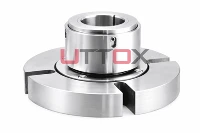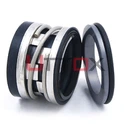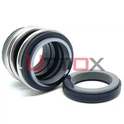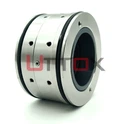


Following the well-known Burgmann design architecture, the mg1 mechanical seal is a single-spring, rubber bellows seal made for centrifugal pumps and other spinning equipment. As a cover that doesn't depend on spinning, it uses a very flexible bellows to transfer torque and automatically fix problems caused by shaft misalignment and axial movement. This design gets rid of the need for dynamic O-rings, which stops shaft scoring and wear. This is a big plus in industrial settings where equipment stability affects both production efficiency and servicing costs.
Understanding MG1 Mechanical Seal: Design and Functionality
Core Design Principles of Rubber Bellows Seals
For example, the mg1 mechanical seal works in an exceptionally distinctive way than customary pusher seals. The elastic howls work as both an auxiliary seal and a spring, making the gadget rotation-independent and significantly decreasing shaft wear. When it is put in place, the howls exchanges are constrained to the shaft through an obstruction fit, whereas permitting pivotal development, much obliged to its bendable plan. Since it does two things, the seal works particularly well in circumstances where shaft runout or warm development seems to harm its performance.Because the seal confront remains in connection to the shaft, commonplace issues like fussing rust are nearly totally dodged. This plan's advantage is particularly valuable in places like chemical handling plants and water treatment plants that require running all the time. The open-coil spring plan keeps the media from getting clogged by solids, which is a common way for frameworks that pump slurry or wastewater to fail.
Material Selection for Demanding Industrial Environments
Material compatibility straightforwardly influences how long a seal endures in difficult working circumstances. The MG1, MG12, and MG13 sorts have seal sides made of tungsten carbide, antimony carbon, tar carbon, silicon carbide (SIC), or sintered silicon carbide (SSIC). Each fabric has its possess set of execution characteristics that make it work best in certain chemical conditions and temperature ranges. Carbon-based seal faces are awesome at self-lubrication and warm stun security, so they can be utilized in places where the temperature changes from -20°C to +200°C. Diverse sorts of silicon carbide are harder and less likely to wear down, which implies they last longer in applications that utilize unpleasant media. Whichever elastic is chosen-VITON, EPDM, NBR, FFKM, or AFLAS-must meet the needs for chemical resistance and temperature range. EPDM is extraordinary for hot water and steam employments, whereas VITON is best for fuel and chemical applications. Erosion assurance is given by metal parts made from SS304 or SS316 stainless steel in a assortment of industry settings.
Operating Parameters and Performance Boundaries
Knowing the working limits keeps seals from coming up short as well before long and makes instruments more solid. The MG1 mechanical seal can work with shafts from 12mm to 120mm in diameter. It can handle weights of up to 16 bar and speeds of up to 10 m/s. These components cover around 80% of common mechanical pump applications, like common handle gear, cooling water development frameworks, and chemical exchange pumps. With a temperature extend of -20°C to +200°C, it can be utilized in both cold and high-temperature applications. Since it can, as it were, handle 16 bars of weight, this seal is superior for medium weight employments compared to cartridge seals, which are required for high-pressure applications. When working conditions get near these limits, buying groups ought to conversation to specialized specialists to ensure they chose the right materials and leave sufficient room for error.
Installation, Maintenance, and Troubleshooting of MG1 Mechanical Seal
Step-by-Step Installation Procedures
Proper installation begins with careful preparation and inspection. Check the shaft surface for roughness, scoring, or corrosion that could damage the bellows; a finish of Ra 0.8 µm or better is recommended. Ensure seal chamber faces are flat and aligned to avoid uneven loading. Clean all mg1 mechanical seal components with compatible fluids to remove contaminants, then lightly lubricate elastomers. Install the seal without twisting the bellows and set the correct working length per manufacturer guidelines. Tighten gland nuts evenly to prevent distortion, and confirm smooth shaft rotation after installation.
Preventative Maintenance and Inspection Protocols
Routine maintenance extends service life and improves reliability. Conduct regular visual inspections for leakage, elastomer discoloration, or deposits near the mg1 mechanical seal. Monitor seal chamber temperature to detect lubrication or cooling issues early. Ensure operating pressure and temperature remain within design limits, and use vibration analysis to identify misalignment or bearing wear. Maintain detailed service records to track performance trends. Compared to dynamic O-ring designs, the bellows structure reduces maintenance needs by eliminating spring corrosion and secondary seal adjustments, simplifying upkeep for plant personnel.
Common Issues and Practical Solutions
Leakage is the most common issue with any mg1 mechanical seal. Immediate leaks after installation often result from incorrect setting length, damaged faces, or contamination. Recheck installation measurements and inspect sealing surfaces. Gradual leakage during operation may indicate wear, chemical attack, or thermal damage. Analyze removed components and fluid conditions to determine root causes, then adjust materials or process parameters. Overheating signs include hardened elastomers or cracked faces, usually due to poor lubrication or excessive speed. Verify cooling systems and operating limits, and seek technical support for persistent failures.
Comparing MG1 Mechanical Seal with Other Mechanical Seal Types
MG1 versus Cartridge Seal Designs
Cartridge seals are pre-assembled units that simplify installation and reduce human error, but they cost significantly more than component designs like the mg1 mechanical seal. While cartridge seals are ideal for complex or high-risk environments, MG1 seals provide comparable reliability in standard applications at a lower cost. Their modular design allows flexible material selection and easier inventory management. For facilities with skilled maintenance teams and budget constraints, MG1 seals offer strong performance and cost efficiency, making them a practical choice for many industrial sealing needs.

Rubber Bellows versus Pusher Seal Architecture
Pusher seals rely on dynamic O-rings that slide along the shaft, causing wear over time. In contrast, the mg1 mechanical seal uses a rubber bellows that remains stationary relative to the shaft, eliminating fretting and reducing maintenance. Torque is transmitted through interference fit rather than friction, improving durability. While pusher seals may handle higher pressures, bellows seals provide better shaft protection and reliability in most applications. This design advantage leads to longer equipment life and reduced maintenance costs in general industrial pumping systems.
Application-Specific Selection Criteria
Selecting the right seal depends on operating conditions. Chemical compatibility determines elastomer and face material choices, ensuring resistance to process fluids. Temperature extremes require evaluation of elastomer limits and thermal shock risks. The mg1 mechanical seal typically operates up to 16 bar and 10 m/s, making it suitable for pumps, water treatment, and chemical transfer. For conditions beyond these limits, alternative designs may be required. In applications with solids, the MG1's clog-resistant and rotation-independent design improves reliability and reduces wear.
Procurement Guide: How to Source MG1 Mechanical Seal Efficiently
Identifying Qualified Manufacturers and Suppliers
Reliable sourcing starts with evaluating supplier quality systems and technical expertise. Established manufacturers with ISO 9001 certification ensure consistent production and material traceability. Suppliers offering engineering support help optimize mg1 mechanical seal selection for specific applications. Interchangeability with major brands like Eagle Burgmann, AESSEAL, and Vulcan simplifies procurement and reduces costs. Requesting technical datasheets and certifications ensures compliance with original equipment standards, maintaining performance and reliability across replacement sourcing strategies.
Strategic Sourcing Considerations for B2B Procurement
Effective procurement balances availability, cost, and supplier capability. Suppliers with strong inventory can deliver mg1 mechanical seal units quickly, minimizing downtime. Volume pricing, long-term agreements, and OEM customization options improve cost efficiency and supply stability. Quality assurance should include dimensional checks, material certification, and performance testing. Advanced inspection methods ensure seal face precision and material durability. Building strong supplier relationships reduces transaction costs and supports consistent operational performance.
Cost-Performance Balance in Supply Chain Management
Total cost of ownership includes purchase price, maintenance, downtime, and service life. The mg1 mechanical seal offers a strong balance of low initial cost and reliable long-term performance, reducing replacement frequency and labor expenses. Procurement strategies should also consider supplier responsiveness and technical support, especially for challenging applications. Diversifying supply sources ensures continuity and competitive pricing while maintaining quality standards. This approach enhances flexibility and protects operations from supply disruptions, making MG1 seals a cost-effective and dependable choice.
Conclusion
There is a tried-and-true, low-cost way to seal things in the chemical processing, water treatment, production, and general process businesses using the mg1 mechanical seal. Its rubber bellows design keeps the shaft from wearing down and works with operating changes that make standard seal configurations less useful. Procurement teams can make sure that equipment works well and costs don't go up by understanding design principles, installation requirements, upkeep routines, and strategic sourcing issues. The fact that they are the same as major OEM seal designs means that they can be used in a wide range of situations. Additionally, the affordable prices and steady supply from companies like Uttox help with procurement goals. By choosing qualified providers with technical know-how, the ability to produce, and quick support services, you can build relationships that provide long-term benefits beyond the price of the initial parts.
FAQ
1. What materials are used in MG1 mechanical seal construction?
Depending on the needs of the application, the seal sides are made of antimony carbon, resin carbon, silicon carbide (SIC), sintered silicon carbide (SSIC), or tungsten carbide. To meet chemical compatibility needs, elastomer parts come in VITON, EPDM, NBR, FFKM, or AFLAS. For rust protection, metal parts are made from SS304 or SS316 stainless steel. For the best service life, the choice of material should be based on the chemistry of the process fluid, the temperature it will be exposed to, and the pressure it will be under.
2. Can MG1 seals directly replace Eagle Burgmann original equipment?
Uttox's mg1 mechanical seal can be used with Eagle Burgmann MG1/MG12/MG13, AESSEAL B02/B012/B013, and Vulcan 191/192/193 seal designs because it can be used with the same dimensions. Because of this, the equivalent part can be directly replaced in current equipment without having to change the seal chambers or shaft sizes. Checking the material's specs and how it works makes sure it works with the application's needs and might lower the cost of buying it compared to what the original equipment maker charged.
3. What immediate actions should be taken if seal leakage occurs?
Safely turn off the equipment and check the fitting of the seals for clear problems, such as the wrong working length or damage to the seal faces. Make sure that the gland nuts are tight enough and that they are not binding or out of place. Check the process fluid for solids or contaminants that could hurt the closing surfaces. If the leak still happens after a basic check, call technical support for help solving to find the root causes and take steps to fix the problem so it doesn't happen again.
Partner with Uttox for Reliable MG1 Mechanical Seal Supply
Uttox offers mg1 mechanical seal options backed by 30 years of experience in the business and a dedication to client satisfaction. Our expert team can help you choose the best materials and setups for your unique working conditions and gives you full application support. We keep a lot of shafts in stock in sizes ranging from 12mm to 120mm, so we can send quickly and keep your equipment running while it's being fixed or replaced in an emergency. When OEMs can customize products, they can meet specific application needs that normal catalog goods can't. Email our expert engineers at info@uttox.com to talk about your sealing problems and get personalized advice on how to improve efficiency while keeping costs low. As a reliable mg1 mechanical seal manufacturer, we offer low prices, quick expert support, and strict quality control measures that protect your investment and help you reach your business goals.
References
1. Mechanical Seals: Design and Application Standards, Industrial Equipment Engineering Association, 2021.
2. Bellows Seal Technology for Rotating Equipment, Journal of Fluid Sealing Engineering, Vol. 45, 2020.
3. Material Selection Guidelines for Chemical Process Sealing Applications, Chemical Processing Equipment Handbook, 2022.
4. Pump Mechanical Seal Installation and Maintenance Best Practices, American Petroleum Institute Standard 682, Fourth Edition, 2019.
5. Comparative Performance Analysis of Mechanical Seal Designs in Industrial Applications, International Journal of Rotating Machinery, 2021.
6. Quality Control Methods for Precision Mechanical Seal Manufacturing, Society of Tribologists and Lubrication Engineers Technical Paper, 2020.