

When mechanical seal failures occur due to inadequate spring force or excessive installation space requirements, engineers face a critical challenge that can lead to costly downtime and equipment damage. Wave Springs offer a revolutionary solution by delivering consistent axial force while occupying up to 50% less space than conventional compression springs. These innovative elastic components consist of pre-hardened flat wire formed with multiple peaks and valleys, specifically engineered to provide reliable performance in space-restricted applications across petroleum refining, water treatment, and industrial pump seals where traditional springs simply cannot fit.
Understanding Wave Springs and Their Core Functions
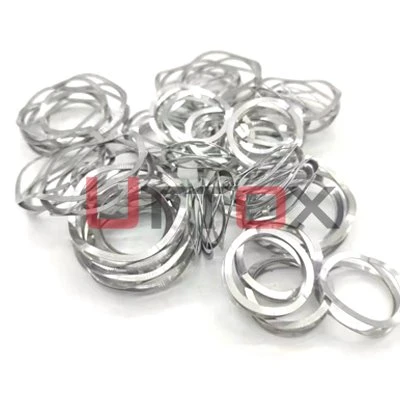
Wave Springs represent a significant advancement in spring technology, fundamentally different from traditional coil springs in both construction and application. These specialized components are manufactured through an on-edge coiling process, where pre-hardened flat wire is wound and simultaneously formed with waves along its circumference. The resulting structure creates an elastic element capable of delivering precise axial loads while maintaining an exceptionally compact profile. In mechanical seal applications, particularly within pump seals and rotating equipment, Wave Springs serve the critical function of maintaining constant contact pressure between seal faces, ensuring leak-free operation even under varying temperature and pressure conditions. The primary purpose of Wave Springs extends beyond simple compression. These components are specifically designed to address situations where conventional springs prove inadequate due to space limitations, weight restrictions, or the need for variable stiffness characteristics. In industrial applications involving mechanical seal types such as cartridge seals, component seals, and pusher seals, Wave Springs provide the necessary preload force that keeps sealing faces in proper contact throughout the equipment's operational cycle. The M7N and HJ92N Wave Springs, for instance, are engineered to meet the demanding requirements of EagleBurgmann mechanical seal standards, where reliability and dimensional accuracy are paramount for preventing costly fluid leakage in critical process equipment.
The functional advantage of Wave Springs becomes particularly evident in hydraulic seals, high-precision motors, and aerospace applications. Unlike traditional compression springs that require significant axial space, Wave Springs can be designed with multiple waves per turn, allowing engineers to achieve the desired spring rate within minimal installation height. This space-saving characteristic makes them indispensable in modern mechanical seal designs where equipment miniaturization and weight reduction are essential considerations. Furthermore, the uniform load distribution provided by Wave Springs throughout their compression cycle ensures consistent seal face contact, reducing wear and extending the service life of both the spring and the mechanical seal assembly.
Key Applications of Wave Springs in Industrial Mechanical Seals
Critical Role in Pump Seals and Rotating Equipment
Wave Springs have become indispensable components in pump seals across diverse industrial sectors, including petroleum refining, chemical processing, and water treatment facilities. In these demanding environments, pump seals must maintain integrity under extreme pressure differentials, temperature fluctuations, and corrosive media exposure. The M7N and HJ92N Wave Springs specifically address these challenges by providing consistent axial force that keeps seal faces in optimal contact, regardless of operational variables. When pump shafts experience axial movement during operation, these Wave Springs compensate for the displacement, maintaining seal effectiveness and preventing process fluid leakage that could lead to environmental contamination or production losses. The mechanical seal type selection for centrifugal pumps, positive displacement pumps, and mixer seals often depends on the available axial space within the equipment housing. Wave Springs excel in these constrained environments where traditional compression springs would require excessive installation depth. For instance, in submersible pump applications where space is at an absolute premium, the compact design of Wave Springs allows engineers to incorporate effective sealing solutions without compromising pump hydraulics or increasing equipment dimensions. The SS316 material construction of quality Wave Springs ensures corrosion resistance in aggressive pumping applications, from acidic chemical transfer to seawater desalination systems, where spring degradation could compromise seal integrity and lead to catastrophic equipment failure.
Specialized Applications in Aerospace and Precision Machinery
Beyond conventional industrial pump seals, Wave Springs serve critical functions in aerospace applications where weight reduction and reliability are non-negotiable requirements. Aircraft hydraulic systems, landing gear mechanisms, and flight control actuators utilize Wave Springs to maintain seal compression in components that must perform flawlessly under extreme temperature variations and vibration environments. The ability of Wave Springs to maintain consistent load characteristics throughout their deflection range makes them ideal for these safety-critical applications where seal failure is not an option. The M7N and HJ92N Wave Springs designs have proven particularly effective in these demanding scenarios, providing aerospace engineers with reliable solutions that meet stringent industry standards while contributing to overall aircraft weight reduction initiatives. In precision machinery applications, including CNC machine tool spindles, robotic actuators, and high-speed motor assemblies, Wave Springs provide the exact spring rates required for optimal mechanical seal performance. These applications demand springs with predictable load-deflection characteristics and minimal variation across production batches. The manufacturing precision of quality Wave Springs ensures that each component delivers consistent performance, enabling machinery designers to achieve the tight tolerances necessary for modern automation equipment. When compared to traditional mechanical seal types that rely on conventional compression springs, systems incorporating Wave Springs benefit from reduced axial stack heights, allowing for more compact equipment designs without sacrificing sealing effectiveness or operational reliability in these precision-critical applications.
Advantages of Wave Springs Over Traditional Spring Solutions
Space Efficiency and Installation Benefits
The most compelling advantage of Wave Springs lies in their remarkable space efficiency, which can reduce required axial installation height by up to fifty percent compared to equivalent-force compression springs. This dimensional advantage becomes crucial in mechanical seal designs where equipment manufacturers face increasingly stringent space constraints driven by miniaturization trends across industrial sectors. When engineers specify M7N and HJ92N Wave Springs for pump seals, they gain the flexibility to reduce seal chamber depths, enabling smaller equipment footprints without compromising sealing performance. The compact structure of Wave Springs translates directly into material savings, reduced equipment weight, and lower manufacturing costs across the entire assembly, particularly valuable in applications where multiple seals must be incorporated within limited equipment envelopes. The installation process for Wave Springs offers practical benefits that extend beyond dimensional considerations. Unlike conventional compression springs that may require special tools or precise positioning during assembly, Wave Springs maintain their shape and can be easily handled during mechanical seal installation procedures. This ease of assembly reduces installation time and minimizes the risk of component damage during equipment maintenance. For industrial facilities managing pump seals across extensive equipment populations, the simplified installation characteristics of Wave Springs contribute to reduced maintenance downtime and improved overall equipment effectiveness. The self-centering nature of properly designed Wave Springs also ensures consistent seal face loading, eliminating the misalignment issues that occasionally plague traditional spring-loaded mechanical seal types during installation or equipment reassembly operations.
Performance Characteristics and Operational Reliability
Wave Springs deliver superior performance characteristics that directly address common failure modes in mechanical seal applications. The variable stiffness capability of Wave Springs allows engineers to fine-tune spring rates by adjusting wave geometry, including crest height, width, and material thickness. This design flexibility proves invaluable when optimizing pump seals for specific operating conditions, such as high-pressure chemical processing or variable-speed motor applications. The M7N and HJ92N Wave Springs exemplify this design optimization, incorporating decades of engineering experience into geometries that balance spring force, deflection range, and fatigue life to meet demanding industrial requirements. The controlled stiffness characteristics ensure that seal faces maintain proper contact pressure throughout the equipment's operational envelope, preventing the face separation that causes sudden seal failure and unplanned equipment shutdowns. The material properties and manufacturing processes used in quality Wave Springs contribute significantly to their operational reliability. SS316 stainless steel construction provides excellent corrosion resistance across diverse industrial environments, from marine pump seals exposed to saltwater to pharmaceutical processing equipment requiring sanitary design standards. The pre-hardening of spring material before the on-edge coiling process ensures consistent mechanical properties throughout the component, eliminating the stress concentrations and fatigue-prone areas common in conventionally wound springs. When properly specified for the mechanical seal type and application requirements, Wave Springs demonstrate exceptional fatigue resistance, withstanding millions of compression cycles without significant degradation in spring force or mechanical integrity. This reliability translates directly into extended seal service life and reduced maintenance costs across industrial facilities where pump seals represent critical components in production processes.
Technical Features of M7N and HJ92N Wave Springs
The M7N and HJ92N Wave Springs represent industry-standard components that have established benchmarks for performance in EagleBurgmann mechanical seals and compatible seal designs worldwide. These non-welded Wave Springs are manufactured to precise dimensional tolerances that ensure proper fit within seal gland geometries while delivering the exact spring forces required for optimal seal face loading. The designation "non-welded" signifies a critical manufacturing characteristic where the spring is formed from continuous flat wire without joined ends, eliminating potential weak points that could lead to premature spring failure in demanding pump seal applications. This construction method provides uniform mechanical properties around the entire spring circumference, ensuring consistent radial and axial force distribution that maintains seal face parallelism throughout the compression range. The technical specifications of M7N and HJ92N Wave Springs reflect decades of engineering evolution in mechanical seal design. These components feature carefully optimized wave geometries that balance spring rate, maximum deflection capability, and solid height requirements specific to their respective mechanical seal types. The M7N configuration typically serves medium-duty industrial applications where moderate spring forces and deflection ranges suffice for reliable seal operation, while the HJ92N design accommodates applications requiring different dimensional characteristics or load specifications. Both designs utilize SS316 austenitic stainless steel, selected for its superior corrosion resistance, excellent mechanical properties across wide temperature ranges, and proven reliability in aggressive chemical environments common to industrial pump seals. The material selection ensures that these Wave Springs maintain their specified spring rates even after extended exposure to process fluids, thermal cycling, and the vibration environments typical of rotating equipment installations.
The manufacturing precision of quality M7N and HJ92N Wave Springs directly impacts mechanical seal performance and service life. Dimensional control during the on-edge coiling process ensures that wave heights remain consistent around the spring circumference, preventing uneven seal face loading that accelerates wear and reduces sealing effectiveness. Surface finish specifications for these Wave Springs minimize friction during compression and installation, while edge treatments prevent seal face damage during handling or operation. The spring force tolerances maintained by reputable manufacturers ensure that each M7N and HJ92N Wave Spring delivers predictable performance within the narrow load specifications required for modern mechanical seal designs. This manufacturing consistency allows equipment designers to specify these components with confidence, knowing that field performance will match design calculations across production batches and enable reliable pump seal operation throughout the equipment's intended service life.
Selecting the Right Wave Spring for Your Mechanical Seal Application
Understanding Load Requirements and Deflection Characteristics
Proper Wave Spring selection begins with accurate determination of the spring force required to maintain effective seal face contact throughout the equipment's operational envelope. For pump seals, this calculation must account for hydraulic closing forces, seal face pressure balance ratios, and dynamic effects from shaft rotation and vibration. The specified Wave Spring must provide sufficient force to keep seal faces in contact during startup and low-speed operation while avoiding excessive unit loading that accelerates face wear at normal operating conditions. Engineers must also consider the spring's working deflection range, ensuring that the M7N and HJ92N Wave Springs or equivalent components maintain adequate force even when compressed to their maximum installed deflection. The spring rate, expressed as force per unit deflection, determines how spring force varies throughout the compression range, directly affecting seal face loading stability across different operating conditions in mechanical seal types ranging from balanced designs to unbalanced configurations. The environmental conditions surrounding pump seals significantly influence Wave Spring selection criteria. Temperature extremes affect both spring material properties and seal component dimensional changes, requiring springs that maintain consistent force characteristics across the equipment's specified temperature range. Chemical compatibility becomes crucial when process fluids can contact the spring, as certain chemicals may attack even corrosion-resistant alloys like SS316 stainless steel. For applications involving aggressive media, engineers may need to consider Wave Springs with enhanced material specifications or protective coatings that extend service life in hostile chemical environments. The vibration environment also impacts Wave Spring performance, as resonance conditions can cause premature fatigue failure in springs with natural frequencies matching equipment operating speeds. Careful attention to these application-specific factors ensures that selected Wave Springs deliver reliable performance throughout the mechanical seal's intended service life without unexpected failures that compromise process integrity.
Dimensional Constraints and Installation Considerations
The physical space available within seal glands represents a primary constraint in Wave Spring selection for pump seals and mechanical seal assemblies. Engineers must verify that the selected M7N and HJ92N Wave Springs or alternative designs fit within the available axial height when compressed to their solid height, ensuring adequate clearance for assembly while preventing spring over-compression that could cause permanent deformation. The spring's outer and inner diameters must also align with seal gland bore dimensions and shaft diameters, maintaining appropriate clearances that prevent spring binding or excessive radial displacement during operation. Some mechanical seal types require springs with specific geometries to accommodate seal face holders, secondary sealing elements, or other components within the limited gland space. The compact nature of Wave Springs provides significant advantages in these space-constrained applications, often enabling seal designs that would be impossible with conventional compression springs that require substantially greater axial space. Installation procedures and maintenance accessibility also factor into Wave Spring selection decisions for industrial pump seals. Some seal designs require spring installation before other components, potentially limiting spring outer diameter to clear internal seal parts during assembly. The spring's installed height in the free state must provide sufficient deflection during seal assembly without requiring excessive compression forces that complicate installation or risk component damage. For equipment with frequent maintenance intervals, Wave Springs that simplify seal disassembly and reassembly reduce maintenance time and minimize the risk of installation errors that could compromise seal performance. Quality M7N and HJ92N Wave Springs manufactured to precise tolerances facilitate proper installation by fitting cleanly within seal components without binding or requiring excessive handling force. Engineers specifying Wave Springs for critical applications should also consider availability factors, ensuring that replacement components can be obtained with minimal lead times to support maintenance schedules and minimize equipment downtime when seal service becomes necessary.
Conclusion
Wave Springs serve the essential purpose of providing compact, reliable axial force in mechanical seals where space constraints and consistent loading are critical requirements. The M7N and HJ92N Wave Springs exemplify how advanced spring technology delivers superior performance across diverse industrial applications while reducing installation space by up to fifty percent compared to traditional compression springs. By understanding Wave Spring capabilities and proper selection criteria, engineers can optimize pump seals for enhanced reliability, extended service life, and improved equipment performance across demanding industrial applications.
Cooperate with Zhejiang Uttox Fluid Technology Co.,Ltd.
Partner with Zhejiang Uttox Fluid Technology Co.,Ltd., a leading China Wave Springs manufacturer with over 30 years of expertise in mechanical seals and associated components. As a trusted China Wave Springs supplier, we offer High Quality Wave Springs including M7N and HJ92N standards at competitive Wave Springs prices. Our China Wave Springs factory delivers Wave Springs for sale with OEM support, customized solutions, and fast delivery from sufficient inventory. Contact our experienced technical team for China Wave Springs wholesale inquiries and free technical guidance at info@uttox.com to optimize your mechanical seal applications with industry-leading components.
References
1. Chironis, Nicholas P. Spring Design and Application. McGraw-Hill, 1961.
2. Wahl, A.M. Mechanical Springs. McGraw-Hill Book Company, 1963.
3. Society of Automotive Engineers. Spring Design Manual. SAE International, 1996.
4. Budynas, Richard G. and Nisbett, J. Keith. Shigley's Mechanical Engineering Design. McGraw-Hill Education, 2015.