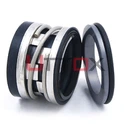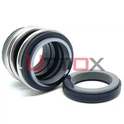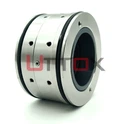


When your mechanical seals fail prematurely due to extreme wear, corrosion, or operational stress, the hidden culprit is often the wrong material choice. Cemented carbide, particularly tungsten carbide, has revolutionized industrial sealing applications by delivering unmatched durability where conventional materials fall short. This comprehensive guide explores everything you need to know about this exceptional material and why it has become the gold standard for demanding industrial environments.

Understanding the Fundamentals of Cemented Carbide and Tungsten Carbide
Cemented carbide represents a sophisticated class of composite materials engineered to withstand the most punishing industrial conditions. At its core, this material consists of hard carbide particles, predominantly tungsten carbide, bonded together by a metallic binder such as cobalt or nickel. The carbide phase typically comprises between seventy and ninety-seven percent of the total weight, with grain sizes averaging between point four and ten micrometers. This unique composition creates a material that balances extreme hardness with sufficient toughness, a combination rarely found in nature or conventional engineering materials. The manufacturing process involves powder metallurgy techniques where tungsten carbide particles are mixed with binder metal powders and then subjected to sintering at elevated temperatures. During sintering, the binder enters a liquid phase while the carbide grains remain solid, allowing them to rearrange and compact together. This process creates intimate bonding between the hard carbide phase and the ductile metallic binder, resulting in a material that exhibits properties superior to either component alone. Tungsten carbide seal rings manufactured through this process demonstrate exceptional dimensional stability and surface quality, making them ideal for precision sealing applications.
The Material Science Behind Tungsten Carbide Performance
Tungsten carbide has always been a commonly used hard material for the sealing surface in mechanical seals because of its high toughness and rigidity, as well as good wear resistance. The material's remarkable performance stems from its unique crystalline structure, where tungsten atoms form strong covalent bonds with carbon atoms. This bonding creates an incredibly hard compound with a Vickers hardness typically ranging between fifteen hundred and nineteen hundred, surpassing that of alumina and approaching the hardness of diamond. Unlike many hard materials that become brittle, tungsten carbide maintains substantial toughness when properly bonded with appropriate metallic binders. The addition of cobalt as a binder serves multiple critical functions. Cobalt provides the ductility needed to absorb impact forces and prevent catastrophic brittle failure, while its excellent wetting properties ensure thorough bonding with tungsten carbide particles. Seven-cobalt-based tungsten carbide has a wide range of applications across diverse industries. The binder content directly influences the material's properties, with higher cobalt content increasing toughness at the expense of hardness, allowing manufacturers to tailor TC seal rings to specific application requirements. This flexibility enables the production of tungsten carbide seal rings optimized for different operational environments.
Grades and Classifications of Tungsten Carbide Materials
The versatility of cemented carbide extends from its various grade classifications, each designed for specific application demands. Common grades include YG6, YG8, YN6, and YN8, where the designation indicates the binder type and content. YG grades utilize cobalt binders, while YN grades employ nickel binders for enhanced corrosion resistance. The numerical suffix indicates the approximate percentage of binder metal, directly affecting the material's hardness-toughness balance. YG6, containing six percent cobalt, offers higher hardness suitable for applications requiring maximum wear resistance, while YG8 with eight percent cobalt provides greater toughness for impact-prone environments. Nickel-based tungsten carbide is more commonly used in the petrochemical industry than cobalt-based due to its improved corrosion resistance. When exposed to acidic or corrosive media, nickel-bonded grades maintain their integrity far better than cobalt-bonded alternatives, though they typically exhibit slightly lower hardness. At the same time, the main sealing ring and matching ring of tungsten carbide are used, which is widely used in petroleum refining, mining and non-corrosive processes. Tungsten carbide, which does not contain a binder in mechanical seals, is the mainstream of corrosion-resistant cemented carbide, offering superior chemical stability in the harshest environments where conventional grades would deteriorate rapidly.
Applications of Tungsten Carbide in Industrial Sealing Systems
The deployment of tungsten seal ring components in mechanical seals addresses critical challenges across numerous industries. In petroleum refining operations, where temperatures fluctuate dramatically and abrasive particles contaminate process fluids, tungsten carbide seal rings deliver reliable performance that extends seal life by three to five times compared to traditional materials. The material's thermal conductivity, approximately ten percent that of copper, efficiently dissipates frictional heat generated at the sealing interface, preventing thermal distortion and maintaining tight clearances essential for effective sealing. Water treatment facilities benefit immensely from tungsten carbide's resistance to erosion and cavitation damage. Pumps handling slurries or particle-laden water subject seal faces to continuous abrasive wear that quickly destroys softer materials. TC seal rings withstand this punishment while maintaining the precision surface finish required for leak-free operation. In pulp and paper manufacturing, where seals must endure chemically aggressive pulping liquors combined with fibrous contaminants, tungsten carbide seal rings provide the durability and chemical resistance necessary for extended service intervals, reducing downtime and maintenance costs significantly.
Performance in Extreme Operating Conditions
Shipbuilding applications present unique challenges where seals must function reliably in marine environments characterized by saltwater corrosion, biofouling, and wide temperature variations. Tungsten carbide seal rings excel in these conditions, maintaining their mechanical properties and dimensional stability despite prolonged exposure to corrosive seawater. The material's maximum application temperature typically reaches eight hundred to nine hundred degrees Celsius before binder softening occurs, providing substantial safety margins for most industrial applications. This thermal stability makes tungsten seal ring assemblies suitable for food and beverage processing equipment requiring high-temperature cleaning and sterilization cycles. Pharmaceutical manufacturing demands materials that combine chemical inertness with extreme cleanliness and durability. Tungsten carbide seal rings meet these stringent requirements while withstanding aggressive cleaning agents and sterilization procedures without degradation or contamination. Power generation facilities, particularly those utilizing coal slurry or ash-laden process streams, rely on TC seal rings to maintain equipment availability in environments that would rapidly destroy conventional seal materials. The combination of wear resistance, corrosion resistance, and thermal stability makes tungsten carbide the material of choice for these demanding applications.
Manufacturing Excellence and Quality Control in TC Seal Rings Production
Producing high-quality tungsten carbide seal rings requires exceptional manufacturing precision and rigorous quality control throughout the production process. The size control is quite strict and the processing requirements are very high, beginning with carefully selected raw materials where particle size distribution and purity directly impact final properties. Powder preparation involves milling tungsten and carbon sources to achieve the desired particle size, followed by blending with precisely measured binder metals to ensure compositional uniformity. Any deviation in composition or particle size distribution can significantly affect the material's performance characteristics. The pressing and sintering stages demand careful control of temperature, pressure, and atmosphere to achieve full densification without grain growth or residual porosity. Advanced sintering techniques such as hot isostatic pressing ensure uniform properties throughout the component, eliminating the weak spots that could lead to premature failure. After sintering, tungsten carbide seal rings undergo precision grinding and lapping operations to achieve the mirror-like surface finishes required for mechanical seal applications, typically better than point one micrometers Ra. This level of surface quality minimizes friction, reduces wear, and ensures optimal sealing performance.
Customization Capabilities for Diverse Industrial Requirements
Various grades of tungsten carbide exist to meet the needs of various customers, each formulated to excel in specific operating conditions. Manufacturers can adjust carbide grain size, binder composition, and binder content to optimize properties for particular applications. Fine-grain carbides with submicron particle sizes offer maximum hardness and wear resistance for precision applications, while coarser grades provide enhanced toughness for impact-resistant requirements. The quality of TC rings and TC sleeves produced through advanced manufacturing processes enables reliable operation across temperature extremes, corrosive environments, and high-pressure applications where standard materials fail. Custom formulations allow tungsten carbide seal rings to handle various extreme working conditions, from cryogenic temperatures in liquefied gas service to elevated temperatures in petrochemical processes. Specialized grades incorporate additional carbides such as titanium carbide or tantalum carbide to enhance specific properties like high-temperature stability or corrosion resistance. This customization extends to dimensional specifications, with manufacturers capable of producing complex geometries and maintaining tight tolerances essential for modern mechanical seal designs. The ability to tailor material properties and dimensions ensures optimal performance in each unique application.
Comparative Advantages of Tungsten Carbide Seal Rings
When evaluated against alternative sealing materials such as silicon carbide, carbon graphite, or ceramics, tungsten carbide seal rings offer distinct advantages that justify their widespread adoption. While silicon carbide provides excellent hardness and chemical resistance, it lacks the toughness of cemented carbide, making it more susceptible to chipping and fracture under mechanical shock. Carbon graphite offers superior lubricity and thermal shock resistance but cannot match tungsten carbide's wear resistance or load-bearing capacity in demanding applications. Ceramics provide chemical inertness but suffer from brittleness and thermal sensitivity that limit their applicability. The unique combination of properties in tungsten carbide seal rings creates performance advantages difficult to replicate with alternative materials. Their fracture toughness permits operation in applications with occasional solid ingress or mechanical disturbance that would shatter purely ceramic materials. The material's high elastic modulus maintains face flatness under pressure and temperature variations, ensuring consistent sealing performance across varying operating conditions. TC seal rings also demonstrate excellent compatibility when running against various counterface materials, from carbon to silicon carbide, providing flexibility in seal design optimization.
Economic Benefits and Lifecycle Cost Considerations
While tungsten carbide seal rings command premium initial costs compared to conventional materials, their superior durability translates to substantial lifecycle cost savings. Extended service life reduces seal replacement frequency, minimizing downtime and associated production losses that often exceed material costs by orders of magnitude. In critical applications where unplanned shutdowns incur severe economic penalties, the reliability of tungsten seal ring components provides invaluable operational security. Maintenance planning becomes more predictable, allowing facilities to schedule interventions during planned outages rather than responding to emergency failures. The wear resistance of TC seal rings reduces the generation of wear debris that can contaminate process streams or damage downstream equipment. This cleanliness benefit proves particularly valuable in pharmaceutical, food processing, and semiconductor applications where product purity is paramount. Additionally, the dimensional stability of tungsten carbide seal rings maintains tight clearances throughout their service life, preventing the gradual performance degradation common with softer materials. These factors combine to make tungsten carbide an economically superior choice despite higher upfront investment.
Selection Criteria and Design Considerations for Tungsten Carbide Applications
Selecting appropriate tungsten carbide grades for specific sealing applications requires careful consideration of multiple operating parameters. Fluid chemistry determines whether cobalt-bonded or nickel-bonded grades are more suitable, with nickel-bonded materials preferred for corrosive environments despite slightly lower hardness. Operating temperature influences binder selection and carbide grain size, with finer grains generally preferred for elevated temperature applications to minimize grain boundary diffusion. Pressure and pressure-velocity product calculations ensure the selected grade possesses adequate load-bearing capacity without excessive frictional heat generation. Surface finish requirements must align with sealing performance expectations and counterface material selection. Tungsten carbide seal rings typically achieve surface finishes between point zero-five and point two micrometers Ra, with finer finishes reducing friction and wear but increasing manufacturing costs. The balance between surface quality and economic considerations depends on application criticality and expected service life. Dimensional tolerance specifications must account for both manufacturing capabilities and thermal expansion characteristics to ensure proper fit and function across the anticipated temperature range.
Conclusion
Cemented carbide, particularly tungsten carbide, represents the pinnacle of engineering materials for demanding mechanical seal applications, combining exceptional hardness, wear resistance, and chemical stability in a single package that outperforms alternatives across diverse industrial environments.
Cooperate with Zhejiang Uttox Fluid Technology Co.,Ltd.
As a leading China tungsten carbide manufacturer and China tungsten carbide supplier with over thirty years of manufacturing excellence, Zhejiang Uttox Fluid Technology offers high quality tungsten carbide seal rings at competitive tungsten carbide price points. Our experienced R&D team provides technical guidance and customized solutions for different working conditions, supported by sufficient inventory for fast delivery. We are one of the leading companies in the sealing ring industry, offering China tungsten carbide wholesale options and tungsten carbide for sale to customers across petroleum refining, water treatment, pulp and paper, shipbuilding, food and beverage, pharmacy, and power plant industries in over fifty countries. Our professional technical team provides free technical support and OEM services with quality assurance through independent quality control or third-party cooperation. Contact us today at info@uttox.com to discuss your sealing challenges and discover how our China tungsten carbide factory can deliver the efficient solutions your operations demand.
References
1. "Cemented Carbides: Processing, Properties and Applications" by Luyckx, S. and Love, A., Materials Science and Engineering Research Developments series
2. "Tungsten Carbide: Processing and Properties" by Prakash, L., International Journal of Refractory Metals and Hard Materials technical review
3. "Mechanical Seal Technology for Pumps and Agitators" by Mayer, E. and Brossman, K., Engineering Applications handbook
4. "Powder Metallurgy of Superhard Materials" by Roebuck, B. and Bennett, E.G., Institute of Materials technical publication