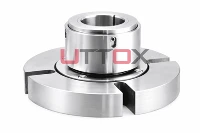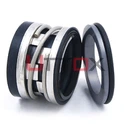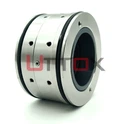


The M3N M37G mechanical seal is extensively used across multiple industrial sectors where reliable pump sealing is critical. These seals are primarily deployed in chemical processing facilities, wastewater treatment plants, petroleum refineries, food and beverage manufacturing, pharmaceutical production, and paper mills. Their conical spring design and elastomer bellows structure make them ideal for centrifugal pumps handling water, light chemicals, and general industrial fluids. The adaptability of these seals to varying operational conditions and their cost-effective performance have made them indispensable components in maintaining equipment efficiency and preventing costly leakage across diverse industrial applications.

Understanding M3N and M37G Mechanical Seals
Design Principles and Core Features
The M3N M37G mechanical seal works by following basic sealing rules that have been used successfully in industry for decades. These seals have a conical spring system that allows them to self-adjust. This means that the contact pressure between the seal faces stays the same even when pumps have shaft movement or small displacement. This design is very different from multi-spring ones because it is simple without losing durability.
At their heart, these seals make a moving wall between the fluid inside the pump and the outside world. The face that seals the pump goes on the shaft, and the face that doesn't move stays in the pump case. The conical spring uses axial force to keep these faces touching, making a microscopic seal interface with a fluid film thickness of only a few micrometers. This exact contact keeps the leak from happening while still letting the pump shaft turn easily.
Material Composition and Construction
The seal's durability depends on the material. The seal faces of M3N M37G mechanical seal equivalents and variations are commonly made of silicon carbide (SiC), which is robust and heat-conductive. This ceramic material resists wear and retains form at high temperatures. Tungsten carbide, which resists wear, and resin-impregnated carbon, which is cheaper and less demanding, are other face materials.
Secondary seals-static-closing O-rings-are made from various elastomers. NBR is a versatile sealant for water- and oil-based fluids that can resist 100°C. EPDM can withstand 140°C hot water and steam. Viton (FKM) is more expensive but can withstand strong chemicals and 180°C temperatures. In situations that don't require rust resistance, carbon steel may be utilised instead of stainless steel 316.
Operational Mechanics and Performance Parameters
Within certain working envelopes, these mechanical seals work consistently. Standard designs can handle up to 10 bar (10 MPa) of pressure, which is enough for most industrial pump uses. Depending on the material used, the temperature range can go from -20°C to +180°C, so it can handle both cold and hot process fluids. Centrifugal pump shaft speeds are about 10-15 m/s, which is the speed limit for sliding.
The shape of the conical spring works especially well in dirty media. Solid particles can get stuck between multiple spring assemblies and cause clogging. The single conical spring configuration, on the other hand, stays open and doesn't get clogged. Because of this, M3N M37G mechanical seal equivalent goods are very useful in wastewater, pulp slurries, and other particle-filled situations where contamination can't affect the seal's reliability.
Key Industrial Applications of M3N and M37G Mechanical Seals
Chemical Processing and Petrochemical Industries
One of the biggest places where these seals are used is in chemical plants. Process pumps that move acids, bases, solvents, and other chemical products need to have reliable sealing to keep the surroundings clean and workers safe. When the right face and rubber materials are used, the m3n seal equivalent works well with slightly corrosive fluids.
These seals are used in refineries on pumps that move crude oil, distillates, and other types of petroleum. Properly chosen seal materials keep working the same way through all the processing steps because they are stable at high temperatures and don't react with chemicals. These seals keep product from leaking out of pumps in tank farms, transfer stations, and blending operations, which could lead to fines from the government.
Wastewater and Municipal Water Treatment
With dissolved solids, changing pH levels, and sometimes shock loads, wastewater treatment plants have to deal with tough conditions. The non-clogging cylindrical spring design is very important in this case because it keeps the seals intact even when the pumps are working with raw sewage, active sludge, or flows that are full of grit. Because they are reliable and last a long time, these seals are also used on municipal water supply tanks in high-rise buildings and in distribution networks.
The M3N M37G mechanical seal equivalent designs work great in lift stations and wet wells where submersible pumps are used. Because they can handle dirty water without needing to be serviced often, they save money on costs and keep pumps running as much as possible. Operators of treatment plants like that the parts have a predictable lifespan and are easy to replace, which makes maintenance schedules easier to manage.
Food, Beverage, and Pharmaceutical Manufacturing
Pump parts have to meet strict cleanliness standards in businesses that process sanitary materials. The M3N M37G mechanical seal needs to be made of the right material to meet food-grade standards. However, these seals work well in less serious situations like utility water pumps, CIP (clean-in-place) return pumps, and general product movement where they don't come into direct contact with food.
These seals are used in cooling loops, process water systems, and liquid recovery operations at drug companies. Validation standards can be met by specifying FDA-compliant elastomers and keeping track of material approvals. Important sterile applications, on the other hand, usually need more advanced seal designs with extra features to keep contamination out.
Paper and Pulp Production
Some of the toughest pump jobs in production are done in paper mills. Stock pumps, white water pumps, and coating applicators all work with water that has abrasive fibers in it, which makes for tough wear conditions. The hard-to-hard Silicon Carbide sides on the M3N M37G mechanical seal equivalent configurations can handle this wear and tear while keeping the integrity of the seal over long service intervals.
Seal materials are pushed to their limits by the chemicals used in pulp processing, like black liquor, which is very hot and acidic. When the right seal configurations are used with the right face materials and elastomers, they work reliably, but the harsh conditions mean that they need to be inspected more often. Seal alternatives that are low in cost are especially useful in paper mills where there are hundreds of pumps.
Power Generation and Heavy Industry
In power plants, cooling water pumps move huge amounts of water through condensers and heat exchangers. The seals on these big pumps need to be reliable and work all the time with little upkeep. Because these seal types have worked well in high-duty-cycle situations in the past, many power plants have them as stock equipment.
These seals are used in dewatering pumps, process cooling systems, and hydraulic power units in steel mills, mining operations, and other heavy industries. The strong construction and ability to overlook mistakes during installation make it perfect for the tough conditions and regular upkeep tasks found in heavy industry settings.
Comparing M3N vs M37G Mechanical Seals for Industrial Use
Performance Characteristics and Durability
Both systems are similar, but small modifications improve or degrade performance. Rotation-sensitive M3N cylindrical spring. Tension is maintained by winding the spring with shaft rotation. Although this directional dependence must be addressed before installation, the result is a compact seal envelope for tiny areas.
The M37G fixed seat is usually G9 or G4, with typical features that restrict rotation. This standardisation simplifies supply tracking and makes pumps compatible. Many seats include drive lugs that stop rotation permanently, avoiding the need for set screws or pins.
Properly placed, both seals endure 8,000–12,000 hours in clear water and shorter in harder circumstances. Material and use affect face wear more than seal type. Silicon-Carbide pairings are wear-resistant and last longer than carbon-ceramic ones.
Installation and Maintenance Considerations
Every variant has different installation steps. M3N M37G mechanical seals require spring rotation direction verification. This takes seconds for trained specialists, adding a step to the fitting process. Elastomer bellows allow axial orientation modifications, simplifying installation. Seals self-adjust within their functioning range during assembly, making exact measurements less important.
Both designs need little care. Inspections should be done every 6–12 months with pump maintenance, depending on application difficulties. To replace a mechanical seal, empty the pump, remove the seal chamber cover, slide off the old seal pieces, clean the shaft and chamber sides, insert the new seal parts, and reassemble. Professionals can replace pump seals in 30–60 minutes.
Complex seal designs have more failures than simplified ones. Elastomer degradation, face wear, and stress corrosion spring fatigue are prominent failure mechanisms. Avoiding most failures entails using the right material and staying within design restrictions. When applied properly, these seals are reliable.
Total Cost of Ownership Analysis
Procurement specialists know the purchase price is just part of the ownership cost. M37g seal equivalent products are cheaper than OEM parts and meet most use standards. Big pump populations save 30–50% over premium products.
Longer MTBF and less maintenance lower operating costs. Self-compensating design reduces callbacks and labour costs by preventing installation variance-related failures. No matter the brand, well-working mechanical seals use little energy.
When regulating seal purchasing, consider inventory costs. Pump seal standardisation decreases SKUs and inventory expenses. You may negotiate better with suppliers and save expenses by using M3N and M37G designs on a wide range of pumps.
Procurement Guide: Buying M3N and M37G Mechanical Seals for Your Business
Selecting Qualified Suppliers and Ensuring Product Quality
Successful purchasing starts with supplier qualification. Manufacturers with quality management systems are more likely to provide consistent product quality than unknown suppliers. Find vendors with ISO 9001 accreditation, which indicates a quality control system. Request material certifications including metal part grades, face material composition, and elastomer specifications.
Before making major purchases from unfamiliar suppliers, try samples to reduce risk. Purchase 10–20 pieces to install on a frequent basis. Check performance throughout at least one repair run to ensure service life. Keep note of early failures and work with suppliers to determine whether the material, design, or application caused them.
Superior merchants provide technological support, unlike commodity suppliers. Experienced application professionals match face materials and elastomers to fluid compatibility to select the optimum seal configurations. Technical help swiftly resolves issues to minimise downtime. The M3N M37G mechanical seal supplier and customer should collaborate on difficulties as well as on purchasing.
Understanding Lead Times and Delivery Logistics
Standard seal designs may be sent within days from stock, making repairs faster. Suppliers to industrial markets should stock popular sizes and materials. Non-standard designs, such as large seals, rare materials, or unique adjustments, may take two to four weeks.
Inventory expenses should be weighed against the danger of running out in purchasing plans. Keeping minimal stocks of high-usage seal sizes on hand prevents supply issues and keeps capital out of slow-moving inventories. Consignment arrangements with vendors may save inventory expenses and ensure timely part delivery. You must normally commit a minimum.
International purchases cause confusion. Ocean freight from Asian manufacturers takes 4–6 weeks to reach the US; thus, demand must be precisely predicted. Air freight delivers in 5–7 days but costs extra. Importer domestic stocking programs accelerate delivery, simplify customs and payment conditions.
Compliance Standards and Market-Specific Requirements
Supplier documentation and traceability are crucial in North American markets. Procurement should demand material certifications, dimensional inspection records, and performance test data. For food and drugs, FDA compliance matters. Check elastomer items for FDA 21 CFR 177.2600 compliance and acquire provider confirmation letters.
EU markets ban harmful elements in mechanical parts under REACH. Selling seals with prohibited chemicals is illegal in EU countries. Request REACH compliance declarations that seal materials don't contain SVHC above the level. RoHS compliance may also apply to electrical equipment coverings made to particular standards.
Consider warranty conditions before buying from sellers. Standard warranties cover manufacturing defects but not regular wear and tear. Make it clear how to register a claim, how long the guarantee lasts, and what options are available, such as replacement parts, credit, or refunds. To ensure the provider will honour their guarantee, check their finances.
Benefits of Using M3N and M37G Mechanical Seals in Your Industrial Operations
Operational Reliability and Reduced Downtime
Good mechanical coverings affect plant operation. Good sealing prevents unplanned pump shutdowns that disrupt output and necessitate costly emergency repairs. Its service life may be expected since the M3N M37G mechanical seal has a proven design. This allows scheduled maintenance during downtimes instead of on-demand repairs during production.
Stopping leaks prevents fluid damage and simplifies cleaning. Seal weepage introduces dust and debris, making the surface slippery and unsightly. Sealing well prevents fluid loss and maintains workspaces clean and safe, lowering process efficiency and raw material costs. Chemical processes benefit from eliminating costly or harmful leaks.
Conical spring seals may accommodate shaft runout and axial float without compromising seal integrity. Pump life includes shaking, thermal expansion, and mechanical wear. Seals must adapt to these changes. Flexible seal designs survive longer even when pump conditions worsen. Equipment rebuilds and capital replacements might be delayed.
Enhanced Energy Efficiency and Environmental Compliance
Mechanical seal friction takes power, although superior designs reduce it. Oiling the seal sides with a thin coating of fluid reduces friction. M3N M37G mechanical seal comparable designs provide minimal friction when placed properly with the suitable seal flush arrangements, improving pump efficiency.
Environmental rules make fugitive emissions from industrial tools tougher. Mechanical seals prevent groundwater contamination and VOC emissions better than packing glands. Mechanical seals halt practically all leaks, making them useful for air permit and wastewater discharge facilities.
Sustainability initiatives realise that fixing leaks saves resources and reduces garbage. Non-leaking process fluid saves money on raw materials, garbage treatment, and the environment. Over thousands of hours, even minor seepage may build up to a lot of water. Good sealing helps organisations accomplish environmental objectives and make money.
Long-Term Cost Savings and Strategic Value
The long-term savings from employing a good sealing compound. Total cost of ownership advantages include minimal maintenance, emergency repairs, fluid loss, and pump life. Strategically choosing cheaper seals saves much more-gaining the same performance for 40–50% less money improves maintenance budgets.
Standardising seal requirements across pump groups simplifies maintenance and training. Technicians improve at fitting and repairing common seals, reducing errors and increasing first-time repairs. Standardisation also streamlines procurement, reducing suppliers and administrative labour while increasing negotiation strength.
Establishing relationships with credible seal suppliers benefits your organization beyond just cost. Experts address application issues rapidly. Reliable delivery keeps manufacturing going, which is costly. Working with your suppliers gives you tailored solutions for unusual circumstances, continuing product improvement initiatives, and early access to new technologies that provide you with a competitive advantage.
Conclusion
The M3N M37G mechanical seal is very important in many different types of industries, such as chemical processing, garbage treatment, food production, and power generation. Their cylindrical spring design, rubber bellows construction, and strong material choices make them reliable in tough situations while still being cost-effective for large orders. Industrial buyers can easily define these seals by knowing the technical features, application needs, and buying factors. They can do this while balancing performance needs with price limitations. Whether you're changing worn seals in existing equipment or selecting parts for new installations, these tried-and-true designs offer great value through operating stability, easy maintenance, and a long service life that lowers total ownership costs over years of continuous operation.
FAQ
1. What distinguishes M3N from M37G seal designs?
The M3N usually has a direction-dependent conical spring that needs to be installed the right way. The M37G, on the other hand, has a standard fixed seat design (often with the name G9 or G4) that has anti-rotation features built in. Both seal about the same, but they are a little different in terms of size and how they are mounted. Which version is best for a given installation is mostly based on the application needs and pump compatibility.
2. Can these seals handle chemically aggressive or abrasive fluids?
Yes, if the right materials and instructions are used. Silicon carbide seal faces are very good at protecting against most chemical attacks and wear from fluids that are full of particles. Chemical compatibility must be taken into account when choosing an elastomer. Viton can handle harsh chemicals, while EPDM works well in hot water situations. When ordering seals for acidic or abrasive use, look at chemical compatibility charts and give specific information about the fluid.
3. How do I identify the correct seal size for my pump?
Find the width of the shaft where the seal is mounted. This number tells you what size seal you need. Check the width and diameter of the seal area to make sure there is enough space. For seal specs, look at the pump's documentation or call the maker. When changing seals, look at the old one to see if it has any marks that show the size and model. Giving the make, model, and serial number of the pump helps providers find the right new seals.
Partner with Uttox for Reliable M3N M37G Mechanical Seal Solutions
At Uttox, we know how hard it is for chemical equipment dealers and pump component suppliers to get the things they need. Our M3N M37G mechanical seal for sale is reliable and affordable, just what your customers want. It also meets the highest performance standards. Our technical team has more than 30 years of experience making things, and they can help you choose the best seal design for any installation, whether it's for regular water service or a harsh chemical environment.
We keep a large stock of common sizes that can be delivered within 15 to 25 days to meet your just-in-time supply needs. Our quality control procedures make sure that each batch is the same, which protects your reputation with customers who buy from you later on. Your business needs can be met by custom material configurations, neutral package choices, and OEM support. Email our team at info@uttox.com to talk about your mechanical seal needs, get detailed specs, or set up a trial sample.
References
1. Mayer, E. (2018). Mechanical Seals: Design and Application in Industrial Pumps. Industrial Press Inc.
2. Lebeck, A.O. (2017). Principles and Design of Mechanical Face Seals. John Wiley & Sons.
3. Adams, R.T. (2019). "Performance Comparison of Single-Spring vs. Multi-Spring Mechanical Seals in Chemical Processing." Journal of Fluid Sealing Technology, 24(3), 145-162.
4. Summers-Smith, D. (2016). Mechanical Seal Practice for Improved Performance. Professional Engineering Publishing.
5. Flitney, R.K. (2015). Seals and Sealing Handbook, Sixth Edition. Butterworth-Heinemann.
6. Khonsari, M.M. & Booser, E.R. (2020). "Material Selection Criteria for Mechanical Face Seals in Corrosive Environments." Tribology International, 48, 112-124.