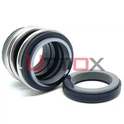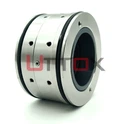


With the requirements of production safety and environmental protection, the application of agitator mechanical seals is becoming more and more extensive. The agitator mechanical seals is a relatively precise component in the equipment, and the requirements for technicians are relatively high in the process of operation and maintenance. Now we will explain several problems in installation and use.
1. Installation of agitator mechanical seals
The performance of the mechanical seal and the length of its life during the use of the mechanical seal are largely due to the working environment given by the equipment itself to the mechanical seal. Therefore, it is necessary to carefully check the equipment before installing the mechanical seal, which will reduce the possibility of failure of the mechanical seal and improve the service life of the mechanical seal. The equipment needs to be checked in the following aspects:
(1) The diameter and depth of the sealing cavity should be the same as the dimensions on the installation drawing of the sealing assembly, and the general tolerance should be within ±0.13mm; the dimensional deviation between the shaft and the shaft sleeve should be within ±0.0.3-±0.05. The axial direction of the shaft The movement needs to be checked, and the total movement cannot exceed 0.25mm in theory; the radial runout of the shaft is generally less than 0.05mm. Excessive radial runout may cause wear between the seal sleeve and the shaft; the self-checking leakage of the sealing surface increases, thereby affecting the overall working environment of the seal and reducing the service life of the seal.
(2) Check the curvature of the shaft, the maximum curvature should be less than 0.07mm.
(3) Check the alignment between the sealing cavity hole and the shaft, and the misalignment should be less than 0.13mm. Misalignment between the seal cavity hole and the shaft will affect the dynamic load between the seal faces, thereby reducing the seal operating life.
2. Check the seal before installation
Whether it is a new or repaired mechanical seal, the following items should be carefully inspected: all parts should be clean and free of dirt, especially the sealing surfaces; inspection of rotating parts, drive pins and spring pins; inspection of rotating parts set screws.
3. Start-up operation and use of agitator mechanical seals
Correct use is critical to the service life of the mechanical seal. Generally, the following precautions should be used with most mechanical seals.
(1) Most mechanical seals are designed to work in a liquid environment, so the sealing surface must be immersed in liquid before starting the machine. Dry running may damage the sealing surface and affect the service life. Jogging equipment has little effect, but at full speed it is necessary to ensure that the sealing equipment is in the working fluid.
(2) Turn on the cooling and flushing system, no matter whether the equipment is running or not, it is best not to cut off the cooling or flushing system, especially when the heat medium transported by the equipment will crystallize after cooling.
(3) It is normal for the newly installed equipment to have a slight leakage at the first operation. With the running-in of the seal, the leakage will be reduced to no leakage.