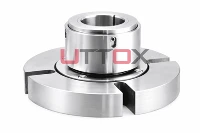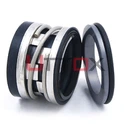


When industrial purchasers are looking for a reliable multi-spring mechanical seal that meets standard EN 12756 (DIN 24960) L1K specifications, the chesterton 491 seal is always at the top of the list. This component seal with O-ring mounting is suitable for shaft diameters of 18 mm to 100 mm, pressures of up to 25 bar, speeds of up to 15 m/s, and temperatures of - 20 °C to + 180 °C. The 491 platform provides a cross-referenceable, field-proven sealing solution for broad industrial operation, from a chemical transfer pump to a municipal wastewater system.

Understanding the Chesterton 491 Seal – Specifications and Features
Design and Seal Type
The 491 is a single unbalanced mechanical seal with multi-spring and O-ring mounted spinning face. Its finger-spring design keeps the springs out of the process fluid to avoid clogging in slurry and fibrous media. Statistics on the petrochemical industry show that 80–90 % of the centrifugal pumps use mechanical seals as their main dynamic sealing technology, and the 491 format is one of the most common models supplied worldwide.
Technical Operating Limits
The seal is operating within these confirmed parameters:
Temperature range: -20 °C to +180 °C
max. Pressure rating: 25 bar
Speed over surface <= 15 m/s
Shaft diameters covered: 18 mm – 100 mm
Dimensional standard: EN 12756 (DIN 24960) L1K or better
These restrictions make the 491 appropriate for mild chemical use, pulp stock pumps, and ordinary MRO replacement situations. Always verify the exact elastomer grade against your process fluid before purchase.
Materials and Elastomer Options
The flexibility in material choices is really what the Chesterton 491 seal is all about. Seal rings are available in grades A, B, Q1/12, Q2/22, U1/12 and U2/22, and are made of carbon-graphite, silicon carbide (SSiC) and tungsten carbide combinations. For hydrocarbon and acid service, VITON (FKM) is used; for water and mild alkali, EPDM; for general-purpose oil service, NBR; for aggressive chemical duty, FFKM; and for steam and amine conditions, AFLAS. Metal wetted parts are in SS304 or SS316.
Comparing the 491 with Other Mechanical Seal Designs
491 vs. Coil-Spring Equivalents
There are many coil spring seals out there, such as the John Crane Type 1, but the spring is immersed in the process fluid. In abrasive or high-solids media, that spring pockets with grit, greatly reducing seal life. The many finger springs are on the atmospheric side of the 491 DIN mechanical seal, removing that failure mechanism completely. Paper mill field studies confirm 40–60% increases in MTBF when converting from coil-spring to finger-spring designs in medium-consistency stock pumps.
491 vs. Cartridge Seals
Cartridge seals are quicker to install and less likely to be set up incorrectly, but they cost two to five times as much as component seals. For regular MRO changeouts in pumps with good shaft tolerances, the 491 format is equivalent in sealing performance and at a tenth of the cartridge cost. Many regional wholesalers carry the 491 as their entry-level SKU since it perfectly balances the gap between price and technical capability.
Cross-Reference Accuracy and EN 12756 Compliance
Cross-referencing is non-negotiable for distributor customers. The 491's L1K dimensional compliance necessitates that any replacement touted as a 491 equivalent must fit the gland-to-shaft geometry precisely. A variation of 0.2 mm in the seat bore will cause the dynamic O-ring to roll rather than slide, generating the same leakage event that causes a field complaint. Before taking a first shipment from any new supplier, always get a complete dimensional drawing with tolerances.
Procurement Guide for the Chesterton 491 Seal
Sourcing Considerations for Distributors
Typically regional MRO distributors look for three things: cross-reference accuracy, mixed-specification order capabilities, and pricing consistency. A credible supplier of Chesterton 491 seals should be able to give a dimensioned drawing to EN 12756 L1K, be able to take mixed shaft-size orders without significant minimum-order penalties, and hold pricing for a 30–90 day window to safeguard margin on quoted works.
Quality Verification Steps
Before committing to volume, any smart buyer should ask the following from a supplier of 491 mechanical seals:
Report of dimensional examination verifying critical L1K interface dimensions
Material traceability certificate for seal face grades, particularly SiC hardness >= 2400 HV
Elastomer Batch Test Report Shore A Hardness and Compression Set values per ASTM D395
Records of hydrostatic pressure test at 1.5× rated pressure
These papers provide the basis for the internal supplier certification and avoid complaints from the end customers about the batch variance.
OEM Labeling and Channel Protection
Distributors building their own brand equity need a manufacturing partner that respects channel boundaries. A manufacturer that offers OEM packaging support and does not contact end-users directly provides the security a regional distributor needs to invest in stock and promotion. Uttox supports private-label packaging for qualified partners.
Enhancing Seal Performance and Troubleshooting Tips
Common Failure Modes
A well-designed 491 seal might fail prematurely if it is not installed or used in the circumstances for which it was designed. The three most common failure modes are dry running at pump start-up (which scores the seal faces within seconds), wrong compression of the dynamic O-ring (which causes static leakage at the shaft), and shaft runout in excess of 0.05 mm TIR (which causes a cyclic bending load on the seal faces). Quickly identifying the failure mechanism that returned a Chesterton 491 DIN seal narrows remedial action.
Proactive Maintenance Practices
The service life is extended even before the pump is put into operation. The following are the basic maintenance methods that will ensure constant 491 seal performance:
Check shaft runout before installation (within 0.05 mm TIR)
Apply a thin coat of a grease compatible with the fluid to the dynamic O-ring during assembly
Fill the pump casing completely before starting to avoid dry-running
Check gland bolt torque after 24 hours of operation
Together, they remove the leading causes of early life seal failure, safeguarding equipment uptime and the reputation of the distributor with end users.
Matching Elastomer to Process Fluid
One elastomer does not fit all services. VITON is resistant to most hydrocarbons and to mild acids up to 180 °C. EPDM is best suited for fluids based on water, steam, and ketones. It has to be isolated from petroleum compounds. FFKM can withstand the widest variety of chemicals but comes at a premium price. Incompatible elastomers take weeks to expand or harden. Checking the fluid compatibility chart prior to shipping eliminates the most common preventable return claim.
Conclusion
The chesterton 491 seal is now one of the most referred multi-spring mechanical seal designs for broad industrial operation. It is EN 12756 L1K dimensions compliant, making cross-referencing simple. Its finger-spring design prevents clogging in abrasive media, and its wide elastomer range covers most of the process fluids found in chemical, paper, and wastewater applications. The 491 format provides reasonable SKUs for distributors to develop a solid MRO catalog. If you go for a provider with solid dimensional controls, material traceability, and flexible OEM packaging, a commodity item might transform into a competitive asset.
FAQ
1. Can the 491 seal run without an external flush in slurry service?
Yes. The stationary finger-spring design keeps the spring chamber away from process solids. In applications with solids content up to approximately 5 % by weight, the seal typically runs without an external flush, reducing system complexity and water consumption.
2. Does the 491 meet EN 12756 L1K dimensions for direct cross-reference?
A properly manufactured 491 equivalent meets or exceeds EN 12756 (DIN 24960) L1K interface dimensions. Request a full dimensional drawing from your supplier and verify the seat bore, drive lug positions, and spring working height before the first order.
3. What face combination suits abrasive media?
Silicon carbide versus silicon carbide (SSiC/SSiC) is the standard choice for abrasive slurry. Tungsten carbide versus carbon-graphite suits moderate abrasion with dry-run risk. Avoid carbon-graphite versus carbon-graphite in any media carrying particulates.
4. What is the expected service life?
Service life depends heavily on installation quality and fluid conditions. In clean water service, properly installed 491 seals commonly reach 18–24 months. In abrasive or chemically aggressive media, quarterly inspection is advisable until a site-specific MTBF baseline is established.
5. How do I confirm elastomer compatibility?
Check the fluid's pH, temperature, and chemical composition against the elastomer compatibility chart provided by your supplier. VITON, EPDM, NBR, FFKM, and AFLAS cover the majority of industrial fluids, but borderline cases should be tested with a fluid soak test before full deployment.
Get Your 491 Mechanical Seal Quote from Uttox
Uttox has manufactured mechanical seals since 1990, supplying customers in over 50 countries. As a direct chesterton 491 seal manufacturer, we offer EN 12756 L1K-compliant designs with full material traceability, OEM packaging support, and fast delivery from stocked inventory. Send your shaft size, elastomer grade, and required quantity to info@uttox.com to request a dimensional drawing and same-day quotation.
References
1. Pump and Systems Magazine – "Mechanical Seal Selection for Abrasive and Slurry Applications," 2022.
2. Fluid Sealing Association Technical Report FSA-MS-101 – "Mechanical Seal Fundamentals," 2021.
3. European Sealing Association (ESA) / Fluid Sealing Association (FSA) Joint Publication – "Seal Support Systems," 2020.
4. Hydrocarbon Processing Journal – "Extending Pump MTBF Through Seal Material Optimization," 2023.
5. ASME Pumping Machinery Technical Paper – "Spring Design Effects on Mechanical Seal Clogging in Medium-Consistency Stock Pumps," 2019.
6. EN 12756:2000 (DIN 24960) – "Mechanical Seals – Principal Dimensions, Designation, and Material Codes," European Committee for Standardization, 2000.