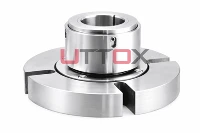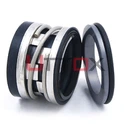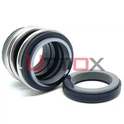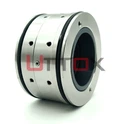


The seccomix dry running agitator mechanical seal is a balanced outboard semi-cartridge seal for flush-free operation in industrial mixers, vacuum dryers, and process reactors. It does not need a barrier fluid or Plan 52/53 flush systems as traditional wet-running seals do and is thus excellent for contamination-sensitive applications in pharmaceutical, food and chemical processing. The SeccoMix dry running agitator mechanical seal is proven in use on a wide variety of low-speed agitation devices with a working range of vacuum to 6 bar(g), -20°C to 200°C and shaft diameters from 25 to 160 mm.

Understanding the SeccoMix Dry Running Agitator Mechanical Seal
Choosing the correct agitator shaft seal is an important choice with a direct impact on batch quality, equipment uptime, and compliance standing. The design of the SeccoMix dry running agitator mechanical seal was based on one single principle: to prevent the process medium from escaping into the atmosphere without the need for an external lubricating system.
How Dry Running Technology Works
The traditional mechanical seal relies upon a thin layer of liquid between the seal faces to minimize friction. Instead of that liquid film, there's a designed material pairing, FDA-approved carbon graphite against a silicon carbide (SiC) seat, that creates low heat at sliding speeds of up to 2 m/s, with a dry-running agitator seal. The seal faces are cooled by the frictional heat being carried away by a passive internal air circulation design without any external cooling loop.
Material Selection and Its Role in Performance
The basic wetted material set of carbon graphite face, SiC seat, FKM/EPDM/PTFE secondary seals, and 316L stainless steel housing was chosen for chemical resistance, sanitary compliance, and dimensional stability over the complete -20°C to 200°C working range. An extra cooling flange increases the thermal envelope without affecting the installation footprint for process temperatures approaching 250 °C.
Atmosphere-Side Spring Design
All compression springs are located on the atmospheric side of the seal and are entirely separated from the process media. This design avoids crystallization, scaling or solid deposits that might jam the spring mechanism, a typical failure mode in batch reactors processing viscous or slurry-type media. The outcome is a uniform closure force across the service period.
Common Challenges and Troubleshooting of SeccoMix Dry Running Mechanical Seals
Even a fully specified dry running agitator seal might fail to work if the installation or operating circumstances are beyond the seal design envelope. Maintenance teams benefit from knowing the most common failure modes so they can take action before a little problem turns into an expensive batch loss.
Identifying Early Signs of Seal Wear
The SeccoMix dry running agitator mechanical seal has a visible wear indicator included in the Agitator Mechanical Seal, so that the remaining service life can be checked by personnel during regular checks without disassembly of the equipment. Abnormal noise (especially a dry scream) and a noticeable rise in leakage rate at the atmospheric side are early signs that the carbon graphite face has surpassed its wear limit. This detects catastrophic seal failure in a running vacuum batch early.
Shaft Runout and Misalignment Issues
Agitator shafts have higher radial runout and axial endplay than pump shafts. The SeccoMix agitator seal has a friction-locked drive system that supports typical shaft deflection without transmitting bending stresses to the seal faces. If aberrant vibration is detected, before presuming the seal itself is damaged, the first step in diagnosis is to check that shaft runout is within the prescribed tolerance.
Installation Best Practices
The semi-cartridge design means that it may be easily replaced on site since the seal is delivered pre-set and pre-compressed, eliminating measuring mistakes during installation. Prior to pressing the seal into place, technicians must verify that the gland pilot bore and bolt circle are compatible with the existing flange, that the dimensions are in accordance with DIN 28138 agitator flange specifications, and that the shaft surface polish falls within the prescribed range.
SeccoMix Dry Running vs. Wet Running Mechanical Seals: Making the Right Choice
When designing a new agitator, OEM engineers often wonder whether they should specify a dry running seal or a wet running seal. The answer relies on the process medium, the equipment configuration, and the maintenance infrastructure of the plant.
When Dry Running Seals Are the Right Fit
Wet running double seals also need a pressurized barrier fluid reservoir (API Plan 53) or a circulating flush system (Plan 52) with accompanying piping, instrumentation, and periodic fluid replenishment. For mobile tanks, skid-mounted reactors, or any installation where running a flush line is impractical, the SeccoMix dry running agitator mechanical seal removes that whole auxiliary system from the equipment BOM, reducing installed cost and the risk of barrier fluid contamination reaching the product.
Performance Comparison in Vacuum Service
Deep vacuum conditions may strip the fluid coating from wet running seals, leading to increased face wear and leakage risk. The dry running design is reliable from full vacuum to 6 bar(g) and is therefore more suitable for vacuum dryers and batch reactors that experience cycling of atmospheric and sub-atmospheric pressures during a single production run.
Cost and Compliance Considerations for OEMs
The equipment compliance package is simplified when opting for a dry running agitator seal, as no barrier fluid reservoir needs to be validated, no secondary containment is necessary for the flush medium, and the FDA-compliant material declaration covers both the SeccoMix seal faces and the secondary elastomers in one document. For OEMs who provide pharmaceutical or food-grade equipment, that documentation efficiency has actual significance when customers conduct audits.
Procurement and Purchasing Guide for SeccoMix Dry Running Agitator Mechanical Seals
Sourcing a reliable SeccoMix dry running agitator mechanical seal equivalent requires more than finding a dimensionally similar part. The following points cover what procurement teams and design engineers should verify before approving a supplier.
Here are the key checkpoints every procurement team should address:
Dimensional interchangeability: Confirm shaft diameter coverage (25–160 mm, including 1.000–6.250 inch sizes) and gland bolt pattern against the original equipment drawing. A 100% drop-in fit means no re-drilling or adapter flanges.
Compliance documentation: Request the actual ATEX certificate number, the issuing Notified Body, and the TA-Luft test report - not just a website claim. For FDA compliance, ask for a material declaration with batch traceability.
Model selection - SeccoMix 1 vs. SeccoMix R: The SeccoMix 1 covers top-entry single-ended configurations; the SeccoMix R is a dual-seal arrangement for side-entry or bottom-entry horizontal dryers where nitrogen pressurization is required. Confirm which model matches the equipment shaft orientation.
Prototype and sampling response: A capable supplier should be able to provide dimensional drawings within a few business days and deliver sample units for in-situ testing within a commercially reasonable lead time.
Long-term supply continuity: For OEMs whose equipment is installed globally, the ability to source replacement seals years after initial delivery matters as much as the original unit price.
These checkpoints protect against the most common procurement risk in this category: a seal that passes a desk audit but fails in production.
Future Directions in Dry Running Agitator Seal Design
Material science and monitoring technology are gradually changing what a dry running agitator seal can do. The current generation of carbon graphite and SiC face materials already performs well across a wide chemical and thermal range, but ongoing work in ceramic matrix composites and surface texturing aims to extend service intervals further, particularly in abrasive media applications. Integrated wear sensing - moving from the current visual indicator to a digital output compatible with plant DCS systems - is an area where equipment builders and seal manufacturers are collaborating. For OEMs designing equipment for pharmaceutical and biotech clients, the ability to log seal condition data within the equipment's qualification record adds a layer of process assurance that auditors increasingly expect.
Conclusion
The seccomix dry running agitator mechanical seal solves a specific and recurring problem in process equipment: how to seal a rotating agitator shaft reliably without introducing a flush system that complicates the installation, adds contamination risk, and requires ongoing maintenance. The combination of passive air cooling, FDA-compliant materials, ATEX Zone 0 capability, and a 100% drop-in geometry makes this seal a practical choice for OEM equipment builders and plant engineering teams alike. Uttox has manufactured mechanical seals for industrial applications since 1990, and our technical team is equipped to support shaft sizing, non-standard variants, and compliance documentation for customers across North America and globally.
FAQ
1. Is the SeccoMix dry running agitator mechanical seal a true drop-in replacement for EagleBurgmann SeccoMix seals?
Yes. The Uttox version is designed to match the original installation dimensions, pressure rating (vacuum to 6 bar(g)), temperature range (-20°C to 200°C), and shaft diameter coverage (25–160 mm). No modifications to the equipment flange or shaft are required.
2. What certifications come with the seal?
The seal carries FDA food contact compliance for wetted materials, ATEX Zone 0 explosion-proof certification, and TA-Luft low-emission compliance. Customers should request the certificate number and Notified Body details directly from the supplier before making commitments to their own clients or auditors.
3. Can the seal handle both vacuum and positive pressure in the same process cycle?
Yes. The balanced outboard design performs across the full range from deep vacuum to 6 bar(g), which covers the pressure cycling typical of batch vacuum dryers and reactors.
4. What is the difference between SeccoMix 1 and SeccoMix R?
SeccoMix 1 is a single-ended seal for top-entry agitators. SeccoMix R is a dual-seal arrangement suited to side-entry or bottom-entry shafts on horizontal dryers, and it supports optional nitrogen pressurization between the two seal faces.
5. How do I know when to replace the seal?
The built-in visual wear indicator gives a direct read on remaining service life during routine inspections. Abnormal noise or a detectable increase in atmospheric-side leakage are secondary signals that warrant immediate inspection.
Request a Quote from Uttox - Your Trusted SeccoMix Dry Running Agitator Mechanical Seal Supplier
Uttox has supplied mechanical seals to customers in over 50 countries since 1990. Whether you need a standard seccomix dry running agitator mechanical seal, a non-standard bore variant, or OEM documentation support, our engineering team responds quickly with drawings, compliance files, and competitive pricing. Contact us at info@uttox.com to discuss your shaft size, operating conditions, and volume requirements directly with our technical staff.
References
1. Müller, H. K., & Nau, B. S. Fluid Sealing Technology: Principles and Applications. Marcel Dekker, 1998.
2. European Sealing Association. Dry Running Mechanical Seals: Application Guidelines and Material Selection. ESA Technical Report, 2017.
3. American Society of Mechanical Engineers. ASME B73.1: Specification for Horizontal End Suction Centrifugal Pumps. ASME, 2020.
4. Flitney, R. K. Seals and Sealing Handbook. 6th ed. Elsevier, 2014.
5. FDA Guidance for Industry: Materials Used in Food Contact Surfaces. U.S. Food and Drug Administration, 2022.
6. European Committee for Standardization. DIN 28138: Agitator Flange Connections - Dimensions and Design Requirements. DIN, 2019.