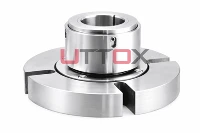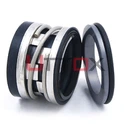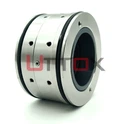


When your industrial pump's sealing integrity is compromised, production halts, safety risks escalate, and maintenance costs spiral out of control. The 491 mechanical seal has long been recognized as a dependable solution for demanding fluid containment applications across chemical processing, pulp and paper, and wastewater treatment sectors. Yet procurement managers and plant engineers increasingly seek high-performance equivalents that deliver comparable reliability without extended lead times or premium pricing. This guide explores proven alternatives to the original design, focusing on technical compatibility, operational advantages, and sourcing strategies that support uninterrupted industrial operations while optimizing total cost of ownership.

Understanding the 491 Mechanical Seal and Its Industrial Applications
What Defines the 491 Mechanical Seal Design
There is a balanced, one-part sealing solution called the 491 mechanical seal that was made for spinning equipment that deals with difficult process fluids. At its core, this seal uses a stationary finger-spring arrangement that keeps the springs away from the process medium. This is an important feature that keeps the seal from getting clogged in slurry-filled environments, where other multi-spring designs fail too soon. The seal works by creating a primary sealing interface between a rotating face (usually made of silicon carbide or tungsten carbide) and a stationary face. The secondary sealing is done by dynamic O-rings that allow the shaft to move without fretting damage.
This well-balanced design keeps hydraulic closing forces on seal faces to a minimum. This keeps heat from being generated and increases the life of the part in high-pressure situations up to 31 bar. The one-piece seal face design is very stable at high temperatures and keeps the seal face from distorting during pressure spikes, which is a common way for chemical transfer pumps and industrial mixers to fail. Following the EN 12756 and ANSI pump standards makes sure that parts from different big equipment makers can be used interchangeably in terms of size.
Primary Industrial Applications and Operating Environments
Chemical processing plants use 491 mechanical seals in centrifugal pumps that deal with strong acids, caustic solutions, and volatile organic compounds. It is very important that the materials used are compatible and that leaks don't happen. The balanced shape of the seal handles changing vapour pressures well, keeping the face in contact even when process conditions change quickly during batch operations or temperature changes.
For medium-consistency stock pumps in pulp and paper mills, this seal design works well because the fibre material would quickly clog up regular spring setups. The finger-spring design doesn't get clogged, so it can work continuously in settings with up to 5% suspended solids without the need for expensive external flush systems. This is a big practical benefit that cuts down on the complexity and energy use of the extra systems.
In wastewater treatment plants that deal with biological and abrasive grit, 491 mechanical seals are used in sludge transfer pumps and thickener drives. These are used where other sealing technologies fail. The fixed spring design protects important parts from particles that could damage them, which greatly increases the Mean Time Between Failures compared to spring setups that aren't protected.
Common Challenges and Maintenance Tips for 491 Mechanical Seals
Frequent Operational Issues and Root Causes
Even though they are well-designed, chesterton 491 seal always have problems in tough industrial settings. Too little lubrication at the sealing interface can cause the seal face to wear out too quickly. This can happen when process fluid evaporates because of too much heat or when dry-running conditions continue during starting sequences. As time goes on, abrasive particles in elastomers weaken secondary sealing, causing weep leakage that gets worse until the seal fails completely if nothing is done.
Another way that O-rings can fail is through dynamic extrusion. This happens a lot in high-pressure situations where gaps are too small because of worn shafts or bad gland plate cutting. In steam-traced systems, thermal cycle makes metal parts and elastomers expand at different rates, which causes compression set and loss of closing force. Using standard Buna-N O-rings in hydrocarbon service or choosing carbon-graphite sides for highly oxidising media both speed up breakdown when chemicals are used on materials that don't work well together.
Installation Best Practices for Optimal Performance
Careful preparation of the shaft is the first step in a proper fitting. The surface finish must be Ra 0.8 µm, and the runout should not be more than 0.05 mm to keep the face from wearing out too quickly. Clean all the parts with the right chemicals before putting them together. This will get rid of any machine oils or dirt that could damage the precision-lapped sealing faces.
During installation, use a compatible process fluid or a seal manufacturer-approved lubricant to grease the O-rings. This will keep them from rolling over and make sure they are compressed evenly. Make sure the seal fits firmly against the shoulder and doesn't cock. If it doesn't, the contact pressure will be concentrated and hot spots will form. For even tension around the seal's edges, the torque on the gland plate bolts should be set according to the manufacturer's instructions in a cross-pattern order.
Slowly getting equipment up to working pressure and temperature will help you put new seals to use. This will give the seal faces time to reach thermal balance and form a stable lubricating film. Rapid starts-ups push the sides together before enough hydraulic lift forms, damaging the surface and starting a pattern of wear that gets worse over time.
Preventive Maintenance Strategies to Extend Service Life
Implementing structured inspection routines greatly extends seal service life while reducing unplanned downtime. During routine equipment checks, use infrared thermography to keep an eye on the temperature of the seal chamber. Too much heat means that the face is damaged or there isn't enough lubrication, which needs immediate attention. Check to see if there is visible leakage at the drain ports and gland connections. Small leaks often happen weeks before major failures, giving you time to fix the problem.
Before these mechanical problems hurt the 491 mechanical seals, vibration analysis finds worn bearings and shafts that aren't lined up straight. Instead of waiting for noticeable noise, which means the bearings are badly worn out, change them before they become noisy based on vibration trends. Keep accurate service records that include installation dates, operating hours, and process conditions to find out how well the system is working now and to spot patterns of failure that could mean the design wasn't good enough or the wrong materials were chosen.
When external lubrication is used, make sure that the seal chamber cleaning is optimised and that the flow rates and temperatures are managed correctly. If you have blocked flush lines or pipes that are too small, they can create areas where solids build up and temperatures rise above what the elastomer can handle. Disassemble and check flush systems on a regular basis to make sure they are working right.
Comparing Chesterton 491 with Its Alternatives: Making an Informed Choice
Design Variations: Cartridge vs. Component Seals
Because the sleeve, seal head, and gland all attach to the shaft separately, component seals like the 491 mechanical seal need to be carefully measured and installed by someone who knows what they're doing. This setup allows for customisation, but it needs skilled workers and accurate control of the dimensions. Alternatives to cartridge seals come as pre-assembled units that are already compressed, which makes installation easier and lowers the chance of making a mistake. Maintenance teams like cartridge designs because they make it easy to swap out parts during emergency repairs. However, component seals usually cost less and only let parts be replaced instead of the whole cartridge being exchanged.
The 491 mechanical seal component construction is helpful when it's hard to get to the shaft or when the design of the equipment makes it impossible to fit the cartridge. Most of the time, pumps with built-in bearing housings or motors that are close to each other can't fit cartridge seal specs, so component seals are the only choice.
Material Compatibility and Chemical Resistance Considerations
When you combine silicon carbide faces with carbon-graphite, you get great wear protection and chemical compatibility across a wide pH range. This is why this combo is common in the 491 mechanical seal design. Alternatives to tungsten carbide are better at resisting wear in slurry uses, but they are worse at resisting heat shock. Reaction-bonded silicon carbide and other advanced ceramics are very hard and can be used in very rough conditions.
Chemical compatibility and temperature tolerance are very affected by the choice of elastomer. Most hydrocarbons and acids don't bother fluorocarbon (Viton) O-rings, but ketones and esters break them down. EPDM works well in steamy and acidic conditions, but it breaks down quickly in oily ones. Perfluoroelastomer (FFKM) is resistant to all chemicals and can be used in very high or very low temperatures, but it costs a lot and should only be used in very specific situations.
Single Seal vs. Double Seal Configurations
Single mechanical seals like the 491 mechanical seal depend on process fluid to keep them working and can handle small leaks past the seal faces, which is fine for media that isn't dangerous or harmful. In double seal configurations, a barrier or buffer fluid is placed between the inner and outer seal pairs. This keeps the process fluid from leaking even if the primary seal fails. Environmental laws require double covers for volatile organic compounds and poisonous chemicals more and more, but this makes operations much more difficult and expensive.
The balanced design of the 491 mechanical seal reduces emissions even when it's only one seal in place, so it can often meet fugitive emission standards without having to be complicated with two seals. When working with compounds that can cause cancer, you need to switch to double-seal arrangements because of zero-tolerance leak policies.
Procuring Chesterton 491 Equivalents: Where and How to Buy
Identifying Qualified Equivalent Manufacturers
UTTOX High-Performance Mechanical Seals are drop-in compatible with the original 491 specifications and use advanced engineering to address common failure modes. UTTOX 491 mechanical seals meet or exceed EN 12756 (DIN 24960) L1K dimensions and are a reliable option for engineers who want proven performance without having to pay OEM prices. This one-of-a-kind design doesn't scratch and uses a moving O-ring on a protective surface instead of the shaft to prevent damage to the shaft sleeve. Monolithic seal face technology keeps UTTOX seals stable at high temperatures and stops them from distorting in high-pressure or high-vacuum situations. This makes them perfect for centrifugal pumps, mixers, and agitators in pulp and paper and chemical processing.
By isolating springs from process fluids, UTTOX prevents clogging in slurry or viscous media applications, ensuring extended Mean Time Between Failures in demanding environments. When it comes to keeping ANSI pumps or metric DIN equipment, UTTOX options give you the exact fit, shape, and function you need for important fluid containment tasks. Stable stock supply guarantees quick delivery for pressing replacement needs, and quick expert help handles difficult application-specific needs.
Evaluating Supplier Credibility and Support Infrastructure
Reliable providers keep a large stock of seal parts and repair tools, which cuts down on the time it takes to get supplies during emergency shutdowns. When production stops costing thousands of dollars an hour, manufacturers with global distribution networks can offer local expert help and fast parts delivery. Ask for examples from current customers in similar fields to check the accuracy of performance claims and see how quickly the company responds to emergencies.
Superior suppliers are different from commodity vendors because they can provide technical support. Access to application engineers who can recommend optimal materials, flush plans, and operating parameters adds significant value beyond component pricing. Suppliers who offer on-site installation training and troubleshooting help cut down on the time it takes to commission and avoid making mistakes that cost a lot of money.
When buying 491 mechanical seal alternatives, quality assurance methods are very important. Manufacturers who use ISO 9001 quality management systems and provide documentation on how materials can be tracked show that they are committed to making sure their products always work well. Third-party testing verification for key dimensions and material properties gives extra trust when qualifying new sources.
Cost-Benefit Analysis: OEM vs. Equivalent Components
Usually, original equipment maker parts for Chesterton 491 Mechanical Seal cost 30 to 50 percent more than qualified alternatives, even though they don't work better. The standard sizes and well-known form of the 491 mechanical seal make it possible for many companies to make replaceable parts that meet the same standards. Equivalents from trustworthy manufacturers usually have design improvements that fix known failure modes. These design improvements can include stronger materials, better spring loads, or better secondary sealing geometries.
When figuring out the total cost, you need to look at more than just the buying price. Longer-lasting equivalent seals cut down on maintenance costs and downtime, which often makes up for small price differences. Supplier reliability affects the cost of keeping inventory on hand-consistent quality and delivery performance allow safety stock levels to be lowered. Having access to technical help cuts down on the time needed to fix problems during crashes, which speeds up the return to operation.
Facilities that use a lot of identical pumps can save a lot of money through wholesale buying programs and volume deals. Standardising on similar 491 mechanical seal designs across all types of equipment makes it easier to keep track of extra parts and train technicians, and it also makes it easier to negotiate better prices.
Why Choose Chesterton 491 Equivalents? A Practical Guide for Engineering and Procurement Teams
Performance-Proven Alternatives Across Industrial Sectors
Modern 491 mechanical seal alternatives deliver reliable performance across demanding industries. UTTOX is designed for abrasive and slurry applications, offering strong wear resistance and longer service life in mining, wastewater, and heavy-duty environments. These cost-effective solutions reduce maintenance needs and downtime while supporting chemical plants, pulp mills, and power facilities with dependable sealing performance and supply support.
Strategic Advantages: Cost, Availability, and Support
Using equivalent 491 mechanical seals provides benefits beyond initial savings. Multiple suppliers reduce supply chain risks, improve negotiation power, and support cost efficiency. Strong inventory availability enables faster replacements and reduces downtime. Custom solutions, technical support, and installation training help improve reliability, reduce errors, and strengthen maintenance capabilities.
Selection Criteria for Optimal Seal Specification
Selecting the right 491 mechanical seal requires evaluating operating conditions, including fluid properties, temperature, pressure, viscosity, and chemical composition. Shaft speed, equipment design, and movement limits also affect seal selection. Safety and environmental requirements may require specialised configurations, such as low-emission or double seals, to ensure reliable performance and regulatory compliance.
Conclusion
To choose the right 491 mechanical seal comparable, you need to carefully look at the technical specs, the supplier's skills, and the total cost. Quality options work just as well as the original designs and are easier to find, cheaper, and come with better expert support. UTTOX High-Performance Mechanical Seals are an example of a modern equivalent design that uses advanced engineering and materials science to fix common failure modes. By understanding application requirements, reviewing supplier credentials, and following proper installation and upkeep practices, procurement teams and plant engineers can improve sealing system reliability while controlling costs. There are a lot of different choices on the industrial sealing market, which lets you make smart sourcing decisions that help with business excellence and long-term machine reliability.
FAQ
1.Can Equivalent Seals Directly Replace Original 491 Components?
Quality replacements made to EN 12756 measurements can be dropped right in place of original 491 mechanical seals without having to make any changes to the equipment. Make sure that similar seals have the same envelope size, face tracking, and spring load properties. Reliable manufacturers offer charts that compare dimensions to show that the parts can be swapped out. It is important to always check if a material is compatible with a certain process fluid, since elastomer and face material choices may not match the original specs. When replacing seals in important uses, check with technical help to make sure they are compatible.
2.How Can I Detect Early Signs of Seal Failure?
Check the temperature of the seal chamber. Readings more than 20°C above the temperature of the process fluid mean that the face is damaged or there isn't enough lubrication. During regular inspections, look for moisture or residue around the gland connections. Small leaks happen before the whole thing fails. When pumps make strange noises or vibrate, it could mean that bearing wear is changing the orientation of the 491 mechanical seals. Use vibration analysis programs to find mechanical problems before they cause damage to the seal. Set up baseline performance metrics during commissioning to look for changes that could mean problems are starting to appear.
3.What Maintenance Routines Maximize Seal Service Life?
Check seal flush systems once a month to make sure they are working right and that there are no clogs. Keep accurate service logs that record the dates of installations and working hours so that you can set reasonable replacement times. To keep them from getting damaged during installation, lubricate O-rings with items that are suitable. Follow the pressure recommendations given by the maker for gland bolts and apply force in a cross-pattern pattern. Install new seals slowly so that the temperature can stabilise before they are fully operational. Instead of waiting for failure to happen, change bearings before they fail based on how they are vibrating.
Partner with UTTOX for Reliable 491 Mechanical Seal Solutions
UTTOX's 30 years of production experience and full technical support help procurement teams find reliable options to the 491 mechanical seal. In chemical processing, pulp and paper, mining, and wastewater applications, our engineering team creates custom sealing solutions to solve specific problems. UTTOX supports smooth industrial operations without any problems by keeping a large inventory on hand for quick shipping and quick technical help for pressing needs. Get in touch with our experts at info@uttox.com to talk about your sealing needs and find low-cost options that have been shown to work. As a mechanical seal maker with a lot of experience, we can offer you affordable prices, quality assurance, and technical advice that will help your business succeed in the long run.
References
1. Mayer, E. (2019). Mechanical Seals: Design, Application, and Maintenance. Industrial Press Inc.
2. Flitney, R. (2014). Seals and Sealing Handbook (6th ed.). Butterworth-Heinemann.
3. American Petroleum Institute. (2014). API Standard 682: Pumps-Shaft Sealing Systems for Centrifugal and Rotary Pumps (4th ed.). API Publishing Services.
4. European Sealing Association. (2016). EN 12756: Mechanical Seals-Principal Dimensions, Designation and Material Codes. European Committee for Standardization.
5. Summers-Smith, J. D. (1992). Mechanical Seal Practice for Improved Performance (2nd ed.). John Wiley & Sons.
6. Hydraulic Institute. (2017). ANSI/HI 9.6.2: Centrifugal and Vertical Pumps for Allowable Operating Region. Hydraulic Institute Standards.