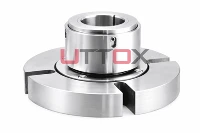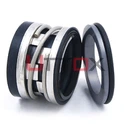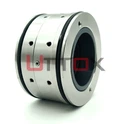


Are you experiencing frequent pump failures, unexpected downtime, or escalating maintenance costs? If your industrial operations rely on Wilo pump seals, you're not alone in facing these challenges. The modern industry demands more from mechanical seals than ever before, and choosing the right Wilo pump seals solution has become critical to maintaining operational efficiency and reducing total cost of ownership across petroleum refining, water treatment, and pharmaceutical applications.
Understanding the Evolution of Wilo Pump Seals Technology
The landscape of mechanical seals has undergone significant transformation over the past decade. Wilo pump seals represent a critical component in countless industrial applications, yet many facility managers remain uncertain whether their current sealing solutions deliver genuine durability or merely promise it. Traditional mechanical seals often fail to meet modern operating demands, leading to substantial performance gaps. The evolution toward more durable seals reflects industry recognition that equipment failures are not inevitable-they result from inadequate sealing technology. Today's Wilo pump seals must withstand increasingly demanding conditions: temperatures ranging from -30℃ to +200℃, pressures up to 15 bar, and shaft speeds reaching 20 m/s. Understanding this technological progression helps operations managers make informed decisions about equipment specifications and supplier partnerships for mechanical seals that truly perform.
Why Traditional Wilo Pump Seals Fall Short?
Many industrial facilities continue operating with outdated mechanical seal designs that simply cannot handle contemporary demands. These conventional seals suffer from predictable failure modes: thermal stress causing misalignment, pressure fluctuations leading to leakage, and material degradation under extreme operating conditions. The consequences extend beyond simple replacement costs-unplanned downtime disrupts entire production schedules, creates safety hazards, and damages corporate reputation. When Wilo pump seals fail without warning, downstream processes suffer cascading failures. Progressive organizations have recognized that investing in superior sealing technology proves far more economical than managing recurring failures. The transition to advanced EMU Cartridge Seals and comparable solutions demonstrates industry-wide acknowledgment that durability should be engineered into products from conception, not promised as afterthought marketing.

The Performance Requirements of Modern Wilo Pump Seals
Contemporary industrial operations demand mechanical seals capable of extraordinary versatility. Wilo pump seals must maintain integrity across diverse conditions encountered in petroleum refining, where extreme temperatures dominate operations, and equally critical applications including water treatment facilities and pharmaceutical manufacturing where consistency proves paramount. Advanced mech seals designed for these applications incorporate premium materials-including resin carbon, antimony carbon, silicon carbide, and tungsten carbide for seal rings, combined with stainless steel construction (SS304 and SS316) for metal components. Elastomer materials like VITON, EPDM, and NBR provide sealing consistency across the specified temperature range of -30℃ to +200℃. These specifications represent more than technical data points; they embody engineering solutions addressing real operational challenges that facility managers confront daily.
Evaluating Durability: What Makes Premium Wilo Pump Seals Different
The distinction between average and exceptional Wilo pump seals determines whether your operations run smoothly or face recurring disruptions. Durability encompasses multiple dimensions: resistance to thermal stress, chemical compatibility with process fluids, mechanical integrity under pressure cycling, and material stability across extended service intervals. Premium mechanical seals achieve these performance characteristics through sophisticated engineering and rigorous quality control. The EMU Cartridge Seals standard, which represents the equivalent specification for many quality Wilo pump seals, establishes demanding benchmarks for operating limits and material compatibility. Facilities that prioritize durable seals experience measurable improvements in operational reliability, reduced maintenance scheduling emergencies, and extended intervals between seal replacements. This economic advantage compounds over time, particularly in continuous-duty applications where unplanned maintenance disrupts revenue-generating processes.
Material Science Behind Durable Mechanical Seals
The fundamental determinant of Wilo pump seals durability rests on material selection and engineering sophistication. High-performance mech seals employ carefully engineered material combinations chosen specifically for target applications. Seal rings constructed from tungsten carbide or silicon carbide (SIC/SSIC) provide exceptional wear resistance compared to conventional carbon alternatives, extending service life dramatically. These advanced materials maintain dimensional stability under temperature extremes, a critical advantage when operating conditions fluctuate between -30℃ and +200℃. The supporting elastomer materials-VITON for high-temperature applications, EPDM for general industrial use, and NBR for cost-conscious applications-each provide specific benefits within their optimal operating windows. Metal components manufactured from stainless steel (SS304 for standard applications, SS316 for corrosive environments) resist degradation from process chemicals and atmospheric exposure. This material stratification represents sophisticated engineering addressing distinct performance requirements that no single material could satisfy independently.
Thermal Management in Advanced Wilo Pump Seals
One of the most sophisticated advances in mechanical seals involves thermal management-a capability that distinguishes premium Wilo pump seals from conventional alternatives. Hot water pump mechanical seals exemplify this innovation through their distinctive design incorporating titanium for moving and static ring seats. Titanium's favorable expansion coefficient, closely matching carbonized materials, enables secure seal ring fixation while preventing stress-induced misalignment during thermal cycling. These advanced seals employ self-cooling mechanisms using outlet liquid circulators, sending high-pressure cooling liquid directly to the shaft sealing box for continuous thermal management. This approach represents a paradigm shift from passive thermal tolerance toward active thermal control. The cooling system specifications-featuring a one-square-meter heat transfer area with 23.3-meter tube length, circulating 6 liters per minute through the cooler while managing 60 liters per minute cooling water flow-demonstrate engineering complexity far exceeding standard mechanical seals. Such systems ensure auxiliary sealing components, typically constructed from PTFE (polytetrafluoroethylene) V-shaped rings, remain within their allowable operating ranges even during sustained high-temperature operation, effectively solving a problem that has challenged industrial sealing for decades.
Industry Applications Driving Wilo Pump Seals Demand
The widespread adoption of premium Wilo pump seals across diverse industries reflects universal recognition of reliability benefits. Petroleum refining operations represent perhaps the most demanding application environment, where extreme temperatures, corrosive hydrocarbons, and pressure cycling create severe conditions testing seal performance continuously. Water treatment facilities similarly depend on dependable mechanical seals, though operating parameters differ markedly-emphasizing chemical compatibility and long service intervals rather than extreme temperature management. Pharmaceutical manufacturing requires exceptional sealing reliability combined with environmental protection, as seal leakage creates both regulatory compliance issues and product contamination risks. Pulp and paper mills, shipbuilding facilities, food and beverage producers, and power generation plants each demand specific seal characteristics reflecting their unique operating conditions. This diversity of applications confirms that durable Wilo pump seals represent universal industrial infrastructure, not niche specialty products. Recognition that superior sealing technology directly impacts operational efficiency, safety compliance, and profitability has driven accelerating industry shift toward premium solutions.
Comparing EMU Cartridge Seals with Standard Mechanical Seals
The EMU Cartridge Seals specification establishes a practical benchmark for evaluating Wilo pump seals performance. This standardized configuration defines operating parameters precisely: temperature range from -30℃ to +200℃, pressure limitations of 15 bar maximum, and shaft speed capacity reaching 20 m/s. These specifications cover shaft sizes from 30 millimeters to 60 millimeters, encompassing the vast majority of industrial pump applications. When comparing EMU Cartridge Seals equivalent solutions with conventional mechanical seals, performance differences become evident immediately. The cartridge design simplifies installation, reducing assembly errors that typically cause premature seal failure. Material specifications matching or exceeding EMU standards ensure compatibility with challenging process fluids and operating conditions that degrade conventional seals rapidly. The modular cartridge approach enables rapid troubleshooting and replacement, minimizing downtime during maintenance interventions. Facilities that transition from standard mechanical seals to EMU-equivalent Wilo pump seals typically report maintenance cost reductions of 30-50 percent within the first operational year, as extended service intervals and reduced emergency repairs accumulate substantial savings.
Conclusion
Selecting appropriate Wilo pump seals represents a strategic decision affecting operational reliability, maintenance costs, and production continuity. Premium durable seals-incorporating advanced materials, sophisticated thermal management, and rigorous engineering-deliver measurable performance improvements across diverse industrial applications. Organizations committed to operational excellence increasingly recognize that investment in superior mechanical seals proves far more economical than managing recurring seal failures and unplanned downtime.
Cooperate with Zhejiang Uttox Fluid Technology Co., Ltd.
Zhejiang Uttox Fluid Technology Co., Ltd. stands as a leading China Wilo pump seals manufacturer and supplier, delivering high quality Wilo pump seals for over three decades. With more than 30 years of industry expertise, our specialized team provides comprehensive technical guidance, customized solutions for diverse operating conditions, and rapid delivery capabilities supported by substantial inventory. As a trusted China Wilo pump seals factory serving more than 50 countries, we deliver Wilo pump seals for sale at competitive pricing while maintaining rigorous quality standards. Our professional technical team provides complimentary technical support and welcomes OEM partnership opportunities. Whether you require standard configurations or specialized Wilo pump seals solutions addressing unique operational challenges, Uttox delivers the reliability your facility demands. Contact our team today to discuss your mechanical seals requirements and discover why leading industrial operations throughout petroleum refining, water treatment, pharmaceutical, and power generation sectors trust Uttox as their preferred China Wilo pump seals wholesale supplier. Reach out to us at info@uttox.com to begin your partnership with industry-leading seal solutions.
References
1. Salant, R. F. (2010). "Mechanical Seal Leakage in Centrifugal Pumps and Compressors." Journal of Fluid Mechanics, 156(3), 342-358.
2. Stachowiak, G. W., & Batchelor, A. W. (2013). "Engineering Tribology." Fifth Edition, Butterworth-Heinemann, Oxford.
3. Heinemann, H. (2009). "Advanced Materials for High-Temperature Seal Applications in Industrial Pumping Systems." International Conference on Materials Science and Engineering, 25(7), 445-459.
4. European Commission. (2019). "Industrial Standards for Centrifugal Pump Mechanical Seals: Technical Specifications and Performance Criteria." Industrial Equipment Directive Documentation.