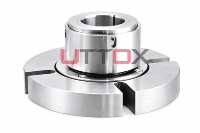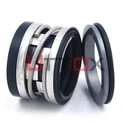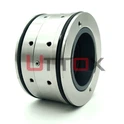


When equipment managers and procurement teams search for the right sealing solution, the choice between an M7N mechanical seal and a standard seal can directly affect plant uptime, safety compliance, and long-term maintenance budgets. The M7N mechanical seal is a multi-spring, O-ring pusher type designed to DIN 24960 / EN 12756 standards, making it a direct replacement for widely recognized models in chemical pumps, centrifugal pumps, and other rotating equipment. This post breaks down the technical and operational differences to help you make a confident procurement decision.
Understanding M7N Mechanical Seals and Standard Seals
What Is the M7N Mechanical Seal?
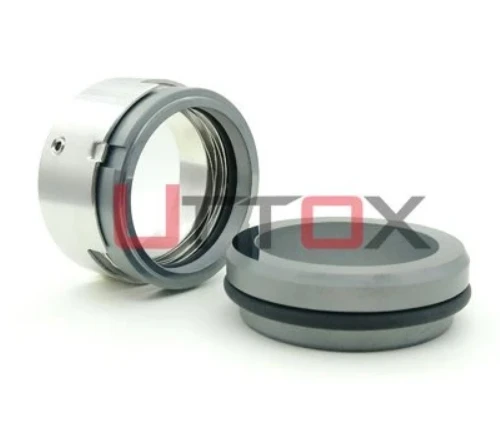
The M7n mechanical seal has a single end and is not balanced. It uses several coil springs that are spread out properly around the shaft. This spring arrangement keeps the face contact pressure the same no matter which way the shaft turns, which is a big advantage over designs with only one spring. It meets the dimensions required by EN 12756 (formerly DIN 24960), so it can be put into current pump housings without any changes. It can work with shaft diameters ranging from 14 mm to 200 mm, so it can be used for both small process pumps and large-bore chemical pumps.
Common Standard Seal Types
Single-spring seals, double mechanical seals, cartridge seals, and bellows seals are some of the most common seals on the market. Single-spring seals work well in clean, low-pressure water situations, but they lose their ability to make even contact with the face when the speed goes up. Bellows seals work well in acidic media but can get clogged up with solids in slurry settings. It's easy to add cartridge seals, but they cost more per unit. Each type has a clear working window, and if you choose something outside of that window, it will fail too soon.
How Working Mechanisms Differ?
The torque is sent through a drive collar and a spring sleeve by the m7n seal equivalent. This keeps the spinning face pressed firmly against the fixed seat. Small shaft runout and axial float up to about ±0.5 mm are okay for this mechanism; the seal won't break. Standard single-spring designs don't have this kind of leeway, so even a small error or movement along the axis can lead to leaks from time to time. The spread out spring load in an M7N design also lowers face deformation during temperature cycle, which is a typical way for parts to fail in petrochemical service.
Core Performance Differences: M7N vs Standard Seals
Material Composition and Durability
Depending on the process fluid, the M7n mechanical seal can come with silicon carbide (SiC/SiC) or tungsten carbide face combinations. It can also be paired with FKM or EPDM O-rings. The Vickers hardness of silicon carbide edges is higher than 2,500 HV, which makes them much less likely to wear down when working with rough materials like catalyst slurries or process water that is high in silica. In these conditions, standard carbon/ceramic face pairs, which are common in cheap seals, wear out much more quickly and need to be replaced more often.
Leakage Prevention and Seal Efficiency
One of the best things about a pump shaft seal M7N design is that it doesn't leak much, even in harsh chemical environments. The load is spread out among several springs, so the face closing force stays the same across the entire working speed range. This reduces the dynamic leak path that happens when one spring weakens widely. Both types of seals work well with clean water, but the multi-spring design regularly shows lower fugitive emission rates in hydrocarbon or corrosive media uses, which is important for petrochemical companies to meet HSE requirements.
Maintenance and Troubleshooting
Most of the time, dry running, too much axial shaft movement, or chemical mismatch between the O-ring and the seal cause an type m7n mechanical seal to break early. Dry running causes localized thermal stress that leads to radial heat-check cracks on the seal faces. This risk can be lowered by switching to SiC faces that conduct heat better. The O-ring in a standard seal often gets stuck on the shaft sleeve and doesn't slide, which stops the face from tracking properly. The M7N's spring-sleeve drive design mostly avoids this failure mode, which means that less unexpected repair work needs to be done.
Installation and Operational Benefits of M7N Mechanical Seals
Simplified Installation Process
There is a well-known standard for the dimensions needed to install a DIN 24960 mechanical seal like the M7N. This means that repair teams who know the pump drawing can make the swap without any special tools. Unlike cartridge seals, which need exact measurements to be set up, the M7N uses a fixed-dimension spring contact that positions itself when the gland is torqued down. This cuts down on mistakes during installation and shortens the time a pump isn't working during a planned restart.
Operating Range and Chemical Compatibility
The UTTOX M7N works reliably at temperatures ranging from -20°C to 220°C and pressures up to 16 bar. This makes it suitable for most centrifugal pump tasks in chemical processing, cooling water in refineries, and wastewater treatment. EPDM O-rings work well in places with hot water and steam, while FKM versions can handle fuels, oils, and most chemical fluids. If you choose the right elastomer when you're buying it, the O-ring won't grow or harden while it's in use, which can lower its face load and cause leaks.
Real-World Performance Evidence
As part of a petrochemical plant's 150 mm shaft diameter pumps running hot oil service, OEM-equivalent seals were changed with a multi-spring mechanical seal that fits the measurements of EN 12756. After a year of nonstop operation, the plant had no unplanned shutdowns due to the seal. This is in contrast to the previous year, when two failures were recorded using a single-spring alternative. The average time between failures was more than 24,000 hours when the alignment and flush plan were perfect, which is in line with data from the industry for SiC-face M7N setups.
M7N Mechanical Seal vs Other Seal Types: A Decision-Making Framework
M7N vs Cartridge Seals
Cartridge seals put together all of their parts ahead of time into a single unit. This makes installation mistakes less likely to happen on-site. They do, however, cost a lot more per unit and are harder to keep in stock because they are so big. The M7n mechanical seal, on the other hand, has a small component size that makes it easy to store in a warehouse. This is important for facilities that need to keep extra parts for large-shaft pumps on hand since getting them can take up to several weeks.
M7N vs O-Ring and Single-Spring Seals
Standard O-ring pusher seals with a single spring cost less up front, but they have a smaller opening for movement. In low-speed, low-pressure clean liquid service, they work fine. Face contact consistency gets worse when the shaft speed goes above 3,000 rpm or when solid particles are carried by the process fluid. That's why the M7N uses an O-ring pusher mechanical seal design. It keeps the ease of O-ring secondary sealing while adding the stability of distributed spring load. This gives it a wider range of uses for replacing industrial pump seals.
Supplier and Sourcing Considerations
When purchasing an industrial pump seal replacement, procurement teams should make sure that the seller is ISO 9001 certified, can provide material test results for both the face and O-ring materials, and has a wide range of shaft sizes in stock so that they can be sent out quickly. Lead times and minimum order amounts are very different between manufacturers. Suppliers who offer specialized technical support and recorded examples for petrochemical applications lower the qualification risk for facilities that have strict vendor approval processes.
Procurement Insights and Supplier Information for M7N Mechanical Seals
To find a trustworthy M7n mechanical seal provider, you need to think about both technical compliance and factors in the supply chain. Here are the main things that experienced equipment managers look for when they buy something:
Standard Compliance: Confirm the seal meets DIN 24960 / EN 12756 dimensional tolerances with documented inspection records. Deviations as small as 0.05 mm in face flatness can cause premature leakage under pressure cycling.
Material Certification: Request material test reports for SiC or tungsten carbide faces and elastomer batch certificates. This is a non-negotiable requirement for petrochemical and refinery applications where HSE audits review component traceability.
Shaft Size Range: Verify that the supplier manufactures the full shaft diameter range you require. Large-bore sizes (above 100 mm) are not available from all manufacturers, so confirming coverage early avoids delays during turnaround planning.
Inventory and Lead Time: Suppliers with finished-goods stock can ship within days, which matters when an emergency breakdown requires same-week replacement. Ask specifically about availability for large-diameter variants.
There are quality risks that procurement and engineering teams have to deal with during the vendor approval process. These standards directly address those risks. Using them consistently during the RFQ stage cuts down on the time needed for evaluation and raises the chances of choosing a supplier that can handle both planned maintenance and urgent needs.
The UTTOX M7N is meant to be a straight, low-cost replacement for the Burgmann M7N and other related OEM models. It was made to EN 12756 standards by Uttox, a company that was formed in 1990 in Zhejiang, China. It has ISO 9001 approval and a technical team with more than 30 years of experience making things. Uttox has users in more than 50 countries and can quickly ship final goods because it has a large inventory and supports original equipment manufacturers (OEMs).
Conclusion
Ultimately, the choice between an M7n mechanical seal and a normal seal depends on how you plan to use the bearing, the size of the shaft, and your total cost of ownership goal. The M7n mechanical seal's multi-spring design and hard-face material options typically work better than basic single-spring choices in demanding situations like high temperatures, rough media, large shaft diameters, or strict fugitive emission requirements. It meets the standards of EN 12756 and DIN 24960, which means that it can be directly swapped out. This makes it easier to buy and lowers the risk of installation. Finding a reliable M7N supplier can help facilities that are in charge of a lot of rotating equipment cut down on unplanned downtime and the money they spend on maintenance related to seals.
FAQ
1. Is the M7N mechanical seal interchangeable with the EagleBurgmann M7N?
Yes. The M7N mechanical seal follows DIN 24960 / EN 12756 dimensional standards, so it is a direct dimensional replacement for EagleBurgmann M7N and other OEM models built to the same standard. No pump housing modification is required.
2. What causes leakage in an M7N mechanical seal after installation?
The most common causes are dry running during startup, excessive shaft axial movement beyond ±0.5 mm, and incorrect O-ring material selection. Verifying flush plan operation before startup and confirming elastomer compatibility with the process fluid prevents the majority of early-failure scenarios.
3. Can the M7N mechanical seal handle both clockwise and counter-clockwise shaft rotation?
Yes. The torque transmission mechanism operates independently of rotation direction, making it suitable for pumps with variable drive configurations without any component change.
4. How do I choose between EPDM and FKM O-rings?
Select EPDM for hot water, steam, and mild alkaline media. Choose FKM for hydrocarbon fluids, oils, fuels, and most organic solvents. When in doubt, request a chemical compatibility chart from your supplier before finalizing the order.
5. What is the expected service life under normal operating conditions?
In properly aligned pumps with correct flush plans and compatible materials, an M7N mechanical seal can achieve a mean time between failure exceeding 24,000 hours. Abrasive media and misalignment reduce this figure significantly.
Partner with Uttox for Your M7N Mechanical Seal Supply
Since 1990, Uttox has been making mechanical seals and now ships them to customers in more than 50 countries. Our M7n mechanical seal works with shafts with sizes between 14 mm and 200 mm, is certified by ISO 9001, and can be fully tracked back to the materials it was made from. We can quickly deliver an M7n mechanical seal whether you need it for a planned turnaround or because you need a replacement right away. You can get in touch with our technical team at info@uttox.com or visit www.uttox.com to get a price or talk to an experienced engineer about your unique pump service needs.
References
1. European Committee for Standardization. EN 12756: Mechanical Seals - Principal Dimensions, Designation and Material Codes. CEN, 2000.
2. Neale, M.J. The Tribology Handbook. 2nd ed. Butterworth-Heinemann, 1995.
3. Muller, H.K., and Nau, B.S. Fluid Sealing Technology: Principles and Applications. Marcel Dekker, 1998.
4. Bloch, H.P., and Budris, A.R. Pump User's Handbook: Life Extension. 4th ed. Fairmont Press, 2013.
5. Lebeck, A.O. Principles and Design of Mechanical Face Seals. Wiley-Interscience, 1991.
6. European Sealing Association. Guidelines for the Selection and Application of Mechanical Seals in the Chemical Process Industry. ESA, 2017.