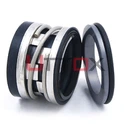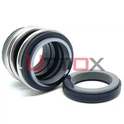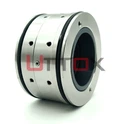


When pump failures occur unexpectedly in critical industrial operations, the root cause often traces back to mechanical seal selection. Understanding the different types of mechanical seals becomes crucial when itt flygt pumps experience downtime, potentially costing thousands in lost productivity. This comprehensive guide explores the various mechanical seal classifications, helping engineers and maintenance professionals make informed decisions for optimal pump performance across diverse industrial applications.
Primary Categories of Mechanical Seals for Industrial Applications
Mechanical seals represent sophisticated engineering solutions designed to prevent fluid leakage while accommodating the rotational movement between stationary and rotating components. The fundamental classification system divides mechanical seals into several primary categories, each serving specific operational requirements and performance criteria. Single component seals constitute the most basic configuration, made up of static and rotary seal faces pushed together by a spring, creating a primary seal through a thin film of process liquid between the faces. These seals are particularly suitable for standard itt flygt applications where simplicity and cost-effectiveness are paramount considerations. Double mechanical seals represent a more advanced solution, utilizing two mechanical seals within a single housing configuration. This design provides enhanced safety margins for hazardous or expensive fluids, making them ideal for Flygt mechanical seals in chemical processing environments. The dual-seal arrangement offers backup protection, ensuring operational continuity even if the primary seal experiences degradation. Cartridge mechanical seals have revolutionized installation procedures by incorporating all working components within a pre-set housing assembly. This design significantly reduces installation time and potential errors, particularly beneficial for pump mechanical seal replacements in critical applications where downtime must be minimized.
Spring-Type Mechanical Seal Configurations
Spring-loaded mechanical seals employ various spring mechanisms to maintain proper sealing face contact throughout operational cycles. Single spring designs utilize a large coil spring surrounding the shaft, providing uniform pressure distribution across the sealing interface. This configuration works exceptionally well in itt flygt pump applications where consistent sealing pressure is essential for preventing leakage. Multi-spring arrangements distribute loading forces through several smaller springs positioned around the seal circumference. This design offers superior balance and compensation for shaft misalignment, making it particularly suitable for applications experiencing variable operating conditions. The distributed spring loading reduces stress concentrations and extends seal life in demanding industrial environments. Wave spring configurations represent an innovative approach to spring loading, utilizing a wavy metal strip to provide sealing force. These designs offer space-saving advantages and excellent temperature stability, particularly valuable in compact pump mechanical seal installations where space constraints are significant considerations.

Seal Face Material Classifications and Applications
The selection of appropriate seal face materials directly impacts performance, longevity, and reliability in specific operating environments. Understanding material characteristics becomes crucial when specifying seals for itt flygt equipment operating under varying temperature, pressure, and chemical compatibility requirements. Carbon-based seal faces represent the most common choice for standard industrial applications. These materials offer excellent thermal conductivity, self-lubricating properties, and compatibility with most process fluids. Carbon faces work particularly well in Flygt mechanical seals handling clean water applications, providing reliable service with minimal maintenance requirements. Silicon carbide faces deliver superior wear resistance and chemical compatibility, making them ideal for abrasive or corrosive applications. The exceptional hardness and thermal stability of silicon carbide enable extended service life in demanding pump mechanical seal applications, particularly where process fluids contain suspended solids or aggressive chemicals. Tungsten carbide faces provide the ultimate in wear resistance and dimensional stability for extreme service conditions. These premium materials excel in applications involving high pressures, elevated temperatures, or severe abrasive conditions, justifying their higher initial cost through extended operational life and reduced maintenance frequency.
Secondary Sealing Element Variations
Secondary sealing elements prevent leakage along the shaft and provide accommodation for thermal expansion and manufacturing tolerances. O-ring seals represent the simplest and most economical secondary sealing solution, offering excellent sealing performance in static applications with moderate temperature requirements. Bellows-type secondary seals eliminate the need for dynamic sealing along the shaft, reducing friction and wear while accommodating significant axial movement. Metal bellows provide exceptional temperature and chemical resistance, making them suitable for extreme service conditions in specialized itt flygt applications. PTFE bellows offer chemical compatibility advantages while maintaining flexibility for shaft movement accommodation. These synthetic bellows work particularly well in corrosive environments where metal bellows might experience chemical attack or degradation over time.
Application-Specific Mechanical Seal Designs
Industrial applications demand specialized mechanical seal configurations optimized for specific operating conditions and performance requirements. Understanding these application-driven design variations ensures optimal seal selection for particular pump mechanical seal installations. Mixer and agitator seals address the unique challenges associated with large shaft diameters and heavy-duty mixing applications. These robust designs incorporate reinforced seal faces and enhanced cooling provisions to handle the increased loads and heat generation typical in mixing operations. The specialized geometry accommodates the larger shaft sizes while maintaining effective sealing performance. Compressor seals operate under significantly different conditions compared to pump seals, requiring specialized designs to handle gas compression applications. These seals must accommodate rapid pressure fluctuations and elevated temperatures while preventing gas leakage, demanding materials and configurations specifically engineered for gas service applications. High-pressure seals incorporate design modifications to handle extreme pressure conditions safely and reliably. Pressure balancing features reduce the actual pressure acting on seal faces, preventing excessive wear and heat generation. These specialized designs enable reliable operation in applications where standard seals would fail rapidly due to pressure-induced loading.
Split Seal Configurations for Maintenance Advantages
Split mechanical seals represent innovative solutions for applications requiring seal replacement without shaft removal. These designs split along the shaft centerline, enabling installation and removal while equipment remains in place. Split seals prove particularly valuable in large pump mechanical seal applications where shaft removal would require extensive disassembly. The split design maintains sealing integrity through precision-machined mating surfaces and specialized fastening systems. Proper installation techniques ensure that split seals perform equivalently to conventional single-piece designs while offering significant maintenance advantages in appropriate applications. Gas barrier split seals combine the installation advantages of split configuration with enhanced sealing capability for gas applications. These specialized designs prevent gas emissions while maintaining the ability to service seals without major equipment disassembly, particularly valuable in environmental compliance applications.
Advanced Seal Technologies for Modern Applications
Contemporary mechanical seal technology incorporates advanced features addressing evolving industrial requirements for enhanced reliability, environmental compliance, and operational efficiency. These technological advances particularly benefit itt flygt installations requiring superior performance under demanding conditions. Dry-running capability represents a significant advancement enabling seals to operate temporarily without process fluid lubrication. This capability prevents catastrophic failure during pump startup, shutdown, or temporary dry-running conditions, extending seal life and reducing maintenance requirements in critical applications. Gas barrier seals utilize inert gas injection to prevent process fluid contact with the atmosphere, ensuring environmental compliance while maintaining operational efficiency. These systems incorporate sophisticated monitoring and control features, automatically adjusting barrier gas pressure to maintain optimal sealing conditions throughout operational cycles. Magnetic coupling seals eliminate physical shaft penetration entirely, using magnetic coupling to transmit rotational power while maintaining complete fluid containment. This technology proves particularly valuable for handling toxic or environmentally sensitive fluids where zero-emission requirements must be maintained.
Temperature and Pressure Adaptation Features
Modern seal designs incorporate adaptive features accommodating varying temperature and pressure conditions throughout operational cycles. Thermal barrier coatings reduce heat transfer to seal components, enabling operation at elevated temperatures while maintaining material integrity and dimensional stability. Pressure-responsive designs automatically adjust sealing force based on system pressure, optimizing performance while minimizing wear. These intelligent systems reduce energy consumption while extending seal life through optimized loading conditions that adapt to changing operational parameters. Multi-stage pressure reduction designs enable safe handling of extreme pressure differentials through stepped pressure reduction. This approach prevents damage from excessive pressure loading while maintaining reliable sealing performance across wide pressure ranges.
Conclusion
Mechanical seals encompass diverse configurations designed for specific industrial applications, with primary categories including single and double seals, cartridge assemblies, and specialized designs for extreme conditions. Understanding these variations enables optimal selection for itt flygt and other industrial pump applications, ensuring reliable operation and minimized maintenance requirements.
Cooperate with Zhejiang Uttox Fluid Technology Co.,Ltd.
Zhejiang Uttox Fluid Technology Co.,Ltd. stands as your trusted China itt flygt supplier, delivering exceptional mechanical seal solutions since 1990. Our experienced R&D team provides technical guidance and customization for diverse working conditions, backed by 30 years of industry expertise and cooperation with major enterprises worldwide. As a leading China itt flygt manufacturer and China itt flygt wholesale provider, we offer rich product variety with sufficient inventory for fast delivery. Our professional technical team provides free support and OEM services, ensuring High Quality itt flygt solutions at competitive itt flygt prices. Whether seeking standard or custom itt flygt for sale, contact us at info@uttox.com for immediate technical assistance and competitive quotes.
FAQ
Q: What is the most common type of mechanical seal used in industrial pumps?
A: Single component mechanical seals are the most widely used, offering reliable sealing through spring-loaded seal faces suitable for most standard applications.
Q: When should double mechanical seals be used instead of single seals?
A: Double mechanical seals are recommended for hazardous fluids, expensive process liquids, or applications requiring enhanced safety and environmental protection.
Q: What determines the choice between different seal face materials?
A: Seal face material selection depends on process fluid chemistry, temperature, pressure, and abrasiveness requirements specific to each application.
Q: How do cartridge seals differ from component seals in installation?
A: Cartridge seals come pre-assembled in a housing, simplifying installation and reducing potential errors compared to individual component assembly.
References
1. "Mechanical Seals for Industrial Applications" by John H. Crane, Industrial Press, 2019
2. "Pump Handbook: Fourth Edition" by Igor J. Karassik, McGraw-Hill Education, 2018
3. "Sealing Technology: A Practical Guide" by Peter L. Walker, Professional Engineering Publishing, 2020
4. "Industrial Mechanical Seals: Design and Application" by Robert K. Flitney, Butterworth-Heinemann, 2017