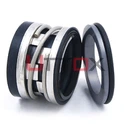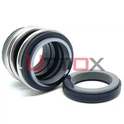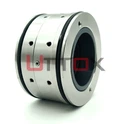


When industrial equipment suddenly fails due to fluid leakage, production stops and costs skyrocket. This critical scenario highlights why understanding how mechanical seals work is essential for any facility manager or engineer. Mechanical seals create a barrier between a rotating shaft and the housing that contains the fluid, preventing large volumes of pressurized fluid from escaping while allowing the shaft to rotate freely. Among the various types available, MG1 mechanical seals have proven to be reliable solutions for challenging industrial applications, offering superior performance in environments where traditional packing simply cannot deliver the required sealing integrity.
Understanding the Basic Operating Principle of MG1 Mechanical Seals
Mechanical seals work by utilizing two very flat surfaces (generally within 2-3 light bands flat) that are pressed together, with one surface rotating with the shaft while the other remains stationary in the equipment housing. This fundamental principle forms the backbone of all mechanical seal technology, including advanced MG1 mechanical seals designed for demanding industrial applications. The operating mechanism relies on maintaining an extremely thin fluid film between these two precisely machined surfaces. When properly installed and maintained, this design makes leakage virtually impossible beyond minimal vapor emissions. MG1 mechanical seals incorporate advanced materials and precision engineering to ensure optimal face contact and pressure distribution across the sealing interface.
Critical Components of Modern Mechanical Seal Systems
Most mechanical seals feature three distinct sealing points to ensure complete containment. The primary seal face provides the main barrier against fluid leakage, while secondary sealing elements prevent bypass around the shaft and housing interfaces. In MG1 mechanical seals, each sealing point incorporates high-performance elastomers and specialized coatings to enhance durability and chemical compatibility. The stationary seal ring typically mounts in the pump housing or gland plate, while the rotating element attaches to the shaft through drive mechanisms such as pins, slots, or spring systems. Advanced water pump seals utilize this configuration to handle the unique challenges of water treatment applications, where reliability and longevity are paramount concerns for facility operators. Spring systems within mechanical seals provide the necessary closing force to maintain face contact throughout various operating conditions. MG1 mechanical seals feature optimized spring designs that balance closing force with heat generation, ensuring consistent performance across wide temperature and pressure ranges commonly encountered in industrial applications.

How Pressure and Spring Forces Enable Effective Sealing?
The pressure from seal springs and hydraulic pressure of the liquid in the pump provide compression force that keeps the seal faces closed. This dual-force system ensures that mechanical seals maintain their sealing capability even when system pressures fluctuate during normal operation or startup/shutdown cycles. The hydraulic balance of mechanical seals determines how much of the system pressure acts on the seal faces. Balanced seals reduce the effective area exposed to hydraulic pressure, minimizing face loading and heat generation while extending operational life. MG1 mechanical seals incorporate advanced balancing techniques to optimize performance in high-pressure applications commonly found in petroleum refining and chemical processing industries.
The Role of Lubrication in Mechanical Seal Performance
When two faces rub together, a fluid film between the two faces provides lubrication and cooling. This microscopic film layer prevents direct metal-to-metal contact while carrying away heat generated by the sealing interface. The thickness and stability of this film directly impact seal performance and longevity. Modern water pump seals and other mechanical sealing systems depend on maintaining optimal film thickness through precise face geometry and surface finish. MG1 mechanical seals utilize advanced face materials and surface treatments to promote stable film formation even in challenging applications with poor lubrication characteristics or contaminated process fluids. Temperature control becomes critical in mechanical seal operation, as excessive heat can cause face distortion, material degradation, and seal failure. The fluid film serves as both lubricant and coolant, making proper seal chamber design and flushing arrangements essential for reliable operation in demanding industrial environments.
Application-Specific Design Features in MG1 Mechanical Seals
Different industrial applications require specialized mechanical seal designs to handle unique operating conditions. MG1 mechanical seals incorporate application-specific features such as corrosion-resistant materials for chemical processing, high-temperature capabilities for power generation, and abrasion-resistant faces for slurry handling applications. In water treatment facilities, mechanical seals must withstand exposure to chlorinated water, varying pH levels, and suspended solids while maintaining leak-free operation. Water pump seals designed for these applications feature specialized elastomer compounds and face materials that resist chemical attack and abrasive wear over extended service periods.
Advanced Materials and Coatings in Modern Sealing Technology
The selection of appropriate materials for seal faces, secondary sealing elements, and hardware components determines the success of mechanical seal installations. MG1 mechanical seals utilize advanced ceramics, tungsten carbide, and specialized carbon grades to provide optimal performance in specific operating environments. Surface treatments and coatings further enhance seal performance by improving wear resistance, reducing friction, and providing better chemical compatibility. These treatments enable mechanical seals to operate reliably in applications that would quickly destroy conventional sealing solutions, making them indispensable in critical industrial processes. Quality control during manufacturing ensures that every MG1 mechanical seal meets stringent dimensional and performance specifications. Advanced metrology equipment verifies face flatness, surface finish, and dimensional accuracy to guarantee consistent sealing performance across all production units.
Installation and Maintenance Considerations for Optimal Performance
Proper installation procedures are crucial for achieving optimal mechanical seal performance and longevity. Even the highest-quality MG1 mechanical seals will fail prematurely if installed incorrectly or without proper attention to shaft alignment, surface finish, and seal chamber preparation. Pre-installation inspection should verify that all components are clean, undamaged, and properly oriented. The shaft must be straight and smooth, with surface finish and runout within manufacturer specifications. Seal chamber dimensions and surface finish directly impact secondary seal performance and must meet design requirements.
Troubleshooting Common Mechanical Seal Problems
Understanding common failure modes helps maintenance personnel identify and correct problems before catastrophic seal failure occurs. Excessive leakage, premature wear, and seal face damage often result from installation errors, system contamination, or operating conditions outside design parameters. Regular monitoring of seal chamber temperature, vibration levels, and leakage rates provides early warning of developing problems. MG1 mechanical seals incorporate design features that facilitate monitoring and maintenance while minimizing downtime for routine service activities. Proper storage and handling procedures protect mechanical seals during transportation and warehouse storage. Exposure to extreme temperatures, contamination, or physical damage during handling can compromise seal performance even before installation, making careful material management essential for reliable operation.
Conclusion
Mechanical seals work by maintaining a tight, controlled interface between rotating and stationary components, effectively preventing fluid leakage and ensuring the integrity and efficiency of rotating machinery. Understanding these principles enables better selection, installation, and maintenance of MG1 mechanical seals across diverse industrial applications.
Cooperate with Zhejiang Uttox Fluid Technology Co.,Ltd.
Zhejiang Uttox Fluid Technology Co.,Ltd. stands as a premier China MG1 mechanical seals manufacturer with over 30 years of industry expertise. As a trusted China MG1 mechanical seals supplier, we provide High Quality MG1 mechanical seals for petroleum refining, water treatment, pulp & paper, shipbuilding, food & beverage, pharmacy, and power plant industries. Our experienced R&D team offers technical guidance and customization solutions, while our China MG1 mechanical seals factory maintains sufficient inventory for fast delivery. Contact our China MG1 mechanical seals wholesale team at info@uttox.com for competitive MG1 mechanical seals price and MG1 mechanical seals for sale inquiries.
FAQ
Q: What causes mechanical seal failure in pumps?
A: Common causes include improper installation, contaminated seal chamber, excessive temperature, poor lubrication, and operating outside design parameters.
Q: How often should mechanical seals be replaced?
A: Replacement intervals depend on operating conditions, but typical industrial seals last 1-3 years with proper maintenance and monitoring.
Q: Can mechanical seals handle high-pressure applications?
A: Yes, balanced mechanical seals are designed specifically for high-pressure service and can handle pressures exceeding 1000 PSI when properly selected.
Q: What maintenance is required for mechanical seals?
A: Regular monitoring of leakage, temperature, vibration, and ensuring proper lubrication and seal flush systems are maintained.
References
1. "Mechanical Seal Technology" by Heinz K. Müller, Bernard S. Nau - Comprehensive technical reference covering seal design principles and applications.
2. "Centrifugal Pump Handbook" by Igor J. Karassik - Authoritative guide including detailed mechanical seal selection and troubleshooting procedures.
3. "Sealing Technology: A Guide to Fluid Power" by Malcolm F. White - Industrial sealing reference covering mechanical seal theory and practical applications.
4. "Pump Handbook" by Igor J. Karassik, Joseph P. Messina - Engineering reference with extensive coverage of mechanical seal systems and maintenance practices.