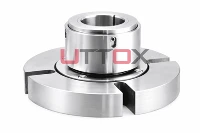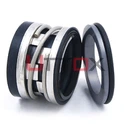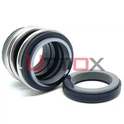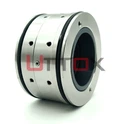


In the industrial world, pump failures and costly downtime due to leakage issues plague operations daily. When rotating equipment like pumps encounter sealing challenges, the consequences can be devastating - contaminated products, environmental hazards, and expensive maintenance shutdowns. A mechanical seal is a precision-engineered device that provides dynamic sealing between rotating and stationary components, preventing fluid leakage while allowing shaft rotation. Unlike traditional packing, ITT Flygt mechanical seals offer superior performance with minimal maintenance requirements, making them essential for industries ranging from water treatment to petroleum refining where reliability cannot be compromised.
Understanding ITT Flygt Mechanical Seal Fundamentals
A mechanical seal represents a sophisticated engineering solution designed to contain process fluids within rotating equipment while preventing contamination from external sources. At its core, a mechanical seal consists of two highly polished surfaces - one rotating with the shaft and one stationary - that maintain contact under controlled conditions. The ITT Flygt mechanical seal technology exemplifies this principle through precision manufacturing and advanced material selection. The fundamental operation relies on the principle of creating a microscopic film between the seal faces, allowing for smooth rotation while maintaining an effective barrier against fluid escape. This thin liquid film, typically measured in micrometers, lubricates the interface and dissipates heat generated by friction. ITT Flygt pump mechanical seals are engineered to optimize this critical balance between sealing effectiveness and operational longevity. The sealing mechanism involves multiple forces working in harmony. Spring force provides the primary closing mechanism, while hydraulic pressure from the sealed fluid creates additional closing force. The geometry of the seal faces and the properties of the sealed medium determine the optimal balance point. Flygt mechanical seals incorporate advanced face materials such as silicon carbide, tungsten carbide, or ceramic composites to withstand demanding operating conditions while maintaining dimensional stability.
Primary Components and Design Elements
Modern mechanical seals comprise several critical components that work together to achieve reliable sealing performance. The rotating assembly includes the primary ring, which attaches to the shaft and rotates with it. This component must maintain perfect perpendicularity to the shaft axis while accommodating thermal expansion and shaft deflection. ITT Flygt mechanical seals utilize precision machined components and advanced mounting systems to ensure optimal alignment throughout the operating range. The stationary assembly consists of the mating ring, which remains fixed within the equipment housing. This component provides the sealing surface against which the rotating ring operates. The housing and gland plate secure the stationary assembly while allowing for proper compression of the seal components. Flygt mechanical seals feature robust housing designs that distribute loads evenly and provide stable mounting platforms. Secondary seals, typically O-rings or elastomeric elements, prevent leakage around the shaft and housing interfaces. These components must accommodate shaft movement while maintaining sealing integrity across temperature and pressure variations. The spring system, whether single or multiple springs, provides the necessary closing force and maintains face contact during startup and varying operating conditions. ITT Flygt pump mechanical seals employ carefully calibrated spring systems that optimize closing force while minimizing face loading.
Material Selection and Compatibility Considerations
The selection of appropriate materials for mechanical seal components directly impacts performance, longevity, and reliability in specific applications. Face materials must exhibit excellent wear resistance, chemical compatibility, and thermal stability while maintaining dimensional precision under operating conditions. Silicon carbide represents the most common choice for demanding applications due to its exceptional hardness, chemical inertness, and thermal conductivity properties. Tungsten carbide faces offer superior performance in abrasive environments where particle contamination poses challenges to seal life. The self-mating capability of tungsten carbide makes it ideal for applications where consistent face materials are preferred. Carbon-graphite faces provide excellent running characteristics against harder mating materials and offer superior thermal shock resistance. ITT Flygt mechanical seals utilize these advanced materials based on specific application requirements and operating parameters. Elastomeric secondary seal materials require careful selection based on chemical compatibility and temperature requirements. Nitrile rubber provides excellent general-purpose performance for petroleum-based fluids, while fluorocarbon elastomers offer superior chemical resistance for aggressive media. Perfluoroelastomers represent the ultimate choice for extreme chemical environments but require careful installation procedures. Flygt mechanical seals incorporate proven elastomeric compounds that have demonstrated long-term reliability in field applications.

ITT Flygt Mechanical Seal Applications Across Industries
The versatility of mechanical seal technology enables its application across diverse industrial sectors, each presenting unique challenges and requirements. Water treatment facilities rely heavily on pump mechanical seals to handle various fluid types, from clean water to heavily contaminated wastewater streams. ITT Flygt mechanical seals have established themselves as industry standards in municipal water treatment applications where reliability and low maintenance requirements are paramount. Chemical processing industries demand exceptional chemical resistance and temperature capability from their sealing solutions. Mechanical seals in these applications must withstand aggressive chemicals, elevated temperatures, and challenging operating conditions while maintaining leak-tight performance. The pharmaceutical industry requires seals that meet stringent cleanliness standards and provide contamination-free operation. ITT Flygt pump mechanical seals designed for these applications incorporate FDA-approved materials and surface finishes that facilitate cleaning and sterilization procedures. Power generation facilities utilize mechanical seals in critical applications including cooling water pumps, boiler feed water systems, and chemical feed equipment. The reliability requirements in these applications are extreme, as seal failures can result in forced outages and significant economic losses. Flygt mechanical seals in power applications are designed with redundant sealing elements and monitoring capabilities to provide early warning of potential issues.
Petroleum Refining and Petrochemical Applications
Petroleum refining operations present some of the most challenging environments for mechanical seal applications. The combination of hydrocarbon fluids, high temperatures, and process pressures creates demanding operating conditions that require specialized seal designs. ITT Flygt mechanical seals in refinery applications must handle everything from light hydrocarbons to heavy crude oil while maintaining safety and environmental compliance. Process temperatures in refining applications can range from cryogenic conditions in gas processing to elevated temperatures exceeding 400°C in distillation units. The seal faces must maintain dimensional stability across these temperature extremes while preserving sealing effectiveness. Thermal management becomes critical, often requiring external cooling or heating systems to maintain optimal seal chamber conditions. Chemical compatibility assumes paramount importance in petrochemical applications where seal exposure to various process chemicals is inevitable. ITT Flygt pump mechanical seals utilize materials that resist swelling, degradation, and chemical attack while maintaining mechanical properties. The selection process involves comprehensive chemical compatibility analysis and often requires custom material combinations for specific process conditions.
Marine and Shipbuilding Industry Requirements
Marine applications present unique challenges for mechanical seal technology due to the corrosive nature of seawater and the dynamic operating environment of vessels. Seawater contains dissolved salts, suspended solids, and biological contaminants that can significantly impact seal performance. ITT Flygt mechanical seals designed for marine applications incorporate corrosion-resistant materials and specialized face combinations that resist biological fouling. The ballast water treatment systems on modern vessels require reliable sealing solutions that can handle varying water quality and maintain performance across extended voyages. These systems often operate intermittently, creating challenging startup conditions for mechanical seals. Flygt mechanical seals in marine applications feature enhanced lubrication systems and face materials optimized for intermittent operation. Shipyard applications involve various fluid types including fuel oils, lubricants, and hydraulic fluids in addition to seawater systems. The seal selection process must consider the diverse operating conditions and maintenance constraints typical of marine environments. ITT Flygt pump mechanical seals provide standardized solutions that simplify inventory management while ensuring reliable performance across multiple applications.
Advanced ITT Flygt Seal Technologies and Innovations
The evolution of mechanical seal technology continues to drive improvements in reliability, performance, and application range. Advanced face materials, including diamond-like carbon coatings and advanced ceramics, extend operational capabilities into previously challenging applications. ITT Flygt mechanical seals incorporate these technological advances to provide enhanced performance characteristics and extended service life. Computational fluid dynamics and finite element analysis enable optimization of seal chamber geometry and face design parameters. These analytical tools allow engineers to predict performance characteristics and optimize designs before manufacturing, reducing development time and improving reliability. Flygt mechanical seals benefit from these advanced design methodologies through improved hydraulic balance, enhanced cooling, and optimized face loading characteristics. Condition monitoring technologies provide real-time assessment of seal performance and enable predictive maintenance strategies. Vibration analysis, temperature monitoring, and acoustic emission detection systems can identify developing seal problems before catastrophic failure occurs. ITT Flygt pump mechanical seals can be equipped with monitoring systems that provide early warning capabilities and extend equipment availability.
Cartridge Seal Systems and Installation Advantages
Cartridge mechanical seals represent a significant advancement in mechanical seal technology by providing pre-assembled, pre-set sealing systems that simplify installation and reduce maintenance requirements. These systems eliminate the need for field measurements and settings, reducing the potential for installation errors that can lead to premature failure. ITT Flygt mechanical seals in cartridge configurations provide consistent performance and simplified maintenance procedures. The cartridge design incorporates all seal components into a single assembly that can be installed as a complete unit. This approach reduces installation time, minimizes inventory requirements, and ensures consistent performance across multiple installations. The pre-engineered nature of cartridge seals eliminates many variables that can affect performance in component seal installations. Installation procedures for cartridge seals are standardized and require minimal specialized tools or measuring equipment. The self-contained design includes integral mounting hardware and precise dimensional control that ensures proper installation every time. Flygt mechanical seals in cartridge configuration provide these advantages while maintaining the performance characteristics required for demanding applications.
Dual Seal Systems for Critical Applications
Dual mechanical seal systems provide enhanced reliability and environmental protection for critical applications where single seal failure could result in significant consequences. These systems utilize two seals in series with a barrier fluid system between them to provide redundant sealing capability. ITT Flygt mechanical seals in dual configurations offer maximum protection for hazardous or valuable process fluids. The barrier fluid system serves multiple functions including lubrication, cooling, and contamination prevention for the seals. The barrier fluid pressure is maintained above the process pressure to ensure inward leakage direction in the event of primary seal failure. This design prevents process fluid release to atmosphere while providing indication of seal condition through barrier fluid consumption monitoring. Control systems for dual seal arrangements include pressure regulation, level monitoring, and alarm functions that provide comprehensive seal system supervision. These systems can be integrated with plant control systems to provide remote monitoring and data logging capabilities. ITT Flygt pump mechanical seals with dual seal capability incorporate these advanced control features to maximize system reliability and safety.
ITT Flygt Seal Selection and Application Engineering
Proper mechanical seal selection requires comprehensive analysis of operating conditions, fluid properties, and equipment characteristics to ensure optimal performance and longevity. The selection process begins with accurate determination of operating parameters including pressure, temperature, speed, and fluid characteristics. ITT Flygt mechanical seals are available in configurations designed to handle specific operating ranges and application requirements. Fluid compatibility analysis involves evaluation of chemical resistance, temperature effects, and potential contamination issues that could impact seal performance. The presence of abrasive particles, corrosive chemicals, or biological contaminants requires specialized seal materials and configurations. Flygt mechanical seals utilize proven material combinations that have demonstrated compatibility with a wide range of process fluids. Equipment integration considerations include shaft specifications, housing dimensions, and auxiliary system requirements that affect seal selection and installation procedures. The mechanical seal must accommodate shaft deflection, thermal growth, and vibration characteristics of the equipment while maintaining sealing integrity. ITT Flygt pump mechanical seals are designed to integrate seamlessly with standard equipment configurations while providing enhanced performance characteristics.
Performance Optimization and Operational Considerations
Optimizing mechanical seal performance requires attention to installation procedures, operating practices, and maintenance requirements that affect seal life and reliability. Proper installation techniques ensure correct seal positioning, appropriate torque values, and adequate auxiliary system connections. Training programs for maintenance personnel help ensure consistent installation quality and reduce the potential for premature failures. Operating procedures should include proper startup and shutdown sequences that minimize thermal shock and face loading during transient conditions. Gradual temperature changes and controlled pressure application help extend seal life by reducing thermal stress and maintaining optimal face contact. ITT Flygt mechanical seals benefit from established operating procedures that maximize performance and reliability. Maintenance planning should include regular inspection schedules, auxiliary system servicing, and performance monitoring to identify developing issues before failure occurs. Trending of operating parameters can reveal gradual changes that indicate wear or degradation requiring attention. Flygt mechanical seals provide accessible monitoring points and diagnostic features that facilitate effective maintenance planning and execution.
Conclusion
Mechanical seals represent critical components in industrial rotating equipment, providing reliable fluid containment while enabling efficient operation across diverse applications. The sophisticated engineering and advanced materials incorporated in modern ITT Flygt mechanical seals deliver superior performance, extended service life, and reduced maintenance requirements compared to traditional sealing methods.
Cooperate with Zhejiang Uttox Fluid Technology Co.,Ltd.
Partner with Zhejiang Uttox Fluid Technology Co.,Ltd., your trusted China ITT Flygt factory since 1990, offering 30+ years of mechanical seal expertise. As a leading China ITT Flygt supplier and China ITT Flygt manufacturer, we provide High Quality ITT Flygt solutions with competitive ITT Flygt prices and ITT Flygt for sale globally. Our experienced R&D team delivers customized pump mechanical seals with fast delivery from sufficient inventory. Professional technical support, OEM capabilities, and third-party quality assurance ensure superior products. Contact us at info@uttox.com for China ITT Flygt wholesale inquiries and technical guidance.
FAQ
Q: What is the main difference between a mechanical seal and packing?
A: Mechanical seals provide superior sealing with minimal leakage and longer service life compared to packing, which requires regular adjustment and allows controlled leakage.
Q: How often should mechanical seals be replaced?
A: Replacement intervals vary based on application conditions, but properly selected and installed mechanical seals typically last 2-5 years in normal service.
Q: What causes mechanical seal failure?
A: Common causes include improper installation, inadequate lubrication, thermal shock, shaft misalignment, and chemical incompatibility with process fluids.
Q: Can mechanical seals handle high-temperature applications?
A: Yes, mechanical seals with appropriate materials can operate at temperatures exceeding 400°C with proper auxiliary cooling and face material selection.
References
1. Lebeck, A.O. "Principles and Design of Mechanical Face Seals" John Wiley & Sons, New York
2. Mayer, E. "Mechanical Seals Technology and Applications" Butterworth-Heinemann Publications
3. Young, L.A. "Advanced Sealing Technology for Rotating Equipment" Marcel Dekker, New York
4. Adams, G.P. "Mechanical Seal Practice for Improved Performance" Elsevier Science Publishers