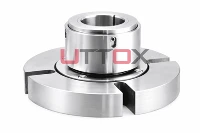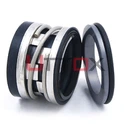


Sourcing precision mechanical seal replacement parts for critical industrial equipment involves far more than just matching technical specifications. Procurement teams often face complex shipping workflows, customs clearance procedures, extensive documentation, and strict global compliance regulations - especially when importing 2100 mechanical seals for centrifugal pumps, wastewater treatment systems, and HVAC applications. These hurdles can delay project timelines and drive up overall operational costs.
This practical guide walks you through every key step to ensure your elastomer bellows mechanical seals arrive on schedule, fully meet international regulatory standards, and deliver consistent reliable performance for your facility operations.
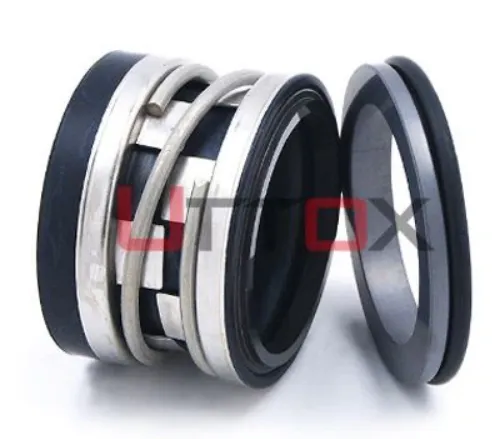
Understanding the Basics of 2100 Mechanical Seals
What Defines the 2100 Mechanical Seal
The 2100 mechanical seal features an elastomer bellows, single-spring unitized design widely adopted for centrifugal pumps and rotary equipment. It eliminates dynamic O-rings entirely, avoiding common shaft fretting and sticking issues found in traditional pusher-style seals.
The integrated bellows delivers both secondary sealing and steady spring loading, boosting operational stability for general fluid handling duties. Its standard operating range covers -20°C to +180°C, maximum working pressure up to 12 bar, and surface speed up to 13 m/s. Shaft diameters range from 10mm to 75mm, covering most mainstream pump configurations.
Available face material options include carbon, silicon carbide, SSIC, and tungsten carbide. Elastomer choices such as VITON, EPDM, NBR, FFKM, and AFLAS are paired with SS304 metal components to suit diverse process media.
How These Seals Function in Industrial Applications
The 2100 mechanical seal operates by maintaining precise contact between a rotating seal ring and a stationary mating ring, effectively preventing fluid leakage across the shaft and pump housing interface.
Its elastomer bellows maintains consistent axial pressure while automatically compensating for shaft misalignment, thermal expansion, and minor operational runout. This self-aligning design greatly improves reliability under dynamic pump working conditions.
The unitized construction simplifies on-site installation, reduces assembly errors, and saves valuable time during emergency breakdown repairs. Plant engineers prefer this design for minimizing unplanned downtime and cutting long-term maintenance expenses. Additionally, its positive drive structure prevents excessive axial load on the bellows, extending service life even under harsh operating conditions and stabilizing overall sealing performance.
Key Material Specifications for Different Operating Conditions
Material selection directly determines seal durability, runtime performance, and lifecycle maintenance costs. Silicon carbide seal faces are ideal for abrasive media such as raw wastewater and slurry fluids. FFKM elastomers provide exceptional chemical resistance for aggressive process environments.
EPDM combined with carbon faces is a cost-effective mainstream choice for clean water circuits and HVAC systems. When selecting materials, procurement teams must evaluate working pressure, temperature, shaft speed, and fluid chemical properties. Limited space inside compact pump housings also affects model selection, especially where overall axial length is restricted.
Proper material matching to actual site conditions extends service life, lowers premature failure risks, and ensures stable performance of the 2100 mechanical seal across multiple industrial sectors.
Shipping and Compliance Essentials for Importing 2100 Mechanical Seals
Understanding U.S. Import Regulations for Industrial Seals
The 2100 mechanical seal falls under HTS Code 8484.10 for U.S. customs classification, covering composite gaskets and mechanical sealing components. Import duty rates typically range from 2.5% to 5%, varying by raw material composition and country of origin.
Mandatory documentation includes commercial invoices, packing lists, and bill of lading for smooth customs clearance. Suppliers must guarantee full adherence to U.S. import regulations. While FDA certification is generally not mandatory for standard industrial grades, EPA and TSCA regulations may apply to certain elastomer formulations.
Verifying all chemical substances comply with TSCA listing or exemption requirements avoids costly customs delays. Complete documentation and proactive regulatory awareness streamline import procedures and reduce compliance-related shipment risks.
Required Certifications and Documentation
Professional certifications accelerate customs clearance and build solid technical credibility with end users. ISO 9001 confirms standardized global quality management systems. Material test reports detailing chemical composition, hardness, and dimensional tolerances validate full compliance with OEM specifications.
For food and pharmaceutical processing applications, FDA-compliant documentation is mandatory. Elastomers used in potable water systems must meet NSF/ANSI 61 drinking water safety standards. RoHS certificates confirm the absence of restricted hazardous substances such as lead and mercury.
These documents validate product quality, prove regulatory compliance, and support vendor qualification processes - critical when onboarding new suppliers or maintaining strict industry operational standards.
Packaging Best Practices to Prevent Shipping Damage
Mechanical seal faces are ultra-precision components that demand careful protective packaging. Even minor impact can cause chipping, deformation, or face distortion, directly leading to in-service leakage.
Every individual 2100 mechanical seal should be fitted with custom foam inserts to eliminate internal movement and fully protect critical sealing faces. Outer export cartons must withstand stacking pressure during sea and air transit. Moisture barrier bags with desiccant sachets prevent humidity-induced aging and damage to elastomer parts.
Clear external labeling such as Fragile – Precision Components and tilt indicators improves courier and warehouse handling standards. Proper export packaging minimizes transit damage, preserves seal integrity, and avoids unnecessary replacement costs caused by shipping defects.
Managing Lead Times and Shipping Costs
Sea freight transit from Asia to the U.S. normally takes 25–35 days, while air freight shortens delivery lead time to just 5–7 days at a significant premium. Most procurement teams adopt a mixed shipping strategy: air freight for emergency urgent orders, and sea freight for large-volume bulk shipments.
Container load optimization improves cost efficiency; a standard 20ft container can hold approximately 8,000–12,000 seals depending on size configuration. LCL consolidated shipping suits smaller order quantities but raises per-unit logistics expenses.
Balancing delivery speed, freight cost, and inventory planning ensures stable supply continuity while keeping overall logistics expenditure under control for 2100 mechanical seal procurement.
Comparing 2100 Mechanical Seals with Alternative Solutions
Performance Differences Between 2100 and 2200 Models
Both the 2100 and 2200 mechanical seals adopt proven elastomer bellows construction with overlapping core performance parameters. The primary distinction lies in overall axial length: the 2200 features a longer design to fit larger pump stuffing boxes.
The compact footprint of the 2100 suits standard pump installations perfectly, while the 2200 targets equipment with extended seal chamber depth. Despite dimensional differences, both models deliver equivalent sealing reliability and stay within similar temperature, pressure, and speed operating limits.
Advantages Over Cartridge and Lip Seal Designs
Pre-assembled cartridge seals simplify installation but carry a much higher purchase price. The 2100 mechanical seal delivers nearly identical functional reliability at a far lower cost, making it the preferred option for budget-sensitive industrial projects.
Basic lip seals are cheaper upfront but rely entirely on direct friction contact, limiting allowable shaft speed and overall service life. Lip seals typically last only 2,000–4,000 operating hours, while properly installed mechanical seals achieve 15,000–25,000 hours of runtime. The 2100 design strikes an ideal balance between initial cost, structural durability, and field performance for broad industrial deployment.
Application Suitability Across Industries
The 2100 mechanical seal is widely specified for water treatment, HVAC systems, chemical processing, and municipal wastewater facilities. Its bellows structure resists particle clogging and performs reliably in solids-laden fluids.
Silicon carbide face grades excel in abrasive slurry conditions, while EPDM elastomers match glycol and chilled water HVAC circuits. Chemical processing plants select FFKM variants for handling aggressive corrosive media. Food and beverage lines require FDA-compliant material configurations. This high versatility allows the 2100 platform to meet diverse operational demands while maintaining consistent reliability across multiple industry verticals.
Sourcing and Procurement Guide for 2100 Mechanical Seals
Evaluating Supplier Credibility and Quality
Working with credible manufacturers guarantees stable product quality and consistent field performance. OEM branded seals come with full certification and professional technical support but command premium pricing. Reputable aftermarket manufacturers like UTTOX provide cost-competitive equivalent seals with matching performance for standard non-critical applications.
Procurement teams should verify ISO certification status, review full material test reports, and confirm strict dimensional tolerances before supplier approval. Thorough vendor evaluation reduces supply risks, ensures full equipment compatibility, and sustains long-term pump system reliability.
Comparing Pricing Structures and Delivery Models
OEM pricing includes tiered distributor discounts and markup layers, pushing up total procurement expenditure. Direct factory sourcing cuts intermediate costs but often requires higher minimum order quantities. Qualified aftermarket suppliers typically deliver 30–50% cost savings while maintaining equivalent quality standards.
For large facility operators, switching approved non-critical seal specifications to reliable aftermarket alternatives delivers substantial annual cost reduction. Balancing unit price, production lead time, and after-sales technical support is key to building an efficient long-term procurement strategy.
Strategies for Bulk Purchasing and Inventory Management
Bulk purchasing lowers per-unit cost but increases upfront inventory capital lock-up. Historical demand analysis helps define optimal safety stock levels. Pareto principle analysis confirms that a small range of core seal sizes accounts for the majority of consumption, allowing targeted inventory focus.
Vendor-managed inventory programs reduce on-site stock pressure while guaranteeing immediate part availability. These procurement and inventory tactics improve overall cost efficiency and strengthen supply chain reliability for ongoing 2100 mechanical seal consumption.
Recognizing Authentic Products and Avoiding Counterfeits
Counterfeit mechanical seals create major operational risks due to substandard raw materials and absent quality control. Common red flags include abnormally low pricing, ambiguous country of origin, and missing official certifications.
Genuine reputable suppliers provide traceable documentation, full material performance reports, and formal inspection records. Consistent packaging quality and standardized labeling also serve as authenticity indicators. Partnering with established verified suppliers minimizes counterfeit risks and protects long-term pump equipment performance.
Best Practices for Installation, Maintenance, and Longevity of 2100 Mechanical Seals
Step-by-Step Installation Procedures
Professional installation starts with thorough cleaning of the pump shaft and seal chamber to eliminate particulate contamination. Shaft surface roughness must meet manufacturer recommended limits to prevent elastomer abrasion damage.
Apply only compatible lubricants to ease assembly and avoid dry-run friction during startup. Position the 2100 mechanical seal carefully to prevent nicking the precision seal faces, and set correct bellows compression per official guidelines. Tighten gland bolts evenly to maintain perfect shaft alignment. Strict adherence to installation protocols ensures peak performance and maximizes overall seal lifespan.
Routine Maintenance and Inspection Protocols
Scheduled regular inspections capture early warning signs of pending seal failure. Monitor for persistent leakage, surface deposits, or discoloration around the seal gland area. Minor seepage during initial startup is normal, but continuous dripping indicates abnormal wear or misalignment.
Routine vibration monitoring detects bearing degradation and shaft runout issues. Operating temperature tracking identifies cooling circuit or lubrication system faults in advance. Implementing preventive maintenance schedules cuts unplanned downtime and significantly extends 2100 mechanical seal service life.
Troubleshooting Common Failure Modes
Typical failure modes include persistent leakage, overheating, and premature elastomer degradation. Root causes range from incorrect installation practices to system-level issues such as pressure spikes and dry running operation.
Abrasive process media accelerates face wear, requiring upgraded material options such as silicon carbide mating rings. Maintaining proper lubrication and stable design operating conditions effectively prevents premature breakdown. Accurate root cause troubleshooting directly improves long-term reliability of the 2100 mechanical seal in continuous-duty applications.
When to Seek Professional Technical Support
Complex recurring failures and high-value critical process applications require professional engineering support. Specialized technicians analyze actual operating conditions, failure pattern history, and overall pump system design to deliver targeted improvement solutions.
Extreme temperature or highly corrosive environments may demand custom seal design or full material grade upgrades. Early engagement of technical experts avoids repeated identical failures, optimizes system performance, and reduces long-term operational maintenance costs.
Conclusion
Successful import of mechanical seals relies on balanced technical specification matching, strict regulatory compliance, and optimized supply chain management. When properly specified and installed, the elastomer bellows style 2100 mechanical seal delivers dependable performance across HVAC, water treatment, and light chemical processing environments.
Mastering U.S. import regulations, mandatory certification requirements, and export packaging standards accelerates customs clearance while protecting precision sealing components in international transit. Evaluating OEM versus aftermarket suppliers based on application criticality, quality documentation, and total cost of ownership enables data-driven procurement decisions.
Standardized installation workflows, regular maintenance routines, and systematic troubleshooting all extend seal service life and eliminate avoidable equipment downtime. Early collaboration with experienced professional manufacturers ensures correct model selection and provides ongoing technical backup for your pump assets.
FAQ
What temperature range can the 2100 mechanical seal handle?
The UTTOX 2100/2100K operates reliably from -20°C to +180°C, covering most standard HVAC, clean water, and wastewater systems. Cryogenic low-temperature applications require special custom elastomer compounds to retain flexibility below standard limits. For high-temperature conditions approaching 180℃, FFKM or AFLAS grades offer superior heat resistance compared to standard VITON formulations.
How do I verify I'm purchasing genuine seals versus counterfeits?
Authentic suppliers provide complete material approval documents, dimensional inspection reports, and full traceability paperwork. Product packaging consistency, market-aligned pricing, and willingness to offer professional technical support are clear authenticity markers. Sourcing from authorized distributors or direct certified manufacturers with established trading history greatly reduces counterfeit risks, compared to unknown third-party sellers with suspiciously low pricing.
What's the fastest shipping option for bulk seal orders?
Air freight from Asian manufacturing bases to U.S. facilities takes only 5 to 7 days, though costs are 400–600% higher than ocean freight. Strategic inventory planning combining air freight for emergency spares and sea freight for scheduled bulk restocks balances speed and logistics expenditure. Suppliers with local stock in U.S. warehouses offer next-day or two-day delivery for popular standard sizes, completely eliminating international shipping delays.
Partner with Uttox: Your Trusted 2100 Mechanical Seal Supplier
UTTOX has specialized in manufacturing premium 2100 mechanical seals for over 30 years, delivering procurement teams reliable, cost-effective aftermarket alternatives to expensive OEM parts. Our in-house engineering team provides end-to-end technical support throughout model selection, installation guidance, and failure troubleshooting - ensuring perfect seal performance matched to your unique site conditions.
We maintain large in-stock inventories of common sizes for fast global delivery, minimizing your facility downtime. Trusted by customers across more than 50 countries, our products balance competitive pricing with strict ISO 9001 certified manufacturing and full material testing protocols.
Our elastomer bellows seals match OEM performance exactly while cutting costs by 30–50%, generating substantial annual savings for facilities with large pump fleets. Whether you need standard replacement seals or custom-engineered solutions for harsh demanding environments, our experienced team is ready to support your sealing requirements.
Email us at info@uttox.com to discuss your project needs, request technical data sheets, or obtain formal quotations for upcoming procurement plans.
References
Miller, A.R., & Roberts, K.D. (2021). "Mechanical Seal Systems for Centrifugal Pumps: Selection and Application Guide." Industrial Press Technical Publishing, pp. 147-189.
Thompson, J.S. (2020). "International Trade Compliance for Industrial Equipment: Customs Classification and Documentation Requirements." Global Trade Publishers, Chapter 8.
Anderson, M.P., & Chang, L.W. (2022). "Elastomer Material Selection for Fluid Sealing Applications." Journal of Industrial Sealing Technology, Vol. 34, Issue 2, pp. 56-73.
Davidson, R.T. (2019). "Mechanical Seal Failure Analysis: Root Cause Identification and Prevention Strategies." Reliability Engineering Quarterly, Vol. 28, No. 3, pp. 112-134.
United States International Trade Commission. (2023). "Harmonized Tariff Schedule of the United States: Chapter 84 - Nuclear Reactors, Boilers, Machinery and Mechanical Appliances." U.S. Government Publishing Office.
European Sealing Association Technical Committee. (2021). "Installation and Maintenance Best Practices for Industrial Mechanical Seals." ESA Technical Bulletin 2021-04, pp. 1-42.