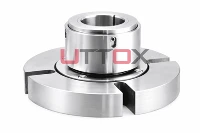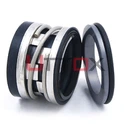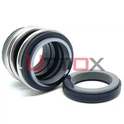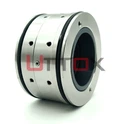


In industrial operations, even minor equipment downtime can trigger massive production losses, safety hazards and unexpected repair expenses. Pump reliability therefore remains a top priority for plant managers and maintenance teams. Though small in size, the mechanical seal is a core component that safeguards stable pump operation, eliminates fluid leakage and cuts unplanned downtime.
Featuring a robust rubber bellows non-pusher design, the MG1 mechanical seal has become a proven solution across chemical processing, water treatment, wastewater and general industrial sectors. It removes traditional dynamic O-rings that cause shaft fretting and wear, automatically compensates for axial displacement, and delivers stable sealing performance even in solids-laden fluids and moderately corrosive media.

Understanding Mechanical Seals and Their Role in Pump Reliability
Core Design Principles of Rubber Bellows Seals
Mechanical seals form a dynamic barrier between rotating pump shafts and stationary pump housings, preventing process fluid leakage along the shaft interface.
The MG1 series - including MG12 and MG13 models - adopts a single-spring elastomer bellows structure that transmits spring load directly through the flexible rubber element. Conventional seals rely on secondary O-rings sliding against the shaft surface, which easily causes abrasion. The MG1 design works differently: the bellows stays fixed relative to the shaft, while seal faces perform rotational sealing. The rubber bellows absorbs axial movement without creating sliding contact points.
MG12 features a medium-length bellows, while MG13 comes with an extended bellows version. This gives engineering teams flexible options to match different pump stuffing box depths and installation lengths.
Key Specifications and Operating Parameters
Clear understanding of performance limits helps procurement and maintenance teams make accurate selection decisions.The MG1 mechanical seal operates steadily across -20°C to +200°C, with maximum working pressure up to 16 bar and shaft speed rated at 10 m/s. These parameters cover the majority of centrifugal pump applications in industrial facilities.
It fits shaft diameters from 12mm up to 120mm, suitable for small circulation pumps through medium-duty process pumps.Material selection directly determines service life and operational stability:
Seal face options: resin carbon, antimony carbon, silicon carbide (SiC), sintered silicon carbide (SSIC), tungsten carbide
Elastomer options: VITON for chemical resistance, EPDM for hot water service, NBR for general use, FFKM for extreme chemical exposure, AFLAS for special harsh conditions
Metal components: SS304 / SS316 for superior corrosion resistance
Material Selection Impact on Durability
Seal face material directly influences wear resistance, heat dissipation and overall lifespan.Silicon carbide paired with carbon excels in clean media with good thermal conductivity and abrasion resistance.Tungsten carbide faces perform reliably in harsh mining slurry and wastewater applications.
Elastomer compounds must withstand process fluid chemistry and working temperature without hardening, swelling or losing flexibility.
VITON: excellent resistance to petroleum products and general chemicals, stable up to 200°C
EPDM: ideal for water and hot water systems, but prone to rapid degradation in hydrocarbon media
Proper material matching avoids premature seal failure, extends replacement cycles and improves overall pump operational efficiency.
Key Advantages of MG1 Mechanical Seal in Enhancing Pump Performance
The MG1 mechanical seal delivers tangible operational benefits derived from mature structural design and field-proven engineering standards, bringing practical solutions to daily challenges faced by maintenance crews and plant engineers.
Elimination of Shaft Fretting and Scoring
Traditional pusher seals with dynamic O-rings continuously rub against the shaft under spring load, creating wear grooves and permanent leakage paths that lead to costly shaft repairs.
The MG1 rubber bellows design fixes this issue: the bellows is stationary on the shaft and flexes internally instead of sliding. This completely eliminates shaft fretting and preserves original shaft surface integrity throughout the service cycle. For chemical plants and industrial facilities, this cuts downtime, avoids expensive shaft rework, and improves long-term equipment reliability.
Prevention of Spring Clogging in Contaminated Media
Many process fluids contain solid particles and fibrous impurities that easily clog conventional enclosed springs. Clogging reduces seal face loading and triggers premature failure.
MG1 adopts an open-coil spring structure allowing contaminants to pass through freely, preventing particle accumulation and maintaining consistent sealing pressure. This advantage is highly valuable in wastewater treatment, pulp & paper, and chemical processing where fine filtration is limited. Reduced clogging lowers maintenance frequency, simplifies system design requirements, and ensures stable operation in challenging solids-laden media.
Automatic Compensation for Shaft Movement
Centrifugal pumps naturally generate axial displacement from thermal expansion, startup shock and hydraulic thrust. The flexible rubber bellows of the MG1 seal automatically absorbs such displacement without extra auxiliary parts, maintaining tight seal face contact and stable sealing under fluctuating working conditions.
It also compensates for minor shaft misalignment and runout caused by assembly tolerance or component wear. The result is stable sealing performance, lower leakage risk, and optimized pump efficiency under variable thermal and mechanical loads.
Cost-Performance Balance for Standard Applications
MG1 strikes an ideal balance between affordable pricing and reliable performance, perfectly fitting general industrial standard duties. Rated up to 16 bar, it covers most water circulation, fluid transfer and light chemical process applications.
Compared to high-priced pre-assembled cartridge seals, its component-style design cuts procurement cost while retaining equivalent durability and reliability. It is fully interchangeable with mainstream equivalents such as Eagle Burgmann MG1, AESSEAL B02 and Vulcan 191, simplifying spare part procurement. The cost-effective structure allows distributors and maintenance teams to optimize inventory with minimal capital investment.
Comparing MG1 Mechanical Seal with Other Market Solutions
Industrial buyers face multiple mechanical seal options, each with distinct strengths and limitations. Clear comparison helps procurement teams select models matching operational demands and budget constraints.
Comparison with Cartridge Seal Assemblies
Cartridge seals are factory pre-assembled to simplify installation and reduce human error, but they come with a much higher price tag. The MG1 mechanical seal offers a budget-friendly alternative for standard applications where professional on-site technicians are available.
Its modular structure supports flexible material combination and easy customization for special media. Spare parts can be stocked individually to lower inventory pressure. While cartridge seals suit complex remote installation scenarios, MG1 delivers reliable performance and obvious economic advantages for routine industrial pumping systems.
Performance Against Bellows Alternative Designs
Metal bellows seals eliminate elastomer parts and perform well under extreme temperature and ultra-aggressive chemical conditions, yet they cost far more and offer lower axial flexibility.
The rubber bellows MG1 operates reliably from -20°C to +200°C, covering nearly all conventional industrial working ranges. It provides superior axial flexibility to maintain stable face pressure during operation. Its simpler structure reduces maintenance cost and ensures easy availability of replacement components. For general-purpose applications, MG1 is more economical and adaptable than rigid metal bellows seals.
Advantages Over Pusher-Type Spring Seals
Pusher-style seals rely on multi-spring layout and sliding O-rings, which inevitably cause shaft abrasion and require strict material compatibility selection to avoid corrosion risks.
MG1's non-pusher rubber bellows design removes dynamic O-ring sliding motion entirely, lowering maintenance concerns and simplifying material matching. Installation difficulty is comparable, yet MG1 has no requirement for shaft rotation direction matching. The design improves overall reliability, minimizes wear failure, and provides a simpler, more durable sealing solution for most industrial pump systems.
Procurement Guide: How to Source MG1 Mechanical Seals for Your Business
Successful mechanical seal procurement requires focusing not only on unit price, but also on technical specifications, supplier professionalism and total cost of ownership.
Identifying Qualified Suppliers and Manufacturers
Choosing a reliable manufacturer is critical when sourcing MG1 mechanical seals. Buyers should evaluate production capacity, quality control standards and full material traceability. Suppliers with in-house engineering capability can recommend optimal material grades and provide technical data including PV limits and chemical compatibility charts.
Brands like Uttox supply cost-effective aftermarket alternatives matching original design performance without quality compromise. Smooth English technical communication reduces specification misunderstanding and speeds up problem resolution during procurement and field operation.
Understanding Pricing Structures and Volume Discounts
MG1 pricing varies by face/elastomer material, order quantity and customized requirements. Standard carbon-ceramic + NBR configurations are the most economical, while premium upgraded materials increase unit cost accordingly.
Bulk ordering, annual framework contracts and consignment inventory programs effectively lower unit price and guarantee stock availability. Lead times range from immediate shipment for standard sizes to several weeks for fully customized designs. Buyers need to balance inventory holding cost and emergency stock risk to optimize overall cost efficiency and operational readiness.
Evaluating Technical Support and Customization Capabilities
Most routine applications adopt standard MG1 designs, while special working conditions require targeted customization. Professional supplier engineering teams can analyze on-site parameters and offer optimized solutions: special chemical-resistant elastomers, upgraded hard face materials for abrasive media, and modified metal hardware for non-standard pump installation dimensions.
With decades of sealing industry experience, Uttox provides professional troubleshooting support and system optimization advice. Solid technical backup guarantees long-term operational reliability and resolves complex sealing challenges efficiently.
Best Practices for Installing and Maintaining MG1 Mechanical Seals
Professional installation and standardized maintenance directly determine mechanical seal service life and overall pump reliability. Even high-quality MG1 seals will suffer premature failure if fitted improperly or maintained carelessly.
Pre-Installation Preparation and Inspection
Complete preparation is essential before MG1 installation:
Confirm full compatibility with pump model and dimensional specifications
Inspect all seal components for damage, deformation or defects
Thoroughly clean stuffing box, shaft sleeve and mating contact surfaces to remove particles and impurities
Check shaft for wear, runout and surface defects; ensure dimensional tolerance meets standard requirements
Shaft surface finish should reach Ra 0.8 μm or higher
Replace worn shaft sleeves directly instead of reusing
Careful pre-installation inspection avoids assembly errors and ensures optimal sealing performance from startup.
Installation Procedure and Critical Checkpoints
Pay close attention to details during MG1 assembly:
Apply only chemically compatible lubricant to elastomer parts to avoid material damage
Install stationary seat gently to ensure proper compression without distortion
Position rotating assembly strictly per rated working length and confirm drive mechanism engagement
Avoid twisting or bending the rubber bellows during fitting
Manually rotate the shaft after installation to verify smooth, unobstructed movement
Fully fill the pump with process fluid before startup to prevent dry running, which can instantly damage seal faces
Routine Maintenance and Troubleshooting Guidelines
Regular periodic maintenance extends MG1 service life significantly. Monitor abnormal leakage, noise, vibration and temperature fluctuation around the seal gland - these are early warning signs of potential failure.
Minor seepage during initial startup is normal; continuous dripping requires immediate inspection. Always check system-level issues such as cavitation and shaft misalignment, which severely affect seal lifespan. Keep complete maintenance records including installation date, running hours and failure root cause. Historical data helps identify failure trends, optimize maintenance plans and guide future seal material selection.
Conclusion
In industrial facilities, mechanical seal performance directly determines pump reliability, operational safety and long-term maintenance expenditure.
With its optimized rubber bellows structure, the MG1 mechanical seal solves three core pain points: eliminating shaft fretting wear, preventing spring clogging in contaminated media, and providing automatic compensation for shaft axial movement. Its diversified material options adapt to clean water, hot water and mild to moderate chemical media, reliably covering -20°C to +200°C and up to 16 bar working pressure.
Full interchangeability with mainstream seal models simplifies equipment retrofit and spare part procurement. Correct material selection, standardized installation and routine maintenance effectively extend seal life and avoid premature downtime failures. By understanding seal design principles, comparing alternative models objectively and partnering with professional manufacturers, industrial buyers can obtain high-performance sealing solutions while lowering total ownership costs.
Frequently Asked Questions
Can the MG1 mechanical seal handle abrasive slurries?MG1 can serve light abrasive slurry when configured with hard face pairs such as silicon carbide or tungsten carbide. Hard-to-hard face combination plus proper flush plan effectively slows abrasive wear. Its open-coil spring design prevents particle deposition and spring binding common in conventional sealed spring structures.
How does elastomer selection affect chemical compatibility?Elastomer chemical matching is the key to long seal life. VITON resists most acids, solvents and petroleum fluids but swells in ketones and esters. EPDM performs excellently in water, steam and alkaline media but degrades rapidly in oil-based fluids. FFKM delivers full-spectrum chemical resistance but comes at a premium cost. Always refer to manufacturer chemical compatibility charts for accurate material selection.
What makes seals fail too soon in pumps?Common premature failure causes include: dry running at startup leading to thermal face cracking; excessive vibration from misalignment or unbalance causing face separation; chemical attack from incompatible elastomer grades; abrasive wear from contaminated or crystallized process fluid. System issues such as cavitation, deadheading and thermal shock also drastically shorten seal service life.
Partner with Uttox for Reliable MG1 Mechanical Seal Solutions
Uttox provides cost-effective rubber bellows mechanical seals fully matched to industrial pump application demands. With over 30 years specializing in MG1 manufacturing, we supply reliable aftermarket alternatives to premium branded seals with identical quality and performance.
Our professional technical team offers free application analysis and optimal configuration recommendations. Large in-stock inventory ensures fast delivery and minimal facility downtime. We also provide customized non-standard solutions for special working conditions under strict quality control standards. Our responsive customer support simplifies the whole procurement process from initial inquiry to after-sales service.
Contact us today at info@uttox.com to discuss your sealing requirements and get a formal quotation. Visit www.uttox.com to browse full product lines, download technical datasheets and access installation guidelines. Whether you need single emergency replacement seals or large bulk orders for continuous operation, Uttox is your long-term trusted mechanical seal partner.
References
Mechanical Seals: Design, Application, and Maintenance Fundamentals, Industrial Press, 2019.
Pump Reliability Engineering Handbook, Gulf Professional Publishing, 2021.
Chemical Processing Equipment Reliability Standards, American Petroleum Institute Standard 682, 2020.
Sealing Technology Performance Analysis in Process Industries, Tribology International Journal, 2022.
Elastomer Material Selection Guide for Mechanical Seals, Sealing Technology Magazine, 2023.
Best Practices for Centrifugal Pump Mechanical Seal Installation, Hydraulic Institute Guidelines, 2021.