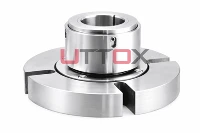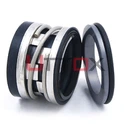


If you manage pump maintenance operations, you already know how much a failed seal can cost - in downtime, labor, and replacement parts. The John Crane 502 mechanical seal is one of the most widely specified elastomer bellows seals in industrial pump applications, used across water treatment, chemical processing, and general fluid handling systems. When it's time for a replacement, choosing the wrong part or skipping critical checks can lead to premature failure and costly rework. This guide walks you through five practical things to verify before and during every replacement.

Understand the John Crane 502 Mechanical Seal Specifications
Key Design Features and Operating Parameters
The John Crane 502 mechanical seal works as a rubber bellows seal with a single spring that does not push. In contrast to regular pusher seals, the full-convolution bellows keeps the O-ring from moving against the shaft. This stops fretting and sleeve wear, which are two of the most common reasons why seals fail quickly in high-vibration environments.
Its operating limits are clear, and you should remember them before you buy anything:
Temperature range: -40°C to +180°C (depending on the type of elastomer chosen)
Pressure rating: ≤ 25 bar
Surface speed: ≤ 15 m/s
Shaft size range: 12mm to 100mm
Because of these specs, the 502 can be used with a lot of different types of spinning shaft equipment, from centrifugal pumps in city water systems to mixers in chemical plants. By knowing these limits, you can check to see if an unauthorized replacement can really meet the needs of your application.
Material Compatibility Matters More Than You Think
Pairing the right seal face material has a direct effect on service life, especially in media that are rough or corrosive. Silicon Carbide (SiC), Carbon, or Tungsten Carbide sides are most often used on the John Crane 502 mechanical seal. VITON (FKM), EPDM, NBR, FFKM, and AFLAS are all types of elastomers for shaft mechanical seal. Each one is good for a different range of temperatures and chemical exposures. SS304 is usually used for metal parts.
Using the wrong rubber material for your process fluid is one of the main reasons why bellows break down. Before placing an order, you should always compare the pumped medium to the elastomer's chemical compatibility data.
Diagnose Common Issues Before Replacement
Identify the Root Cause, Not Just the Symptom
Not only find the symptom, but also find the cause. If you replace a mechanical part without first figuring out why it broke, you'll end up spending a lot of money on repairs. If the problem still exists, like a misaligned shaft, too much vibration, dry running, or bad installation, the new seal will fail at the same rate.
Before you order a new one, here are the most common signs of failure to look for:
Leaks that can be seen on the seal face: This is usually a sign of face wear, heat warping, or chemical attack on the elastomer.
Overheating or discoloration: This means that the system is running dry, not flushing enough, or is operating outside of its recommended temperature range.
Bellows that are cracked or hardened: This is usually because the chemicals don't mix well or the rubber is exposed to high temperatures for a long time.
Shaft stressing marks: This means that either the wrong type of seal (a pushing seal) was used or there was too much axial movement.
Together, vibration research and visual study of the worn seal parts give the most accurate picture. A study by the Hydraulic Institute on pump efficiency found that more than 60% of mechanical seal failures are caused by problems with the way the pump is being used rather than problems with the part itself. This means that it is very important to properly diagnose the problem before replacing the seal. These steps will help your team avoid having the same problems over and over, and they will also help them make sure they are ordering the right seal specification.
Essential Checks During John Crane 502 Mechanical Seal Replacement
Verify Dimensional Compatibility Before Installation
Dimensional interchangeability is the most important thing to check during any repair. For the John Crane 502 mechanical seal to work, the hole, shaft, and gland must all be exactly the right size. Even a small change of 0.1 mm in the shaft diameter or seat bore can stop the part from seating properly and start leaking right away.
Before installation, make sure of the following:
Seal model number and cross-reference: Check the new part number against the original JC 502 standard or a cross-reference chart that has been checked and proven to work.
Shaft diameter tolerance: Use a micrometer to measure the shaft. The stated shaft range is 12mm to 100mm, but the real error is what counts.
Elastomer material marking: Make sure that the elastomer code that is stamped or written on the substitute fits the needs of your process fluid.
Face material mix: SiC/Carbon is common for clean water, while SiC/SiC is better for rough slurries.
After installation, always conduct a pressure hold test and a leak detection check before returning the pump to service. Post-installation validation is not optional - it is the final quality gate that protects both your equipment and your maintenance warranty.
Comparing the 502 With Other Mechanical Seals for Procurement Decisions
How the 502 Stacks Up Against Alternative Seal Types
When procurement teams look at the John Crane 503, competitor bellows seals, or aftermarket alternatives, there are a few clear differences in how well they work. For the John Crane 502 mechanical seal, the secondary sealing element is a bellows. This means that there is no dynamic O-ring riding on the shaft. This is good for the structure in situations where the shaft moves axially or runs out of alignment. The John Crane 503, on the other hand, is a pusher-type single spring mechanical seal that works better in higher-pressure situations (up to 28 bar), but it is more likely to get clogged with particles.
When buying something for non-critical or medium-duty uses like water treatment, general chemical pumps, or HVAC systems, an aftermarket version that is the same size and shape can be just as reliable for 30% to 50% less money. The most important thing is to buy from a company that has checked their measurements and shown proof that their materials are certified.
In solid-particle media that is rough, hard face pairs (SiC/SiC or TC/TC) last a lot longer than Carbon/SiC pairings. No matter if the original seal is chosen or a similar one, pump systems that move slurry, industrial waste, or wastewater sludge should always have hard faces.
Procure John Crane 502 Mechanical Seals Efficiently
Sourcing Strategy for B2B Procurement Teams
To get the John Crane 502 mechanical seal or a good replacement quickly, you need to do more than just compare prices. The total cost of procurement is affected by lead time, minimum order number, availability of expert documents, and access to samples.
Here are the sourcing priorities that experienced repair buying managers look for when they are sourcing:
Request dimensional drawings before ordering: A reliable John Crane 502 mechanical seal provider should give you full dimensional drawings that you can use to check your work without making you make a purchase pledge.
Start with a sample order: Testing 10 to 20 units in real-world settings before placing large orders protects against problems with installation and quality uncertainty.
Confirm material certifications: For elastomers used in chemical or food-grade uses, ask for material test reports (MTRs) or certificates of conformance.
Check stock availability: For maintenance tasks that need to be done within 48 to 72 hours, confirmed inventory is just as important as unit price.
Partnering with an experienced manufacturer that has a lot of stock and offers technical support before the sale.
Conclusion
To replace the John Crane 502 mechanical seal correctly, you need to do more than just order the right part number. Five checks-figuring out the seal's working conditions, figuring out why it failed in the first place, making sure the dimensions match, choosing the right face and elastomer materials, and getting them from a technically skilled supplier-determine whether your replacement will last or keep breaking down. These rules always work the same way, whether you are in charge of a single pump repair or a planned maintenance program at several locations.
FAQ
1.What shaft sizes does the John Crane 502 mechanical seal cover?
The John Crane 502 mechanical seal works with a lot of different centrifugal pump configurations in industrial and municipal settings because it can handle shaft diameters from 12mm to 100mm.
2.Can the 502 handle solid particle media?
When combined with SiC/SiC or TC/TC hard faces, the John Crane 502 mechanical seal works well in rough environments. If solids get into the seal face, they speed up wear in softer Carbon/SiC pairs. For slurry or wastewater service, it is highly suggested to choose a hard face.
3.What elastomers are available for the 502?
Standard rubber choices include AFLAS, EPDM, NBR, VITON (FKM), and FFKM. Each can handle a range of chemicals and temperatures up to 180°C.
4.How do I verify if an aftermarket equivalent is dimensionally accurate?
Ask the supplier for a certified dimensional drawing and compare it to the original JC 502 specification. The most reliable way to check is to measure a sample unit with calipers and a micrometer before ordering in bulk.
5.What is the maximum pressure rating for this seal type?
The highest pressure that can be used is 25 bar, which is fine for most normal industrial pump uses.
Get a Qualified John Crane 502 Mechanical Seal Replacement From Uttox
Since 1990, Uttox has been making replacement mechanical seals for industrial customers around the world. Each product is backed by over 30 years of engineering know-how. Our John Crane 502 mechanical seal alternative is the same size and shape as the original JC 502, comes in all common material combinations, and comes with free expert selection support. You can place sample orders. Please email us at info@uttox.com or go to www.uttox.com to get a price, ask for a detailed drawing, or talk to a technical expert right away.
References
1. Hydraulic Institute. (2023). Pump Reliability and Mechanical Seal Failure Analysis. Hydraulic Institute Standards.
2. European Sealing Association. (2022). Mechanical Seal Installation and Testing Best Practices. ESA Technical Guidelines.
3. Fluidsealing Association. (2023). Aftermarket Mechanical Seal Procurement Guidelines for Industrial Applications. FSA White Paper.
4. ASME. (2021). Pump Components and Sealing Systems for Abrasive Service. ASME Standards Collection.
5. Plant Engineering. (2023). Reducing Pump Downtime Through Seal Selection and Supply Chain Optimization. Plant Engineering Magazine.
6. John Crane. (2023). Type 502 Elastomer Bellows Mechanical Seal - Product Data Sheet. John Crane Technical Publications.