

If you work in pump maintenance or industrial equipment repair, you have almost certainly encountered the 58U mechanical seal at some point. It shows up across chemical plants, refineries, water treatment facilities, and petrochemical operations worldwide - and for good reason. This article walks you through exactly what this seal is, how it works, where it performs best, and how to source a reliable one without overpaying.
Understanding the 58U Mechanical Seal
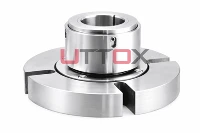
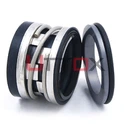
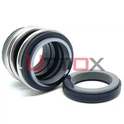
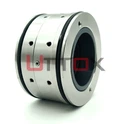
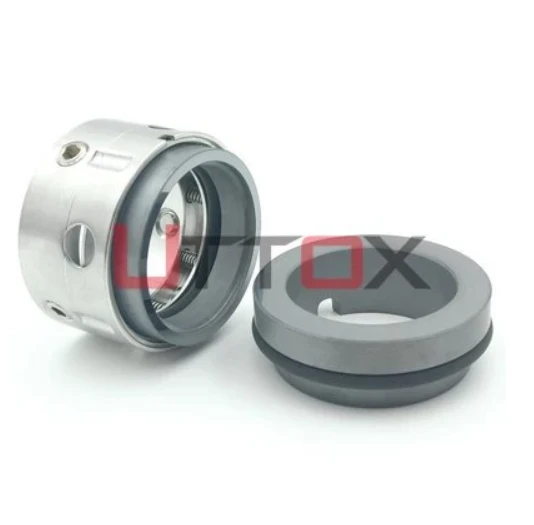
The 58U mechanical seal is an unbalanced, multi-spring sealing device that was carefully designed to meet international standards DIN 24960 and EN 12756. It has many small coil springs that spread the closing force evenly across the seal faces. This fixes the problem of face-loading being uneven that happens a lot with single-spring designs. This makes it very reliable in spinning machinery where shaft run-out and small vibrations are inescapable.
Core Design and Material Composition
A spinning face is pressed against a fixed seat by the seal, making a hydrodynamic film that keeps fluid from escaping. Its multi-spring design lets the shaft go as fast as 20 m/s and can handle pressures of up to 1.2 MPa when it's not balanced. Depending on the type of rubber used, the operating temperature ranges from -40°C to +200°C.
Carbon, ceramic, silicon carbide (SiC), and tungsten carbide (TC) are common face materials. The chemistry of the fluid determines which secondary closing elements are used, such as O-rings or PTFE wedge parts. Viton works well with most oil- and hydrocarbon-based media, but it needs FFKM for strong acids and solvents.
The 58U vs. 59U Structure Distinction
For general-use purposes, the 58U has an O-ring pusher design. The 59U, on the other hand, has a PTFE wedge part instead of an O-ring. This PTFE wedge seal is designed to work with corrosive substances like acids, alkalis, and strong chemical solvents, where regular elastomers would break down quickly. Since both versions have the same envelope size, they can be switched out inside the same equipment housing.
Applications and Benefits of the 58U Mechanical Seal
One of the best things about this type of ptfe wedge mechanical seal is how flexible it is. It's used by procurement engineers and maintenance supervisors in many different industries because it can adapt to different types of fluids and working conditions without needing major equipment changes.
Here are the primary industrial sectors where this seal delivers consistent performance:
Chemical Processing: The design with multiple springs keeps the seal faces closed even when the fluid pressure changes. It works well with acidic acids and alkalis in process pump systems when combined with SiC-vs-SiC hard face configurations. This is where the PTFE wedge version (59U) works best.
Petroleum Refining and Petrochemical Plants: Seals for refinery pumps need to be able to handle hydrocarbons and changing temperatures. The 58U mechanical seal works reliably in these conditions, which cuts down on unnecessary repair and increases uptime.
Water Treatment and Desalination: Seals on high-capacity reverse osmosis pumps are exposed to salt rust and particle contact that is rough. These systems have a long service life because they can be made of hard-face materials and have strong spring mechanisms.
Food, Pharmaceutical, and General Manufacturing: The seal fits easily into mixers and agitators where keeping things clean is very important. It comes in FDA-compliant rubber choices.
These examples show why the 58U mechanical seal is still a popular part for repair work around the world. Maintenance teams can control the total cost of ownership by lowering the risk of leaks, scheduling services more often, and easily swapping out face materials.
Comparing the 58U Mechanical Seal with Other Mechanical Seals
58U vs. 58M: What Changes?
For every uneven 58U, there is a balanced 58M. Both have a multi-spring structure that is similar, but the 58M is made for higher pressure situations where the uneven design would work too hard. If the pressure in your system stays below 1.2 MPa, the 58U mechanical seal should be fine and will save you money. After that point, the 58M is the right way to move up.
58U vs. Cartridge-Style Seals
It is easier to install cartridge seals, and they can self-align. However, they cost a lot more per unit and need more axial space. Because the 58U mechanical seal has a shorter axial length, it can be used in small pump housings where cartridge designs just won't work. For repair jobs that happen a lot, the difference in cost over a year of buying action is big.
When selecting between these options, the decision almost always comes down to three factors: system pressure, fitting room, and how often the seal needs to be replaced. Most of the time, the 58U configuration is the best mix between performance, price, and availability for normal centrifugal pump uses in chemical and industrial settings.
Installation, Maintenance, and Troubleshooting
Installation Preparation
Check that the shaft runout is within ±0.5 mm before fitting a 58U mechanical seal. Going beyond this limit is one of the most common reasons for face wear and leakage happening too soon. Make sure that all of the areas that touch are clean, and never use too much force when putting the seal onto the shaft. Putting a little grease on the O-ring or PTFE wedge part makes it easier to put together without hurting the seal.
Extending Seal Service Life
The pump's general maintenance plan should match up with the times between routine inspections. Keep an eye out for strange vibrations, temperature spikes near the seal, and any weeping that you can see around the gland. It's also important to store extra seals the right way. Elastomeric parts should be kept in cool, dry, ozone-free places for five to ten years.
Common Troubleshooting Points
Leakage at starting is often a sign of a dirty seal face or poor face seating. Weeping that doesn't stop during operation is usually a sign of too much shaft runout or a worn-out O-ring. The most common reason for installation problems is that the replacement seal doesn't fit properly in the original equipment bore. This is exactly why being able to interchange with DIN-standard configurations is so important when buying.
Procurement Guide: Buying and Sourcing the 58U Mechanical Seal
It takes more than just getting the cheapest 58U mechanical seal to find a good one. Maintenance supervisors with years of experience in the field always put delivery speed, accurate measurements, and real materials ahead of initial cost. This is because a failed seal at a crucial moment costs a lot more than the price difference between a premium and budget option for 58u seal replacement.
When evaluating suppliers, these criteria matter most:
Dimensional interchangeability: Full covering from 14 mm to 100 mm shaft sizes provides compatibility across your fleet of tools without having to order special parts.
Verified material composition: Silicon Carbide and Tungsten Carbide faces should come with proof that they can be tracked back to their original source.
Stock availability and lead time: Suppliers with steady inventory can ship within 48 hours, which is very important for repair plans that need to be done quickly.
Batch consistency: Tolerances that aren't the same from shipment to shipment are a well-known problem in the aftermarket seal space. Suppliers that use ISO 9001 quality management systems have lower batch variation that can be measured.
After-sales support: An active expert team that can check compatibility before buying can avoid mistakes that cost a lot of money during installation.
Aftermarket parts that work with John Crane Type 58U and 59U designs are easy to find and can save you money if you buy them from a reputable company. OEM seals can be three to five times more expensive than quality aftermarket seals. This makes verified aftermarket choices very appealing to service shops that are trying to make ends meet.
Conclusion
The 58U mechanical seal is known around the world as one of the most reliable ways to seal things in industrial repair. It can be used in chemical processing, oil refining, water treatment, and general manufacturing because it has multiple springs, works with a wide range of materials, and meets international standards. You can get the O-ring pushing type for general use or the PTFE wedge design for corrosive media, and both will work well as long as you get them from a reputable maker. Finding the right seal standard for your running conditions and working with a seller that keeps real stock and quick support is the easy way to cut down on unplanned shutdowns and lower long-term maintenance costs.
FAQ
1.What is the primary difference between the 58U and 59U seals?
The 58U has an O-ring pusher design that works well in most situations. The 59U uses a PTFE wedge element instead of a regular one, which makes it the best choice for working with aggressive or corrosive media where regular elastomers would break down.
2.Can this seal type handle abrasive fluids?
Yes. When you set up the seal faces with Silicon Carbide on top of Silicon Carbide (hard-on-hard), they are very resistant to wear from abrasive particles in slurry or particle-filled fluids.
3.How do I select the correct elastomer?
The chemical of the fluid and the working temperature affect the choice of material. Viton is good for media that are based on oil and hydrocarbons. When it comes to strong acids or active chemical solvents, FFKM has better chemical protection.
4.Why do multiple springs outperform a single-spring design here?
A single large spring gathers force at one point, while several small springs spread the closing force evenly across the seal face. This is better at adjusting for shaft run-out and vibration than a single large spring.
5.What shelf life should I expect from stored seal components?
Metal parts have an infinite shelf life as long as they are stored properly. If you keep elastomeric O-rings and PTFE elements somewhere cool, dry, and free of ozone, they should be used within five to ten years.
Source Your 58U Mechanical Seal from Uttox - Reliable Stock, Fast Dispatch
For more than 30 years, Uttox has been making mechanical seals for customers in more than 50 countries. As a reliable 58U mechanical seal supplier, we keep a steady stock of seals for 14–100 mm shaft sizes and can ship them within 48 hours. Before and after you buy, our engineering team offers free expert help. Visit www.uttox.com or email us at info@uttox.com to get a quote or make sure our products will work with yours right away.
References
1. Müller, H. K., & Nau, B. S. Fluid Sealing Technology: Principles and Applications. Marcel Dekker, 1998.
2. American Petroleum Institute. API Standard 682: Pumps - Shaft Sealing Systems for Centrifugal and Rotary Pumps (4th ed.). API Publishing Services, 2014.
3. European Sealing Association. A Guide to Mechanical Seals: Selection and Application. ESA Technical Publication, 2019.
4. British Standards Institution. BS EN 12756:2000 - Mechanical Seals: Principal Dimensions, Designation and Material Codes. BSI Standards, 2000.
5. International Organization for Standardization. ISO 9001:2015 - Quality Management Systems: Requirements. ISO, 2015.
6. Flitney, R. K. Seals and Sealing Handbook (6th ed.). Elsevier, 2014.