

If you run a pump repair shop or manage industrial equipment maintenance, you already know how critical the right mechanical seal is to keeping operations running. The john crane type 2 mechanical seal has long been a go-to choice across North American and Commonwealth markets - reliable, widely documented, and compatible with a broad range of centrifugal pumps. But with original parts carrying a premium price tag, more procurement managers are now evaluating high-quality equivalents that deliver comparable performance at a lower cost. This article walks through what makes the Type 2 design effective, how it compares against alternatives, and which equivalent seals are genuinely worth your consideration.

Understanding John Crane Type 2 Mechanical Seal Specifications and Performance
What Makes the Type 2 Design Stand Out
A single-spring, elastomer bellows non-pusher seal, the john crane type 2 mechanical seal is used. Its bellows design stops shaft stressing by stopping the seal and shaft from moving relative to each other. This is where most standard pusher-type seals fail. This makes it perfect for centrifugal pumps that deal with rough fluids, thick media, or situations where the shaft ends tend to move and vibrate.
The Type 2 seal can work in temperatures from -40°F to 400°F (-40°C to 205°C), based on the elastomer chosen (usually NBR, EPDM, or FKM), and pressures up to 425 psi (29 bar). This is according to scientific documentation that is widely used in the industry. Carbon, clay, silicon carbide, and tungsten carbide are some of the materials used for seal faces. These materials meet a wide range of fluid interaction needs.
Real-World Performance Across Industries
In wastewater treatment plants, HVAC systems, and food and beverage preparation lines, the john crane type 2 mechanical seal is frequently used. In wastewater applications, the non-clogging bellows design keeps submersible pumps running through slurry conditions that are rough and full of grit without the seal getting stuck. It doesn't leak for a long time in HVAC high-pressure hot water circulation systems because it can absorb temperature expansion and shaking.
Because of these performance traits, the Type 2 seal has become a standard, and companies that make similar seals work hard to make their goods match or beat it.
Comparing John Crane Type 2 Mechanical Seal and Its Equivalents
Type 2 vs. Type 1 and Type 3
The john crane type 1 mechanical seal works in a way that is similar to bellows, but the configuration of the springs and the operating area are different. Type 1 is often used in submersible pumps because it can handle sewage and fibrous slurries well because it doesn't clog. The Type 3 has a pusher-type design and a different elastomeric method, which makes it more likely for the shaft to fret when there is a lot of shaking.
The Type 2 design is still the best choice when the job needs a small axial area, a constant spring load across the seal face, and protection against debris buildup.
Type 2 vs. Cartridge Seals and Competitor Equivalents
Cartridge seals are easier to install because they are already put together and set, but they cost a lot more per unit. That difference in cost adds up quickly for repair shops that work on a lot of pumps every week. Similar products made by different companies have hit the market, claiming to be equivalent to john crane type 2 and interchangeably fit the original Type 2's dimensions. However, the quality of the materials and the consistency of the tolerances vary a lot between suppliers.
These are the parts where buying choices get complicated. Matching the outside measurements is only one part of the equation. If an equal will work similarly under long-term use, it depends on the quality of the elastomer, how flat the face is within two helium light bands, and the Shore hardness of the material used for the bellows.
Installation, Maintenance, and Troubleshooting of Type 2 Seals and Equivalents
Key Installation Practices
The difference between a seal that lasts a long time and one that fails quickly is how it was installed. Check the shaft diameter tolerance, the seal chamber bore, and the shaft sleeve for scoring before attaching any equivalent to a john crane type 2 mechanical seal. It is normal practice to use a water-soluble lube on elastomeric parts instead of petroleum-based ones, and all mating surfaces should be cleaned carefully.
When installing, make sure that the compression of the seal spring matches the setting dimensions given by the manufacturer. Over-compression speeds up face wear, while under-compression causes leaks when the pressure changes.
Routine Maintenance and Troubleshooting
Checking for external leaks, keeping an eye on the working temperature at the seal housing, and looking for strange vibration patterns should all be part of regular inspections. If a seal starts to leak soon after installation, it's usually because the face wasn't properly seated, the shaft wasn't lined up right, or the elastomer material wasn't right for the process fluid.
Before starting up a facility that deals with corrosive media, it is necessary to make sure that the bellows elastomer (NBR, EPDM, or FKM) is chemically compatible with the pumped fluid.
Procurement Guide: How to Source Type 2 Equivalents Effectively
Evaluating Suppliers Beyond Price
Price is the first thing that you should look at, but it shouldn't be everything. Request dimensional models with tolerances clearly stated, not just hypothetical values, when looking for a john crane type 2 seal equivalent mechanical seal comparable. Ask for material certificates and make sure you have proof of a face flattening test. Procurement managers have a good quality audit record when suppliers can show tracking paperwork that is linked to ASTM material standards.
In the repair business, lead time is just as important. Air freight from reliable overseas makers usually takes 7–10 business days, which is about the time it takes for most repair shops to turn things around. This can often be lowered even more if the suppliers keep a steady stock of finished goods.
Before you decide on a supplier, you should check these basic sourcing factors:
Dimensional interchangeability - fitting measurements must be a perfect match for the original Type 2 specs. This includes the shaft range, OD, and face thickness.
Material documentation - elastomer hardness grades, face material grade, and metallurgical traceability should be available on request.
MOQ flexibility - repair shops only need small amounts each time; sellers with low minimum order numbers make it much cheaper to keep stock.
English-language technical support - basic requirements include expert help in English, such as installation guides, cross-reference charts, and quick contact.
Payment method compatibility - being able to accept PayPal, credit cards, and wire transfers makes it easier for small to medium-sized repair businesses to make transactions.
These requirements work together to make a solid framework for checking out any new mechanical seal seller. If a seller can't meet all five, you should be very careful about making your first order with them.
Why Consider John Crane Type 2 Mechanical Seal Equivalents?
Over the past ten years, the market for Type 2 alternatives has grown a lot. Manufacturers with real engineering skills can now make seals that meet or beat OEM performance and size requirements, and they often cost 30–50% less than the original brand. For a repair shop that rebuilds dozens of pumps a year, that increase in margin is big.
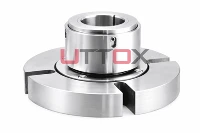
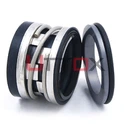
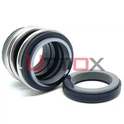
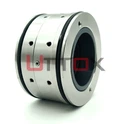
The UTTOX Type 2 mechanical seal is a good alternative that you should think about. UTTOX has designed the Type 2 with more than one spring arrangement and an elastomer bellows design instead of just copying the original's single-spring arrangement. This setup spreads the load across the seal face more evenly, which stops wear in specific areas and keeps the sealing consistent even when the pressure changes and the machine runs continuously.
The UTTOX Type 2 is made to work with medium- to heavy-duty pumps. If the seal fails on these jobs, the client will be angry and there will be an emergency callout. Its stable stock supply lets it be sent out quickly, and Uttox's technical support team offers English-language installation instructions and cross-reference documentation to make sure your device is compatible before you buy. Zhejiang Uttox Fluid Technology Co., Ltd. has been making mechanical seals for more than 30 years, so the product isn't a cheap copy but rather a real engineering investment.
Conclusion
Although the john crane type 2 mechanical seal is still the gold standard for closing industrial pumps, it is not the only reliable choice. Similar companies have raised the standards of their engineering and quality control, so procurement managers can now find options that can be used instead and work well in real-world situations. The UTTOX Type 2 meets the main needs of demanding applications with its multi-spring configuration and elastomer bellows design, while also offering clear cost benefits. If you need new seals for a pump repair job, it makes sense and is becoming more popular to look at a well-documented equivalent.
FAQ
1.Does the UTTOX Type 2 install in the same space as the original john crane type 2 mechanical seal?
Yes. The UTTOX Type 2 is designed to fit the same fitting space as the original john crane type 2 mechanical seal, including the range of shaft diameters, the size of the seal chamber, and the axial setting dimensions. You can ask for dimensional drawings to make sure they are compatible before you place your order.
2.What elastomer options are available for the UTTOX Type 2?
The UTTOX Type 2 comes with NBR, EPDM, and FKM elastomers to handle different fluids and temperatures. These are the same material choices that were used in the original Type 2 design.
3.What is the typical lead time for delivery to North America?
Standard air freight delivery to the US and Canada takes between 7 and 10 business days from the time of release. For urgent needs, there are options for faster shipping.
4.What is the minimum order quantity?
UTTOX has flexible MOQ arrangements that work for repair shops that buy a lot of parts. Send an email to info@uttox.com with the number and size of shafts you need for a quote.
5.Is English-language technical support available?
Yes, Uttox offers installation guides in English, charts that show how different products work together, and direct technical support for business-level uses.
Ready to Source a Reliable Type 2 Mechanical Seal? Contact Uttox Today
With 30 years of production experience and helpful English-language support, Uttox offers high-quality john crane type 2 mechanical seal alternatives. Our team at www.uttox.com can help you with your repair operation by providing reasonable price, measurement verification, and material paperwork. This is true whether you need a single replacement or a regular supply arrangement. Get in touch with a reliable mechanical seal manufacturer at info@uttox.com to get a quote.
References
1. John Crane Product Specification Sheet - Type 2 Elastomer Bellows Seal. John Crane Inc., 2022.
2. Pump Sealing Solutions: Selection and Application Guide. Hydraulic Institute, 2021.
3. Mechanical Seal Fundamentals. Fluid Sealing Association (FSA), 2020.
4. Industrial Maintenance & Plant Operation: Cost Reduction in Rotating Equipment. Putman Media, 2023.
5. Uttox Mechanical Seal Product Overview. Zhejiang Uttox Fluid Technology Co., Ltd., 2024.
6. API 682 Shaft Sealing Systems for Centrifugal and Rotary Pumps. American Petroleum Institute, 2014 (4th Edition).