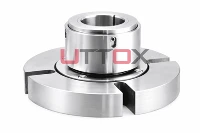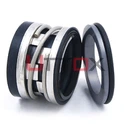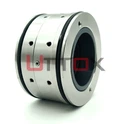


The M7N mechanical seal is a proven sealing solution engineered to prevent fluid leakage in rotating equipment across petrochemical, chemical processing, water treatment, and heavy manufacturing sectors. Built to DIN 24960 / EN 12756 standards, it uses a multi-spring and O-ring pusher design that delivers consistent sealing performance across a wide range of shaft sizes and operating conditions. Whether you are evaluating a direct replacement for existing pump systems or planning a large-scale maintenance overhaul, understanding this seal's design logic and application scope is essential for making a sound procurement decision.
Understanding the M7N Mechanical Seal: Design and Working Principles
How the Seal Works
The M7N mechanical seal works by keeping a precise, well-oiled contact surface between two curved seal faces, one of which rotates with the shaft and the other of which stays still in the housing. There are several coil springs that apply axial load to keep the faces touching. An O-ring elastomer seals the shaft and allows for some minor axial movement. This setup gets rid of the shaft wear that happens in older systems that used packing and greatly lowers the risk of leakage when the system is moving.
The Hydraulic Institute Standards (2023) say that mechanical seals are better than standard compression packing because they cut leakage rates by up to 99%. This makes them the best choice for controlled industrial settings.
Key Design Features
The multi-spring design spreads force evenly across the seal face, which is very helpful when the shaft bends or isn't lined up right, which can happen a lot in large-diameter pump applications with 14 mm to 200 mm shaft sizes. The O-ring pushing device lets the seal face "float," which makes up for axial runout without affecting face contact in burgmann m7n mechanical seal.
The choice of material directly affects which media the seal can be used with. Common combinations of face materials are:
Silicon Carbide (SiC) vs. SiC - useful for rough or corrosive materials in chemical and petrochemical work, with great resistance to wear and chemical inertness.
Carbon vs. Silicon Carbide - a cheap pair for clean fluids and water-based media where getting rid of heat is important.
Tungsten Carbide vs. Carbon - preferred in applications involving fine particles or moderate abrasives; carbon is better when working with these media.
When you choose an elastomer like EPDM, FKM (Viton), or PTFE, you can make the seal work with hot water, steam, solvents, oils, and highly active fluids. The multi-spring mechanical seal is a real workhorse in many industries because it can be used with a wide range of materials.
Applications and Maintenance of M7N Mechanical Seals for Optimal Performance
Where It Is Used
A lot of petroleum plants, refineries, water treatment plants, and food preparation lines use the M7N mechanical seal on centrifugal pumps, compressors, agitators, and mixers. In petrochemical service, an unexpected stop can cost tens of thousands of dollars per day. Operators depend on the proven dependability of this seal to keep things running smoothly.
When working with corrosive media, like acid or solvents, SiC/SiC face configurations keep the material from wearing out too quickly. The open multi-spring design doesn't get clogged easily in wastewater and slurry service, which is a big plus over bellows-type seals that tend to get solids build up in the springs.
Installation and Maintenance Best Practices
The single most important thing that affects how long a seal lasts is how it was installed. Here are the main things that repair workers should do:
Verify shaft axial runout before installing; check the shaft's axial runout as most M7N mechanical seals can handle axial play of about ±0.5 mm, but going over this limit speeds up face wear.
Clean all contact surfaces and avoid touching the seal faces with your bare hands, as skin oils can cause contamination in certain areas and uneven lapping.
Apply appropriate lubricant to O-rings while putting them together to keep them from tearing; be careful not to use lubricants that aren't compatible with the elastomer material.
Confirm correct spring compression according to the manufacturer's fitting plan to avoid over-compression, which causes too much heat, or under-compression, which lets air out.
The mean time between failures (MTBF) is directly increased by these actions. A well-installed M7N type seal can last more than 24,000 hours if the working conditions are ideal, which include correct alignment, enough cleaning, and the right amount of lubrication. Regular checks should look for leaks at the gland area, strange heat near the seal chamber, and changes in vibrations that could mean the face is wearing down or the spring is getting old.
Comparing M7N Mechanical Seal to Other Seal Types: Making the Right Choice
Engineers often compare the M7N mechanical seal to other options like the M5N, cartridge seals, and bellows seals. There are different trade-offs for each type.
The M5N doesn't have multiple coil springs; it only has one. The single-spring version is easier to put together, but it is more likely to fail if the shaft isn't lined up right, and it causes uneven face loading when the shaft width is bigger. The M7N's multiple springs make the load much more evenly distributed, which is why it is the best O-ring pusher mechanical seal for shafts larger than 50 mm.
Because cartridge seals are pre-compressed and can be installed more quickly, mistakes are less likely to happen during assembly. But they cost a lot more per unit and aren't as good at managing large inventories of extra parts, which is a big problem for equipment managers who are in charge of large pump companies.
Bellows seals get rid of the dynamic O-ring completely, which is helpful in media that are very cold or crystallizing, where the O-ring could harden or come out. Still, bellows can crack from fatigue when they are subjected to high cyclic axial movement, and they aren't usually good for using with rough materials.
The M7N is a good choice for standard industrial pump applications where both performance reliability and procurement efficiency are important because it has a balance of standard dimensions (EN 12756 / DIN 24960 mechanical seal), material flexibility, and a low unit cost.

Procurement Guide: Where and How to Buy M7N Mechanical Seals
Evaluating Suppliers
When equipment managers buy a lot of pump shaft seals, the quality of the seller is just as important as the seal specifications. Some important things to look for are ISO 9001 certification, the ability to test materials in-house (for example, reports on the hardness and surface finish of SiC and tungsten carbide faces), and proven experience in your industry with eagle burgmann m7n seal.
Since 1990, Uttox (formerly Zhejiang Uttox Fluid Technology Co., Ltd.) has been making M7N mechanical seals for customers in over 50 countries. For straight interchangeability, the UTTOX M7N is an engineered equal to the EagleBurgmann M7N. It was made to the same DIN 24960 / EN 12756 dimensions. It works as a proven replacement for industrial pump seals, and full material documentation is available upon request.
Cost and Inventory Considerations
Original equipment manufacturer (OEM) seals for big pumps can cost a lot per unit, which can make maintenance budgets tight. If procurement teams get an equivalent-to-Burgmann M7N seal from a reputable company like Uttox, they can lower the cost per unit without affecting the accuracy of measurements or the integrity of the material. This difference in cost becomes important for petrochemical owners who have to keep track of extra parts for various pump trains over the course of a year.
Uttox keeps a lot of standard shaft sizes in stock, ranging from 14 mm to 200 mm. This allows for quick delivery times, which are very important when unexpected failures need a quick fix. The engineering team can make custom setups, such as shaft diameters that aren't standard, face material choices that aren't standard, or elastomer grades that aren't standard.
Conclusion
The M7N mechanical seal is still one of the most common ways to seal industrial rotating equipment, and for good reason. It is flexible, reliable, and easy to find because it has a multi-spring design, an O-ring pushing architecture, and is compatible with EN 12756 measurement standards. The UTTOX M7N offers technical credibility backed by 30 years of production experience. This is true whether your goal is to lower the cost of big overhauls, build a reliable spare parts inventory, or qualify a new supplier for petrochemical service. Picking the right seal and supplier will protect both the safety of operations and the uptime of the equipment.
FAQ
1.How often should an M7N mechanical seal be replaced?
Replacement times depend on how the machine is being used. MTBF can be more than 24,000 hours in systems that are clean and properly oriented. If the service is rough or hot, it's best to check it once a year for the M7N mechanical seal.
2.Can this seal handle high-temperature or corrosive environments?
Yes. If you use the right face and elastomer materials, like SiC faces and FKM O-rings, it works well in temperatures ranging from -20°C to 220°C and pressures up to 16 bar.
3.How do I detect early seal failure?
Keep an eye out for leaks that you can see at the gland plate, higher temperatures near the seal chamber, or more shaking. Most of the time, these signs show that the face or spring is wearing out before a catastrophic failure happens.
4.Is customization available for non-standard shaft sizes or special media?
Uttox can make custom setups for media with unusual size or needs. For a custom solution, let the engineering team know the size of your shaft, the operating pressure, the temperature range, and the properties of the fluid.
5.Is the UTTOX M7N interchangeable with the EagleBurgmann M7N?
Yes. As long as it meets the dimensions required by EN 12756 and DIN 24960, it can be used in place of most existing pump systems.
Partner with Uttox for Reliable M7N Mechanical Seal Supply
Since 1990, Uttox has been a trusted M7N mechanical seal maker for industrial users all over the world. For tough jobs in the petrochemical and process industries, our engineering team offers free technical advice, documentation for material certification, and custom seal solutions. We help equipment managers lower the risk of buying things and keep processes running smoothly by having a large collection, quick delivery, and quality control that is backed by ISO 9001. You can email our team at info@uttox.com or go to www.uttox.com to get a price or talk about the needs of your unique application.
References
1. Hydraulic Institute. Mechanical Seal Guidelines for Pumps. Hydraulic Institute Standards, 2023.
2. European Sealing Association. Mechanical Seals: Materials and Application Guidelines. ESA Technical Report, 2022.
3. Nesbitt, B. Handbook of Pumps and Pumping. Elsevier, 2006.
4. Lebeck, A. O. Principles and Design of Mechanical Face Seals. Wiley-Interscience, 1991.
5. DIN/EN 12756 Standard: Mechanical Seals - Principal Dimensions, Designation and Material Codes. European Committee for Standardization (CEN), 2000.
6. Flitney, R. K. Seals and Sealing Handbook (6th ed.). Elsevier, 2014.