

If you source industrial sealing components for the North American market, you already know the challenge: OEM pricing for the john crane type 1 mechanical seal can strain procurement budgets, especially when you need consistent volume to keep downstream repair shops and plant equipment running. The good news is that high-quality, fully interchangeable equivalents exist - and understanding how to evaluate them can unlock meaningful margin improvements without compromising performance. This guide walks through specifications, comparisons, procurement strategy, and what to look for when selecting a reliable john crane type 1 mechanical seal alternative.

Understanding John Crane Type 1 Mechanical Seal Specifications and Performance
What Makes This Seal Design Stand Out
For general-purpose centrifugal pump uses, the John Crane Type 1 mechanical seal is a rubber bellows seal with a single spring. While pusher-type seals depend on dynamic O-rings, the bellows design can handle shaft end-play, runout, and small misalignment without mechanical hang-up, which is a common point of failure in fluid environments that are rough or thick. The operating range is usually up to 425 psi (29 bar), and the temperature range is from -40°F to 400°F (-40°C to 205°C), based on the material chosen [1].
Material Selection and Industry Suitability
Material compatibility is a big part of how many procurement decisions work or don't work. The John Crane Type 1 mechanical seal is frequently offered with 304/316 stainless steel hardware, carbon or silicon carbide seal faces, and elastomers like NBR, EPDM, or FKM. For gritty slurries or higher-pressure jobs, silicon carbide faces are best because they greatly increase the mean time between failures (MTBF). They work well for light-duty water and general fluid service [2].
The right choice of material protects both the seal and the equipment further down the line, so stating the elastomer grade in relation to the fluid being sealed is an important step that must be included in any purchase plan.
Comparing John Crane Type 1 Mechanical Seal with Alternatives and Competitors
Bellows vs. Pusher Seals: A Functional Difference That Matters
The structure difference accounts for the majority of the performance difference when comparing the John Crane Type 1 mechanical seal to cartridge seals, Type 2 designs, or regular pusher setups. With pusher seals, there is a moving secondary seal that can get scale or particle growth on it, which can make the seal face stick up and fail early. By making the secondary seal static, the full-convolution bellows design completely gets rid of that weakness.
While cartridge seals are easier to install, they are also much more expensive-often 3 to 5 times as much as an equivalent bellows seal when bought in bulk. The single spring mechanical seal type 1 form factor is a good mix between reliability and unit cost for wholesalers who sell to pump repair shops across North America.
Lifecycle Cost as a Procurement Metric
Depending on the size and material, the John Crane Type 1 mechanical seal typically costs between $40 and $120 per unit at the distribution level. By buying equivalent seals from reputable makers, you can cut the cost per unit by 60–75% while still meeting the same material and size standards. When you buy between 1,000 and 5,000 units a year, those savings add up to a big margin advantage [3].
Not just the unit price should be included in a lifecycle cost study. It should also include how often the seals need to be replaced, the work needed to install them, and any costs related to downtime. When you use equivalents that exactly match OEM dimensional standards, you cut down on installation mistakes and guarantee claims, which keeps the total cost of ownership low.
Procurement Insights: Purchasing John Crane Type 1 Mechanical Seal Equivalents
Verifying Interchangeability and Dimensional Accuracy
Before committing to large orders, the most important thing for North American distributors to check is the accuracy of the shaft diameter in inch increments, usually from 1" to 3.5". Metric-to-inch conversion mistakes can happen during production if the seller hasn't been checked out, and even small deviations from tolerances can lead to fitting problems in the field.
Request full English-language dimensional models, material certificates (MTRs), and proof of agreement with ANSI/ASME B73.1 pump standards or DIN 24960, if appropriate, when evaluating a source for a John Crane Type 1 mechanical seal replacement. As part of any sample qualification procedure [4], precise gaging should be used to check the dimensional tolerances as well as the stated specs.
Managing Lead Times and Inventory Strategy
Ocean freight takes about 25 to 35 days to get from Asia to ports in North America. That time is cut down to 7–10 days by air freight, but it costs more. For smart inventory planning, sea freight orders of john crane type 1 seal should be spread out over 90-day demand cycles, with a small air freight buffer for when replacements need to be sent right away. Suppliers with stable in-house stock make it much less likely that your production wait time will change.
Important things to make sure of with any possible suppliers:
Inch-size stock availability for shaft diameters ranging from 1" to 3.5", with half-inch increments.
English-language technical documentation such as installation directions, dimension models, and material specs.
Batch consistency controls including optical flatness testing on seal sides and rubber durometer proof to ensure each batch is the same.
Intellectual property compliance to escape problems with U.S. Customs; products should be sold and labeled as equivalents instead of John Crane name products.
Why Consider John Crane Type 1 Mechanical Seal Equivalents?
The UTTOX Type 1 Solution: Built for Volume Replacement Procurement
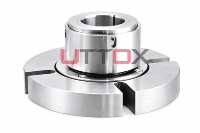
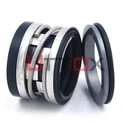
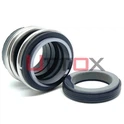
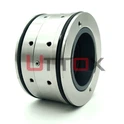
Uttox was founded in 1990 and is based in Zhejiang, China. For more than 30 years, it has sold mechanical seal parts to customers in more than 50 countries. For wholesalers and pump repair companies that need uniform quality on a large scale, the UTTOX Type 1 mechanical seal is built as a direct-fit equal to the John Crane Type 1 mechanical seal.
Here are the main reasons why the UTTOX Type 1 is a good choice for procurement:
Inch-standard dimensional accuracy across the entire 1"–3.5" shaft diameter range, confirmed to North American ANSI tolerances, which eliminates conversion errors.
Single spring, elastomer bellows construction that mirrors the original design and keeps the self-aligning and non-sticking features.
Carbon and silicon carbide face options with NBR, EPDM, and FKM elastomers available to cover most common industrial service combinations.
ISO-compliant quality control process that checks seal face flatness, hydraulic pressure, and all dimensions before shipment.
Stable warehouse inventory which lets you keep lead times regular and lowers your risk of supply disruptions.
The technical team at Uttox responds in English and quickly reviews drawings, suggests materials, and helps with applications [5]. The rubber bellows mechanical seal type 1 configuration has been proven to work well in wastewater, food-grade, pulp and paper, and general water service because the non-pusher design handles shaft movement and abrasive media reliably.
Navigating the Future of Mechanical Seal Procurement
The industrial sealing market is going toward more advanced composite face materials, condition tracking integration, and stricter fluid containment rules in areas such as water treatment and food preparation. Purchasing managers who build relationships with manufacturers who are technically skilled now will be better able to handle these changes in the future. More and more, predictive maintenance programs need exact records of John Crane Type 1 mechanical seal specs and when they need to be replaced, making full English-language technical packages a necessity [6].
Conclusion
For single-spring bellows seals in industrial pumps used in North America, the John Crane Type 1 mechanical seal continues to be the gold standard. When you buy qualified alternatives that have been through strict dimensional verification, proper material paperwork, and clear IP compliance, they perform just as well as OEM parts but cost a lot less. For distributors who buy hundreds or thousands of units a year, that difference in cost directly affects their overall margin and ability to compete. Getting the right suppliers the first time is very important.
FAQ
1.What is the john crane type 1 mechanical seal used for?
This is a single-spring elastomer bellows seal commonly used in centrifugal pumps for treating wastewater, processing food, making paper, and other general industrial tasks. Its non-pusher design works well with rough and thick fluids.
2.How do I verify that a Type 1 equivalent matches OEM dimensions?
Ask for full-size drawings in inches and make sure they meet ANSI/ASME B73.1 or DIN 24960 standards for tolerances. Before placing large orders, it is strongly suggested that you check a physical sample using precision gaging.
3.What face materials are best for abrasive service?
Silicon carbide sides paired with FKM elastomers work best with gritty slurries or fluids that are harsh on chemicals. Carbon faces can be used for normal fluid and water service.
4.Is it legal to import Type 1 equivalents into the United States?
It is allowed to bring in similar seals as long as they are not marked or sold with John Crane brands. Legally, products must be sold as suitable alternatives instead of original OEM parts in order to follow U.S. Customs and brand rules.
5.What shaft sizes does the UTTOX Type 1 cover?
The UTTOX Type 1 mechanical seal is offered for shaft diameters between 1" and 3.5", which is the range of sizes that most North American pumps need.
Partner with Uttox for Reliable John Crane Type 1 Mechanical Seal Supply
Every package from Uttox comes with more than 30 years of experience making things. Uttox, a reputable John Crane Type 1 mechanical seal manufacturer, provides inch-accurate equivalents, full English documentation, stable inventory, and quick technical support-everything a distributor in North America needs to establish a reliable supply chain. To get samples or a quote for a large order, contact the Uttox team at info@uttox.com or go to www.uttox.com right now.
References
1. Crane, John Crane Inc. Type 1 Elastomer Bellows Mechanical Seal - Product Specifications. John Crane Technical Documentation, 2022.
2. Flitney, R.K. Seals and Sealing Handbook, 6th Edition. Elsevier, 2014.
3. Hydraulic Institute. Pump Life Cycle Costs: A Guide to LCC Analysis for Pumping Systems. Hydraulic Institute, 2020.
4. American National Standards Institute. ANSI/ASME B73.1 - Specification for Horizontal End Suction Centrifugal Pumps. ASME, 2020.
5. Uttox Fluid Technology Co., Ltd. UTTOX Type 1 Mechanical Seal - Product Overview and Technical Specifications. Uttox, 2024.
6. European Sealing Association. Best Practice Guidelines for Mechanical Seal Selection and Maintenance. ESA Technical Report, 2021.