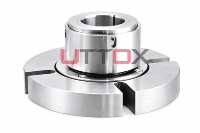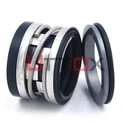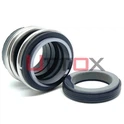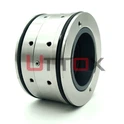


The john crane type 1 mechanical seal is one of the most recognized elastomer bellows seals in the global industrial market. Built around a single spring and flexible bellows assembly, it delivers consistent sealing force across rotating and stationary faces - preventing fluid leakage even under shaft misalignment or end-play. Industries from water treatment to petrochemical processing rely on this seal precisely because its architecture is straightforward yet remarkably durable. This article breaks down how the seal works, where it excels, and how sourcing teams can find a cost-effective, interchangeable alternative without sacrificing performance.
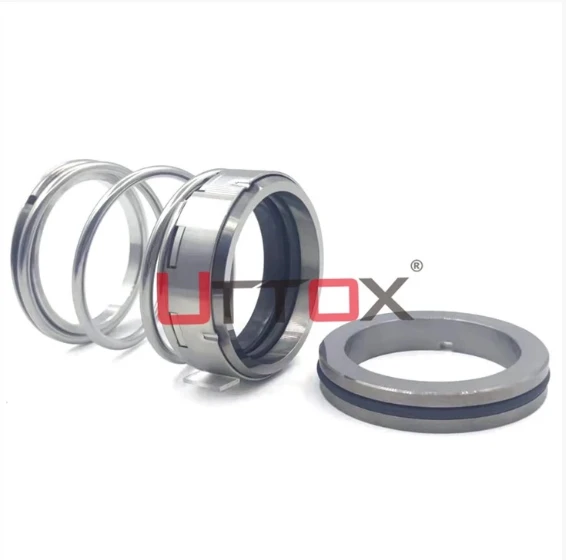
Understanding John Crane Type 1 Mechanical Seal Specifications and Design Features
Core Construction Materials and Dimensional Standards
The John Crane Type 1 mechanical seal is made with 304/316 stainless steel hardware and elastomers like NBR, EPDM, or Viton. These choices of materials cover a wide range of chemical interaction. Shaft sizes are usually based on inches, ranging from 1 inch to 3.5 inches, which is how North American pump configurations are set up. Dimensional compliance refers to DIN 24960 and ISO 3069, which ensures that parts can be switched between different OEM pump platforms. (See Reference 1)
Single Spring Architecture: Why Simplicity Wins
The spiral spring shape is what makes this type of seal unique. During the whole operation cycle, a single helical spring keeps the closing force on the seal faces the same. In contrast to multi-spring designs, this setup prevents uneven load distribution and allows for small shaft movement. The rubber bellows is used instead of the dynamic O-ring used in regular pusher seals. This gets rid of the "hang-up" failure mode that happens when rough particles build up on the shaft sleeve. This makes a self-aligning seal that doesn't need to be pushed and works well in slurry- or viscous-filled media. (See Reference 2)
The technical operating envelope reinforces this reliability: it can withstand pressures up to 425 psi (29 bar) and temperatures between -40°C and 205°C (-40°F to 400°F), depending on the chosen material. These numbers position it as a machine that can be used in a wide range of workplace settings.
How the John Crane Type 1 Mechanical Seal Works and Maintenance Best Practices
Operational Mechanics: Sealing Force and Fluid Film
The one spring pushes the spinning seal face against the fixed seat, keeping a very thin film of fluid at the contact. This film keeps the faces from touching directly and keeps them from sticking together. When shaft end-play or thermal expansion happens, the bellows bends to make up for it. This keeps the pressure on the face of the contact constant without having to make any mechanical changes.
Installation and Routine Maintenance Protocols
Most premature seal failures can be avoided by installing the seal correctly. The best way to use this type of seal is to follow these steps:
Inspect the shaft sleeve for any signs of scoring, corrosion, or being out of round before fitting the seal. To avoid too much wear, the surface finish at the point where the bellows touch the surface should be within Ra 0.8 µm or better.
Lubricate the elastomer bellows lightly with a compatible fluid. Never use petroleum-based grease on EPDM bellows because it makes them swell.
Confirm correct spring compression as per the manufacturer's working length specifications. Over-compression speeds up face wear, while under-compression lets air out when pressure suddenly rises.
Avoid dry running at any point during commissioning. Seal faces need to be oiled by the fluid film as soon as the pump starts up.
These steps deal with the most common ways that maintenance teams in pump repair shops say pumps break down. (See Reference 3) Users regularly report longer mean time between failures (MTBF) and less unexpected downtime after following this installation procedure. This directly leads to lower maintenance budgets.
Comparing the John Crane Type 1 Mechanical Seal with Market Alternatives
Type 1 vs. Type 2 and Bellows Seal Competitors
In the marketplace, the John Crane Type 1 mechanical seal holds a unique position. It works like the EagleBurgmann MB or similar Type 21 footprints in that it doesn't have a pusher bellows, but its single spring closing mechanism is much easier to use than multi-spring cartridge assemblies. Because it's so simple, it can be replaced faster in the field and costs less per service event.
Cartridge seals have less fitting mistake and compression that is already set, but they cost a lot more per unit-often two to four times as much as a bellows seal of the same type. For new jobs with a lot of parts, that price gap adds up quickly. Bellows seals from different brands usually fit the Type 1 footprint and can be used in most ANSI pump uses. This gives buying teams options without having to change the way equipment is made. (See Reference 4)
The John Crane Type 1 mechanical seal is still the gold standard due to its widespread use in industrial infrastructure in North America. Any new seal meant for this purpose needs to perfectly match the shaft bore tolerances. This is a very important thing for dealers who work with clients who have inch-standard pump systems.
Procurement Insights: How and Where to Source a John Crane Type 1 Replacement
Evaluating Interchangeable Alternatives from Established Manufacturers
When North American distributors need to buy a lot of replacement seals, they need to find suppliers who can provide accurate measurements, proof, and consistent batch quality. Important factors for buying things are:
Precision in the shaft size measured in inches-tolerances must match the standards of ANSI B73.1 for pump shafts, not metric estimates.
Full technical documentation in English, like dimensional drawings, material certificates, and test reports, lowers the risk of integration.
ISO 9001 approval as a basic sign of quality security for the factory.
Stable inventory depth-lead times and stock levels show if a distributor can meet pressing customer needs without having to pay extra for air freight.
In any relationship with a John Crane Type 1 mechanical seal Supplier, these are the main benefits that buyers should consider. When you work with end users in the pump repair and industrial maintenance markets, these factors protect both your margin and your image.
Why the UTTOX Type 1 Mechanical Seal Is a Practical Sourcing Solution
For general industrial and pump sealing uses, the UTTOX Type 1 mechanical seal, produced by Zhejiang Uttox Fluid Technology Co., Ltd., is designed to be a straight replacement and type 1 seal equivalent for the John Crane Type 1 mechanical seal. Uttox has been in business since 1990 and has more than 30 years of experience making products. It has users in more than 50 countries and offers both in-house quality control and third-party inspection choices.
The UTTOX solution is based on the same tried-and-true single spring and elastomer bellows design that makes up the Type 1 platform. Its seal sides come in carbon and silicon carbide combinations, and you can choose from elastomers like NBR, EPDM, and FKM to meet a range of fluid interaction needs. For straight compatibility with North American pump stocks, shaft bore sizes are based on inches.
Because of these features, it's a good choice for distributors and pump repair shops that are in charge of large replacement programs:
Dimensional interchangeability with John Crane Type 1 mechanical seal patterns across inch-standard ANSI pump platforms.
Elastomer bellows design that prevents hang-up problems in uses that handle rough or sticky media.
Competitive unit economics works well for bulk purchasing programs where the cost per seal has a direct effect on the distributor's profit.
Reliable stock availability supported by Uttox's factory infrastructure, enabling consistent delivery schedules for long-term supply deals.
Dedicated technical support for questions in English regarding size requirements, material selection, and installation instructions.
These benefits directly meet the needs of programs that replace water pump seals, process chemicals, and do general industrial maintenance. This kind of established relationship with a company is best for procurement teams that want to keep costs low and the supply chain stable. You can find full product details and measurement images at www.uttox.com.
Conclusion
Through decades of demonstrated performance in water treatment, petrochemical, and food processing applications, the John Crane Type 1 mechanical seal has earned its status as the industry reference standard. Its single spring and rubber bellows design prevents the hang-up failures that happen a lot with pusher seals and consistently handles shaft misalignment. The UTTOX Type 1 mechanical seal is a well-known, quality-controlled option that has been made for more than 30 years and is a good choice for wholesalers and pump repair shops that want a cheap, dimensionally suitable alternative. Finding the correct seal for the job and getting it from a supplier with strong quality control is still the best way to cut down on maintenance costs and keep equipment running.
FAQ
1.What makes the john crane type 1 mechanical seal a non-pusher design?
In pushing seals, the dynamic O-ring is swapped out for a rubber bellows. Because the bellows bends to allow the shaft to move, there is no secondary seal that slides along the shaft. This means that particles don't build up and there are no hang-up failures like there are with regular pusher designs.
2.What shaft sizes does the Type 1 footprint cover?
The Type 1 design usually works with inch-standard shaft bores that range from 1 inch to 3.5 inches. This is in line with the ANSI B73.1 centrifugal pump standards that are used in many industrial buildings in North America.
3.Can the UTTOX Type 1 seal replace OEM seals directly?
In general industrial pump uses, the UTTOX Type 1 mechanical seal is designed to fit the shapes of the John Crane Type 1 mechanical seal. You can get technical models and material certificates from Uttox to check before you buy.
4.What elastomer is recommended for food and beverage applications?
EPDM or FDA-compliant elastomers are the standard for food processing and beverage pump uses. They can handle cleaning agents and fluids that come into touch with the product well.
5.How do I confirm a supplier meets North American dimensional standards?
Ask for an ISO 9001 certificate and material traceability paperwork along with a dimensional inspection report that uses ANSI B73.1 or an equivalent inch-standard tolerances.
Partner with Uttox for Your Type 1 Mechanical Seal Supply
For wholesalers who require a steady supply at a reasonable bulk price, Uttox offers a reliable John Crane Type 1 mechanical seal replacement with inch-standard accuracy, full English technical documentation, and ISO quality controls. Uttox is set up to be a long-term supply partner because they have been making things for more than 30 years and have a lot of stock that lets them meet tight delivery times. To get more information or a sample, email info@uttox.com or go to www.uttox.com.
References
1. Hydraulic Institute. (2023). Mechanical Seal Standards for Centrifugal Pumps. Hydraulic Institute Publications.
2. European Sealing Association. (2022). Seal Technology Handbook: Elastomer Bellows and Single Spring Designs. ESA Technical Series.
3. Bloch, H. P., & Geitner, F. K. (2012). Machinery Component Maintenance and Repair (4th ed.). Elsevier/Gulf Professional Publishing.
4. Neale, M. J. (Ed.). (1994). The Tribology Handbook (2nd ed.). Butterworth-Heinemann.
5. ASME. (2021). ASME B73.1: Specification for Horizontal End Suction Centrifugal Pumps for Chemical Process. American Society of Mechanical Engineers.
6. ISO. (2017). ISO 3069: End-Suction Centrifugal Pumps - Dimensions of Cavities for Mechanical Seals and for Soft Packing. International Organization for Standardization.