

If you're sourcing a john crane type 1 mechanical seal for your pump repair or distribution business, the supplier you choose matters just as much as the seal itself. This single spring, elastomer bellows seal is one of the most widely specified components in North American industrial pump systems - from water treatment plants to chemical processing facilities. Getting the right replacement at the right price, with the right documentation, is what separates a profitable sourcing decision from an expensive headache.
Understanding John Crane Type 1 Mechanical Seal: Specifications & Features
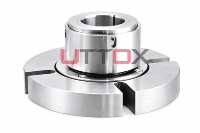
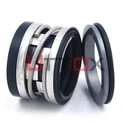
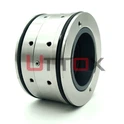
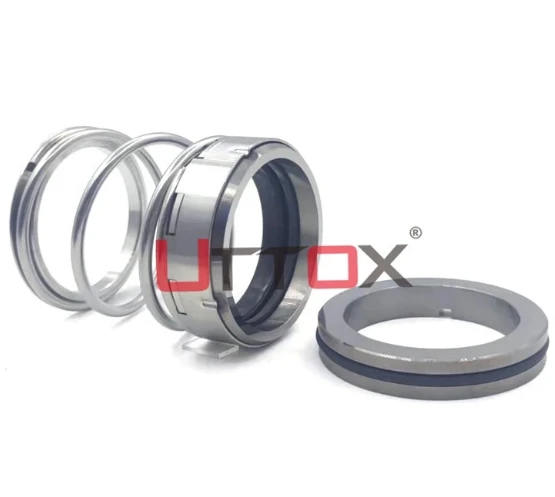
It's helpful to know exactly what you're getting before you place an order. The john crane type 1 mechanical seal is a single spring rubber bellows seal that doesn't push. It was made for general-purpose centrifugal pumps and spinning equipment.
Core Design Principles
Instead of a dynamic O-ring, the seal has a full-convolution rubber bellows. This means that it can fix itself for shaft end-play, run-out, and small alignment problems without needing a second slide seal. This gets rid of the common "hang-up" failure mode in pusher-type seals, in which particles build up and hold the seal face in place.
Technical Performance Parameters
Depending on the material, the seal can work in temperatures from -40°C to 205°C (-40°F to 400°F) and pressures of up to 425 psi (29 bar). Carbon, silicon carbide, and tungsten carbide are all common face materials. Most hardware is made of 304 or 316 stainless steel. With elastomers in NBR, EPDM, and Viton (FKM) types, you can use them with a lot of different process fluids.
Compliance and Quality Standards
The dimensions of this type of seal must be made in a way that meets DIN 24960 and ISO 3069 standards. Manufacturers you can trust test the optical flatness of seal faces by measuring them within one to two light bands. They also test all metal parts for hydraulic pressure and positive material identification (PMI).
Comparing John Crane Type 1 Mechanical Seal with Alternatives
When making a catalog of replacement parts for pump repair customers in North America, it's important to compare products as part of your research.
Type 1 vs. Type 2 Mechanical Seals
Instead of a single compressed spring, the Type 2 seal has a set of curved springs, which makes it more balanced in some high-speed situations. The Type 1's single spring design, on the other hand, is easier to install and keep up, which is helpful for situations where a lot of replacements need to be done in general industry work.
Type 1 vs. Cartridge Seals
Cartridge seals have suction that is already set and can be installed faster in some cases, but they cost a lot more per unit and aren't as easy to switch between pump types. The Type 1 rubber bellow mechanical seal format gives distributors who buy a lot of replacement parts more cost-effective options and a wider range of uses.
Type 1 vs. Competitor Bellows Seals
The Eagle Burgmann MG1 and other Type 21-format seals, as well as the single spring mechanical seal type 1, all have the same standard size. This ability to be switched out is a big plus when it comes to buying things, because it means that a well-sourced Type 1 compatible seal can fill more than one OEM replacement spot in a single order.
Installation, Maintenance, and Troubleshooting Guidance
If you don't put a good seal right, it will fail soon. Knowing how to install something will keep your customers and your reputation as a distributor safe.
Installation Best Practices
Before they are put together, the shaft and seal area must be clean and free of burrs. The elastomer bellows should be pushed onto the shaft until it reaches the compression length specified by the manufacturer. If the bellows are compressed too much, they can crack, and if they are compressed too little, the face contact load is reduced. Before fitting, you should always lightly grease the bellows with a fluid that works with it.
Maintenance Schedule
Although the john crane type 1 mechanical seal requires little upkeep, it is still a good idea to check it every so often. Every three to six months, check the gland area for leaks that you can see. If the seal housing gets too hot, it could mean that the engine is dry running or the face is wearing down. When working with rough materials, like when moving garbage, inspections should happen more often.
Common Failure Modes and Fixes
Dry running is the main reason why people hurt their faces too soon. The second most common failure is when the process fluid and elastomer bellows don't mix chemically. If there are early fails in the field, the first thing that should be done is to check the rubber grade against the fluid that is being sealed. If the service is rough or under a lot of pressure, carbon sides should be switched out for silicon carbide to increase the average time between fails.
Sourcing and Procurement: Finding the Right Supplier
Finding a john crane type 1 seal replacement that is both cheap and made by a reputable company is where North American wholesalers and pump repair companies make the most money.
What to Look for in a Supplier
A good Type 1 mechanical seal provider should be able to give you full technical datasheets in English, detailed drawings in inches, and certifications for the materials they use. Being certified by ISO 9001 is a minimum requirement. When you buy from suppliers with their own quality labs that do face flatness testing, pressure testing, and elastomer durometer verification, you lower your risk of failures in the field that make your warranty costs go up.
Here are the core evaluation criteria procurement professionals typically apply:
Dimensional accuracy in inch sizes: Shaft diameters from 1 to 3.5 inches must exactly match North American pump specs, with no mistakes when converting from metric to inch.
Interchangeability documentation: The seller should confirm that the product will fit directly with standard pump brands and give you cross-reference tables.
Stock availability: You can be sure of your customer lead times when you have a single spring pump seal type 1 supplier with a stable inventory.
IP compliance: To escape problems with U.S. Customs, replacement seals must be sold under the supplier's own name and not as John Crane products.
Why UTTOX Is Worth Evaluating
Since 1990, UTTOX (Zhejiang Uttox Fluid Technology Co., Ltd.) has been making mechanical seals. The company has been making products for more than 30 years and has customers in more than 50 countries. They offer a Type 1 compatible seal that can be used directly in general industrial pump applications.
The UTTOX Type 1 mechanical seal has a single spring and an elastomer bellows structure, which is the same as normal Type 1 style seals in terms of how they work. It works with standard inch-sized shafts, comes with full English documentation, and has full technical support. Before being sent out, their in-house quality control process checks the dimensions, makes sure the face is flat, and tests the product's resistance to pressure. Stock levels are kept high so that return orders can be delivered quickly.
Making an Informed Decision: Procurement Best Practices for B2B Clients
It's not enough to just find the cheapest unit price to set up a reliable supply chain for new mechanical seals.
Align Product Specs to Your Customer Base
Make a list of the shaft sizes and elastomer grades your customers need before you choose a supplier. When you need to change a john crane type 1 mechanical seal, one that comes in sizes from 1 to 2.5 inches and is made of NBR and Viton may be more useful than one with a wider range of sizes and longer wait times.
Sample Testing Before Volume Orders
Before you place your first order of 500 to 2,000 units, ask for samples and test them on your own or with a customer. This is how North American distributors normally do things, and any supplier worth working with will support it without any problems.
Build for Repeat Orders
The most cost-effective way to buy something is from a source who knows your standard sizes, keeps stock for you, and can talk to you easily in English when you have a technical question. It takes time to set up first sales. After the first order goes through, future purchases should go through faster-usually in two to four weeks, which includes sea freight.
Conclusion
To find a good john crane type 1 mechanical seal replacement for the North American market, you need three things: the right measurements in inches, quality paperwork that has been checked, and a seller who communicates clearly and ships on time. UTTOX has all three. They have been making things for more than 30 years, offer full English technical help, and keep their stock stable, making them a good place for any wholesaler to start building a solid Type 1 replacement supply chain. Visit www.uttox.com to review product specifications and request a quote.
FAQ
1. What pressure and temperature range does a Type 1 mechanical seal handle?
Up to 425 psi (29 bar) and temperatures from -40°C to 205°C (-40°F to 400°F) are what a Type 1 format elastomer bellows seal can normally handle. The exact limits depend on the face and elastomer materials that are chosen.
2. Can the UTTOX Type 1 seal replace a john crane type 1 mechanical seal directly?
Yes. The UTTOX Type 1 mechanical seal is made to be a straight substitute in general industrial and pump settings. It has an inch-sized shaft and a single spring bellows structure that are the same as the john crane type 1 mechanical seal.
3. What elastomer options are available?
The most common choices are NBR, EPDM, and Viton (FKM), and they can handle most water, chemical, and oil-based process fluids used in North American pump systems.
4. How do I verify that a supplier's seal is IP compliant?
Make sure that the replacement seal has the manufacturer's brand name on it and not an OEM name that is protected by trademarks. Also, ask for a compliance statement. Items made by UTTOX are only sold under the UTTOX name.
5. What face materials should I choose for rough use?
When the process fluid has solids in it or is under a lot of pressure, silicon carbide or tungsten carbide faces are much better than standard carbon because they last a lot longer.
Get a Quote for Type 1 Mechanical Seal Replacement - Contact Uttox Today
Uttox has supplied mechanical seals to wholesalers and companies that fix pumps in more than 50 countries since 1990. As a verified john crane type 1 mechanical seal manufacturer, we offer inch-size compatible Type 1 seals with full English documentation, consistent QC, and stable stock for quick repeat fulfillment. If you're starting a replacement seal product line or want to add to it, reach out to our technical team directly at info@uttox.com or visit uttox.com to request samples, datasheets, or a volume pricing quote.
References
1. Grundfos Engineering Guidelines - Mechanical Seal Selection and Application, Grundfos Technical Publication, 2021.
2. Hydraulic Institute - Mechanical Seal Guidelines for Centrifugal and Rotary Pumps, HI Standard 9.6.4, 2022.
3. ASME - Fluid Sealing Technology: Principles and Applications, ASME Press, 2019.
4. British Fluid Power Association - Sealing Technology in Industrial Pump Systems, BFPA Technical Report, 2020.
5. SKF Group - Sealing Solutions Engineering Handbook, SKF Publication, 2022.
6. ISO - End Face Mechanical Seals - Principal Dimensions and Designation System, ISO 3069:2000, International Organization for Standardization, 2000.