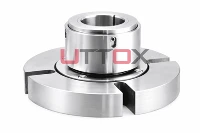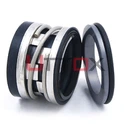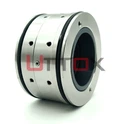


Mechanical seals are the backbone of reliable pump system operation. They stop unwanted liquid leakage and prevent costly premature equipment breakdowns across industrial facilities. As production plants push for higher efficiency and longer uptime in 2026, plant managers, procurement teams and maintenance crews need a clear practical understanding of mechanical seal selection and application.
The John Crane 502 mechanical seal has long proven itself in real-world pump applications. Built with a durable elastomer bellows design, it absorbs shaft movement and holds steady even under vibration and minor shaft misalignment. This guide breaks down how mechanical seals work, how to pick the right model for your pump, and practical ways to optimize your entire pump system - so you can make confident, cost-effective purchasing and maintenance decisions.
Understanding Mechanical Seals in Pump Systems
A mechanical seal keeps process fluid contained while allowing the pump shaft to rotate freely. It forms a dynamic sealing barrier between the rotating shaft and the stationary pump housing. Precision-engineered seal faces stay pressed together under consistent spring load, creating an almost emission-free interface.
This is a key advantage over traditional packing glands, which rely on controlled leakage for lubrication and cannot meet today's low-emission operational standards.
The Critical Role of Mechanical Seals in Industrial Operations
When mechanical seals fail in systems handling hazardous, high-temperature or high-value fluids, the consequences are immediate: unplanned production shutdowns, environmental contamination and serious safety hazards. In petroleum and chemical facilities, a single seal failure can trigger downtime costing thousands of dollars per hour.
Industry data shows 35–40% of all pump failures stem directly from sealing issues, making proper selection and routine maintenance non-negotiable. Tighter environmental regulations, including stricter VOC emission limits, are pushing facilities to replace old packing with modern low-leakage mechanical seals.
Today's advanced sealing technology is no longer just an operational upgrade - it is essential for regulatory compliance, workplace safety and long-term cost control in modern industrial plants.
Key Specifications and Dimensional Standards
The John Crane 502 mechanical seal covers shaft sizes from 12 mm up to 100 mm, with a maximum working pressure of 25 bar and a wide temperature range of -40°C to +180°C. A maximum surface speed of 15 m/s delivers stable performance for most standard pump setups.
Its compact bellows construction fits installations with limited gland depth, making it ideal for retrofit and replacement projects. Face material options include silicon carbide, tungsten carbide and carbon, delivering outstanding durability in harsh operating conditions.
Elastomer choices such as Viton, EPDM, NBR, FFKM and AFLAS ensure full compatibility with a broad range of process liquids. Stainless steel hardware boosts corrosion resistance, extending service life across continuous-duty industrial applications.
Material Selection for Challenging Environments
Choosing the right seal materials always starts with chemical compatibility and actual working conditions.
Viton is a trusted option for hydrocarbons and general chemical service. EPDM performs exceptionally well in hot water and alkaline environments but is not suitable for oil-based fluids. FFKM delivers superior resistance to extreme temperatures and aggressive chemicals, though it comes at a higher price point.
For abrasive slurry services, silicon carbide face combinations provide excellent wear resistance. One major advantage of the John Crane 502 design is the elimination of dynamic O-rings, which commonly trap solid particles and cause premature wear in slurry applications.
Matching materials accurately avoids unexpected early failure and keeps seal performance consistent in demanding process industries.
How John Crane 502 Mechanical Seal Works and Its Application in Pumps
Understanding the working principle and real pump applications of the John Crane 502 helps plant teams optimize overall system reliability.
Its flexible elastomer bellows design removes the dynamic secondary seal found in traditional pusher-style seals, eliminating one of the most common failure points. When the full-convolution bellows compresses against the shaft or sleeve, it acts as both a built-in spring and a static seal at the same time.
Standard O-rings often slide back and forth along the shaft during normal operation, leading to fretting corrosion over time. The non-pusher layout of the 502 avoids this issue entirely.
Operational Principles and Sealing Mechanism
Sealing performance relies on two precision-lapped faces held firmly together by spring pressure. One face rotates with the pump shaft, while the other remains stationary inside the gland. A thin fluid film between the faces reduces friction, dissipates heat and minimizes leakage.
The bellows naturally compensates for face wear and maintains consistent sealing load. Its self-aligning design easily accommodates minor shaft misalignment and runout, keeping operation stable under fluctuating loads. Internal system pressure enhances face loading, while the balanced structure prevents overheating and excessive wear.
This robust mechanism lets the John Crane 502 maintain steady performance across variable loads and tough industrial environments.
Installation Procedures and Best Practices
Correct installation directly determines seal lifespan and running performance.
Shaft surface finish should be maintained below 0.8 micrometers Ra. Every component must be thoroughly cleaned to prevent particle contamination and face damage. Always handle the elastomer bellows with care to avoid nicks or deformation during fitting.
Use only lubricants compatible with the selected elastomer type, and avoid generic greases that can degrade rubber compounds. Align the mechanical seal and gland plate accurately, keeping all tolerances within manufacturer recommended ranges. Poor alignment causes uneven face wear and early seal failure.
Always verify positioning with precision tools before final tightening - this simple step prevents most operational issues right after startup.
Troubleshooting Strategies and Maintenance Tips
Early leak detection is the best way to avoid major seal and pump failures. Following standard leakage benchmarks allows maintenance teams to spot abnormal conditions quickly. Excessive running temperature usually points to lubrication issues or face contact problems, requiring immediate shutdown to prevent permanent damage.
Bellows failure often comes from chemical attack or persistent misalignment, while uneven wear patterns signal vibration problems or installation errors. Routine inspections and component analysis help locate root causes instead of just replacing parts.
Monitoring operating parameters, maintaining proper alignment and following correct lubrication practices greatly improve long-term reliability. Proactive maintenance tailored to the John Crane 502 design cuts unplanned downtime and extends service life in demanding industrial settings.
Applications of John Crane 502 Mechanical Seal in Water and Chemical Pumps
Thanks to its reliable sealing performance and durable non-pusher elastomer bellows design, the John Crane 502 is widely specified for water treatment, wastewater systems and chemical process pumps.
In water treatment facilities, it is commonly fitted to centrifugal pumps and circulation pumps handling clean water, raw wastewater, sludge and treatment chemicals. The seal reduces shaft wear, tolerates slight misalignment, and runs reliably around the clock in continuous-duty setups.
For chemical processing plants, the John Crane 502 suits pumps transferring mildly corrosive liquids and industrial chemicals under moderate temperature and pressure. Its bellows structure removes dynamic O-ring movement, lowering fretting corrosion and boosting sealing reliability during long-run operations.
Built-in self-alignment compensates for normal vibration and shaft movement, minimizing leakage risk and extending overall equipment service life. With compact dimensions, straightforward installation and low maintenance demands, the John Crane 502 delivers a cost-effective, high-efficiency sealing solution for water treatment and chemical processing pump systems.
Comparing John Crane 502 with Other Mechanical Seals on the Market
Equipment specifications often list specific seal model numbers, but procurement teams always compare alternative options to balance cost, availability and supply chain stability. Making smart purchasing decisions means understanding design differences, functional limits and ideal application ranges for each seal type.
Design Differences Between Model 502 and 503
The Type 502 uses a single bellows layout, while the Type 503 adopts a multi-spring structure for higher face loading capacity. The 503 handles higher working pressure and greater shaft end movement but requires more installation space inside the gland.
The 502 is compact, easier to maintain and more budget-friendly for standard industrial conditions. Final selection depends on available gland space, system pressure requirements and continuous-duty demands. For general industrial service, the John Crane 502 offers simplicity and proven reliability, while the 503 is reserved for heavier-duty high-load applications.
Performance Comparison with Competitive Products
Many competing brands offer similar bellows-style seals with overlapping performance ranges. Real differences come down to raw material quality, machining precision and structural optimization.
Total cost of ownership includes installation labor, expected service life and long-term parts availability. Aftermarket equivalent seals deliver solid cost savings while maintaining full dimensional compatibility. When properly specified, they match original performance perfectly for non-critical applications.
The John Crane 502 remains an industry benchmark for consistent reliability, while quality aftermarket alternatives offer flexibility for cost-sensitive projects without sacrificing daily operational efficiency.
Total Cost of Ownership Analysis
True total cost covers upfront purchase price, installation labor, maintenance frequency and the financial impact of unexpected downtime. Longer-lasting seals reduce replacement cycles and cut ongoing labor costs.
In industrial operations, downtime expenses often far exceed the price of the seal itself, making reliability the top priority for critical process systems. Premium original seals are fully justified for high-risk applications, while cost-effective alternatives work well for auxiliary and non-critical service.
Maintaining multiple qualified suppliers also reduces supply chain disruption risks. The John Crane 502 strikes an ideal balance between initial cost and long-term reliability, fitting a wide range of industrial pump applications.
Procurement Considerations for John Crane 502 Mechanical Seal
Sourcing John Crane 502 mechanical seals requires careful evaluation of supply channels, equipment reliability, regulatory compliance and long-term maintenance costs. When selecting suppliers, procurement managers evaluate pricing, lead time, quality guarantees and after-sales technical support.
Trusted Purchasing Channels and Supply Options
Authorized official distributors supply certified original units with full warranty and professional technical backup - the safest choice for critical process equipment. Reputable aftermarket suppliers offer dimensionally identical equivalents that fit as direct drop-in replacements with no modification needed.
Well-selected aftermarket alternatives commonly deliver 30–40% cost savings while matching fit and function exactly. Choosing the right channel depends on how critical the application is, budget limits and the level of technical support required.
Lead Times, Warranty Terms, and Global Support
Standard common sizes are usually available for fast shipping within days, while fully customized configurations may require several weeks of lead time. Keeping critical seal sizes in on-site inventory minimizes downtime risk during unexpected failures.
Standard warranty coverage typically protects against manufacturing defects, excluding damage from improper installation or misuse. Established brands maintain global support networks to ensure product availability and technical assistance across multiple regions. Reliable suppliers deliver consistent product quality and ongoing support to keep your pump systems running smoothly with John Crane 502 seals.
Industry Certifications and Compliance Standards
Certifications such as ISO 9001 validate structured quality management systems, while full material traceability ensures compliance with industrial and customer requirements. Installations in regulated sectors may require additional FDA or pharmaceutical-grade material certifications.
Procurement teams should always verify that selected seals meet all local and industry standards. Confirming compliance at the sourcing stage avoids operational risks and ensures full regulatory adherence, especially when deploying John Crane 502 seals in high-standard critical environments.
Optimizing Mechanical Seal Performance and Longevity in Pump Systems
Seal service life heavily relies on installation quality, stable operating conditions and structured maintenance routines. Proactive asset management lowers total ownership costs and extends maintenance intervals significantly.
Maintenance Strategies and Inspection Techniques
Regular scheduled inspections catch leaks, overheating and abnormal noise early before they escalate into major failures. Tracking performance trends allows planned predictive maintenance instead of emergency reactive repairs.
Bearing health directly impacts seal lifespan, as excess vibration rapidly damages precision seal faces. Proper lubrication and effective flush systems support consistent cooling and stable running performance. Implementing predictive maintenance programs noticeably extends the service life of John Crane 502 mechanical seals and cuts unplanned downtime.
Environmental Factors Affecting Seal Performance
Temperature swings can degrade elastomer materials over time, while sudden pressure spikes place unnecessary stress on seal components. Controlled startup procedures and dedicated pressure protection systems reduce shock loading and failure risk.
Chemical contamination accelerates material degradation, requiring strict process control of fluid composition and operating parameters. Monitoring environmental conditions closely ensures seals operate safely within their designed limits. The John Crane 502 delivers its best long-term performance when these external factors are properly managed.
System-Level Optimization for Enhanced Uptime
Overall pump system design directly influences mechanical seal behavior and lifespan. Avoiding cavitation, maintaining optimal flow rates and following standard operating procedures reduce unnecessary seal stress.
Running pumps continuously outside their design parameters is one of the leading causes of premature seal failure. Collecting and analyzing performance data reveals operational trends and clear improvement opportunities. Optimizing system conditions at the pump level boosts reliability, extends the working life of John Crane 502 seals and reduces overall maintenance spending over time.
Conclusion
How you select, install and maintain mechanical seals directly impacts pump system safety, operational reliability and long-term maintenance expenses. By understanding seal design fundamentals, correct installation methods and performance optimization tactics, procurement and maintenance teams can make smarter decisions that cut downtime and control overall costs.
The Type 502 elastomer bellows seal is field-proven across a wide spectrum of industrial environments. Qualified aftermarket replacements also offer viable budget-friendly options for non-critical service applications.
Industrial facilities will continue moving toward higher efficiency and lower emission standards. Investing in quality sealing solutions and following industry best practices pays off through reduced maintenance workload, higher plant uptime and full regulatory compliance.
Frequently Asked Questions About Mechanical Seals in Pump Systems
1. Can elastomer bellows seals handle vacuum applications?
Elastomer bellows seals work reliably in vacuum service, depending on the exact vacuum level. The integrated bellows provides steady spring force to keep seal faces in contact regardless of pressure direction. Deep vacuum applications may require internal support springs or special modified layouts. For most standard industrial vacuum ranges, conventional elastomer bellows designs perform perfectly well.
2. What causes premature bellows failure in chemical services?
Most early bellows failures stem from chemical incompatibility between the process fluid and the selected elastomer material. Evaluation must include not just the main process media, but also trace contaminants, temperature fluctuations and cleaning chemicals used during maintenance. Rough handling during installation can also create stress points and micro-cracks, especially if sharp edges are dragged across bellows convolutions during fitting.
3. How do I verify seal compatibility with existing equipment?
Compatibility is confirmed by matching overall dimensional specifications to your existing seal chamber. Key measurements include shaft diameter, gland bore size and gland depth. Seal chamber dimensions can be found in original equipment manuals or measured directly from your current installed seal. Reputable aftermarket equivalents match OEM envelope dimensions exactly, allowing direct drop-in replacement with no machining or modification required.
Source Your Mechanical Seal Solutions from a Trusted Manufacturer
Uttox specializes in manufacturing high-performance mechanical seals built to meet global industry standards - including direct-fit John Crane Type 502 equivalents engineered for seamless equipment replacement.
With over 30 years of manufacturing experience and customers across more than 50 countries, Uttox supplies reliable John Crane 502 mechanical seal solutions at competitive pricing without compromising quality or performance. Our in-house technical team provides free application support to help you select the ideal seal configuration, whether you manage demanding chemical processing, critical power generation assets or large-scale water treatment plants.
We maintain large in-stock inventories for fast global delivery and also offer custom engineered solutions for unique non-standard requirements. Professional technical expertise, strict quality assurance and responsive customer service make Uttox a dependable long-term partner for procurement managers sourcing mechanical seals.
Reach out via email at info@uttox.com or visit www.uttox.com to discuss your mechanical seal requirements and request product samples for on-site testing.
References
Lebeck, A.O. (1991). Principles and Design of Mechanical Face Seals. Wiley-Interscience Engineering Publications.
Mayer, E. (1977). Seals and Sealing Handbook. Newnes-Butterworths Technical Publications.
Summers-Smith, J.D. (1992). Mechanical Seal Practice for Improved Performance. Institution of Mechanical Engineers, London.
Flitney, R.K. (2007). Seals and Sealing Handbook. Fifth Edition, Elsevier Advanced Technology.
Nau, B.S. (1997). "Mechanical Seal Face Materials," Proceedings of the Institution of Mechanical Engineers, Part J: Journal of Engineering Tribology, Vol. 211, pp. 165-183.
Hydraulic Institute (2019). ANSI/HI 9.6.6 Rotodynamic Pumps Guideline for Mechanical Seal Installations for Centrifugal and Rotary Pumps. American National Standards Institute.