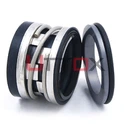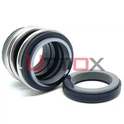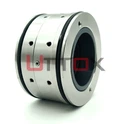


Plants save money, protect the environment, and keep workers safe when their industrial pump systems don't leak. Mechanical seals are very important for reaching this goal of zero leaks because they keep moving and fixed pump parts from touching each other. When it comes to standard solutions, the John Crane 502 mechanical seal is the gold standard for rubber bellows designs. It has self-aligning features that fix issues with shaft misalignment and end play. This tried-and-true technology helps OEM makers, support teams, and dealers cut down on downtime while still meeting strict government rules in the power generation, chemical processing, and water treatment sectors.
Understanding Mechanical Seals and Their Benefits in Leak-Free Pump Systems
Mechanical seals keep process fluids from leaking along moving shafts in pumps, compressors, and regulators. They do this by acting as dynamic seals. Modern mechanical seals make a nearly perfect seal by pressing together precisely-lapped faces with hydraulic and mechanical forces. Traditional packing lets controlled leaks happen.
Why Leak-Free Operation Matters in Industrial Environments
There is more and more pressure on process businesses to get rid of fugitive pollution and stop the release of dangerous materials. A chemical company with just one leaking pump can lose thousands of dollars worth of product every year, get fined by the government, and damage the environment. These problems can be solved by mechanical sealing technology, which keeps a rotating seal ring on the pump shaft in touch with a fixed seal ring inside the pump housing. The very small space between these very flat surfaces-usually measured in micrometers-only lets a thin film of lubrication exist, which stops large amounts of fluid from leaking.
Core Benefits of Advanced Mechanical Sealing Solutions
High-quality mechanical seals boost performance in many ways. Seals prevent impurities and fluid loss, extending equipment life and reducing bearing and shaft damage. Replace seals every few months instead of annually to save maintenance expenses. This is particularly true when elastomeric bellows designs eliminate common failure points like blocked passages and rusty springs.Packing glands need regular cooling water flows, whereas mechanical seals consume less flush fluid. This improves energy economy. It's simpler to prove environmental compliance when emissions monitoring indicates no leakage. This helps plants maintain operating licenses and avoid penalties.Due to its full-convolution rubber bellows architecture, the John Crane 502 mechanical seal prevents shaft stressing issues that plague pusher-type seals. The design facilitates shaft run-out and axial movement without losing face contact. In shaking or heat expansion circumstances, this is advantageous.
In-Depth Look at 502 Mechanical Seal Specifications, Materials, and Performance
Knowing the technical details of Type 502 mechanical seals helps engineers and procurement managers fit the seal's abilities to the needs of the application. The Uttox Type 502 mechanical seal is a cheaper option that has the same performance as the original equipment and is compatible with its specs.
Operating Limits and Dimensional Range
Type 502 seals support shaft sizes from 12 mm to 100 mm, covering most centrifugal pump applications. Operating temperatures range from -40°C to +180°C, with pressure capability up to 25 bar and speeds reaching 15 m/s. These limits suit medium-duty industrial services like water treatment and chemical transfer. The single spring mechanical seal design allows consistent use across varied duties, simplifying inventory and maintenance planning. Its compact bellows construction fits confined seal chambers, especially in retrofit scenarios where space constraints prevent use of bulkier pusher seals.
Material Options for Harsh Chemical Services
Material selection directly impacts durability in aggressive environments. Common face combinations include carbon/ceramic for clean fluids, silicon carbide pairs for abrasive slurries, and tungsten carbide for extreme wear and chemical exposure. Elastomer choices-Viton, EPDM, NBR, FFKM, and AFLAS-provide flexibility across chemical and temperature ranges. The John Crane 502 mechanical seal standard supports these variations, enabling precise matching to process conditions. Stainless steel components, typically SS304 or upgraded alloys, ensure corrosion resistance, allowing reliable operation in industries ranging from wastewater to petrochemical processing.
Performance Characteristics That Matter to Plant Engineers
Elastomer bellows designs eliminate dynamic O-rings, reducing friction and failure risks. The bellows acts as both spring and secondary seal, simplifying construction. Self-alignment compensates for shaft misalignment and vibration, maintaining face contact under dynamic conditions. The John Crane 502 mechanical seal excels in compact installations and slurry handling due to its non-clogging design. These features enhance reliability, reduce maintenance frequency, and improve performance in challenging environments where conventional pusher seals often fail.
Installation, Maintenance, and Troubleshooting for Optimal Performance
When mechanical seals are installed correctly, they last as long as the manufacturer says they will. Even high-quality seals can fail early if the wrong steps are taken during installation and parts are damaged, or if mistakes during setup cause working conditions that are not within the design limits.
Installation Best Practices for Elastomeric Bellows Seals
Proper installation ensures seal longevity. Shaft surfaces must be clean, smooth, and free of defects that could damage elastomers. Run-out should be checked and corrected before installation. Light lubrication compatible with process fluids prevents damage during assembly. The John Crane 502 mechanical seal requires correct compression setting to balance face load-too little causes leakage, too much increases wear. Even tightening of gland bolts prevents misalignment. Following these practices minimizes early failures and ensures optimal sealing performance.
Maintenance Protocols to Maximize Seal Life
Routine inspections detect early signs of wear. Monitoring temperature, vibration, and leakage trends helps identify developing issues. Seal faces, elastomers, and metal parts should be checked for wear, cracking, or corrosion. The John Crane 502 mechanical seal benefits from proper flush systems to maintain cooling and lubrication. Regular maintenance of these systems prevents overheating and contamination, extending seal life and reducing unplanned downtime.

Common Failure Modes and Troubleshooting Solutions
Seal failures often stem from contamination, misalignment, or incorrect material selection. Sudden leaks indicate mechanical damage, while gradual leakage suggests wear or chemical attack. Face wear patterns reveal operational issues such as misalignment or poor lubrication. Elastomer degradation points to chemical incompatibility or temperature extremes. The John Crane 502 mechanical seal rarely fails when correctly selected and installed, making troubleshooting focused on system conditions rather than design flaws.
Comparing Type 502 with Market Alternatives
When making decisions about what to buy, it helps to know how different seal styles work in different situations. While the Type 502 mechanical seal design has clear benefits, comparing it to other options helps to define its best uses.
Elastomeric Bellows Versus Metal Bellows Designs
Metal bellows seals handle higher temperatures and aggressive chemicals but require precise installation and cost more. Elastomer bellows designs like the John Crane 502 mechanical seal offer flexibility, easier installation, and lower cost. They tolerate misalignment better and perform reliably in most industrial applications below extreme temperature limits, making them a practical choice for general service.
Aftermarket Alternatives Delivering Value
Aftermarket equivalents provide similar dimensions and material options at lower cost. The John Crane 502 mechanical seal standard ensures compatibility, allowing direct replacement without modification. Savings of 30–50% are common, especially across large installed bases. Reliable manufacturers maintain quality through strict testing and certification, ensuring performance comparable to OEM products.
Application-Specific Selection Criteria
Seal selection depends on application priorities. Wastewater systems favor non-clogging, wear-resistant designs. Chemical processes require precise material compatibility. Food and pharmaceutical industries demand hygienic materials. The John Crane 502 mechanical seal adapts to these needs through configurable materials, making it versatile across industries.
Procurement Guide: Sourcing Quality Type 502 Equivalents
Cost optimization, supply dependability, and expert help are all important parts of good procurement strategies. Knowing the buying scene helps buyers make smart choices that are in line with their business's needs.
Identifying Qualified Suppliers
Reliable suppliers demonstrate certifications, testing capabilities, and engineering support. ISO-certified manufacturers ensure consistent quality. The John Crane 502 mechanical seal equivalents from experienced producers provide dependable performance backed by technical expertise. Supplier evaluation should include material verification, production capability, and application support.
Lead Times and Inventory Management
Standard seals are often available from stock, while custom configurations require production time. Strategic inventory planning reduces downtime risks. The John Crane 502 mechanical seal benefits from standardized sizing, allowing easier stocking and faster replacement during maintenance cycles.
Total Cost of Ownership Considerations
Evaluating lifecycle cost is essential. Longer-lasting seals reduce labor, downtime, and replacement frequency. The John Crane 502 mechanical seal offers strong value when balancing initial cost with durability and service intervals. Cost analysis should include installation, maintenance, and operational impact.
Warranty and After-Sales Support
Warranty terms vary, typically covering manufacturing defects but excluding misuse or incorrect installation. Strong after-sales support improves reliability through failure analysis and technical guidance. The John Crane 502 mechanical seal performs best when backed by responsive supplier support, ensuring long-term operational success.
Conclusion
Using reliable mechanical sealing technology to keep pumps from leaking saves the environment, cuts down on costs, and makes sure that industrial buildings stay in line with regulations. The Type 502 elastomeric bellows seal design provides proven performance as a standard mechanical seal through self-aligning flexibility, non-clogging construction, and accommodation of shaft movement that causes premature failure in less forgiving designs. Multiple face types and elastomer compounds in the materials make it possible to fit specifications to a wide range of chemical and temperature conditions. Aftermarket options from reputable companies like Uttox offer similar performance at a lower price, allowing buyers on a budget to buy without losing reliability. Long-term value is maximized by strategic buying methods that look at total ownership costs instead of just purchase price while keeping essential extra parts readily available.
FAQ
1. What is the typical service life of a Type 502 mechanical seal in water service?
When installed and kept properly, Type 502 mechanical seals in clean water systems can usually work nonstop for 3 to 5 years. Water quality (suspended solids content), working temperature, and shaft state are all things that affect how long something lasts. When it comes to rough water, hard face combinations like silicon carbide last longer than softer carbon-ceramic pairs.
2. Can elastomeric bellows seals handle vacuum conditions?
In mild vacuum situations, Type 502 mechanical seals work consistently because the elastomer bellows keeps the face loading steady through material flexibility instead of relying on atmospheric pressure. For deep vacuum services below 100 mbar absolute, you might need to talk to someone to make sure you have enough stopping force, but most industrial vacuum conditions are fine.
3. How do I select the correct elastomer material for my chemical service?
Check your process fluid against chemical compatibility charts that seal makers give you. VITON can deal with a lot of acids and most fuels. EPDM works well with acids, hot water, and steam. When cost is an issue, FFKM can repel all chemicals. Limits on temperature also affect the choice of elastomer-make sure that the highest process temperature stays 20 to 30 degrees Celsius below the elastomer's grade to give yourself a safety cushion.
Partner with Uttox: Your Trusted Type 502 Mechanical Seal Manufacturer
Uttox offers low-cost Type 502 mechanical seal options backed by 30 years of experience making them and shipping them to more than 50 countries around the world. Our replacement seals are the same size and shape as the original equipment, but they cost 30–50% less to buy and don't affect performance. We keep a lot of standard sizes in stock so that we can send them quickly, and we can also make changes for specific uses. Our expert engineering team provides John Crane 502 mechanical seal technical support that helps you choose the best seals and fix problems in the field. You can get sample seals before you commit to buying a lot of them, so you can see how well they work in your unique case. Contact us at info@uttox.com or go to www.uttox.com to talk about your sealing needs with a Type 502 mechanical seal provider that cares about customer satisfaction and dependability.
References
1. Lebeck, A.O. (1991). Principles and Design of Mechanical Face Seals. John Wiley & Sons, New York.
2. Mayer, E. (1977). Mechanical Seals: Third Edition. Newnes-Butterworth, London.
3. Summers-Smith, J.D. (1992). Mechanical Seal Practice for Improved Performance. Mechanical Engineering Publications Limited, London.
4. Flitney, R.K. (2007). Seals and Sealing Handbook: Fifth Edition. Elsevier Advanced Technology, Oxford.
5. Nau, B.S. (1997). "Mechanical Seal Face Materials," Proceedings of the Institution of Mechanical Engineers, Part J: Journal of Engineering Tribology, Vol. 211, pp. 165-183.
6. Pecht, G.G. (2001). "Industrial Pump Seal Selection and Application Guidelines," Chemical Engineering Progress, Vol. 97, No. 8, pp. 52-59.