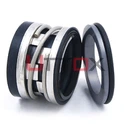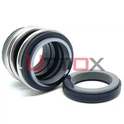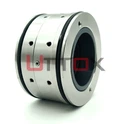


When machines work in harsh circumstances, the right sealing option can mean the difference between them working reliably and breaking down and costing a lot of money. The 2100 mechanical seal stands out because it is made of a unitized rubber bellows design that fixes common problems in industrial pump systems, like shaft fretting, leaking, and the fact that they are hard to maintain. This seal is designed to work in temperatures ranging from -20°C to +180°C and pressures of up to 12 bar. It has become the standard for all-purpose centrifugal pumps used in HVAC, chemical processing, water treatment, and other areas. It delivers reliable performance when it counts most.
Overview of the 2100 Mechanical Seal Series
Precision Engineering for Demanding Environments
The 2100 series is a careful improvement on seal technology. It is based on an elastomer bellows structure that gets rid of the moving O-rings that are common in older pushing seals. A common issue in the industry is shaft damage from grinding wear and seal hang-up caused by deposit buildup. This design choice directly addresses these issues.The small, self-contained design of this seal makes it very useful for OEM makers and servicing teams. The unitized assembly makes installation easier and can handle shaft misalignment and axial movement, which are typical problems in spinning equipment. We've seen this design work well in places where engineers have a hard time with fitting accuracy and limited room.
Operating Parameters and Material Selection
Purchasing managers can better match seals to specific uses when they know about the technical limit. With speeds up to 13 m/s, the UTTOX 2100/2100K works well with shafts ranging in size from 10 mm to 75 mm. This makes it possible to use a wide range of pump designs without having to do any special engineering.The choice of material is very important for how long a seal lasts. You can choose a seal face made of resin carbon for water uses, silicon carbide (SiC) for abrasive slurries, or tungsten carbide for the harshest chemical conditions. Elastomer options like VITON, EPDM, NBR, FFKM, and AFLAS are chemically compatible with a wide range of fluids. SS304 stainless steel is used to make metal parts because it is resistant to rust in most industrial fluids. Instead of making choices that don't work for every situation, these mixes of materials let engineers make seals that can withstand certain process conditions.
Real-World Performance Across Industries
Chemical processing plants benefit from the seal's ability to handle rough media without causing the face to wear away too quickly. Municipal water facilities like how well it works in clean water and wastewater uses, where ease of use and low upkeep make operations more efficient. Its small size makes it useful in HVAC systems with tight pump housings, and FDA-compliant elastomer types are used in food and beverage processing for clean uses.The fact that they can be used with John Crane Type 2100 types makes them more useful for retrofit jobs. Maintenance teams can find other suppliers without having to rethink seal chambers or change the way they are installed. This lowers the risk of buying and makes the supply chain more flexible.
Troubleshooting & Maintenance of the 2100 Mechanical Seal
Common Issues and Root Causes
Leakage is still the most obvious way that a seal fails, but knowing what's really going on stops problems from happening again. Damage to the seal face is often caused by dry running during starting. When there isn't enough oil, the heat from the engine produces cracks or warps in the sealing surfaces. When chemical compatibility is wrongly estimated or working temperatures are higher than the material's limits, elastomers break down. Misalignment, poor torqueing, or contamination introduced during assembly are common mistakes that lead to mechanical damage in systems using a john crane 2100 mechanical seal. We've seen that many early fails are caused by mistakes in the selection process rather than problems with the product itself. Even well-designed seals don't work well when buying teams order them without fully considering fluid qualities, changes in temperature, or pressure spikes.

Proactive Maintenance Practices
Regular inspections greatly increase the life of seals. Visual checks for tears or buildup of waste find problems before they become catastrophic. Bearing state monitoring stops shaft runout, which speeds up seal face wear. Abrasive buildup that hurts faces and elastomers can be avoided by keeping seal chambers clean.Many people don't understand how important it is to control lubrication. A thin film of fluid between the sides of the mechanical valve keeps it cool and smooth. Thermal damage can be avoided and service times can be extended by following the right clean plans, especially when working with fluids that don't lubricate well.
Installation Best Practices
How well seals are installed affects how long they last and whether they fail before their due date. To get the shaft ready for fitting, it needs to be cleaned and checked for any burrs, scratches, or rust that could damage the elastomers. Using the right tools, like mandrels, feeler gauges, and torque wrenches, makes sure that the assembly is done correctly without putting extra stress on any parts.Verifying the alignment stops wear patterns from starting too soon. Even a small angle error causes uneven face loading, which speeds up the wear and tear. It's worth the time to check for perpendicularity and concentricity during fitting. This will lead to longer seal life and fewer repair calls. When fitting original equipment or replacement seals, these steps are still important. They're especially important when maintenance teams are under a lot of time pressure to do emergency fixes.When plant engineers write down how to install things and train workers, the results are always better than in places where installation is sped up and based on local knowledge.
Comparative Analysis: 2100 Mechanical Seal vs Competitors
Design Distinctions and Installation Considerations
When comparing the 2100 mechanical seal with cartridge seals and the 2200 series, key trade-offs appear. Cartridge seals simplify installation because settings are factory-adjusted, reducing errors and time, but they are more expensive and replaced as complete units. The 2100 design allows replacement of individual worn parts, lowering maintenance and spare inventory costs. The 2200 series uses metal bellows, offering higher temperature and chemical resistance. However, metal bellows are less tolerant of debris. The 2100 elastomer bellows handles contaminated fluids better, making it ideal for wastewater and process water applications.
Material Performance Under Stress
Material selection directly impacts the performance of the 2100 mechanical seal in demanding conditions. Silicon carbide faces provide superior wear resistance, especially in abrasive or slurry environments, while SiC/SiC combinations ensure durability in particle-laden fluids. Tungsten carbide offers even greater hardness but is more expensive, making it suitable only for extreme conditions. Elastomer choice is equally important: EPDM performs well in water and steam, VITON resists solvents and acids, and FFKM delivers maximum chemical resistance at higher cost. Proper material matching prevents swelling, hardening, and chemical attack, ensuring long-term reliability.
Total Cost of Ownership Considerations
The 2100 mechanical seal offers strong value when evaluated by total cost of ownership rather than initial price. Its moderate upfront cost, long service life, and ease of maintenance make it competitive. The ability to replace individual components keeps repair costs lower than cartridge systems. Sourcing from reputable suppliers ensures material quality and dimensional accuracy. Low-quality or counterfeit seals often lead to premature failure, increasing downtime and emergency expenses. Reliable suppliers with inventory availability and technical support reduce supply risks and help maintain consistent operations while controlling lifecycle costs.
How to Select and Purchase the Right 2100 Mechanical Seal?
Matching Specifications to Operating Conditions
Selecting the correct 2100 mechanical seal requires understanding actual operating conditions rather than relying only on nominal ratings. Variations in temperature, pressure, speed, and contamination levels influence material compatibility and seal performance. Shaft size and seal chamber dimensions determine fit, while installation clearance must also be considered. Reviewing flush and cooling arrangements ensures adequate lubrication and heat control. Customization options-such as selecting specific face materials, elastomers, or design features-allow adaptation to unique applications without full redesign. Proper specification alignment improves reliability and prevents premature failures.
Procurement Channels and Sourcing Strategy
Different procurement channels support different needs for the 2100 mechanical seal. Direct sourcing from manufacturers is ideal for OEM projects and customized solutions requiring engineering collaboration. Industrial distributors provide quick access to standard products and spare parts, making them suitable for maintenance operations. Online platforms offer pricing transparency but may lack technical support. Volume purchasing reduces unit cost, but inventory holding costs must be considered. Structured agreements, such as blanket orders with scheduled deliveries, help balance cost savings with flexibility and ensure consistent supply for ongoing operations.
Logistics and Lead Time Management
Effective logistics planning is essential when sourcing the 2100 mechanical seal and related type 2100 mechanical seal configurations. Standard configurations are often available from stock, while customized designs require additional production time. Understanding realistic lead times helps avoid urgent, high-cost shipping. Maintaining strategic inventory levels based on usage patterns ensures availability during maintenance cycles. Reliable suppliers with stable stock and responsive service can meet both planned and emergency demands. Efficient communication during procurement ensures accurate specifications, timely order processing, and consistent delivery performance, reducing downtime and supporting smooth industrial operations.
Future Trends and Innovations in Mechanical Seal Technology
Material Science Advancements
More research is being done to make seal face materials and rubber formulas better. Advanced ceramic materials have better thermal conductivity, which lowers the temperature of the face and increases life in situations where there isn't much greasing. New rubber compounds increase chemical resistance, which lets seals handle fluids that needed unusual and pricey materials before.Carbon fiber reinforced materials could be useful in high-speed situations where less mass means less rotational forces and less change in face pressure. As manufacturing methods get better and prices go down, these innovations make their way into industry uses from the aerospace and automotive sectors.
Smart Monitoring and Predictive Maintenance
IoT-enabled condition tracking is a big change in how upkeep is done. Temperature, vibration, and sound pollution are tracked by sensors built into seal settings. This lets engineers find problems before they happen. Pattern-recognizing algorithms in machine learning can guess how much longer something will work by looking at past uses. This lets planned repair windows be used instead of emergency reactions.Refineries, chemical plants, and power plants are all places where unexpected downtime can be very costly. This technology helps those businesses. Adding information about the state of seals to larger asset management systems makes repair plans and inventory planning more efficient. We're looking into ways to add sensors that will let us watch things without making the seals less reliable or making them much more expensive.
Design Evolution and Application Expansion
Seal technology keeps changing to meet new needs in applications. The growth of the hydrogen economy increases the need for seals that stop hydrogen from leaking and weakening in high-pressure hydrogen service. Carbon capture systems need seals that can handle high temperatures and pressures of CO2. To meet strict regulatory standards, pharmaceutical and biotechnology applications need better clean design and paperwork.The basic rubber bellows design of the 2100 series makes it possible to make small changes over time. Better materials, more precise shapes, and better ways of making these seals have increased their powers without changing the core structure that makes them reliable and cost-effective.
Conclusion
As a result of being reliable in a wide range of situations, the 2100 mechanical seal has become an industry standard. Its rubber bellows design gets rid of common ways that pusher seals fail while keeping the ease of use that maintenance teams like. The adaptability of materials lets them be changed to work in a variety of situations without making custom building more difficult.
To choose the right seal, you need to make sure that the technical specs match the real-world running conditions and work with providers who offer both good products and quick support. The service will last longer and have less unexpected downtime if it is installed correctly and maintained regularly.
As industrial systems change and new uses come up, tried-and-true designs like the 2100 series adapt by adding new technologies and making material improvements. This makes sure that they are still useful for OEM manufacturers, maintenance professionals, and procurement teams that want to maximize operational reliability and lifecycle costs.
Frequently Asked Questions
1. What temperature range can the 2100 mechanical seal handle?
From -20°C to +180°C, the 2100 mechanical seal works reliably, so it can be used in most water, sewer, and general chemical situations. Choosing the right elastomer affects the useful working range. EPDM works well in extreme temperatures, while NBR works best in mild ones. Applications that are getting close to temperature limits should be looked over by our expert team to make sure the materials will work together.
2. How does the 2100 differ from cartridge seal designs?
The 2100 mechanical seal has parts that need to be set up when they are installed, but cartridge seals come already put together and with the right dimensions. Parts seals are cheaper and let you replace individual parts, which lowers the cost of rebuilding. Because they are easier to install and less likely to cause mistakes, cartridge seals are better in places where labor costs are high or expert skill levels vary.
3. Where can I purchase genuine OEM-certified seals?
Real seals can only be bought from approved sellers like Uttox, who keep an eye on quality and make sure the sizes are correct. We give you paperwork that verifies the material's specs and performance levels. Buying seals through established channels with technical help will ensure you get genuine goods instead of fakes that damage equipment and make it less safe and reliable.
Partner with Uttox for Reliable Mechanical Seal Solutions
Picking the right 2100 mechanical seal provider can affect how well your business runs and how much it costs to maintain. Every connection with a customer at Uttox is based on thirty years of manufacturing experience and technical know-how. Our technical team will gladly help you match the exact seal specs to your working conditions for free. This will make sure that the seal works well and lasts a long time.
We keep a large stock of common configurations so that we can send quickly, and we can also make changes to meet your specific needs. We give you the goods and help you need whether you're an OEM maker looking for a long-term supplier you can trust or a maintenance manager in need of high-quality replacement seals. Get in touch with our team at info@uttox.com to talk about your particular needs, get technical specs, or get bulk prices for your next purchase. Find out why people in 50 different countries trust Uttox to make mechanical seals that are needed for important tasks.
References
1. Lebeck, A.O. (1991). Principles and Design of Mechanical Face Seals. New York: John Wiley & Sons.
2. Mayer, E. (1977). Mechanical Seals. Third Edition. London: Newnes-Butterworths.
3. Summers-Smith, J.D. (1992). Mechanical Seal Practice for Improved Performance. London: Professional Engineering Publishing.
4. Flitney, R.K. (2007). Seals and Sealing Handbook. Fifth Edition. Oxford: Elsevier Advanced Technology.
5. Nau, B.S. (1997). "Mechanical Seal Face Materials." Proceedings of the Institution of Mechanical Engineers, Part J: Journal of Engineering Tribology, 211(3), 165-183.
6. Sedy, J. (1989). "Improved Performance of Mechanical Seals by Selection and Control of Operational and Design Parameters." Lubrication Engineering, 45(8), 505-514.